 Flash News
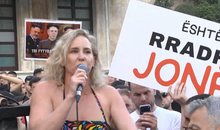
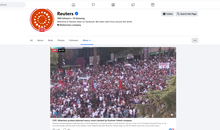
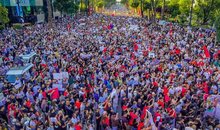
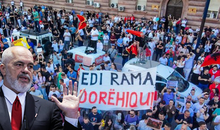
Protests disrupt the SP/ The 'meme' Zegjineja attacks the influencer: Evil, says the judge. Balla is caught with Reuters
Murder in Paskuqan/ The perpetrator was tracked to Bovilë, he abandoned the vehicle
Kukës high school graduate who published his literature thesis 20 minutes after the exam started is expelled
Quarrel erupts within Rilindja/ Rama orders MPs and the party: Be careful, don't make news
How Rama convinced the West that Albania's fate is linked to his name
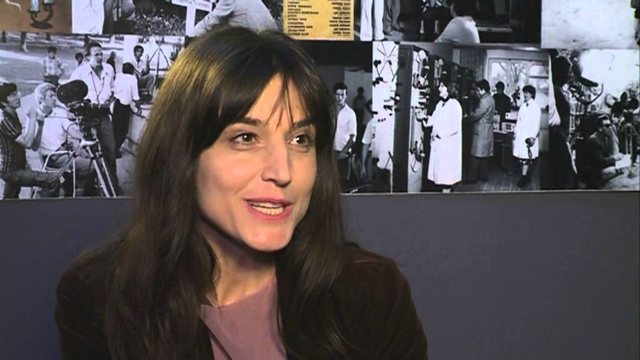
Elsa Demo is a journalist, translator and author of the show "Artes" on Albanian Public Television.
“Adelaida”- Adrian Bravi
If pain severely damages memory, can it undo the pain itself, turning a person into nothing?. “Adelaida” written by Adrian Bravi, a little book about the fate of an artist, of a mother, from one fascism to another, reminded me of unwritten stories about women like Safo Marko and Edi Luarasi. I was surprised by this documentary novel among the 12 finalists of the Strega Prize 2024.
“The Fragile Age” - Donatella Di Pietrantonio
“L'età fragile” by Donatella Di Pietrantonio (winner of “Strega 2024”) is written in a spirit where telling and understanding are sides of the same thing. They are stories of women across generations that prove that progress will always need to look back to eras when the world was more controlled, but wild like today. From the first pages you feel that Di Pietrantonio has writing in her blood. (On Christmas Day I noticed that the novel had been translated into Albanian so quickly.)
"Prison Life" – Fatos Lubonja
Two years after the publication of “Jetë burgu”, the collection of stories by Fato Lubonja, I continue to suggest it to anyone who is looking to read something true and shocking from Albanian authors, to bring them back to life. Despite dealing with prison and the insane asylum within it, this book is read in parallel as a space of freedom and holiness.
“The Storytellers of the Albanian Language” - Ardian Vehbiu
With “The Tales of the Albanian Language”, Ardian Vehbiu accomplishes some good for the health of critical thinking. He analyzes the nature of the crisis that stems from the loss of trust of Albanians in each other and in the elites. He dismantles the mythomaniac thinking about the Albanian language, a popular sport on screens and social networks. With the coherent defense of this cause, Vehbiu offers a vaccine against irrationality.
“Lenin - Anatomy of a Murderer” - Curzio Malaparte
One evening before going to the Paris Opera, Lenin gave his friend Trotsky a gift like the Achaeans, the most vindictive I have ever heard. Knowing that he had the same number of feet as Trotsky (author of the October 1917 coup), he gave him his elegant shoes, but which were terribly tight. This is how Curzio Malaparte describes the dictator to his cell, in the book “Lenin - Anatomy of a Murderer”.
“Diary - 1942-1944” - Tajar Zavalani
Although not on the level of Mitrush Kutel's "Diary of an Economist", Tajar Zavalani's "Diary - 1942-1944" is one of those documentary works written by journalists who, when they maintain an honest relationship with the time they lived in, exceed the expectations of our poor culture. There you will find an excellent profile of Ahmet Zogu's exiled military career, as well as pages from the private life of Zavalani himself, an intellectual who tries to balance the alienation of a professional far from his homeland.
"Sons of Life" - Pasolini
I have Pasolini's novel "Boys of Life" in my head as a multitude of voices from street boys, none of them identifiable, among the Roman borghetti of the fifties. They constitute a group identity like a black and white frame, cut from "Accattone" or "Mamma Roma", where poverty swallows the civilization of former ruins, but also that which was preparing to come as a post-industrial civilization.
“The Future” - Marc Augé
The classics of literature have historically served as spiritual educators. Their place today, at best, is being taken by anthropologists. They tend to see man in dynamic relationships with others and with what society produces for the good or against the individual. Marc Augé's essay "The Future" unfolds scenarios of economic, innovation, or cultural crises, scenarios whose success so far has been guaranteed by our fear of the future.
Bible
The Bible is a book of experiences that take time to process. You can open it to any of the books within it, you can return to the same text to find something you were not ready to see before. “For what I fear most has come upon me, and what I dread has come upon me.” This verse from the “Book of Job” stuck with me, reading it in the courtyard of the Oncology Department. I would call all of this: “the beautiful art of surrender.”
Marguerite Duras-Pain
I thought Primo Levi had said a lot about Auschwitz. In real time with the liberation of the concentration camps, Marguerite Duras keeps a diary of the return from Dachau of a captive, of a husband. Here the perspective changes. She is the one who sees the transparency of the emptiness (even the excrement) of the survivor. “Pain” is the most difficult story from the entire collection with the same title. The Holocaust is seen by as many voices as possible. It seems that Duras goes further than Bravi (suggestion no. 1) and says: man experiences such great pain in this world that he no longer feels the existence of pain itself.
Latest news
Vlora Prosecution seizes 5 million euros of assets
2026-06-09 14:29:19
Vučić's Kopjac is also in crisis
2026-06-09 14:11:14


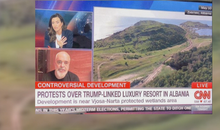
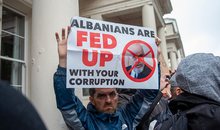
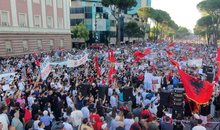
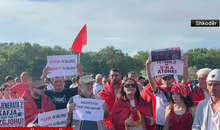
The protest clashes Rama with the world media, the risk of an image crisis!
2026-06-09 13:01:41
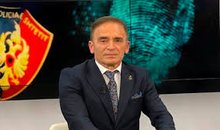
Security expert raises the alarm: Criminal groups are sheltering in Kamza areas!
2026-06-09 12:36:03
Who is in command of Edi Rama today?!
2026-06-09 12:14:10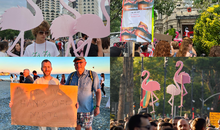
Rama's 'bluff'/ How foreign tourists are embracing the protests in Albania
2026-06-09 12:00:57

How Rama convinced the West that Albania's fate is linked to his name
2026-06-09 11:20:31
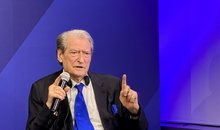
Berisha at the EPP conference: Albania is in the emergency room
2026-06-09 10:27:53
From towers to rivers: the invisible cost of the building boom
2026-06-09 10:04:25
Operation in Vlora, names of 6 arrested revealed
2026-06-09 09:44:49
Foreign exchange, how much foreign currencies are sold and bought today
2026-06-09 09:26:15

Horoscope, get to know the star forecast
2026-06-09 08:40:29
Alarming depopulation / In one year, 33 thousand young people leave Albania
2026-06-09 08:28:03
Unstable and cloudy weather, rain expected in some areas
2026-06-09 07:59:52
Posta e mëngjesit/ Me 2 rreshta: Çfarë pati rëndësi dje në Shqipëri
2026-06-09 07:45:13

Nard Ndoka gives the news: Sali Berisha's "non grata" status has been lifted
2026-06-08 21:59:42

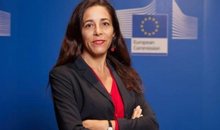
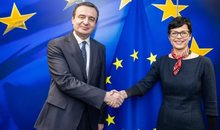
Kaja Kallas proposes Portuguese diplomat as EU ambassador to Albania
2026-06-08 20:28:55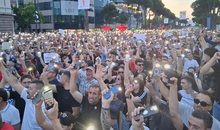
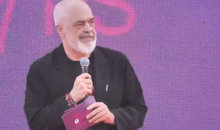
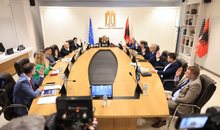

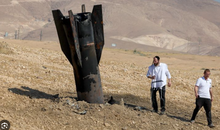
Tensions between Iran and Israel, EU: Region stuck between war and ceasefires
2026-06-08 17:42:47
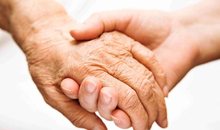
Retirement age even more difficult than working life
2026-06-08 17:03:32
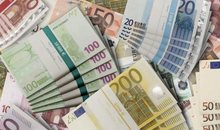
Euro starts the week in further decline, drops towards the threshold of 95 lek
2026-06-08 16:34:43
Nga kullat te lumenjtë/ Kostoja e padukshme e etheve të ndërtimit
2026-06-08 15:56:47
Criminal amnesty approved in principle, 380 convicts released immediately
2026-06-08 15:11:42
Abuses with "SASPAC" funds, Appeal leaves Ilir Beqaj in prison
2026-06-08 14:58:54
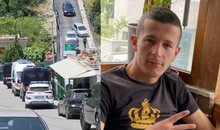
Killed after a conflict in Kamëz, this is the 27-year-old who passed away
2026-06-08 14:43:04
Gunshots in Velipoja
2026-06-08 14:38:01
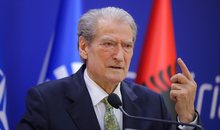
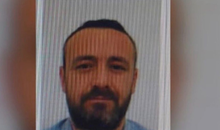
Photo/ This is the perpetrator of the murder of the 27-year-old in Paskuqan
2026-06-08 13:59:22
Rama appears in a miniskirt, commentators 'massacre' him: Is the boy sick?
2026-06-08 13:46:47
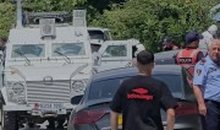
Daytime murder in Kamëz, police react: No others injured in the incident
2026-06-08 13:21:38
DP takes the "anti-Rama package" to Parliament, demands the repeal of 4 laws
2026-06-08 13:02:58

EU: Elections in Kosovo pave the way for overcoming political deadlock
2026-06-08 12:33:32
Shooting in Kamëz, injured person dies in Trauma
2026-06-08 12:17:24
Berisha publishes video: 2 million slaps will come to Rama from Albanians
2026-06-08 12:09:26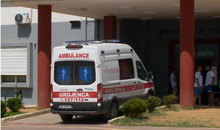
Gunshot wound in Kamza
2026-06-08 12:00:47
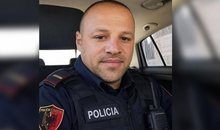
Bullets on the police 'Eagles', how officer Enea Mekollli was killed by 5 shots
2026-06-08 11:44:05

EU 'scolds' Rama for Zvërnec: Protect nature before you destroy it
2026-06-08 11:14:01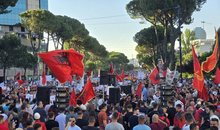
Journalist warns: Campaign to remove students from protest has begun
2026-06-08 11:00:46
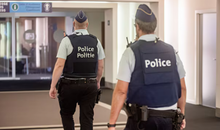
Albanian drug trafficker "Maradona" buys his freedom with 1.5 million euros
2026-06-08 10:31:34

Foreign exchange, how much foreign currencies are sold and bought today
2026-06-08 09:27:27