 Flash News
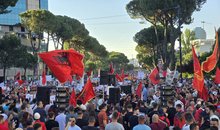
Judge this protest by its opponents
Accident in Greece, 16-year-old Albanian dies
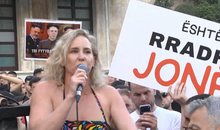
Protests disrupt the SP/ The 'meme' Zegjineja attacks the influencer: Evil, says the judge. Balla is caught with Reuters
Murder in Paskuqan/ The perpetrator was tracked to Bovilë, he abandoned the vehicle
Kukës high school graduate who published his literature thesis 20 minutes after the exam started is expelled
Alfred Lela
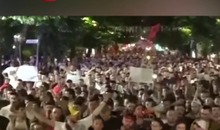
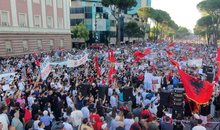
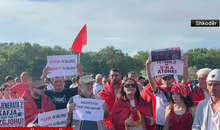
A rather entertaining crowd of commentators from the Tirana–Prishtina axis, aided by the occasional homemade poll, has been producing theories whose internal logic collapses under its own weight. Their arguments reveal something else entirely: the fear that the protest has instilled in them.
First, because the protest has taken away precisely what they claimed only Rama could provide: an urban tone, a certain coolness that, in their view, the Democratic Party—the main opposition force—had not embodied since 2005.
Worse still for them, Rama has reversed the trend. From provocateur, he has become a subject of amusement.
This has left the Batonicuses, Beratinuses, Frocupinuses, and other creatures of the government lagoon without their exhibitionist peacock and staring instead at the flamingo, the symbol of the protest.
Second, because neither the Democratic Party nor Berisha conceived this protest, government-friendly critics are forced to invent new counterarguments to discredit it in the public eye. Those who dismiss the protest from afar fail to understand that it is not a movement of directors or former directors of government institutions, nor of people who have jobs they are desperate to keep, nor of those seeking jobs they hope to obtain.
For that reason, the protest has a pleasant scent. It is a protest of the middle class, which differs from both the wealthy and the poor precisely because it strives not to smell distinctively at all—not of hard-earned sweat, nor of expensive perfumes applied in overwhelming doses that would make even cars go dizzy.
The middle class can often be recognized by its lack of effort to adorn itself so excessively that individuality disappears. It avoids such displays precisely because it believes it already possesses individuality. That is why the crowd gathered in this movement is not amorphous. It stands out—not as an expression of despair, nor of self-exposure, but of identification.
This has caught the political “thinkers” unprepared. Until they invent new tools and narratives with which to confront this protest, they continue to pull from the old toolbox of anti-opposition rhetoric.
The first instrument is the so-called “national-modern Albania interest,” which they claim this project serves and which supposedly irritates Albania’s neighbors and enemies. Their opposition to the protest resembles, more or less, that of the Luddites—the workers who smashed machines at the dawn of the Industrial Revolution because they believed the machines threatened their livelihoods or because they did not understand them and saw them as instruments of the devil.
The second instrument is numerical disadvantage—what might be called the “Carlo technique”: flying drones above the protest in search of empty spaces, then highlighting those gaps to proclaim the misery of low turnout and, by extension, the absence of popular support. Rama himself took to the skies with a drone, openly revealing the anxiety the protest was causing him.
The third instrument is polling. As always, these surveys seek to confuse the public with references to methodology, sample sizes, margins of error, and similar technical jargon. Unlike drones, these are flights powered by imagination—absurd excursions resembling Borat dialogues.
It is amusing to watch men of respectable age thrown into confusion by the absence of Berisha and the Democratic Party as obvious targets. They appear disoriented because the protest, owing to its diversity and the attention it has captured, has become a moving target.
We shall remain on the sofa of observation and watch them in this condition: without a target, without analysis, armed only with the instincts of an old game and, most importantly, bewildered.
The protest, it must be said, has achieved something entirely original and unprecedented. It has shifted the pendulum of public revolt and political expression several decades forward.
For the first time, Albania resembles the West—and perhaps even surpasses it—in a public movement that appears to have emerged almost accidentally, at a moment when power has committed so many transgressions against those who possess the real strength: the willingness to stand on the side of what is right.
The gravity of evil can no longer bear itself.
Latest news


Judge this protest by its opponents
2026-06-09 18:20:57
After four sessions, Ilir Beqaj concludes preliminary requests
2026-06-09 18:11:25
UN message to Iran, Lebanon and Gaza: Respect ceasefires
2026-06-09 17:06:22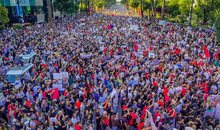
10 days that shook the "system"
2026-06-09 16:53:28
Anti-drug operation in five cities in Kosovo, 5 arrested
2026-06-09 16:44:03
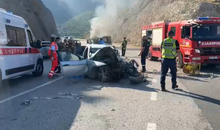
Accident in Greece, 16-year-old Albanian dies
2026-06-09 16:25:19
Rama 'clash' with Romanian journalist: They've blocked her brain!
2026-06-09 16:13:59
“Revolucioni i Flamingove” përplas Ramën me Iranin
2026-06-09 15:56:07



Vlora Prosecution seizes 5 million euros of assets
2026-06-09 14:29:19

Vučić's Kopjac is also in crisis
2026-06-09 14:11:14



The protest clashes Rama with the world media, the risk of an image crisis!
2026-06-09 13:01:41


Security expert raises the alarm: Criminal groups are sheltering in Kamza areas!
2026-06-09 12:36:03
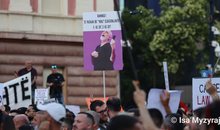
Who is in command of Edi Rama today?!
2026-06-09 12:14:10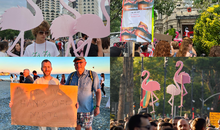
Rama's 'bluff'/ How foreign tourists are embracing the protests in Albania
2026-06-09 12:00:57

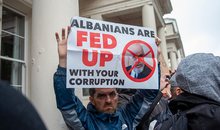
How Rama convinced the West that Albania's fate is linked to his name
2026-06-09 11:20:31

Berisha at the EPP conference: Albania is in the emergency room
2026-06-09 10:27:53
From towers to rivers: the invisible cost of the building boom
2026-06-09 10:04:25
Operation in Vlora, names of 6 arrested revealed
2026-06-09 09:44:49

Foreign exchange, how much foreign currencies are sold and bought today
2026-06-09 09:26:15

Horoscope, get to know the star forecast
2026-06-09 08:40:29
Alarming depopulation / In one year, 33 thousand young people leave Albania
2026-06-09 08:28:03

Unstable and cloudy weather, rain expected in some areas
2026-06-09 07:59:52
Posta e mëngjesit/ Me 2 rreshta: Çfarë pati rëndësi dje në Shqipëri
2026-06-09 07:45:13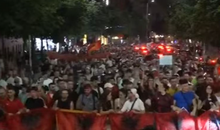

Nard Ndoka gives the news: Sali Berisha's "non grata" status has been lifted
2026-06-08 21:59:42


Kaja Kallas proposes Portuguese diplomat as EU ambassador to Albania
2026-06-08 20:28:55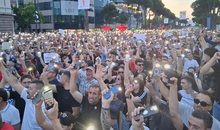


Tensions between Iran and Israel, EU: Region stuck between war and ceasefires
2026-06-08 17:42:47

Retirement age even more difficult than working life
2026-06-08 17:03:32

Euro starts the week in further decline, drops towards the threshold of 95 lek
2026-06-08 16:34:43
Nga kullat te lumenjtë/ Kostoja e padukshme e etheve të ndërtimit
2026-06-08 15:56:47

Criminal amnesty approved in principle, 380 convicts released immediately
2026-06-08 15:11:42
Abuses with "SASPAC" funds, Appeal leaves Ilir Beqaj in prison
2026-06-08 14:58:54

Killed after a conflict in Kamëz, this is the 27-year-old who passed away
2026-06-08 14:43:04
Gunshots in Velipoja
2026-06-08 14:38:01
Photo/ This is the perpetrator of the murder of the 27-year-old in Paskuqan
2026-06-08 13:59:22
Rama appears in a miniskirt, commentators 'massacre' him: Is the boy sick?
2026-06-08 13:46:47
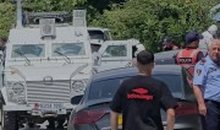
Daytime murder in Kamëz, police react: No others injured in the incident
2026-06-08 13:21:38
DP takes the "anti-Rama package" to Parliament, demands the repeal of 4 laws
2026-06-08 13:02:58