
 Flash News
Balluk's investigations are not closed, SPAK extends the deadline by another 3 months
Protest organizer Arben Kola is escorted and dragged away by police
Tomatoes, eggs and peppers, the "arsenal" of protesters for MPs in front of the Parliament
Greek customs officers' protest blocks Kapshtica, traffic suspended for 4 hours
Rain, storms and hail, the weather worsens today in some areas of the country
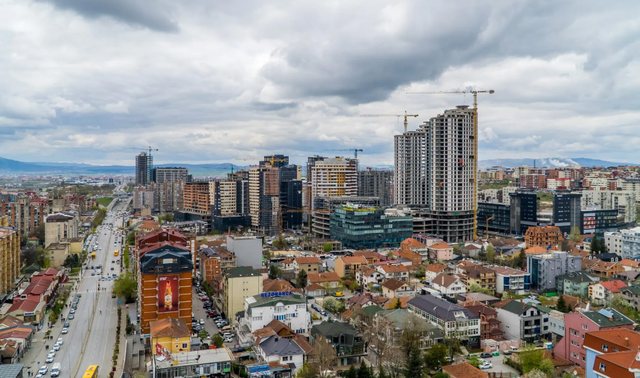
The former president of the Kosovo Chamber of Commerce, Safet Gërxhaliu, has raised the alarm about a serious risk that is challenging the construction sector in Kosovo. According to him, the real estate market in Kosovo is being driven by speculative goals and not by the real need for housing.
The construction sector in Kosovo is facing a silent, but potentially very dangerous, crisis.
The former president of the Kosovo Chamber of Commerce, Safet Gërxhaliu, has raised the alarm about a growing bubble in the real estate market, warning that the lack of development policies, the speculative investment trend and the decline in real demand for housing are leading the economy towards deepening instability.
Gërxhaliu says that construction, traditionally seen as an engine of economic development, is losing its substantial role due to deviations in financial access.
According to him, this sector is not supporting sustainable development, but is fueling an economic model where money is locked up in unused properties.
"If finance does not serve the real economy, then development is only a superficial illusion," declared Gërxhaliu, adding that capital is being channeled towards property purchases for speculative purposes, rather than for housing or productive development.
"The growing demand for credit, especially mortgage credit, does not necessarily reflect an increase in well-being, but an attempt to quickly profit from rising prices in the housing market. Many of these properties are not used, but are stored in anticipation of further increases in value, a behavior that creates a closed capital cycle and stops the circulation of money in vital sectors of the economy."
Supply has exploded, demand is declining
Official data from the Kosovo Agency of Statistics confirms this worrying trend.
According to the 2024 Population, Household and Housing Census, there are a total of 581,095 dwellings in Kosovo, of which 207,165, or 35.7%, are unoccupied. These include dwellings intended for sale, rent, or other uses, that are currently not occupied by anyone.
In a country of about 1.6 million inhabitants, this figure raises serious questions about the real structure of the housing market. More than one in three homes is empty, while construction continues at a high rate. In the last 13 years, the number of homes has increased by 43 percent, a pace that exceeds the natural increase in population.
With the increase in youth emigration and the lack of young families in many areas of Kosovo, the need for new housing is declining.
Prices don't stop, but is this sustainable?
Despite the high number of unoccupied apartments, prices in the housing market have not fallen — on the contrary, they are constantly increasing.
In Pristina, according to data from real estate agencies, one square meter of housing currently costs between 1,200 and 2,500 euros, depending on the area and quality of the building.
The most expensive areas remain the city center, the “Arbëria” and “Pejtoni” neighborhoods, where prices often exceed 2,000 euros per square meter. While in other areas such as Prishtina e Re or B and C streets, prices range from 1,200 to 1,700 euros per square meter.
This phenomenon is occurring even though, according to the same official data, 96% of families in Kosovo own the homes they live in, which implies a saturation of the primary housing market.
This further increases suspicions that home purchases are no longer for housing, but for investment, often driven by fear of losing the value of money or the lack of safe investment alternatives.
Rising construction costs, another factor in high prices
The Kosovo Agency of Statistics has also recorded an increase in construction costs. According to the Construction Cost Index for the first quarter of 2025, prices in this sector increased by 1.7 percent compared to the last quarter of 2024 and by 6.5 percent compared to the same period last year.
The increase was driven by the increase in the cost of construction materials (1.9%), employee salaries (2.4%), and other operating expenses (1.8%). This directly impacts the increase in new housing prices and the ongoing pressure on the market.
Safet Gërxhaliu believes that if banks continue to finance speculative projects instead of productive sectors, the country risks entering a dangerous economic cycle. He calls for immediate intervention in the direction of capital.
"It's not wrong for banks to seek profit - that's natural. But if the focus remains on short-term profit through real estate, then we are moving away from sustainable economic development."
He calls for the orientation of financial resources towards sectors that create real value: local production, agriculture, small businesses, and construction for real and affordable housing.
All the data — from the number of unoccupied housing units, high prices, rising construction costs, the lack of a secondary market, to demographic changes — point to a serious imbalance in the real estate market in Kosovo.
Kosovo currently has a total of 581,095 dwellings, of which 356,959 are occupied, while 207,165 dwellings, or 35.7%, are unoccupied. The latter include dwellings intended for sale, rental or other uses./Monitor
Latest news






Protest in front of the Parliament, police forcibly escort some citizens
2026-07-27 10:46:22
Protesters surround Parliament outside, plenary session begins
2026-07-27 10:34:36
Protest organizer Arben Kola is escorted and dragged away by police
2026-07-27 10:19:00
Protesters march towards Elbasan Street, clash with police: Arrest Belinda!
2026-07-27 10:05:18
Greek customs officers' protest blocks Kapshtica, traffic suspended for 4 hours
2026-07-27 09:42:00

Eurostat: Albania ranks fourth in Europe for deaths from air pollution
2026-07-27 08:46:40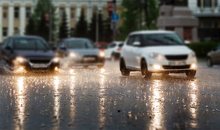
Rain, storms and hail, the weather worsens today in some areas of the country
2026-07-27 08:31:40
58th protest, citizens return to the Parliament in the last session
2026-07-27 08:16:00
Morning Post/ In 2 lines: What mattered yesterday in Albania
2026-07-27 07:59:52
Ekspertët zbulojnë ngjyrën ideale të dhomës së gjumit për të fjetur më mirë
2026-07-26 21:46:01

What is behind the record strengthening of the lek?
2026-07-26 21:00:00



The 4 zodiac signs that are considered the most trustworthy
2026-07-26 19:42:24

Joshua after the fight with Kristian Prengë: I just thought about keeping calm
2026-07-26 18:33:26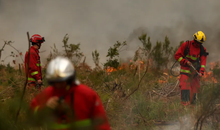
Fires sweep southwest France, over 220,000 people evacuated near Bordeaux
2026-07-26 18:17:06
Debate over donations brings healthcare system financing back into focus
2026-07-26 17:55:00

Rita Ora tells her family story: I am proud to be an immigrant
2026-07-26 17:20:00
Massive fire engulfs Soda Forest, pine areas at risk
2026-07-26 16:59:57
When 'Besa' doesn't even convince the left: Who came out against Rama's 'Besa'?
2026-07-26 16:45:00
Fire in Zvërnec, smoke covers Vlora
2026-07-26 16:23:13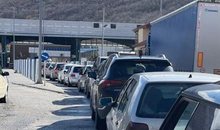
Grevë në doganat greke, kufizime disaorëshe në 4 pikat kufitare me Shqipërinë
2026-07-26 16:07:46
Meteorology warns of scorching August, temperatures could reach up to 40°C
2026-07-26 15:54:00
The end of July could bring financial luck to these 3 zodiac signs
2026-07-26 15:36:00





Zhupa: Saranda hostage to a poorly designed terminal, wasted time, traffic
2026-07-26 14:03:54
Milot–Balldren: Si turp, si faj, si brengë, si pabesi!
2026-07-26 13:20:41
Shooting in Debar, a 38-year-old man in handcuffs, 9 people are being prosecuted
2026-07-26 13:02:44
He bought products and paid with fake euros, 24-year-old arrested in Durrës
2026-07-26 12:45:15
Mountains Package/ Bardhi: Even Diella no longer trusts Rama, resigns
2026-07-26 12:28:15


Scandal with medical student exams, Minister of Education resigns
2026-07-26 11:08:36
War crisis, the world is consuming less oil
2026-07-26 10:47:53
Triple accident on the Peqin-Elbasan axis, two people injured
2026-07-26 10:26:28


Car bursts into flames after accident on Tirana-Durres highway
2026-07-26 09:23:47
Clear skies across the country, weather forecast for today
2026-07-26 09:01:36
Accident in Vlora/ 52-year-old dies, five others injured (Names)
2026-07-26 08:42:00
Horoscope July 26, 2026, discover the star predictions
2026-07-26 08:23:48
Morning Post/ In 2 lines: What mattered yesterday in Albania
2026-07-26 07:56:03



22-year-old man injured by gunfire in Laç
2026-07-25 20:13:01
Red and black flags and calls for change, Albanians protest in Munich
2026-07-25 19:38:39
Former socialist minister announces candidacy for Vlora Municipality
2026-07-25 18:54:12
Fires engulf France and Spain, around 270,000 people evacuated
2026-07-25 18:32:36
The master of loloisms or the lolo of the workers?!
2026-07-25 18:10:38

Musk predicts the end of money: You won't need it in 2036
2026-07-25 17:26:57
REL Analysis: Who is lobbying the United States from Serbia and why?
2026-07-25 17:03:59
Two-faced, cynical and bankrupt!
2026-07-25 16:44:00
Accident on the Tirana-Durrës highway, two vehicles collide near Maminas
2026-07-25 16:28:27
Lee Kang-in leaves PSG, transfer to Atletico Madrid is official
2026-07-25 16:12:00

Coffee may help protect the liver from obesity
2026-07-25 14:58:00
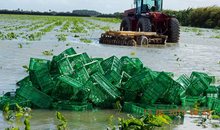
KTA: Floods caused 100 million dollars in losses in agriculture in 1 decade
2026-07-25 14:24:13

The solar eclipse of August 12, the rare spectacle that will fascinate Europe
2026-07-25 13:51:15
Babo's Covenant and the Expulsion of Braça
2026-07-25 13:26:14

Do you have faith? What about institutions?
2026-07-25 12:56:42
Berisha: Rama ignored the protesters' demands
2026-07-25 12:30:00

Mashtronte klientët me servis automjetesh në Astir, arrestohet 37-vjeçari
2026-07-25 10:36:21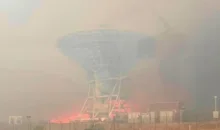
Fires near Madrid hit NASA facilities, space communications station evacuated
2026-07-25 10:21:36
Noise "suffocates" cities, Vlora leads at night, Tirana and Saranda follow
2026-07-25 10:00:35

Horoskopi, zbuloni parashikimin e yjeve për shenjën tuaj
2026-07-25 08:43:31
Suspect arrested for murder of Italian journalist hiding in abandoned building
2026-07-25 08:37:06

Morning Post/ In 2 lines: What mattered yesterday in Albania
2026-07-25 08:04:15