 Flash News
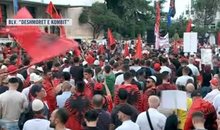
The 22nd protest against Rama begins, thousands of citizens in the square
Pas Koçekut ikën Spiropali? Socialistja sfidon hapur Ramën: PS duhet të vetëpastrohet
Accident in Fushë Krujë-Laç, motorcycle rider dies, "Benz" driver is escorted to the police
"Albania is not for sale", the walls of the Prime Minister's Office are 'dressed' with the protesters' messages
Video/ Marjana Koçeku leaves the SP and joins the protest against Rama
Rita Petro on the protests and the role of the citizen: Albania needed to be shaken up

Politiko
2026-06-21 20:07:28

In a period characterized by social tensions and persistent public discontent, the analysis of phenomena such as protests and civic reactions becomes an absolute necessity to understand the essence of democracy and civic development.
In an interview on the 'Pasvon' podcast with Alfred Lelë, writer and intellectual Rita Petro offered an in-depth sociological and psychological treatment of the protests in Albania, focusing specifically on the nature of those who fill the squares and the way they are perceived by power structures.
To understand the dynamics of the latest developments, it is essential to examine her approach to crowd psychosis, the historical return of civic revolt, and the language of political labeling.
The genesis of a revolt and the repetition of history. When a society finds itself in a state of stagnation or what Petro calls a 'stagnant water', the need to shake up and oppose becomes an essential mechanism of social cleansing. For the speaker, the squares filled with young people, many of whom belong to a generation born after the 1990s, are a hopeful image and at the same time a cyclical return of history.
She recalled her personal memories from 1990, when she participated in the mass protests that brought about the fall of the communist regime. Today, seeing the children of that generation raise their voices against the arrogance of the current government, she emphasizes that regardless of whether individuals may have their own reservations about specific causes, the very act of protesting generates a vital adrenaline rush.
This adrenaline rush of dissent serves to prevent the installation of harmful institutional comfort and to awaken a society that can get used to submission.
On an aesthetic and creative level, Petro also dwells on the dominant color of this youth movement, the color of flamingo or pink that naturally spread through social networks and memes. Beyond aesthetics, she particularly appreciates the appearance of humor and poetic depth in the slogans of the youth, elements that profoundly replace the traditional and hateful language that we are used to hearing constantly from the mouths of our politicians, such as calls for 'to prison' or radical curses.
This fundamental shift from politically sponsored hate speech to pure civic creativity further emphasizes the conceptual and mental shift of society. This youthful approach manages to unite people with a free spirit and distance them from the destructive mindset of the past.
Crowd Psychosis and the Role of the Individual. A central element of Petros’s analysis is the so-called phenomenon of ‘crowd psychosis’, a concept widely addressed by classical philosophers and sociologists. As individuals, she argues, people can feel powerless, silent, or even somewhat cowardly in the face of substantial power and its oppressive mechanisms. However, spontaneously uniting in a crowd gives them a new power, a loud voice, and a total collective courage. It is precisely this union that transforms silent individuals into courageous protesters. However, this transformation has and carries its own concrete dangers, especially in the presence of provocateurs, children without fear of consequences, and entrenched political manipulations that can easily direct civic anger in the wrong direction.
Language Battle: Crowd or People?
The writer's analysis reaches its peak when she examines the tactical use of words by politicians. Why are protesters constantly called 'the mob' by their political opponents? For Petron, this is a pure and deliberate choice to denigrate and delegitimize civic anger.
Politicians prefer to call a civic movement a 'mob' when it openly threatens their seats or exposes their affairs, but they never hesitate to call that mass a 'people' when the same crowd of people gathers to applaud them in their campaigns. According to her, when an organized crowd possesses a high public self-awareness, when it gathers because of a righteous indignation at injustices and has a common civic purpose based on demands for civil rights and equality, it is fully and fundamentally 'people'. This intellectual redefinition gives the discourse another depth.
In conclusion to this line of analysis, this in-depth segment of the television conversation clearly demonstrates that observing political events through the eyes of an engaged intellectual and writer undoubtedly adds a deeply human, critical, and objective dimension to Albanian public discourse. The continued refusal to blindly accept media propaganda and the intellectual insistence on seeing the revolted crowd as a fully sovereign entity carrying the will of the people offer a modernist approach that invites every citizen to reflect directly on his or her essential role in democratic society.
Latest news

Protester calls on Rama: Be a man for once in your life, resign
2026-06-21 21:15:03

Republika e ortakëve
2026-06-21 20:42:00
Rita Petro: Why Mimoza Ahmeti remains elusive to prejudices
2026-06-21 20:31:45

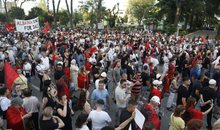
The 22nd protest against Rama begins, thousands of citizens in the square
2026-06-21 19:52:08


Israeli flag incident, activist: There are infiltrated groups among us
2026-06-21 19:14:44
Zodiac signs that change their mood in a second
2026-06-21 18:50:10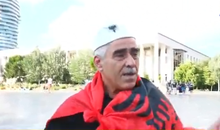
Albanian from Kosovo joins the protest: When Albania is not well, neither am I
2026-06-21 18:28:15

Protests/ Former socialist minister: Rama's fall is inevitable!
2026-06-21 17:46:45

Is it good to keep the shutters closed during hot days?
2026-06-21 17:01:35
DP condemns tearing down of Israeli flag: Criminal and anti-Semitic act
2026-06-21 16:40:17

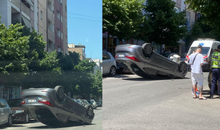
Accident in Durrës, car overturns in the middle of the road
2026-06-21 15:39:54
Mandatory insurance for public works, the law is not enforced
2026-06-21 15:20:46
Summer viruses increase the influx in pediatrics
2026-06-21 15:05:19
The 10-Year Concrete Marathon; Chronicle of a Forewarned Cleanup
2026-06-21 14:54:29

Residents demolish fence blocking access to land after 22 years in Kakome
2026-06-21 13:58:45


An 11-year-old drowns while bathing in the sea on the beach of Durres
2026-06-21 12:09:26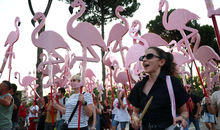



Temperatures reach up to 33 degrees, check out the weather forecast
2026-06-21 09:53:19
China expands diplomatic presence in Tirana amid its global ambitions
2026-06-21 09:36:55

NATO Secretary General to visit US next week
2026-06-21 08:42:21
Who is Dr. Suzanne Huurman, the woman making history at the World Championships?
2026-06-21 08:20:07
Morning Post/ In 2 lines: What mattered yesterday in Albania
2026-06-21 08:00:30

Ruthless Netherlands destroy Sweden 5-1
2026-06-20 21:41:14


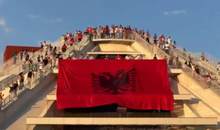

Video/ Marjana Koçeku leaves the SP and joins the protest against Rama
2026-06-20 20:19:13
Why are Albanian couples postponing the decision to have their first child?
2026-06-20 20:07:54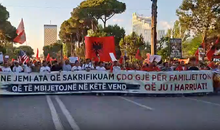
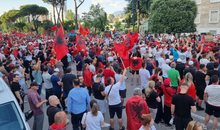
Protester to Rama: The first point of the contract is not to be you
2026-06-20 19:20:30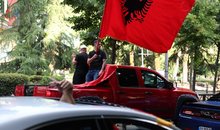

"Heart in Albania", New York Albanians protest against Rama
2026-06-20 18:42:34
Diaspora convoy parades past Rama's office
2026-06-20 18:25:08
Tensions rise, Iran closes the Strait of Hormuz
2026-06-20 18:06:21
A ndikojnë syzet e diellit te hormonet? Ekspertët shpjegojnë çfarë thotë shkenca
2026-06-20 17:42:37


Severe heat wave over the weekend, temperatures reaching up to 39°C
2026-06-20 16:53:08

Switzerland confirms Iran-US talks are continuing
2026-06-20 16:11:07
Diaspora convoy arrives in Tirana, hundreds of cars enter the capital
2026-06-20 15:49:35


Fire in Karaburun, smoke invades the coastline
2026-06-20 14:54:48
Immigrants join the protest, kilometer-long convoy crosses Albania
2026-06-20 14:42:48
Balluk's driver's testimony: The villa in "White Rocks" belonged to the "boss"
2026-06-20 14:20:22

Malësi e Madhe/ 306 narcotic plants destroyed, two people arrested
2026-06-20 13:43:55
7 daily habits that are damaging your brain health
2026-06-20 13:23:06




Protesta e 21-të për largimin e Ramës, sot diaspora
2026-06-20 11:44:33
After warning residents, Kakomë's perimeter fence is removed
2026-06-20 11:19:09
Money Laundering, Tobacco: They are destroying the middle class
2026-06-20 11:00:31
He distributed cocaine in various areas of Tirana.
2026-06-20 10:46:52

Protests against Rama, a group of MEPs urgently arrive in Albania
2026-06-20 10:01:38
Accident on the Levan-Vlora axis, traffic on the highway is heavy
2026-06-20 09:38:39
PS mbledh sot Grupin Parlamentar
2026-06-20 09:17:16


A scorching sunny weekend, here's what the temperatures will be like
2026-06-20 08:25:45
Morning Post/ In 2 lines: What mattered yesterday in Albania
2026-06-20 08:01:56

Erion Isai's wiretaps/How millions were stolen from the Erseka municipality
2026-06-19 21:26:42
Portugalia kërkon pasuesin e Martínezit, Mourinho del nga gara
2026-06-19 21:07:18
Albania has the highest price for a basic mobile internet package in the Region
2026-06-19 20:48:07
Why people who enjoy solitude are often more self-aware and emotionally strong
2026-06-19 20:28:18
Gjendet i pajetë 62-vjeçari në liqenin e Viroit
2026-06-19 20:03:24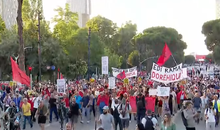
“Rama jep dorëheqjen”, protestuesit marshojnë drejt Kryeministrisë
2026-06-19 19:44:36
Zvicra konfirmon shtyrjen e bisedimeve SHBA-Iran
2026-06-19 19:35:12

Why always saying "YES" at work can turn into a trap
2026-06-19 18:48:46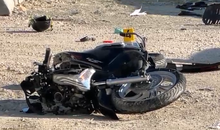
Fatal accident in Fier-Lushnje, a 35-year-old man loses his life
2026-06-19 18:31:12