 Flash News
From Dritan Gjika to Armando Pacani, the names of those accused of cocaine trafficking are published
Albanian Fake Civil Society and the Real One
Transparency Board announces new fuel prices
State Matura/ 26 thousand students take the Mathematics exam today
Suspected of drowning in Lake Ulza, still no trace of the 37-year-old
Albanian Fake Civil Society and the Real One
Shoqëria civile e vërtetë në Shqipëri është në rrugë — jo në sallat e konferencave të financuara nga donatorët

Politiko
2026-06-16 13:46:40
Mrika Temali
Thirty-five years after the fall of communism, Albania presents a bitter paradox. The European Union, Western governments, and international foundations have spent millions—indeed tens of millions—in the name of building civil society, strengthening democracy, protecting civic space, and empowering citizens. Yet, at one of the most dramatic political moments in the country’s post-communist history, much of what is officially called “civil society” is either silent, absent, or comfortably positioned within the orbit of power.
This is not merely a crisis of representation. It is a crisis of democracy itself.
For more than three decades, Albania has been the site of an entire democracy-building industry: seminars, capacity-building programs, consultation forums, monitoring reports, donor strategies, roundtables, conferences on good governance, anti-corruption, electoral integrity, media freedom, and European integration. An entire vocabulary of democracy has been produced, reproduced, and funded. Yet as the language of democracy has expanded, democracy itself has weakened.
Rather than serving as a counterweight to power, a significant portion of the civil society sector has gradually become part of its architecture. It speaks the language of accountability but rarely demands accountability from those who govern. It claims to represent citizens yet seldom stands beside them when they face arbitrariness, injustice, or abuse. It champions civic space in theory while remaining largely silent when that space is challenged in practice.
Meanwhile, real civil society has emerged elsewhere.
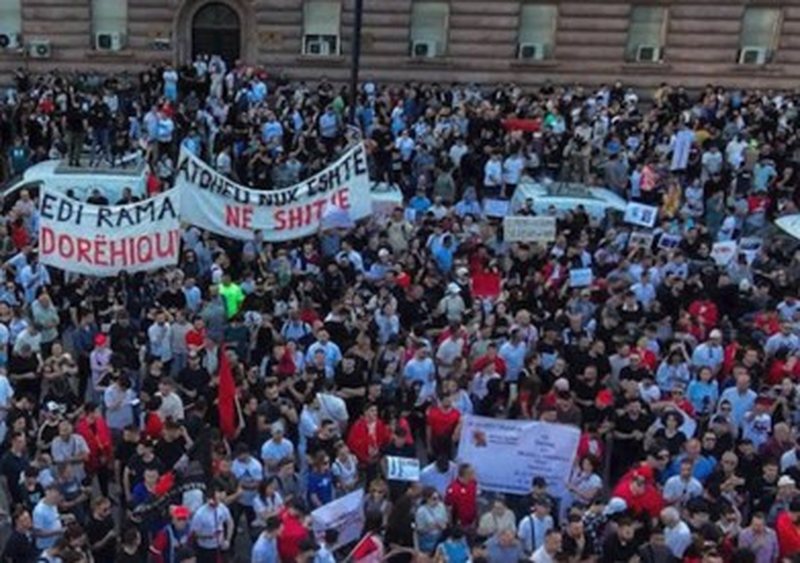
It is not found in conference halls, multi-year projects, or donor-funded reports. It is found in the streets of Tirana, in towns across Albania, and in European capitals where members of the Albanian diaspora have gathered to protest. It consists of young people, families, professionals, pensioners, and ordinary citizens who have no project contracts, write no monitoring reports, and enjoy no institutional access, but possess something increasingly rare: the courage to dissent.
They protest against the concentration of power, against institutions widely perceived as captured, against elections whose integrity many citizens question, against corruption, clientelism, and a political system that many regard as closed to genuine competition.
These citizens are not the footnotes of Albania’s democratization. They are its main text.
For years, Albanians have watched the boundaries between state and party blur. They have seen political, economic, and institutional power become increasingly concentrated. They have witnessed declining trust in elections and weakening confidence in public institutions. They have also experienced a demographic exodus of alarming proportions. Hundreds of thousands have left the country not only in search of better economic opportunities, but because they have lost faith that a future can be built at home.
Faced with these developments, much of organized civil society has often responded with caution, selectivity, or silence.
When the distinction between state and ruling party became increasingly difficult to discern, the response was muted. When public trust in elections deteriorated, the response was cautious. When mass emigration reached levels that threaten the country’s future, the response was sporadic. And when citizens took to the streets in growing numbers, many organizations chose to observe from a distance.
This is why the endless discussions about “civic space,” “democratic backsliding,” “electoral integrity,” or “media freedom” risk sounding hollow when conducted in a parallel universe detached from the political reality citizens experience.
The problem is not that these issues are unimportant. On the contrary, they are essential. The problem arises when they are reduced to procedural rituals without democratic consequences—when they produce reports but not accountability, recommendations but not resistance, language but not truth.
Today, it often feels as though two Albanias coexist.
One is the Albania of strategic documents, consultations, and the polished terminology of European-funded projects. The other is the Albania of citizens in the streets, of anger, dignity, and the refusal to normalize democratic decline.
One seeks procedural relevance.
The other seeks freedom.
This should be a moment of reflection not only for Albania’s NGO sector but also for the European Union and its Western partners. If, after three and a half decades of financial investment and political support, the structures built in the name of democracy prove unable or unwilling to confront the concentration of power and the erosion of democratic standards, then the problem is not exclusively Albanian.
It is also a problem of the democracy assistance model itself.
Too often, donors have rewarded form over substance, stability over pluralism, and predictable partners over critical voices. They have confused professionalization with representation and institutional access with genuine social influence. In doing so, they have inadvertently helped create a class of organizations fluent in the language of donors but increasingly disconnected from the language of citizens.
This is not to say that all organizations are compromised, or that all activists have remained silent. Albania still has independent journalists, courageous activists, lawyers, researchers, and civic organizations that have preserved their integrity. But they are frequently isolated within an ecosystem that has become more cautious, more dependent, and less willing to challenge power.
A civil society that remains silent when democracy deteriorates is not fulfilling its purpose. A civil society that fears losing access more than it fears losing freedom has already lost its mission. A civil society that monitors everything except the concentration of power is not defending democracy; it is decorating its decline.
The protests of recent years have revealed an important truth: Albanian society is neither apathetic nor defeated. It has not disappeared. It has simply been excluded from the official architecture of what is labeled “civil society.”
The young men and women in public squares, the parents bringing their children to demonstrations, the citizens refusing to remain silent, and the diaspora raising its voice abroad are demonstrating that Albania’s democratic energy remains alive.
For the European Union, this should serve as a warning. Albania’s European future cannot be built solely on government narratives, formal progress indicators, or the institutional choreography of reforms. It requires listening to citizens, not only institutions. It requires understanding why a country celebrated as a success story simultaneously produces so much emigration, so much distrust, and so much public discontent.
Albania does not need another vocabulary about civic space.
It needs civic freedom.
It does not need another report on democratic backsliding.
It needs the courage to name it.
It does not need civil society as an accessory to power.
It needs civil society as a counterweight to power.
And today, in the streets of Albania, that form of civic engagement appears to be re-emerging.
Perhaps, after thirty-five years of transition, Albania’s real civil society is finally finding its voice.
*Mrika Temali is a freelance researcher based in London.
Latest news

Who is Dritan Gjika, the Albanian drug trafficking mafia in Ecuador?
2026-06-16 15:16:09
Large-scale fire at the former Metallurgical Plant in Elbasan
2026-06-16 14:43:46

World Cup icon signals end of career after 2026 World Cup
2026-06-16 13:53:07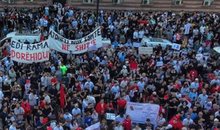
Albanian Fake Civil Society and the Real One
2026-06-16 13:46:40
Berisha: Dumani is hiding Aruba's governors to protect Rama
2026-06-16 12:58:05
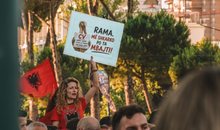
Who could be afraid of flamingos?!
2026-06-16 12:38:13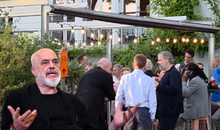
Albania protests and demands his removal, Rama presents his sculptures in Zurich
2026-06-16 12:30:08
Transparency Board announces new fuel prices
2026-06-16 12:12:58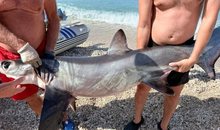
"Fox" shark surprises vacationers in Borsh, gets caught in fishermen's nets
2026-06-16 11:59:00
A gas station in Kruja is robbed at gunpoint.
2026-06-16 11:42:43
Kosovo/ The Vetevendosje Movement reaches 52 mandates thanks to the diaspora
2026-06-16 11:21:12
Weekend temperatures could reach 39 degrees in Albania
2026-06-16 10:22:02
State Matura/ 26 thousand students take the Mathematics exam today
2026-06-16 10:06:10

What do the stars have in store? Love smiles on singles, be careful with money
2026-06-16 09:46:25
Environmental experts refute Rama's arguments about Zvërnec
2026-06-16 09:34:33

Can trauma be inherited through genes?
2026-06-16 09:20:41
Suspected of drowning in Lake Ulza, still no trace of the 37-year-old
2026-06-16 09:12:34
Surprise at the World Cup, Egypt holds Belgium to a draw
2026-06-16 08:56:41
Foreign exchange rate June 16/ How much the dollar and euro are bought and sold
2026-06-16 08:33:11
EU opens first chapter of Ukraine's membership negotiations
2026-06-16 07:32:43
Check out the weather forecast for today.
2026-06-16 07:17:37
Morning Post/ In 2 lines: What mattered yesterday in Albania
2026-06-16 07:00:04
US and Iran sign deal electronically ahead of official ceremony
2026-06-15 22:51:40
Protestuesit marshojnë drejt ish-Bllokut, thirrje kundër qeverisë gjatë tubimit
2026-06-15 21:19:21
Marshuan drejt Rinasit, policia procedon penalisht 19 protestues
2026-06-15 20:55:47
Paqartësi sa i përket tarifave për kalim nëpër Ngushticën e Hormuzit
2026-06-15 20:15:19
Çfarë e bën një këngë të Botërorit të paharrueshme?
2026-06-15 19:59:13
New directors appointed in Lezha, Vlora and Fier
2026-06-15 19:38:52
On the historic EU day, Albania is 'ignored' by Marta Kos
2026-06-15 19:24:05
Young man loses his life while sailing on a jet ski on Lake Ulza
2026-06-15 19:03:17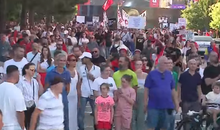
Day 16, citizens begin march towards the Prime Minister's Office: Rama resigns!
2026-06-15 18:47:26
Arrested in Belgium, 'Gert the General' appears transformed
2026-06-15 17:58:26
Marriage on the back burner, Millennials are choosing to live with friends
2026-06-15 17:33:38
World Cup madness, Miami bar offers cocktails in shoes
2026-06-15 17:12:01
Accident in Shëngjin, car collides with motorcycle, two injured
2026-06-15 16:35:15
11 days after Eglant Koç's disappearance, Armando Shakaj still on the run
2026-06-15 16:20:48
Hydration or tactical advantage? New World Cup rule sparks debate
2026-06-15 16:11:33
Rama continues with attacks and insults against protesters, Lubonja: Desperate
2026-06-15 15:59:54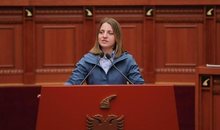
After leaving the SP, Marjana Koçeku joins the protest against Rama
2026-06-15 15:51:48
Why should you leave the closet open on hot days?
2026-06-15 15:40:05
Accident on the Fier-Libofshë road, 4 injured
2026-06-15 15:22:39

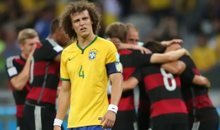
The biggest failures in World Cup history, Curaçao added to the list
2026-06-15 14:32:47
Extradited from Spain, GJKKO leaves Erzen Breçani's son in prison
2026-06-15 14:20:21
Former Kosovo minister sentenced to two years in prison for conflict of interest
2026-06-15 14:12:43
Virgil van Dijk plays final tournament with Netherlands
2026-06-15 13:59:58
Milan finds Igli Tara's replacement after dismissal
2026-06-15 13:47:14
Euro breaks new records, drops below 94.9 lek
2026-06-15 13:42:47
Spain and Belgium take to the field, De la Fuente saves Lamine Yamal
2026-06-15 13:28:09
Sentenced to life imprisonment, Gerd Gjinarari is arrested in Belgium
2026-06-15 13:01:57
Montenegro rejects Vučić's accusations of hybrid war against Serbia!
2026-06-15 12:50:22
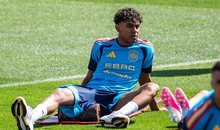
World Cup 2026/ Spain and Belgium take to the field tonight
2026-06-15 12:31:11
By March 2026, Veliaj and his brother had paid $430,000 for lobbying.
2026-06-15 12:05:12
Fight inside the glass cage, defendants rape each other in the GJKKO
2026-06-15 11:50:46
Heat wave comes to Albania, temperatures up to 40 degrees
2026-06-15 11:35:40
House burns down, four brothers lose their lives in fire in Greece
2026-06-15 10:32:13
Received payments for applications and studies abroad, administrator faces court
2026-06-15 10:25:07