
 Flash News
From Dritan Gjika to Armando Pacani, the names of those accused of cocaine trafficking are published
Albanian Fake Civil Society and the Real One
Transparency Board announces new fuel prices
State Matura/ 26 thousand students take the Mathematics exam today
Suspected of drowning in Lake Ulza, still no trace of the 37-year-old
Asylum is no longer a migration route, applications drop 28% for January-March, work permits are now preferred

Politiko
2026-06-16 14:59:37
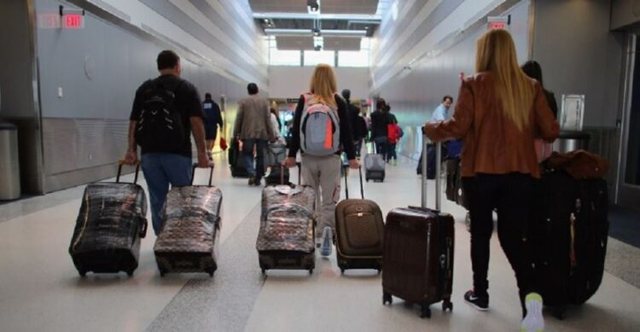
Requesting international protection in one of the European Union countries is no longer seen as a way to leave the country.
Eurostat data shows that asylum applications from Albanian citizens in the first three months of this year were 1,045, which is the lowest level since 2013, before a wave of massive immigration to the country through this form began, with 2015 holding the record level, with over 8 thousand such applications for January-March of that year. (see chart).
Compared to the same period a year ago, asylum applications in January-March 2026 have decreased by about 28%.
France, historically a favorite destination for asylum seekers, received only 310 applications from Albania in the first three months of the year. By comparison, in 2022, when another wave of applications resumed after the pandemic, this country had processed nearly 1,500 requests from Albanian citizens, who were attracted by the French state's social policies.
The decline in asylum applications does not necessarily indicate that immigration rates have fallen at the same rate. A more preferred form of immigration is now work permits.
While asylum applications are expected to drop to around 5,000 in 2025, other Eurostat data shows that in 2022-2024 alone, an average of 20,000 work permits were granted per year, mainly in Italy, Greece and Germany, up from around 3-4,000 a decade ago.
As a result, departures through work permits are now, on average, four times higher than asylum requests. Others also leave for other reasons, with family reunification dominating.
INSTAT also confirmed that the emigration trend continued to remain high. On average, around 28-30 thousand people leave the country net (emigrations minus returns) per year.
From January 1, 2021 to January 1, 2026, more than 166.4 thousand Albanians appear to have left the country, demonstrating further deepening of the demographic crisis and emigration in Albania in an already smaller and older population.
Fewer new asylum applications in the EU, but more positive decisions
In March 2026, a total of 47,100 first-time non-EU nationals applied for international protection in the European Union. This represents a decrease of 19% compared to March 2025 (58,025 applications) and an increase of 1% compared to February 2026 (46,420 applications).
Meanwhile, 10,075 repeat asylum applications, or requests submitted by people who had previously applied, were also registered. This number was 28% higher than in March 2025 (7,855) and 11% higher than in February 2026 (9,080).
During the first quarter of 2026, EU countries' authorities took 205,945 first-instance decisions on asylum applications, an increase of 4% compared to the same period last year (198,560 decisions). However, this number was 10% lower compared to the previous quarter (230,035 decisions).
Of all the decisions taken, 41% were positive, meaning that 84,925 applicants were granted international protection in the EU.
In March 2026, Venezuelans made up the largest group of people seeking asylum in the European Union, with 6,880 first-time asylum applications. They were followed by Afghans with 4,180 applications, Bangladeshis with 3,195 and Syrians with 1,690 applications.
The highest number of first-time applicants was registered in Italy (10,900), Spain (10,840), France (8,895) and Germany (6,980). These four countries concentrated around 80% of all first-time asylum applications in the EU.
In March 2026, at EU level there were 10.5 first-time asylum applicants per 100,000 inhabitants. Taking into account the population of each Member State, the highest rates were recorded in Greece (23.2 applicants per 100,000 inhabitants), followed by Spain (22.1) and Cyprus (19.0).
Over 1,000 unaccompanied minors sought asylum
In March 2026, a total of 1,035 unaccompanied minors applied for asylum in the EU for the first time. The largest number came from Somalia (260), Venezuela (165), Afghanistan (130), Sudan (65) and Syria (50).
Positive asylum decisions in the EU increased in the first quarter of 2026
The EU countries that received the highest number of asylum applications from unaccompanied minors were Germany (280), the Netherlands (190), Spain (185), France (105) and Greece (80).
In the first quarter of 2026, EU countries granted first-instance protection status to 84,925 asylum seekers. This represents an increase of 28% compared to the same quarter of 2025 (66,575), but a decrease of 18% compared to the fourth quarter of 2025 (103,580).
Of the asylum seekers who received protection in the EU, 53% received refugee status, 24% subsidiary protection and 23% humanitarian status.
Germany (27,860), Spain (16,820) and France (15,210) issued the highest number of positive first-instance decisions during the first quarter of 2026.
The main beneficiaries of protection status in the EU during this period were Afghans (24,960), Venezuelans (10,435) and Syrians (6,505)./ Monitor
Latest news

Why our brains don't function well in high-pressure situations
2026-06-16 16:19:13


How to stay safe while traveling in extreme heat
2026-06-16 15:39:24

Who is Dritan Gjika, the Albanian drug trafficking mafia in Ecuador?
2026-06-16 15:16:09

Large-scale fire at the former Metallurgical Plant in Elbasan
2026-06-16 14:43:46


World Cup icon signals end of career after 2026 World Cup
2026-06-16 13:53:07
Albanian Fake Civil Society and the Real One
2026-06-16 13:46:40



Berisha: Dumani is hiding Aruba's governors to protect Rama
2026-06-16 12:58:05

Who could be afraid of flamingos?!
2026-06-16 12:38:13
Albania protests and demands his removal, Rama presents his sculptures in Zurich
2026-06-16 12:30:08

Transparency Board announces new fuel prices
2026-06-16 12:12:58
"Fox" shark surprises vacationers in Borsh, gets caught in fishermen's nets
2026-06-16 11:59:00

A gas station in Kruja is robbed at gunpoint.
2026-06-16 11:42:43

Kosovo/ The Vetevendosje Movement reaches 52 mandates thanks to the diaspora
2026-06-16 11:21:12




Weekend temperatures could reach 39 degrees in Albania
2026-06-16 10:22:02

State Matura/ 26 thousand students take the Mathematics exam today
2026-06-16 10:06:10

What do the stars have in store? Love smiles on singles, be careful with money
2026-06-16 09:46:25
Environmental experts refute Rama's arguments about Zvërnec
2026-06-16 09:34:33

Can trauma be inherited through genes?
2026-06-16 09:20:41
Suspected of drowning in Lake Ulza, still no trace of the 37-year-old
2026-06-16 09:12:34
Surprise at the World Cup, Egypt holds Belgium to a draw
2026-06-16 08:56:41
Foreign exchange rate June 16/ How much the dollar and euro are bought and sold
2026-06-16 08:33:11

EU opens first chapter of Ukraine's membership negotiations
2026-06-16 07:32:43
Check out the weather forecast for today.
2026-06-16 07:17:37
Morning Post/ In 2 lines: What mattered yesterday in Albania
2026-06-16 07:00:04
US and Iran sign deal electronically ahead of official ceremony
2026-06-15 22:51:40


Protestuesit marshojnë drejt ish-Bllokut, thirrje kundër qeverisë gjatë tubimit
2026-06-15 21:19:21
Marshuan drejt Rinasit, policia procedon penalisht 19 protestues
2026-06-15 20:55:47

Paqartësi sa i përket tarifave për kalim nëpër Ngushticën e Hormuzit
2026-06-15 20:15:19
Çfarë e bën një këngë të Botërorit të paharrueshme?
2026-06-15 19:59:13
New directors appointed in Lezha, Vlora and Fier
2026-06-15 19:38:52
On the historic EU day, Albania is 'ignored' by Marta Kos
2026-06-15 19:24:05
Young man loses his life while sailing on a jet ski on Lake Ulza
2026-06-15 19:03:17
Day 16, citizens begin march towards the Prime Minister's Office: Rama resigns!
2026-06-15 18:47:26

Arrested in Belgium, 'Gert the General' appears transformed
2026-06-15 17:58:26
Marriage on the back burner, Millennials are choosing to live with friends
2026-06-15 17:33:38
World Cup madness, Miami bar offers cocktails in shoes
2026-06-15 17:12:01

Accident in Shëngjin, car collides with motorcycle, two injured
2026-06-15 16:35:15
11 days after Eglant Koç's disappearance, Armando Shakaj still on the run
2026-06-15 16:20:48
Hydration or tactical advantage? New World Cup rule sparks debate
2026-06-15 16:11:33
Rama continues with attacks and insults against protesters, Lubonja: Desperate
2026-06-15 15:59:54
After leaving the SP, Marjana Koçeku joins the protest against Rama
2026-06-15 15:51:48
Why should you leave the closet open on hot days?
2026-06-15 15:40:05
Accident on the Fier-Libofshë road, 4 injured
2026-06-15 15:22:39


The biggest failures in World Cup history, Curaçao added to the list
2026-06-15 14:32:47
Extradited from Spain, GJKKO leaves Erzen Breçani's son in prison
2026-06-15 14:20:21
Former Kosovo minister sentenced to two years in prison for conflict of interest
2026-06-15 14:12:43
Virgil van Dijk plays final tournament with Netherlands
2026-06-15 13:59:58
Milan finds Igli Tara's replacement after dismissal
2026-06-15 13:47:14
Euro breaks new records, drops below 94.9 lek
2026-06-15 13:42:47

Spain and Belgium take to the field, De la Fuente saves Lamine Yamal
2026-06-15 13:28:09


Sentenced to life imprisonment, Gerd Gjinarari is arrested in Belgium
2026-06-15 13:01:57
Montenegro rejects Vučić's accusations of hybrid war against Serbia!
2026-06-15 12:50:22

World Cup 2026/ Spain and Belgium take to the field tonight
2026-06-15 12:31:11

By March 2026, Veliaj and his brother had paid $430,000 for lobbying.
2026-06-15 12:05:12
Fight inside the glass cage, defendants rape each other in the GJKKO
2026-06-15 11:50:46

Heat wave comes to Albania, temperatures up to 40 degrees
2026-06-15 11:35:40