 Flash News
Approaching the EU increases the challenges for the banking system

Politiko
2024-11-30 08:51:32

The free movement of capital will expose the banking sector to full competition with the European market. Banks are aware of these challenges, but require more clarity regarding the new rules and their implementation deadlines.
The aging of the population and its migration continue to be very important structural factors that should receive increased attention from central banks and the banking system on their way to the European Union.
The countries involved in the process must continue their structural reforms to increase productivity, digitization, education and financial culture, as well as develop an economic model that ensures long-term sustainable economic growth.
The conclusion was given at the annual conference of the Bank of Albania, "The role of the central bank and the banking system on the road to the EU", in cooperation with the Albanian Association of Banks.
The conference focused on the central banks and the banking system on their way to the European Union, the reforms and the current and future challenges that they and other actors in the market must undertake to make this process and the convergence towards the EU, as soon as possible. efficient and at the lowest possible cost for the financial system and the economy.
The governors present at the Conference gave an assessment of the current situation of the convergence process towards the EU and the alternatives for its acceleration. Structural factors will continue to remain a major challenge, where human capital, productivity and innovation as well as technological development require special focus.
Sejko: The free movement of capital exposes us to full competition with the EU market
During the conference, Governor Sejko underlined the main challenges affecting the role of the Bank of Albania and commercial banks in the integration process.
An important aspect of the integration process is that it implies an increasing exposure to the financial cycle of the European Union, a cycle which has proven to have significant consequences on our financial market and economic activity.
In this context, the Governor said that the priority will be the development and further improvement of the policy and macroprudential instruments, as the right instrument for avoiding their undesirable negative consequences.
"The integration process offers equally serious challenges and opportunities for our banking sector. The free movement of capital also means full exposure to competition between this sector and the European one.
Our banking industry must be made aware of the consequences that this competition will have on the business model and profit margins, taking timely measures to cope with it," said the Governor.
He noted that the integration process also means an increased exposure to financial flows in the form of portfolio investments.
"These flows serve the development of the financial market and reduce the overall costs of financing in the country, but they tend to generate volatility in terms of liquidity and exchange rates.
Their successful administration will be a growing challenge for the Bank of Albania and other law enforcement institutions. In this context, we judge that the current regulatory framework and that of the monetary policy offer a good starting point for addressing them", said Sejko.
The governor emphasized that in terms of structural reforms, the Bank of Albania has focused on two important directions: on increasing the stability and efficiency of the banking system, as well as on the further development of financial markets, payment instruments and financial education.
"As administrators, regulators and promoters of the development of the payment system, we have worked for the continuous modernization of national payment platforms and updating their regulatory basis, with a focus on reducing the use of cash.
Finally, in cooperation with other public agencies and interest groups, we have initiated and are implementing the National Strategy for Financial Education, which constitutes a major and long-term investment for the development of the country", he said.
The governor once again underlined the positive role that the banking sector has had not only in economic growth and development, but also in the process of European integration. According to him, this sector has continuously been the vanguard segment of the Albanian economy in terms of integration and the level of development.
"In particular, its consolidation process carefully managed by the Bank of Albania has served as an instrument of promoting competition within the sector and increasing its effectiveness.
In parallel with its integrative role, the Albanian banking sector has become an important instrument of sustainable and long-term development of the country, through the improvement of the range and quality of banking products, and in particular of loans.
In this context, I would like to emphasize that the level of lending to the Albanian business from the banking sector is comparable to many of the new member countries of the European Union", said Sejko.
Digitization and the challenge of cyber security
Discussions at the conference highlighted that the future is expected to have many challenges in terms of personal data protection, cyber risks and their management.
The countries of the Western Balkans have a lot of potential in terms of financial digitization, so they should be prepared to make the most of it. But, according to the discussants, this will require all financial intermediaries, mainly banks, to adapt to this migration towards digitalization, so that it is as fast as possible and with maximum efficiency.
In this perspective, the discussants agreed that central banks should be at the forefront, provide their best practices, respond to changes, having monitorable and consistent objectives, to ensure as much resistance to expected shocks and macroeconomic shocks.
Also, it was agreed that a special importance should be given to the cultural risk, which requires a communication and explanation of the actions and policies undertaken, for an improvement of the culture and financial inclusion, with the aim of strengthening price and financial stability .
Governor Sejko said that central banks on the road to the EU should strengthen capacity building, improve digitization, and deepen financial intermediation, as an important contribution to the economy. They do not have to be alone on this path; institutions as a whole must be strengthened to ensure faster convergence.
"For the coming years, the future challenges continue to remain cyber risks, digitization, innovation, climate change. To address these challenges, the financial system must invest more to improve financial and digital financial culture.
The EU has been and will remain our strategic, financial and economic partner, the accession to which requires more commitment. The current monetary policy framework based on inflation targeting and a flexible exchange rate regime remains a useful and valuable structure on the road to convergence in the EU," said Sejko.
Banks seek clarity on legal and regulatory changes
The Albanian Association of Banks asked for more clarity regarding the deadlines of some of the important legal and regulatory innovations in the preparation process. The President of the Association of Banks, Bledar Shella, emphasized the need for a faster step in the necessary steps to be fully ready to integrate into the European Union.
"Perhaps a few years ago, we were the ones who asked the authorities for more patience and postponement of the deadlines for the implementation of the standards as long as an imminent EU membership date was not in sight. Today we speak differently.
Because we have a defined time horizon, the year 2030. And in this term, the banking industry cannot fail to be a contributing, supporting and implementing part of the reforms that await us.
We live in a time where developments are dynamic and things change constantly. Our interest is maximum in how the deadlines for completing the MREL for systemic banks will be handled, when we will have a new law for the central bank and second-tier banks, how the deposit insurance scheme can be changed and when we will be ready for instant payments", he said.
According to Mr. Shella, the banking sector is fully aware that the challenge of integrating the banking industry through the completion and implementation of the legal and regulatory framework of the EU and its institutions requires the involvement of all interested parties.
"Banking activity, which for several years, in fact, has been adapting to regulatory changes in accordance with EU standards, does not come to this empty territory. Now our attitudes and opposition to changes are completely guided by the fact whether these changes are in line with EU standards or not.
This has made us experience the burden of the load and responsibility more quickly to go to this process without resistance, but with desire, energy and faith. Although the adaptation of the required legislation is almost determined by EU directives, our role is still indispensable.
The new standards must be well understood, there is a need for education and training of the staff who will implement them, but there is also a need for public education to understand them. Starting with PSD2 and SEPA and continuing for others. As AAB, it is up to us to be at the head of this process, treating them with priority according to the agenda," said Mr. Shella.
He pointed out that the banking sector has managed to fulfill the requirements related to open banking, while it has taken great steps forward in the direction of digitization.
"We have just successfully closed Open Banking, all in compliance with PSD2. Now we await the decision to be part of SEPA. Digitalization, implementing strict requirements for cyber security and personal data protection, has included every aspect of banking activity - from onboarding, electronic signature, services, utility payments, payments for public services, account control, exchanges, etc. ., all in one smartphone.
Aware that we still have to do for financial inclusion, even though with the law on the basic account, there is already a product to attract more citizens to the bank", said Mr. Shella.
According to him, the figures so far clearly prove that the banking industry is at a very good moment in its development. Only for the 9th month of this year, the banking sector has provided about 281 billion ALL in loans to the economy, an increase of 30% compared to the same period last year. The NPL ratio fell to 4.58%, the lowest level in the last 16 years. Annual growth of deposits, 4.1%.
63% of the number of payments are made through electronic channels. Even the total value of payments in these channels has increased to 41%. 34% of active bank accounts are accessible from the Internet.
Mr. Shella emphasized that the role of the banking industry and its contribution to the development of the economy is indisputable.
"We are proud that, after going through the consequences of the crisis of 2008-2010 and those of 2019 and back, such as the earthquake, the pandemic, the war in Ukraine or inflation, the banking industry turned out to be empowered, well-capitalized according to the requirements of the Bank of Albania, with increased lending activity, more public trust in banks, more digitization and more openness to the public. We must strengthen and improve this positive trend during the reform process that unites us with the EU", he said./ MONITOR
Latest news
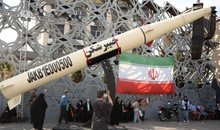
New waves of attacks on Israel, Iran launches missiles
2026-06-07 21:55:36
Zodiac signs that always do things their way
2026-06-07 21:37:47
Protesters 'occupy' the streets of Tirana, motorcyclists join citizens
2026-06-07 21:24:27
Over 40% of votes counted, Vetëvendosje leads with over 41%
2026-06-07 21:03:53

VIDEO/ Rama 'goes crazy', goes off-script with unusual gestures
2026-06-07 20:20:38
Vote counting begins in Kosovo, first results published
2026-06-07 19:57:55
Exit polls after Kosovo elections are out, Albin Kurti leads with 42%
2026-06-07 19:31:58
Gunshot wound in Shijak, names emerge. Bar owner injured, perpetrator on the run
2026-06-07 19:00:13
Rama threatens bloggers: They don't even give 1 euro in tax to the state
2026-06-07 18:48:09
Gunshots in Shijak
2026-06-07 18:33:13
Rama interrupts speech over slogan against Zvërnec: Put him down
2026-06-07 18:20:11
Chain accident in Morina-Kukës
2026-06-07 17:42:58


Elections in Kosovo/ By 15:00 turnout 22.74%
2026-06-07 16:18:03
Këlliçi: Rama insulted protesters, his arrogance and corruption must go away
2026-06-07 15:29:59
Zodiac signs that never give up on love
2026-06-07 15:12:18
How the Western Balkans became Europe's "factory"... what comes next?
2026-06-07 14:52:17
Violand Braçellari, who killed the policeman, is left in prison
2026-06-07 14:30:40
Armenians vote on country's future between East and West
2026-06-07 13:51:13
Former Republican Guard officer found dead in Mat River
2026-06-07 13:00:13
Strong tremors in Athens, two earthquakes one after the other
2026-06-07 12:41:55
Protest in Lushnje over hospital conditions: citizens denounce state negligence
2026-06-07 11:41:43
Tirana/ Over 1 kg of heroin seized, two arrested
2026-06-07 11:24:28



Elbasan's 22-year-old striker dies in accident
2026-06-07 09:47:09
Foreign exchange, the rate at which foreign currencies are sold and bought
2026-06-07 09:29:35
Albania, the automotive industry, between growth and loss of low-cost advantage
2026-06-07 08:54:15
Horoscope, get to know the star forecast
2026-06-07 08:34:25
Weather forecast, what are the temperatures expected to be like today?
2026-06-07 08:17:02
Morning Post/ In 2 lines: What mattered yesterday in Albania
2026-06-07 07:56:42
Aksident në aksin Fier–Levan, tre persona përfundojnë në spital
2026-06-06 21:57:40
How to save money during summer vacation?
2026-06-06 21:30:03
Luxembourg punishes Albania in the 8th minute
2026-06-06 20:39:18
Teacher in protest: Gratitude to Trump and the US for uprooting the Sorosites
2026-06-06 20:17:53


Putin rejects Zelensky's proposal for a meeting
2026-06-06 18:39:37
Germany on alert, Neuer in doubt for World Cup
2026-06-06 17:16:09
Even after the crisis, expensive oil remains a challenge for Albania
2026-06-06 16:52:57
Accident on the Pogradec-Qafë Thanë axis, two injured
2026-06-06 16:30:28
Albanians work 41 hours a week, but one hour of work produces only 995 lek
2026-06-06 16:12:47


Killed during the operation in Maliq, GoFundMe opens for Enea Mekolli's family
2026-06-06 15:24:24
WHO identifies future pandemic threats, what could threaten Europe
2026-06-06 15:05:34


Berisha: Rama is robbing the Gjipe canyon, using Ardit Bido to forge documents
2026-06-06 13:34:48


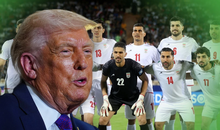
World Cup, Iranian players granted visas to enter the US
2026-06-06 12:07:25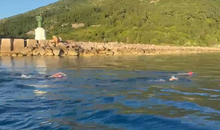
After the Italy-Karaburun record, Eva Buzo swims across the island of Sazan
2026-06-06 11:34:07

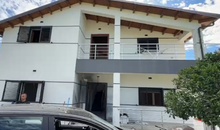
TNT attack at night in an apartment in Lezha, the couple was inside
2026-06-06 09:44:24

Without doctors; Is Albania ready to face new pandemic threats?
2026-06-06 09:03:28
A car hits and kills a person on the Fier-Vlora highway
2026-06-06 08:44:31
Rising temperatures, weather forecast for today
2026-06-06 08:22:32
Morning Post/ In 2 lines: What mattered yesterday in Albania
2026-06-06 08:01:15

"Dad Brain", How Fatherhood Changes the Male Mind
2026-06-05 21:44:40
50 thousand undeclared euros seized at Durres customs
2026-06-05 21:25:48
A citizen married for 30 years in Tirana, institutions declare her single!
2026-06-05 21:19:51
Rama blames Trump's enemies for Zvërnec's echo: The man didn't shave...
2026-06-05 20:56:29
Guard rapes protester during Rama's meeting /VIDEO
2026-06-05 20:39:18
Protest against Rama also in Berlin
2026-06-05 20:14:09
Meta's lawyer: If Rama does not testify, the process is not complete
2026-06-05 20:01:14
How the US naval blockade has cost Iran $6 billion in oil revenue
2026-06-05 19:44:17