Flash News
The boy killed the officer in Maliq, Violand Braçellari's mother speaks for the first time: The policeman shot first, he was not warned
Kosovo votes today for the new Parliament, over 2 million citizens eligible to vote
Morning Post/ In 2 lines: What mattered yesterday in Albania
Rama attacks international media: Why do you make a protest with 2,000 people so dramatic?
Protester suffering from cancer explodes: Oncology, Auschwitz in the middle of Tirana
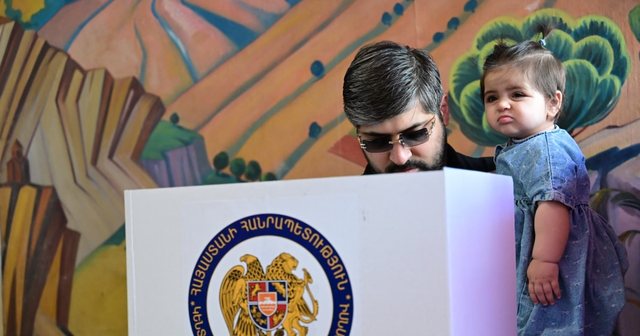
Armenians are voting on Sunday in parliamentary elections that are expected to be a test of support for the country's prime minister, following a controversial peace deal with neighboring Azerbaijan and his efforts to bring the small South Caucasus country closer to the West after decades of dependence on Russia.
The Interior Ministry announced that 2.49 million people are registered to vote for 18 political entities in 2,005 polling stations in the June 7 parliamentary elections.
Prime Minister Nikol Pashinyan's party, Civic Contract, led in pre-election polls against several pro-Russian parties.
Voting centers opened at 08:00 and are expected to close at 20:00.
About 400 international observers have been authorized to monitor the process. The Central Election Commission said preliminary results will be published within 24 hours after the close of voting, with final results to be announced on June 14.
Yerevan's relations with Moscow were the main electoral issue, especially after Russia's decision to impose restrictions on Armenian exports in recent weeks in response to Armenia's further rapprochement with the West.
Polls suggest that the Civic Contract enjoys the support of 24–32 percent of the electorate, while the pro-Russian Strong Armenia party has around 6–11 percent support, ranking in second place.
On the eve of the elections, Armenian authorities arrested six Strong Armenia candidates, state media reported, without giving reasons for the arrests.
Strong Armenia has stated that it aims to preserve Yerevan's economic and political ties with Russia and has accused Pashinyan of dangerous hostility towards Moscow.
The party is led by Russian-Armenian billionaire Samvel Karapetyan, who is under house arrest on charges of calling for the overthrow of the government. He has described the charges as politically motivated.
The United States and the European Union have shown support for Pashinyan, who took power in 2018 after a largely peaceful popular uprising - known as the Velvet Revolution - against the previous Moscow-friendly government.
Pashinyan has launched the EU accession process - although it is expected to take many years - and has advanced the peace process with neighboring Azerbaijan. This controversial policy has strengthened the opposition and angered even some of his former supporters.
Pashinyan gained significant support from the US after agreeing to participate in US President Donald Trump’s “Triple A Path to International Peace and Prosperity” (TRIPP) initiative. The bilateral signing process was completed after Secretary of State Marco Rubio signed the document, which was pre-signed during a visit to Yerevan last month.
The US State Department told Radio Free Europe that it sees this initiative as "a crucial and long-term part of bringing peace and prosperity to Armenia and the South Caucasus."
The prime minister has also attempted to normalize relations with its historical rival and neighbor, Turkey, a close ally of Azerbaijan.
His government has suspended participation in the Russia-led Collective Security Treaty Organization (CSTO)./REL
Latest news
How the Western Balkans became Europe's "factory"... what comes next?
2026-06-07 14:52:17
Violand Braçellari, who killed the policeman, is left in prison
2026-06-07 14:30:40
Armenians vote on country's future between East and West
2026-06-07 13:51:13
Former Republican Guard officer found dead in Mat River
2026-06-07 13:00:13
Strong tremors in Athens, two earthquakes one after the other
2026-06-07 12:41:55

Protest in Lushnje over hospital conditions: citizens denounce state negligence
2026-06-07 11:41:43
Tirana/ Over 1 kg of heroin seized, two arrested
2026-06-07 11:24:28




Elbasan's 22-year-old striker dies in accident
2026-06-07 09:47:09
Foreign exchange, the rate at which foreign currencies are sold and bought
2026-06-07 09:29:35
Albania, the automotive industry, between growth and loss of low-cost advantage
2026-06-07 08:54:15
Horoscope, get to know the star forecast
2026-06-07 08:34:25
Weather forecast, what are the temperatures expected to be like today?
2026-06-07 08:17:02
Morning Post/ In 2 lines: What mattered yesterday in Albania
2026-06-07 07:56:42
Aksident në aksin Fier–Levan, tre persona përfundojnë në spital
2026-06-06 21:57:40
How to save money during summer vacation?
2026-06-06 21:30:03

Luxembourg punishes Albania in the 8th minute
2026-06-06 20:39:18
Teacher in protest: Gratitude to Trump and the US for uprooting the Sorosites
2026-06-06 20:17:53



Putin rejects Zelensky's proposal for a meeting
2026-06-06 18:39:37



Germany on alert, Neuer in doubt for World Cup
2026-06-06 17:16:09
Even after the crisis, expensive oil remains a challenge for Albania
2026-06-06 16:52:57
Accident on the Pogradec-Qafë Thanë axis, two injured
2026-06-06 16:30:28
Albanians work 41 hours a week, but one hour of work produces only 995 lek
2026-06-06 16:12:47


Killed during the operation in Maliq, GoFundMe opens for Enea Mekolli's family
2026-06-06 15:24:24
WHO identifies future pandemic threats, what could threaten Europe
2026-06-06 15:05:34


Berisha: Rama is robbing the Gjipe canyon, using Ardit Bido to forge documents
2026-06-06 13:34:48




World Cup, Iranian players granted visas to enter the US
2026-06-06 12:07:25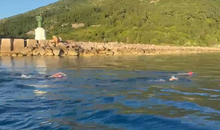
After the Italy-Karaburun record, Eva Buzo swims across the island of Sazan
2026-06-06 11:34:07


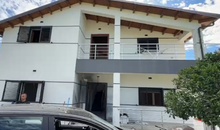
TNT attack at night in an apartment in Lezha, the couple was inside
2026-06-06 09:44:24

Without doctors; Is Albania ready to face new pandemic threats?
2026-06-06 09:03:28
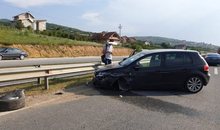
A car hits and kills a person on the Fier-Vlora highway
2026-06-06 08:44:31
Rising temperatures, weather forecast for today
2026-06-06 08:22:32
Morning Post/ In 2 lines: What mattered yesterday in Albania
2026-06-06 08:01:15

"Dad Brain", How Fatherhood Changes the Male Mind
2026-06-05 21:44:40
50 thousand undeclared euros seized at Durres customs
2026-06-05 21:25:48
A citizen married for 30 years in Tirana, institutions declare her single!
2026-06-05 21:19:51
Rama blames Trump's enemies for Zvërnec's echo: The man didn't shave...
2026-06-05 20:56:29
Guard rapes protester during Rama's meeting /VIDEO
2026-06-05 20:39:18
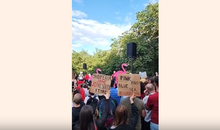
Protest against Rama also in Berlin
2026-06-05 20:14:09
Meta's lawyer: If Rama does not testify, the process is not complete
2026-06-05 20:01:14
How the US naval blockade has cost Iran $6 billion in oil revenue
2026-06-05 19:44:17
Even after the crisis, expensive oil still a challenge for Albania
2026-06-05 19:09:39
Kosovo Police Arrest Serbian List Activist
2026-06-05 18:50:39
Accident at Kombinat, car hits minor
2026-06-05 18:33:56
Rama clashes with Zvërnec resident: Who are you talking to?
2026-06-05 18:27:35
Von der Leyen: Albania should quickly follow Montenegro
2026-06-05 18:13:32
These zodiac signs will find love in June!
2026-06-05 18:01:33
Increased security for Rama's visit to Vlora
2026-06-05 17:46:32
The Rossoneri lose one place in the FIFA rankings
2026-06-05 17:32:56
Police remove 14 sea piers in Ksamil
2026-06-05 17:16:07
Urban accident near Tirana Court, several injured
2026-06-05 16:56:32
Belgium considers selling royal jewels to fill budget gaps
2026-06-05 16:45:02

Socialist MP Klevis Jahaj appears in SPAK
2026-06-05 16:01:00
Photo/ Hundreds of citizens bid farewell to Enea Mekolli
2026-06-05 15:39:58

Citizen puts knife to the neck of a street police officer
2026-06-05 15:03:38

A comparison of problematic projects in Belgrade and Zvërnec
2026-06-05 14:19:49
Berisha: We support the citizen protest for Zvërnec, but the DP is not involved
2026-06-05 13:29:19
Beautiful ugly protest
2026-06-05 13:10:56