 Flash News
VIDEO-scandal in Saranda/ Director of AMP Vlora and officials sexually harass tourists
"The New York Times" about Ye's concert: How Rama justifies the $4.5 million in funding
The suspected perpetrator of the murder in Laç is identified, he shot the 40-year-old 7 times near the palace
7 bullets on the doorstep, who is the 40-year-old with 4 surnames who was killed in Laç
Morning Post/ In 2 lines: What mattered yesterday in Albania
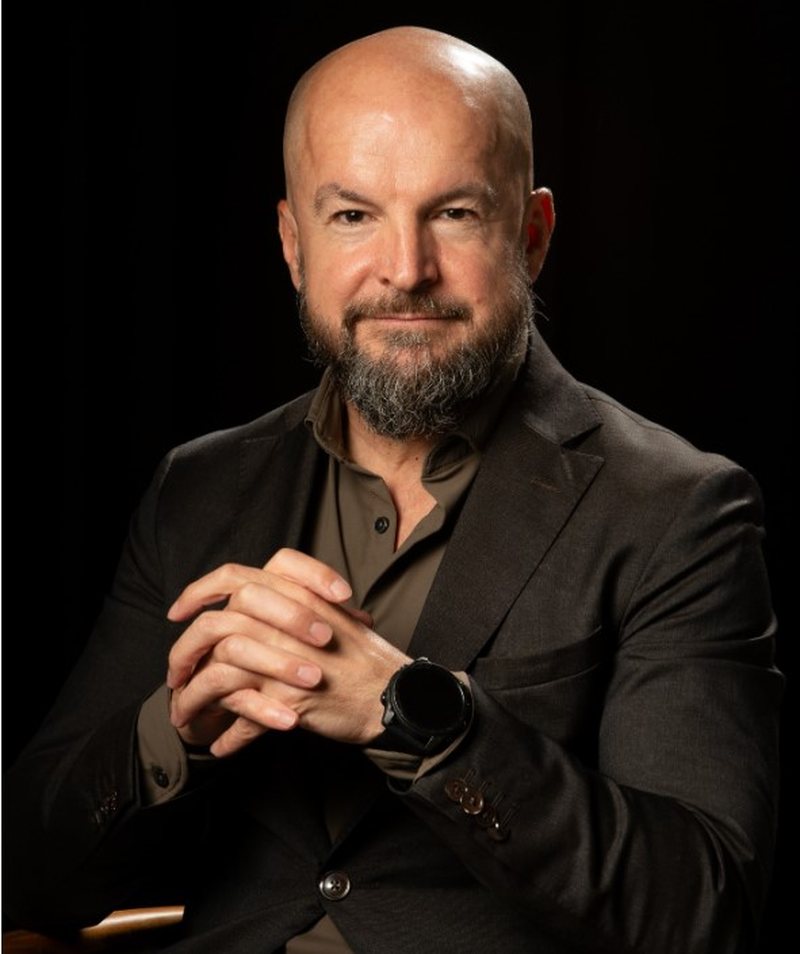
Alfred Lela
As a supporter of the national team, I attended the match against Israel the other night and was saddened to witness the hostile atmosphere directed at the visiting side. Albanians have had their share of enemies throughout history, but it must be said that the Jewish people are among the very few nations that have never harmed us, never discriminated against us, and never looked down on us. If anything, they have consistently shown goodwill toward Albania.
The booing of the Israeli national anthem before kickoff, followed by chants of “Free Palestine,” unnecessarily politicized what was, after all, a friendly match intended primarily to help both teams test their lineups and prepare for future competitions.
What unfolded in the stadium came directly from the protest movement that emerged after the events in Zvërnec. It reflects either a misunderstanding—or a deliberate manipulation—of facts in favor of emotions. The sight of an Israeli flag on what protesters describe as “forbidden land” in Nartë was quickly linked to parallels with Gaza, becoming yet another attempt to demonize the American-Arab-Albanian resort project through the lens of a broader anti-Israeli narrative. It is a narrative aggressively promoted by segments of the left-wing media in Europe and the United States and imported into Albania wrapped in the packaging of Marxist symbolism on one side and political Islam on the other.
The irony is that among all those involved in the Zvërnec project, the only person of Jewish origin is Jared Kushner. Everyone else—from the Albanian partners in Vlora, Tirana, and Kukës to the Arab investors from Qatar—is Muslim. Kushner’s half-blond profile may serve conveniently as a scapegoat, but the idea of some hidden Jewish conspiracy behind the project is nonsense that circulates online in search of gullible minds willing to believe it.
What we are witnessing, therefore, is a kind of political deep fake: a propaganda campaign born from the alliance between sections of the Euro-American left and political Islam, imported into Albania and eagerly embraced by local zealots from Zvërnec to Tirana.
This is the first group that makes the protest movement difficult to view without skepticism.
The second group consists of what might be called the “all-Albanian rejects”: political figures and parties with little or no electoral support who blame their irrelevance entirely on the major parties. Their attempts to organize meaningful protests have repeatedly failed, and this movement offers them yet another opportunity for self-promotion and self-delusion.
The third group includes the anti-opposition crowd who become almost euphoric at the phrase “Berisha in prison,” while mentioning “Rama in prison” only as a token gesture to avoid appearing biased. They conveniently forget that Berisha has, in fact, experienced imprisonment, whereas Rama—the man they support—has spent twenty-eight uninterrupted years in power, longer than any Albanian politician since Enver Hoxha, without ever facing such consequences.
The fourth group is made up of self-styled patriots who claim to love Albania but only for Albanians. They forget, as one American diplomat once observed, that a nation which produces so many emigrants for other countries cannot reasonably refuse to welcome foreigners into its own. This is little more than a naïve form of isolationism.
The fifth group consists of anti-Trump activists who oppose the Zvërnec resort simply because the Trump family is involved. From a public-relations perspective, however, it is precisely that connection that makes the project internationally attractive. Ivanka Trump’s involvement puts Albania on the map. Yet some Albanians seem to prefer turning every meter of the coastline into another Ksamil—a chaotic and overdeveloped “Bathore by the sea”—rather than accepting a project which, even if it does not benefit everyone directly, has the potential to place Albania within the ranks of serious tourism destinations.
The sixth group is made up of patronage operatives and public administration employees who, much like during the student protests, attend not out of conviction but to take the political temperature. They observe who stands out, who can be manipulated, who can be bought, who can be recruited, and, most importantly, who can be dismissed from their jobs.
These are perhaps the most cynical participants of all. You can recognize them by the lifelessness in their eyes—a surrender of spirit that attaches itself like a leech to events and people, feeding off them without believing in anything.
Having said all this, and despite all its ugliness, the protest remains one of the beautiful things happening in Albania today.
It is one of those rare moments when the consciousness and weary spirit of a neglected and poorly governed society remind themselves that they are still alive.
That consciousness has already transformed the protest beyond its original trigger in Zvërnec. What began as a reaction to a local issue has evolved into a broader social outcry against everything that has gone wrong in Albania.
At its core, the protest is an uprising against power. Only if it remains will it succeed.
If it is appropriated by Arlind Qori or others as a struggle against “foreign enemies,” or as an effort to replace one ideological system with another, it will achieve nothing. On the contrary, it may simply help Rama regenerate his political legitimacy by eventually abandoning the Zvërnec project and presenting himself as responsive to public pressure.
What is happening in the streets is not a clash of systems.
Albania has never created or overthrown grand ideological systems. It has merely borrowed, adapted, or patched together systems created elsewhere.
The only sensible course today is to remain within the one civilizational framework that has proven its value—at least so far: the cultural and economic civilization produced by the Judeo-Greek-Roman-Christian tradition.
Latest news

Heatwave hits Germany, over 5,400 heat-related deaths
2026-07-10 10:45:33
Land in "foreign hands"
2026-07-10 10:26:15
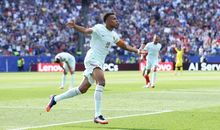
Mbappe the hero of France, the "Roosters" knock out Morocco in the quarterfinals
2026-07-10 09:54:33
Durrës/ 40-year-old man stabs his wife
2026-07-10 09:48:03



How much could the amount of drug money in the Albanian economy be?!
2026-07-10 09:08:34
Government reduces funds for farmers, increases ADF by 75 million euros
2026-07-10 08:55:46
Horoscope, get to know the star forecast
2026-07-10 08:32:54

Morning Post/ In 2 lines: What mattered yesterday in Albania
2026-07-10 07:52:04
A person was shot dead in Kurbin, first details
2026-07-09 22:54:48


Will the Police also stop those who criticize Rama online?
2026-07-09 21:57:02


FIFA decision shocks England, Quansah ruled out for two matches
2026-07-09 20:51:00
Protest/Pedagogue: 4 million euros for Kanye West is "the next concession"
2026-07-09 19:45:53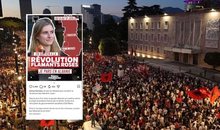
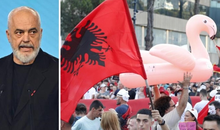
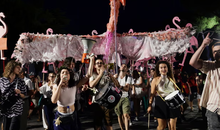
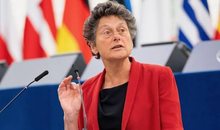
French MEP joins protests in Albania: Support for the "Pink Flamingo Revolution"
2026-07-09 19:28:07


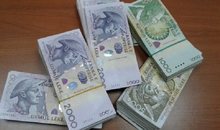
Has the lek strengthened or overvalued?
2026-07-09 17:58:05

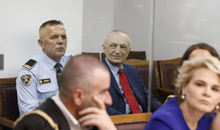
The trial on the merits for Ilir Meta and Monika Kryemadhi is postponed
2026-07-09 16:47:58
The match between England and Norway risks being postponed, this is the reason
2026-07-09 16:12:46
Murder in Shkodra/ Relatives: Peaceful family, no problems
2026-07-09 16:10:02
Kurti invites opposition leaders to a meeting to create new institutions
2026-07-09 15:43:05
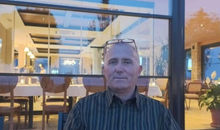
This is the 62-year-old man who killed his wife in Shkodra
2026-07-09 15:01:43

Domestic crime/ Wife killed with shotgun, perpetrator and victim identified
2026-07-09 14:05:18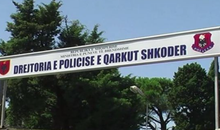
Gunfire in Shkodra, one victim suspected
2026-07-09 13:49:41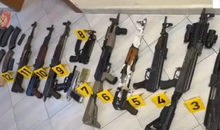
Weapons cache discovered in Fier, Prosecution sends 38-year-old to trial
2026-07-09 13:35:48
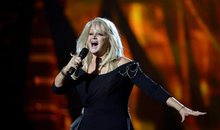
Bota e muzikës në zi, ndahet nga jeta në moshën 75-vjeçare ikona Bonnie Tyler
2026-07-09 12:56:29
Monika Kryemadhi in the Criminal Court: The cell phone was seized illegally
2026-07-09 12:45:54

VALEN MP reacts after border detention: Albania is no one's property
2026-07-09 12:15:44
Albanian gang in Belgium sentenced for trafficking 7 tons of cocaine
2026-07-09 12:01:14
Justin Bieber, Shakira and Madonna to perform at 2026 World Cup final
2026-07-09 11:52:54
Euro falls, inflation rises and domestic production loses ground
2026-07-09 11:39:36
Trial at the GJKKO, Meta's new lawyer appears in the session
2026-07-09 11:29:47
Nighttime accident in Gramsh, man and woman injured
2026-07-09 11:20:25
Meta seeks 134 witnesses, GJKKO delivers decision today
2026-07-09 10:56:54
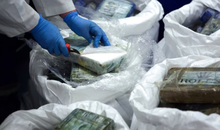

At the peak of the production season, vegetable prices 'fly'
2026-07-09 10:21:14
The African heat returns, the thermometer reaches 40 degrees this weekend
2026-07-09 10:08:08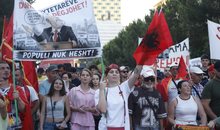
Opinions from 'anonymous' authors target Flamingo protests
2026-07-09 10:07:15
MEP Waitz: The law on protected areas endangers Albania's path to the EU
2026-07-09 09:52:55
"Le Courrier des Balkans": Edi Rama and the megalomania of power
2026-07-09 09:40:26
The economics of concerts, the prime minister's imaginary 100 million euros
2026-07-09 09:28:19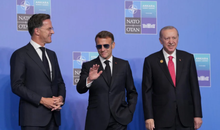
Erdogan's strange gift to NATO leaders
2026-07-09 09:11:15
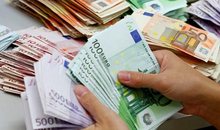
Foreign exchange, the rate at which foreign currencies are sold and bought
2026-07-09 08:30:41
“Uniteti i jashtëzakonshëm” i NATO-s dhe mesazhet kryesore nga samiti në Turqi
2026-07-09 08:11:17

Horoskopi, njihuni me parashikim e yjeve
2026-07-09 07:46:15
Alternime kthjellimesh e vranësirash, parashikimi i motit
2026-07-09 07:25:59
Posta e mëngjesit/ Me 2 rreshta: Çfarë pati rëndësi dje në Shqipëri
2026-07-09 07:02:12



Rama brings West in Tirana, using Eastern premises
2026-07-08 20:41:42
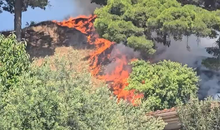
Fire on Kuzum Baba hill in Vlora, flames endanger homes and Tekke
2026-07-08 18:09:45

Shqipëria po plaket, qeveria pa plan
2026-07-08 15:57:26