 Flash News
Rama brings West in Tirana, using Eastern premises
Global fertility crisis: 54 million women over 35 unable to get pregnant
Killed in the courtroom, the Judges' Association demands that Judge Astrit Kalaja be declared a "Martyr of the Homeland"
"Albanians have killed fear", Italian media: Rama is no longer untouchable
"Go directly to Rama and get permission", the testimonies of foreign architects in "The Albanian Files"
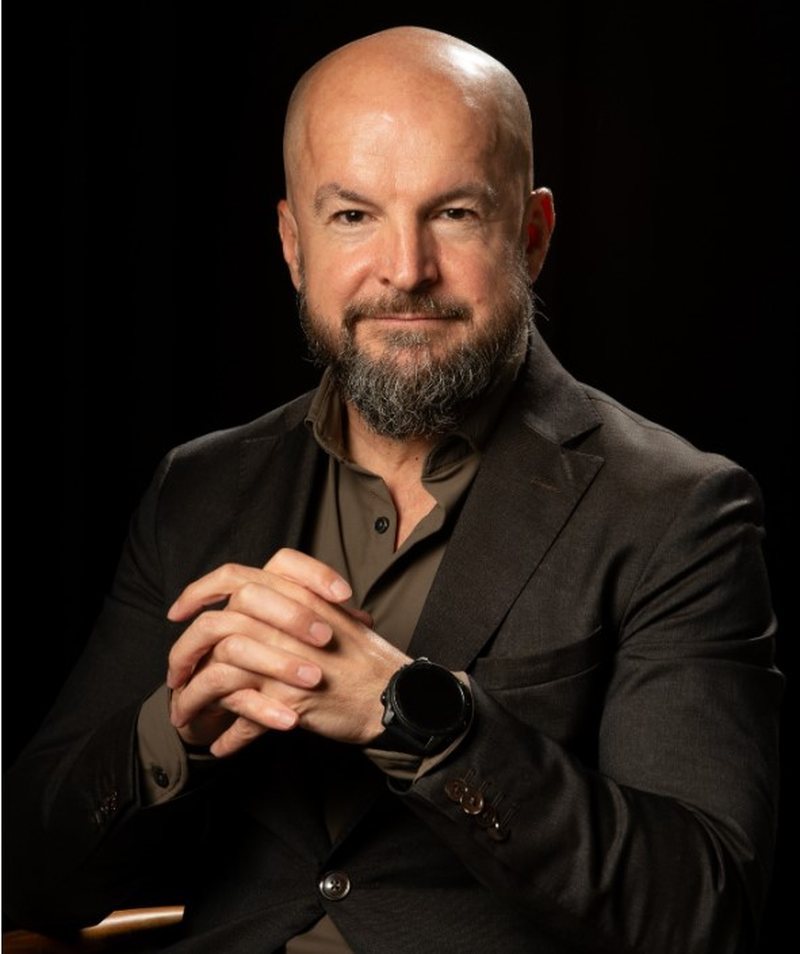
Alfred Lela
It cannot yet be said whether this is the end of Edi Rama. But the ends of those who indulge in excess are usually like this: ridiculous. The other ending—the tragic one—is generally reserved by history for tragic figures, and Albania's Prime Minister is not one of them.
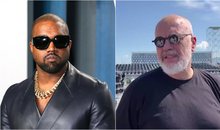
After he, together with his minister Gonxhja—who first blossomed in the compost heap of Rama's first term at Tirana City Hall—assured the public that no public money would be spent on the Kanye West concert, things changed just hours before the fiasco unfolded. Under the new circumstances created by the civic protests, now entering their second month, Edi Rama finds himself compelled to act—not so much because of the famous and controversial singer, still less because of his legions of party operatives, but because of himself.
The collapse of the much-publicized concert, which he had also conceived as an anti-protest demonstration, would mark the end of the very genre through which he has governed Albania for thirteen years—and, before that, the capital for just as long. It must be said that, within this genre, he has excelled. And that has had less to do with creativity than with transgression.
Put differently, he never sought to create to improve. He sought to provoke, to confuse.
The collapse of the Kanye concert, and Rama's decision to inject €4 million to prevent its cancellation, is the closing act of that experiment. From this point on, Rama neither provokes nor confuses anymore. Everything has run its course: the axe-wielding theatrics; the dynamite during his very first week in office; the phrase, "You haven't seen anything yet"; the hanging garden at the Prime Minister's Office; the white sneakers and black briefs; the paint splashed across apartment blocks that later turned into apartment blocks piled upon apartment blocks; the façades bearing the map of Albania atop the tower of the duo that "gifted away" Albania; the self-portrait as Skanderbeg atop the tower in the city center; the "Intercontinental" skyscraper, built as a gesture of defiance toward Enver Hoxha's fifteen-story building—which resembles Dustin Hoffman's pinstriped suit in Papillon—and so on.
This extraordinary reversal of roles, in which Rama strains to create as an individual while thousands of individuals create against him, was always bound to happen one day. No one, however, foresaw the form it would take.
Rama has found himself stuck with this wild boar, squealing in the very mud from which he fashions his pots and pans in his bunker in Surrel. He invented the "anti-Semites" of the protest and then, to bring their "concert" to an end, invited to Tirana an anti-Semite like Kanye West—a performer whose concerts around the world have been cancelled for precisely that reason.
Only Rama could stumble into paradoxes such as these: a suffering boar and a contented Socrates.
Since our Prime Minister is so fond of parables drawn from the films of socialist realism, his Kanye concert resembles Tefta Tashko's performance in Concert in 1936. If the authorities in Lushnja found themselves trapped by that concert, Rama now finds himself with a protest-concert at his own doorstep. If the people in the film loved the singer while the local beys, the prefect and the commander opposed her, then our own "prefect" and "commander" must now bus in a crowd for Kanye's concert by force.
In the end, the Prime Minister of a country has become a concert promoter. Once, he provoked the public even with a local band like West Side Family. Now, not even Kanye West, with millions of fans around the world, can save him.
Yet even this late, even this deep into the crisis, he still does not seem to understand the meaning of excess. Still less does he understand that he himself has become the excess.
Latest news
Rama brings West in Tirana, using Eastern premises
2026-07-08 20:41:42
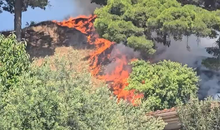
Fire on Kuzum Baba hill in Vlora, flames endanger homes and Tekke
2026-07-08 18:09:45

Shqipëria po plaket, qeveria pa plan
2026-07-08 15:57:26

Skandal te kardiologjia/ Muret e dhomave të çara dhe gërvishtura
2026-07-08 15:29:38
The calendar is published, here's when the new school year 2026-2027 will begin
2026-07-08 14:53:22
Living in Albania is unaffordable, inflation is at its highest level
2026-07-08 14:10:43


Euro reaches another historic low, drops to 93.8 lekë
2026-07-08 13:30:31
Global fertility crisis: 54 million women over 35 unable to get pregnant
2026-07-08 13:11:51
A red card "bomber" will referee the France-Morocco match
2026-07-08 13:03:57
Where is the heat wave hitting hardest in Europe?
2026-07-08 12:37:51
Bloomberg: NATO may cancel summit in Albania next year
2026-07-08 12:01:43
Coach Roberto Martinez leaves Portugal after World Cup elimination
2026-07-08 11:50:55
Why is nighttime heat endangering our health?
2026-07-08 11:42:59
"Albanians have killed fear", Italian media: Rama is no longer untouchable
2026-07-08 11:19:23

Protests/ American economics professor: Time for Rama to open the exit door
2026-07-08 10:46:21
What is expected from the NATO Summit in Turkey?
2026-07-08 10:25:56
With invoice, the government spends 4.2 million euros against the protest
2026-07-08 10:10:36
Property transfer in Dibër, former SP candidate arrested
2026-07-08 09:57:37
From the Hoxhosmani brothers to Rraja, SPAK sends 15 people for trial
2026-07-08 09:50:19
BIRN: Ownership 'red lines' are increasing self-censorship in Albanian media
2026-07-08 09:30:04
Plotësohen 8 ekipet çerekfinaliste, axhenda e plotë e katër ndeshjeve
2026-07-08 09:09:33
Sot certifikohen rezultatet e zgjedhjeve në Kosovë, çfarë pritet
2026-07-08 09:00:22
Foreign exchange, how much foreign currencies are sold and bought today
2026-07-08 08:14:56
Horoskopi, njihuni me parashikimin e yjeve
2026-07-08 07:39:50
Posta e mëngjesit/ Me 2 rreshta: Çfarë pati rëndësi dje në Shqipëri
2026-07-08 07:20:12
Parashikimi i motit, 8 korrik 2026
2026-07-08 07:04:53


Patronage activist caught "in the act" taking photos from the Parliament
2026-07-07 21:17:28

Government allocates 4 million euros from emergency fund for Kanye West concert
2026-07-07 20:06:57
A'SPAK SPAK?! Secret justice as a method
2026-07-07 19:46:24
Court releases 4 FNSH officers arrested for Hasan Ferracak's escape
2026-07-07 19:31:56
University applications start at the end of July, how will the process develop?
2026-07-07 18:28:37
WHO warns Europe of new heatwave: Could face deadlier weeks
2026-07-07 17:18:44
"Benz" explodes in flames on the Qafë Plloçë-Pogradec axis
2026-07-07 16:58:51
Triple accident on the Korça-Pogradec road, one injured
2026-07-07 16:41:54

Six issues to follow at the NATO summit in Turkey
2026-07-07 16:04:21
Murder of 20-year-old Albanian in Sweden, suspected perpetrator arrested
2026-07-07 15:40:07
Lifestyle is increasing mortality, diabetes remains the leading cause
2026-07-07 15:24:46

Appeal confirms fraud conviction, Marine Le Pen risks presidential race
2026-07-07 14:29:46

Experts warn: Phone use is changing our bodies
2026-07-07 13:52:30
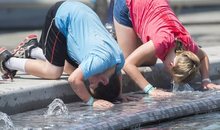
WHO warns Europe of another heatwave: 'Deadliest' week ahead
2026-07-07 13:21:27




Knife fight in Tirana, three arrested, 17-year-old wanted
2026-07-07 10:15:42
Fierza drops to lowest level in recent weeks due to drought
2026-07-07 09:45:55
Serious accident in Durrës, motorcycle ends up in canal
2026-07-07 09:27:29