 Flash News
Mother of 15-year-old involved in rape of 17-year-old: She has mental health problems
"Benz" explodes in flames on the Qafë Plloçë-Pogradec axis
Power, towers and Rama/ “The Albanian Files” as a reflection of a centralized system
Berisha tells how Rama overturned the British plan: The project was supposed to protect the coast, but it turned into a massacre of the territory
Berisha: "Albanian Files" the most serious accusation against Rama, the coasts are being depopulated by crime
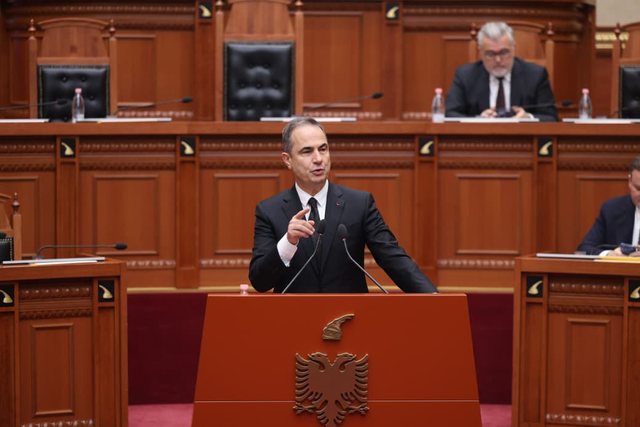
By Luciano Boci
A SPAK SPAK?!
(Secret justice as a method)
SPAK has chosen an "intelligent" way to not do justice, although it sells it as if it is doing justice.
This is not complete silence. Complete silence would actually be very obvious, brutal, and very easy for anyone to denounce.
The most sophisticated method is precisely the one chosen by the "people's" SPAK.
He moves a little.
From time to time, he makes some announcements. He produces some bombastic headlines. He opens endless files. He interrogates those whose names come up somewhere in vain, but without compromising the main ones.
Issue some noisy procedural act, where the "wanted announcement" stands out.
So SPAK keeps the illusion of action alive, while avoiding the essence of responsibility.
This is what is happening with Rama and his accused ministers, with Aruba, Zvërnec, SKY, with electoral crime, with EU funds and with all the other corrupt affairs now and in the past.
This is precisely the most dangerous kind of ignorance. So not incompetence, but ignorance chosen and carried out on purpose.
SPAK was not really created to be a notary of scandals after they have been publicly consumed. It was not even created to come as an act of justice after the findings of investigative journalism, after the denunciations of the opposition, after the demands of citizens, after the revolt of protests, or after any fact that has come to light and belatedly say that "yes, we are seeing something too."
No!
SPAK was created to be the state's strongest instrument against high corruption and organized crime.
It was created to go where politics doesn't want to.
Where power is hidden, where public money is turned into private property, where tenders, concessions, permits, resorts, incinerators, ports, roads, or public property are no longer development policies, but mechanisms of robbery.
But today, citizens see a very disturbing picture, even contrary to expectations.
They see a SPAK that wakes up late, walks with slow steps, stops at the gates of power, and often seems to wait for permission from political circumstances to do its duty.
And here the question naturally arises.
Are we dealing with institutional caution or political calculation?
Because institutional care is appropriate only when it serves strong evidence, clean procedure, and undisputed accusation.
But when this caution turns into procrastination, when procrastination turns into selection, and selection then turns into objective defense of power, then we are no longer at the level of SPAK's prudence. We are at the level of a distortion of justice.
Justice is not measured only by the files it opens, as SPAK shouts. It is measured by the files it dares to pursue to the end.
It is not considered successful just by the names it calls out, but by the names it does not dare to mention, like Rama and his friends.
It is not considered active just because of the sporadic arrests it makes or wanted announcements.
It is called actionable with the hierarchy it follows, with the chain of command it unravels, with the ultimate political beneficiary it reveals.
Because grand corruption and organized crime are never the work of a lone civil servant, or a banal drug dealer, who happened to sign or exchange something between two coffees. Grand corruption and organized crime are a system.
It has architecture, political order, administrative cover, predetermined companies, institutions that turn a blind eye, like the media that cleans up its image.
And at the same time, there is endless propaganda that invents enemies as soon as the fact comes out.
Therefore, when justice strikes the periphery and spares the center, it does not fight the system.
It simply prunes the system so that the trunk of corruption can continue to live.
This is SPAK's big drama today.
It is in danger of turning from an institution of hope into an institution for managing public anger, taking a little bit of citizen pressure and then putting it in a procedural laboratory. It cools it down, softens it, disperses it in time, and ultimately turns it into a technical act that no one cares about anymore.
And this is not justice at all. It is decorum.
Citizens are not seeking revenge, nor political trials, nor prosecutors who behave like militants.
They are looking for something much simpler and much more difficult for a country captured by Rama and his gang of thieves.
They demand equality before the law.
They demand that the law not be afraid of the armchair, that the procedure not become a refuge for the strong and a trap for the weak.
They demand that the investigation not stop where the real name of responsibility begins and that the file not be closed the moment the political dome is touched.
Because there is a second injustice, more subtle than corruption itself, which is the injustice of selective justice.
It wears down society more than theft. Theft takes your money. Selective justice takes your trust.
In this sense, SPAK is facing its greatest test: to show that it is not an institution that moves only when public pressure becomes unbearable, but an institution that acts because the law requires it. To show that it is not a political stopwatch, but a constitutional mechanism. To show that it does not work at two rates.
Fast-paced for opponents of power and slow, leisurely, almost meditative, for people in power.
Because when justice moves slowly in only one direction, it's no longer just slow. It's oriented.
This is the moment when the question can no longer be avoided.
Is SPAK confronting grand corruption, or is it managing the image of confronting it?
The answer so far is clear and unequivocal.
SPAK serves the political image of Rama and his government and carefully paints itself.
And at this point SPAK is NOT SPAK AT ALL!
It is simply the gatekeeper of corruption.
Latest news
Government allocates 4 million euros from emergency fund for Kanye West concert
2026-07-07 20:06:57
A'SPAK SPAK?! Secret justice as a method
2026-07-07 19:46:24
Court releases 4 FNSH officers arrested for Hasan Ferracak's escape
2026-07-07 19:31:56
University applications start at the end of July, how will the process develop?
2026-07-07 18:28:37
WHO warns Europe of new heatwave: Could face deadlier weeks
2026-07-07 17:18:44
"Benz" explodes in flames on the Qafë Plloçë-Pogradec axis
2026-07-07 16:58:51
Triple accident on the Korça-Pogradec road, one injured
2026-07-07 16:41:54

Six issues to follow at the NATO summit in Turkey
2026-07-07 16:04:21
Murder of 20-year-old Albanian in Sweden, suspected perpetrator arrested
2026-07-07 15:40:07
Lifestyle is increasing mortality, diabetes remains the leading cause
2026-07-07 15:24:46


Appeal confirms fraud conviction, Marine Le Pen risks presidential race
2026-07-07 14:29:46
Experts warn: Phone use is changing our bodies
2026-07-07 13:52:30

WHO warns Europe of another heatwave: 'Deadliest' week ahead
2026-07-07 13:21:27






Knife fight in Tirana, three arrested, 17-year-old wanted
2026-07-07 10:15:42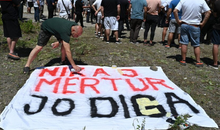
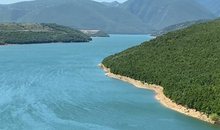
Fierza drops to lowest level in recent weeks due to drought
2026-07-07 09:45:55
Serious accident in Durrës, motorcycle ends up in canal
2026-07-07 09:27:29
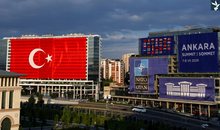
Trump heads to Ankara for key NATO summit
2026-07-07 09:00:17


Temperatures up to 31 degrees Celsius, weather forecast for today
2026-07-07 08:11:59
Morning Post/ In 2 lines: What mattered yesterday in Albania
2026-07-07 07:53:51

Mercury in the background continues, who wins and who loses this week
2026-07-06 21:49:56
Albania is flooded with asylum seekers from Egypt and Afghanistan
2026-07-06 21:19:30
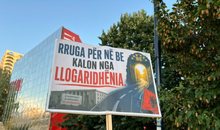
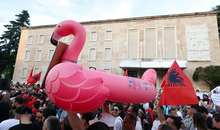
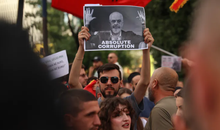
Spicy banners at the protest: The path to the EU passes through accountability!
2026-07-06 20:40:40

10 tips to boost your energy the day after a bad night's sleep
2026-07-06 20:09:11
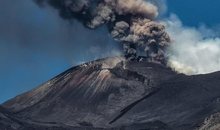
Etna erupts again, ash covers Sicily and flights to Catania suspended
2026-07-06 19:41:24
Greece/ Albanian woman dies after giving birth
2026-07-06 19:16:41
Rising temperatures, appeal from doctors: These categories are most at risk
2026-07-06 18:57:13

"I'm a gangster, I'll tape you shut," Protester tells how he was raped by police
2026-07-06 17:43:20
Large fire in Fushë-Shijakut, flames approaching the Tirana-Durrës highway
2026-07-06 17:27:29


Farmers protest, spill milk in front of the Ministry of Agriculture in Pristina
2026-07-06 16:21:58

Extreme temperatures, IGJEUM: Red alert for fires in 3 counties!
2026-07-06 15:39:07
SPAK puts Lorena Goxhobelli and ASHK district leaders under investigation
2026-07-06 15:25:12
When a mole becomes a cause for concern - signs that should not be ignored
2026-07-06 15:07:42
Albanian executed in Sweden
2026-07-06 15:01:00
Alimehmeti: Early elections are the solution
2026-07-06 14:49:51
EU condemns Russia's destabilizing activities in the Western Balkans
2026-07-06 14:31:20
Car explodes in Shkodra, suspected to be planted with explosives
2026-07-06 14:14:50

Summer fashion according to the horoscope: The ideal outfits for each sign
2026-07-06 13:29:43

Neymar ends era with Brazil, 80 goals and a historic legacy
2026-07-06 12:50:22


Trump speaks with Zelensky and Putin amid Ukraine standoff
2026-07-06 11:37:24
"De Telegraaf": Why might the US reject the NATO summit in Albania?
2026-07-06 11:20:01
African heat returns from Thursday, temperatures up to 40°C at the weekend
2026-07-06 11:01:56



The Albanian Files: The Anatomy of Edi Rama's 'Architectural Renaissance'
2026-07-06 09:39:10
Foreign exchange, how much foreign currencies are sold and bought today
2026-07-06 09:21:38
Albania one of the main heroin transit countries in Europe, cocaine also doubles
2026-07-06 09:03:32
Horoscope, what do the stars have in store for you today?
2026-07-06 08:47:17


Morning Post/ In 2 lines: What mattered yesterday in Albania
2026-07-06 07:59:34
Durrës Archaeological Museum reopens its doors with restrictions
2026-07-05 21:58:33
Diaspora representative: Rama is seeking immunity in Europe to escape justice
2026-07-05 21:25:09


Citizens return to the square, another protest against the government begins
2026-07-05 19:35:08