 Flash News
Iran and Qatar resume maritime trade after five-month hiatus
Court releases most protesters, only two under "house arrest"; Lawyer: Arrests were political
"Der Spiegel": The protest that is shaking the Rama government
Këlliçi exposes Rama: KKT approved the draft for a photovoltaic park in Porto Palermo
Kurbin/ 5 trucks deliberately burned in a quarry
Durrës Archaeological Museum reopens its doors with restrictions

Politiko
2026-07-05 21:58:33
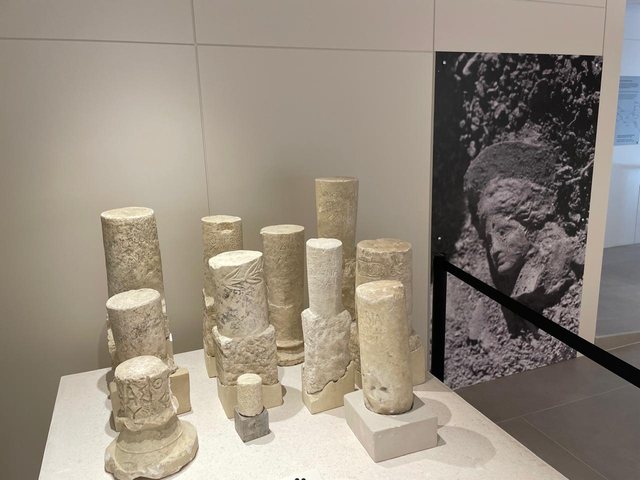
After a few days of vacation in Saranda, Italian tourists Michele and Valentina Merlini came to Durrës to visit the country's largest archaeological museum, but found it locked.
"We had information that the Durrës museum closed at 7:00 PM, but we learned that the daily schedule ended at 3:00 PM. It remained closed on Saturdays and Sundays as well," said Valentina, disappointed.
The restoration and expansion of the archaeological museum with other exhibits requires an increase in the number of personnel for the entire Museum Center, which also includes the Ancient Amphitheater, the Venetian Tower, the Circular Forum and the Medieval Hamam. The Director of the Museum Center, Alban Ramohitaj, told BIRN that they are awaiting the approval of a new organizational structure from the Ministry of Culture.
According to Ramohitaj, the new staff includes 33 employees, or double the current staff. “This will enable not only the respect of schedules throughout the museum system, but also specialized guides in all monuments,” he emphasized.
Paid tickets will also be applied to all visitors, while since the last inauguration of the museum, visits have been free.
Early visitors to the museum were amazed by the ribbon placed on the staircase leading to the second floor, where artifacts from the medieval period, starting from the 5th century AD, were first placed.
They are very interested in learning about the elements of the city's development over a 10-century historical period. Their exhibition had been attempted several times over the past 25 years, but had never been realized.
"Yes, it's true. The second floor with elements from the medieval period is opening for the first time since 2001, when the exhibits were placed in the new building of the archaeological museum," explained Ramohitaj.
According to him, these days the process of receiving all the materials exhibited on the second floor is being completed, which paves the way for visits by local and foreign tourists to the areas where the development of the city in the medieval period is presented.
The same practice will be carried out on the first floor for antique materials, but it will be shorter in time, as some of them were exhibited previously.
The return of the 4th-3rd century BC mosaic, known as the "Beauty of Durrës", was very well received by the citizens of Durrës and beyond, but its installation has not yet begun.
Specialists Agron Islami and Viktor Dhimgjini transferred the well-known mosaic in 1982 from the site of its discovery to the exhibits of the National History Museum in Tirana.
“We have already reburied it in the city where it was discovered 110 years ago,” said architect Viktor Dhimgjini. “We are preparing for it to be placed in the most important space of the archaeological museum, and for it to be seen from above, from the balconies of the second floor,” he added.
Dhimgjini also explained that they are now awaiting approval from the National Heritage Council to install the 14 pieces of the mosaic together at the entrance to the National Museum of Archaeology. Meanwhile, after the restoration, the museum's doors have reopened for concerts by Albanian and foreign instrumentalists.
Nevila Kalaja told BIRN that the festival she organized is returning to the museum premises after a three-year hiatus, the duration of the restoration. The instrumentalists and soprano of the “Arola” quartet inaugurated the 21st edition of the International Chamber Music Festival.
Until July 12, six instrumental ensembles will perform in the Durrës Archaeological Museum and those on the coast, also serving to introduce new visitors to the newly restored museum.
"Artists and viewers feel very comfortable in the halls of the archaeological museum, and the combination of chamber music with archaeological artifacts is wonderful," concluded Kalaja. Reporter.al
Latest news


Diaspora representative: Rama is seeking immunity in Europe to escape justice
2026-07-05 21:25:09


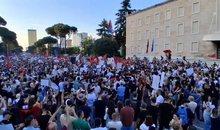
Citizens return to the square, another protest against the government begins
2026-07-05 19:35:08
Funny even in taste!
2026-07-05 19:09:51
Iran and Qatar resume maritime trade after five-month hiatus
2026-07-05 18:44:18
Released by court, protester throws egg at police station: This was my weapon
2026-07-05 18:02:43
Porto Palermo is not Chatgpt, it is KLSH
2026-07-05 17:44:37
Large-scale fire in Drize, Fier, 11 families evacuated, police: Two escorted
2026-07-05 17:19:42




Kane skeptical about Ballon d'Or: Messi and Mbappé remain favorites
2026-07-05 15:30:30
The next theater of the thief clown
2026-07-05 15:28:59

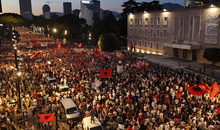
"Der Spiegel": The protest that is shaking the Rama government
2026-07-05 14:56:20
Coastline in Vlora without lifeguards, vacationers: Lack of safety
2026-07-05 14:41:01
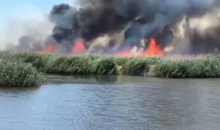
Fire near Tale beach in Lezha, wind favors the spread of flames
2026-07-05 14:22:30
Divjakë/ "Toyota" and "Audi" collide "head to head", several injured
2026-07-05 13:52:46
Jürgen Klopp rikthehet në stol, merr drejtimin e Kombëtares së Gjermanisë
2026-07-05 13:44:04
Fight in Korça ends with axe attack, one injured in hospital
2026-07-05 13:29:18
Serbian Minister in Tehran for Khamenei's Farewell Ceremony
2026-07-05 13:10:55
'The train has left', is there still a path for Kosovo towards the EU?
2026-07-05 13:00:09

Rubbing your eyes can lead to permanent vision problems.
2026-07-05 12:38:56
Protester shows health problems in court, doctors intervene
2026-07-05 12:29:53
What's really left of the 'American Dream'
2026-07-05 12:17:56

Kurbin/ 5 trucks deliberately burned in a quarry
2026-07-05 11:53:42

The decades it takes for the region to approach EU standards
2026-07-05 11:32:56
Strong calls in front of the Tirana Court: Rama in prison, the boys out!
2026-07-05 11:29:37
Policeman Enea Mekolli killed, Braçellari released from Trauma hospital
2026-07-05 11:14:08
Morocco "flies" into the quarterfinals, eliminates Canada by three goals
2026-07-05 11:00:38

Plan your vacation without stress, these are the steps you shouldn't neglect
2026-07-05 10:35:36


On hot days, here's how to reduce the risk of heatstroke
2026-07-05 10:01:01
The EU's half-open door to the Balkans, which country will enter first?!
2026-07-05 09:51:42
Car collides with taxi in Memaliaj, four people injured
2026-07-05 09:40:07
Car goes off the road in Korça, ends up overturned after colliding with a tree
2026-07-05 09:30:49
Associated Press: Protest repeats symbolism of February 20, Rama's bust falls
2026-07-05 09:18:42
Protesters march to Tirana Court today: Release the kids!
2026-07-05 08:58:47
Horoscope, discover the star forecast for your sign
2026-07-05 08:40:39
Weather forecast for today, July 5, 2026
2026-07-05 08:22:38
Morning Post/ In 2 lines: What mattered yesterday in Albania
2026-07-05 08:01:30
Morocco advances to World Cup quarterfinals with 3-0 win over Canada
2026-07-04 22:02:12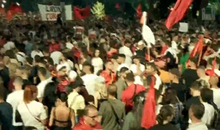


Citizens tear down Edi Rama's bust
2026-07-04 20:55:47
From raw meat to forest fires, serious grilling dangers to keep in mind
2026-07-04 20:36:39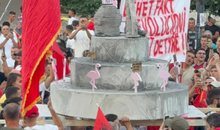
Protesters wish Rama a happy birthday with a concrete cake
2026-07-04 20:25:41


"The Diaspora is with us", citizens: Rama resigns
2026-07-04 19:25:18
Erdogan attacks Israel again: They are addicted to war!
2026-07-04 19:13:30
Maznik, territorial reform and the army of fictitious accounts
2026-07-04 18:28:37
"Rama, resign", the citizens' call also penetrates Reni Gjoka's concert in Korça
2026-07-04 18:00:02
WHO declares end of hantavirus epidemic, last patient recovers
2026-07-04 17:54:27

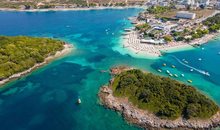
Albania is losing the advantage of being a “cheap destination”
2026-07-04 16:45:57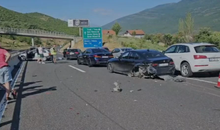
Six-car accident near the border crossing in Morina, 7 injured
2026-07-04 16:15:53
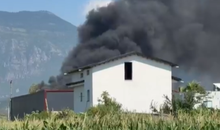
Fire in a car cemetery in Kamëz, smoke covers the area
2026-07-04 15:45:07
Engine noise, a concern for Tirana
2026-07-04 15:01:08

Berisha's birthday message to Rama: Before 7:00 PM...
2026-07-04 14:08:43




"Rama no longer inspires", Marjana Koçeku for BBC: It took me time to understand
2026-07-04 11:58:37
Well-known actor Koço Qëndro passes away at the age of 99
2026-07-04 11:37:09
How the “Flamingo Revolution” is changing Rama’s international image
2026-07-04 11:20:26
Business raises concerns about governance, informality and EU integration
2026-07-04 10:43:19
Between celebration and protest for resignation, Edi Rama's different birthday
2026-07-04 10:08:35


Famous actress appointed as MP in Syria's new parliament, goes viral online
2026-07-04 09:16:02