 Flash News
52-year-old British citizen sentenced to 2 years in prison for building hotel without a permit in Ksamil
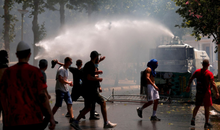
Violence against protesters, Albanian Helsinki Committee: Police used disproportionate force, we demand an investigation
DP takes to the Constitutional Court the dismissal of the investigative commissions for the National Infrastructure Agency and roads
Switzerland secures qualification for the 2026 World Cup round of 16
Another request for Balluk's arrest? Braho: I can tell you two things...
"Rama no longer inspires", Marjana Koçeku for BBC: It took me time to understand

Politiko
2026-07-04 11:58:37
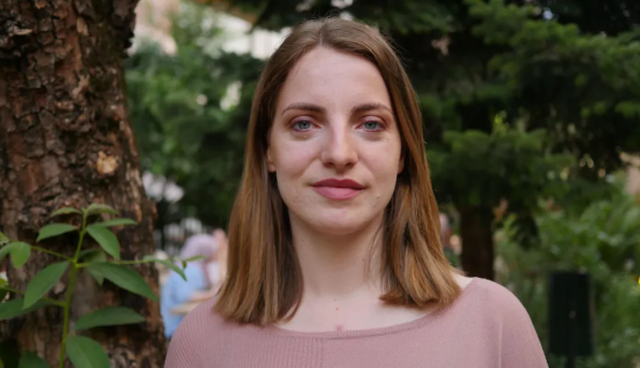
The BBC has covered recent developments in Albania, where protests initially launched over environmental issues have expanded to include broader social and political demands, including the resignation of Prime Minister Edi Rama.
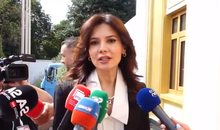
In the article dedicated to the protests, independent MP Marjana Koçeku, now removed from the SP parliamentary group, also speaks for the well-known media outlet.
"Rama no longer inspires," she told the BBC, noting that it took her time to reach this conclusion. According to her, the change in perception came gradually, as, as she puts it, behind the country's "facade of development," the political and social reality is different from what was initially presented to her.
Full article:
Initially protesting about flamingos, the crowd in the streets below Albanian Prime Minister Edi Rama's office has now also started calling for schools, jobs and living standards, and is demanding his resignation. The pink migratory birds have become a symbol of nightly protests in Albania because they gather in the Narta Lagoon, a protected area near the coastal city of Vlora.
A group of international investors, including US President Donald Trump's son-in-law, Jared Kushner, intend to develop a luxury resort near the area, and the government has granted them "strategic investor" status.
No construction permit has yet been issued, and Rama's government says the environmental impact assessment has not yet begun, but fencing and excavation equipment have been observed on the ground.
Small-scale local protests over the potential environmental impact turned into national protests a month ago, when a video of private security guards assaulting a protester went viral on social media. The incident was confirmed by the prime minister.
The dissatisfaction has now broadened, encompassing broader concerns about how Albania is developing and how the country is being governed.
"I'm here for our schools," a young protester named Helena tells the BBC.
"I'm here for our hospitals, for our infrastructure, for my family who are outside Albania and who wanted to be here. And for all of this, I'm here mainly for myself, because I want to stay in my country and I don't want to leave," she says.
Rama and the Socialist Party have been in power for 13 years. During that time, Albania has changed significantly.
The urban space of the capital, Tirana, has been transformed with a large number of towers, designed mainly by international architects. At the same time, tourism has seen a huge increase, changing the country's international image and accounting for more than a fifth of GDP.
Perhaps one of the most important developments is Albania’s progress towards membership in the European Union. From a starting point in 2022, the country aims to conclude membership negotiations by the end of next year. Of the six Western Balkan countries, only Montenegro is ahead, and it has a decade more negotiations to go.
But these achievements do not convince well-known protester Fatos Lubonja. The writer and human rights activist suffered 17 years in a forced labor camp during the communist dictatorship of Enver Hoxha.
Today, according to him, the current government is kept afloat by "oligarchs, organized crime, the media, and corrupt internationals," while the construction boom is nothing more than money laundering.
“We want justice to investigate,” he says, pointing to the tall towers that surround Skanderbeg Square in central Tirana. “If you look at all these towers, it turns out that this is a plan of organized crime, of oligarchs and state functionaries,” he adds.
Taking a quiet moment in his office in the middle of the afternoon, before the evening protests begin, Rama considers the protests a sign of a democratic and functional society.
However, some of his closest political allies are under investigation by the Albanian anti-corruption prosecution (SPAK), including the former deputy prime minister and the mayor of Tirana.
So, should Albanians also be concerned about the integrity of the prime minister?
“I have said it since day one: I want a justice system that does not look left, does not look right, but looks straight,” Rama says. “A justice system that is not bought, is not pressured, and is not controlled by anyone from a distance. And I have also said that this is the greatest contribution that the Socialist Party will make to this country, because it will not only contribute with reforms, but also by putting itself on the test for the country.”
But the youngest member of the Albanian parliament has decided that cooperation with the Socialist Party is no longer the solution. Rama had personally selected 25-year-old Majana Koçeku as a candidate in last year's elections, after she had become known as an environmental activist in the Shkodra region.
Now she has left the party, saying that her youth did not allow her to “stand by and applaud the government and pretend nothing is happening.” According to her, Rama is a big part of the problem.
"He no longer inspires people and I think that has led to a major crisis of legitimacy. It took me a while to realize that behind the beautiful facades that seem so great, the reality is not the same. And people are realizing it more and more every day," Koçek told the BBC.
For now, the situation seems to be at a stalemate. The protesters are not backing down and Rama is not leaving either. Thus, flamingos are expected to remain a familiar sight in the protests on the streets of Tirana.
Latest news

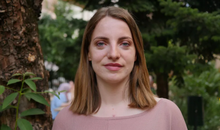
"Rama no longer inspires", Marjana Koçeku for BBC: It took me time to understand
2026-07-04 11:58:37
Well-known actor Koço Qëndro passes away at the age of 99
2026-07-04 11:37:09
How the “Flamingo Revolution” is changing Rama’s international image
2026-07-04 11:20:26
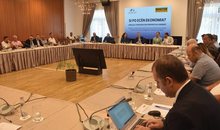
Business raises concerns about governance, informality and EU integration
2026-07-04 10:43:19
Between celebration and protest for resignation, Edi Rama's different birthday
2026-07-04 10:08:35


Famous actress appointed as MP in Syria's new parliament, goes viral online
2026-07-04 09:16:02

July 4, the holiday that changed US history: How Independence Day was born
2026-07-04 08:36:41
Will he move to Chelsea? Granit Xhaka breaks his silence
2026-07-04 08:24:00
Morning Post/ In 2 lines: What mattered yesterday in Albania
2026-07-04 07:59:44
Iran bids farewell to Khamenei with five-day ceremony
2026-07-03 21:21:47
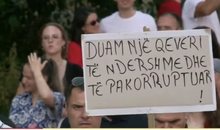
34th protest in Tirana, citizens march towards the Prime Minister's Office
2026-07-03 20:01:03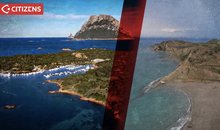
Ndryshe nga Rama, Meloni tërhiqet nga projekti i resortit në Sardenjë
2026-07-03 19:42:56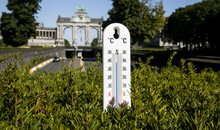
Vala e të nxehtit në Belgjikë shkakton rritje të ndjeshme të vdekjeve
2026-07-03 19:19:53
29-year-old woman found drowned at sea in Vlora
2026-07-03 18:41:21
Just a handful a day, the snack that helps your heart and intestines
2026-07-03 16:56:53
FIFA clarifies Croatia's goal against Portugal disallowed
2026-07-03 16:35:35
Video/ Scorching heat gives way to bad weather, hail storm hits Elbasan
2026-07-03 16:01:29
Granit Pepnikaj arrested in Dhërmi, wanted for Call Center fraud
2026-07-03 15:27:26
Nga projekti fantazmë i inicineratorit të Tiranës u zhdukën 99 milionë euro
2026-07-03 15:13:15


Switzerland secures qualification for the 2026 World Cup round of 16
2026-07-03 13:59:42
Sky News: Protests have turned into demonstrations against the Rama government
2026-07-03 12:54:57
Another request for Balluk's arrest? Braho: I can tell you two things...
2026-07-03 12:06:43
Balliu meets arrested protesters: They were more motivated than ever not to stop
2026-07-03 11:36:05

Ronaldo scores in the knockout stages for the first time at the World Cup
2026-07-03 09:51:37
One-fifth of young people neither in work nor in school by 2025
2026-07-03 08:41:13
Check out the weather forecast for today.
2026-07-03 08:20:51
Morning Post/ In 2 lines: What mattered yesterday in Albania
2026-07-03 07:58:40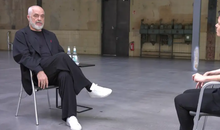
"Resignation is not an option", Rama clashes with DW journalist over protests
2026-07-02 22:00:21
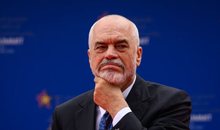

Rama's MP calls protesters "scoundrels": The government did not provoke them
2026-07-02 20:57:40
Protesta/ Ambasada e SHBA në Tiranë paralajmëron qytetarët: Tregoni kujdes
2026-07-02 20:36:13
Hitaj urdhëron ‘mbylljen’ e kufirit për protestën e 4 korrikut
2026-07-02 20:21:14
A 27-year-old Albanian man in Italy died in a workplace accident
2026-07-02 19:04:38
Boçi: Violence against protesters shows the panic of a government on the run
2026-07-02 18:48:02

He spent 6 thousand dollars to see Messi, but was left outside the stadium
2026-07-02 18:17:30
Lawyer: Police implemented illegal orders, protesters should be released
2026-07-02 17:49:37
Barcelona equips employees with smart bracelets to monitor heat
2026-07-02 16:59:48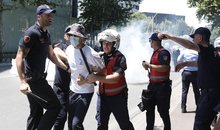
Violent gatherings, 4 protesters held in custody
2026-07-02 16:44:20
Uncontrolled artificial intelligence in the Western Balkans
2026-07-02 16:22:13
Tirana Incinerator/ SPAK takes Mërtir, Zoto and 12 defendants to trial
2026-07-02 15:25:50
The end of a legend! Manuel Neuer bids farewell to Germany
2026-07-02 15:11:46

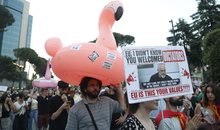
'Digital Lightning': Edi Rama's targeting of protesters raises concerns
2026-07-02 14:09:04
Suspect in Velipoja massacre escapes, police searching for Hasan Ferracak
2026-07-02 13:34:19
Balla attacks protesters: A group of social and political garbage
2026-07-02 13:16:48

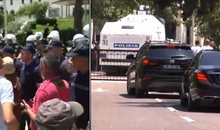
Plenary session ends, protesters throw eggs at cars of SP MPs and ministers
2026-07-02 12:20:26