 Flash News
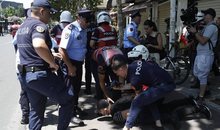
Violence against protesters, Albanian Helsinki Committee: Police used disproportionate force, we demand an investigation
DP takes to the Constitutional Court the dismissal of the investigative commissions for the National Infrastructure Agency and roads
Switzerland secures qualification for the 2026 World Cup round of 16
Another request for Balluk's arrest? Braho: I can tell you two things...
Currency exchange rate July 3/ How much the dollar and euro are bought and sold for
Violence against protesters, Albanian Helsinki Committee: Police used disproportionate force, we demand an investigation

Politiko
2026-07-03 18:21:24
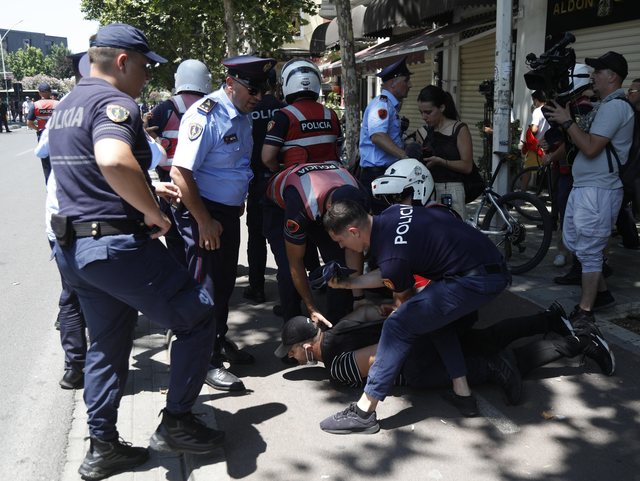
The Albanian Helsinki Committee has expressed concern about the disproportionate violence used by State Police officers against citizens during the protest held on Thursday in front of Parliament.
AHC reiterates that “the right to peaceful assembly and protest is a fundamental right guaranteed in Article 47 of the Constitution of the Republic of Albania and Article 11 of the European Convention on Human Rights.”
"The obligation of state institutions is not limited to the formal permission of protest, but also includes creating conditions for citizens to exercise this right safely and without being exposed to unnecessary or disproportionate use of force," the statement says.
Meanwhile, the AHC states that the protest was largely peaceful and the situation was under control for a long period of time. However, as the statement states, violent acts committed by specific individuals cannot be automatically attributed to all protesters.
“In relation to Article 11 of the European Convention, the European Court of Human Rights has underlined that isolated acts of violence (throwing eggs, stones by individual individuals) do not deprive the assembly of its peaceful character as a whole nor do they deprive the peaceful participants of protection (Kudrevičius [GC]; Ziliberberg v. Moldova, 2005; Frumkin v. Russia, 2016). AHC notes with concern that, following the incident with the vehicles attempting to leave the premises of the Parliament, the behaviour of the police forces changed immediately. According to the monitoring on the ground, within a short time it went from a calm situation to surrounding and pushing back the protesters and then to the use of tear gas.
Particularly worrying is the fact that the use of tear gas, according to field observation, was not preceded by a public warning with a central voice and consequently not by the provision of a reasonable time for voluntary dispersal. The use of such means, which indiscriminately affect peaceful protesters, journalists, observers and other persons present at yesterday's protest, should have been a measure of last resort, necessary and proportionate. Referring to the standards of the Strasbourg Court, in relation to Articles 3 and 11 of the ECHR, the use of chemical means without warning and without allowing time for voluntary dispersal may constitute ill-treatment and disproportionate interference with the assembly (Abdullah Yaşa and Others v. Turkey, 2013; Ataykaya v. Turkey, 2014; Oya Ataman v. Turkey, 2006). Our Law no. 82/2024 "On the State Police", in articles 12 and 32/3, provide that warning is a mandatory prerequisite before the use of force," the statement says.
AHC also expresses concern about the observed cases of the use of force against persons who had been neutralized and were on the ground.
“The use of rubber batons, blows, punches or other forms of force against persons lying on the ground and surrounded by several police officers who no longer pose a threat and do not resist is unacceptable and requires an immediate, independent and effective investigation. The elaborate standards of the ECtHR regarding Article 3 of the ECHR underline that the use of force against a person who is already neutralized and without resistance constitutes inhuman or degrading treatment; blows to the face and humiliation seriously violate dignity (Bouyid v. Belgium [GC]; İzci v. Turkey, 2013)”, emphasizes the Albanian Helsinki Committee.
AHC emphasizes that the police have the obligation and right to protect public order, the security of citizens and institutions, as well as the physical integrity of their employees. But precisely because of the authority and means that the law has given them, the standard of police accountability is higher.
"Force should not be used as a punitive response, but only when necessary, to the limited extent possible and against specific persons who pose a risk. Neither can violence against the police be relativized, just as neither can police violence be justified by the behavior of specific individuals," the statement continues.
Latest news
Vala e të nxehtit në Belgjikë shkakton rritje të ndjeshme të vdekjeve
2026-07-03 19:19:53
29-year-old woman found drowned at sea in Vlora
2026-07-03 18:41:21


Just a handful a day, the snack that helps your heart and intestines
2026-07-03 16:56:53
FIFA clarifies Croatia's goal against Portugal disallowed
2026-07-03 16:35:35
Video/ Scorching heat gives way to bad weather, hail storm hits Elbasan
2026-07-03 16:01:29

Granit Pepnikaj arrested in Dhërmi, wanted for Call Center fraud
2026-07-03 15:27:26
Nga projekti fantazmë i inicineratorit të Tiranës u zhdukën 99 milionë euro
2026-07-03 15:13:15



Switzerland secures qualification for the 2026 World Cup round of 16
2026-07-03 13:59:42

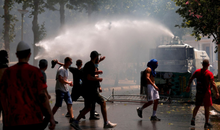
Sky News: Protests have turned into demonstrations against the Rama government
2026-07-03 12:54:57

Another request for Balluk's arrest? Braho: I can tell you two things...
2026-07-03 12:06:43

Balliu meets arrested protesters: They were more motivated than ever not to stop
2026-07-03 11:36:05




Ronaldo scores in the knockout stages for the first time at the World Cup
2026-07-03 09:51:37

One-fifth of young people neither in work nor in school by 2025
2026-07-03 08:41:13
Check out the weather forecast for today.
2026-07-03 08:20:51
Morning Post/ In 2 lines: What mattered yesterday in Albania
2026-07-03 07:58:40
"Resignation is not an option", Rama clashes with DW journalist over protests
2026-07-02 22:00:21



Rama's MP calls protesters "scoundrels": The government did not provoke them
2026-07-02 20:57:40
Protesta/ Ambasada e SHBA në Tiranë paralajmëron qytetarët: Tregoni kujdes
2026-07-02 20:36:13
Hitaj urdhëron ‘mbylljen’ e kufirit për protestën e 4 korrikut
2026-07-02 20:21:14

A 27-year-old Albanian man in Italy died in a workplace accident
2026-07-02 19:04:38
Boçi: Violence against protesters shows the panic of a government on the run
2026-07-02 18:48:02

He spent 6 thousand dollars to see Messi, but was left outside the stadium
2026-07-02 18:17:30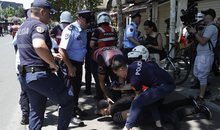
Lawyer: Police implemented illegal orders, protesters should be released
2026-07-02 17:49:37

Barcelona equips employees with smart bracelets to monitor heat
2026-07-02 16:59:48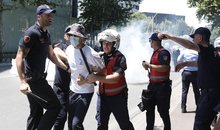
Violent gatherings, 4 protesters held in custody
2026-07-02 16:44:20
Uncontrolled artificial intelligence in the Western Balkans
2026-07-02 16:22:13

Tirana Incinerator/ SPAK takes Mërtir, Zoto and 12 defendants to trial
2026-07-02 15:25:50
The end of a legend! Manuel Neuer bids farewell to Germany
2026-07-02 15:11:46


'Digital Lightning': Edi Rama's targeting of protesters raises concerns
2026-07-02 14:09:04

Suspect in Velipoja massacre escapes, police searching for Hasan Ferracak
2026-07-02 13:34:19
Balla attacks protesters: A group of social and political garbage
2026-07-02 13:16:48

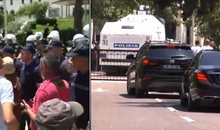
Plenary session ends, protesters throw eggs at cars of SP MPs and ministers
2026-07-02 12:20:26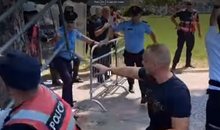








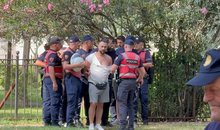
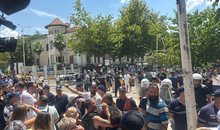
Parliament is armored before the protest, SP MPs enter early to avoid protesters
2026-07-02 09:18:08
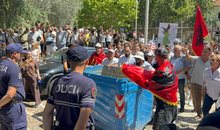

Check out the weather forecast for today.
2026-07-02 08:29:47
Following Paloka, Julia Emiri is elected head of the DP National Council
2026-07-02 08:11:44
Morning Post/ In 2 lines: What mattered yesterday in Albania
2026-07-02 07:58:18


PHOTO NEWS/ "Rama, the most hated man in Albania"
2026-07-01 21:29:16
"DP will be renewed", Zhupa: We are creating a team for the new elections
2026-07-01 21:13:18



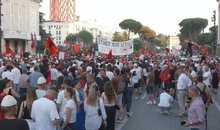
32 days of protest, Albanians determined to remove Rama
2026-07-01 19:32:54