
 Flash News
Berisha from SPAK: 130 million euros disappeared from the Tirana incinerator, no senior official has been arrested
Berisha: Balluku makes the law at the party's Skapi, here's the message I left for Dumani
Albania one of the main heroin transit countries in Europe, cocaine also doubles
Morning Post/ In 2 lines: What mattered yesterday in Albania
Iran and Qatar resume maritime trade after five-month hiatus
When a mole becomes a cause for concern - signs that should not be ignored

Politiko
2026-07-06 15:07:42
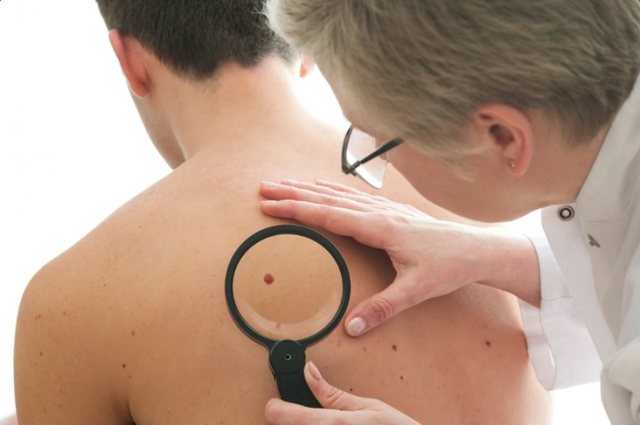
Any new skin change, as well as a change in an existing change, requires an examination by a dermatologist without delay.
Preventive mole examinations play a key role in the early detection of malignant skin changes. Dermoscopic examination once a year is recommended for all adults, and especially for people with fair skin, a large number of nevi, a positive family history of melanoma, or other risk factors.
Dermatological examination of moles
As Dr. Tamara Jelikić, a specialist in dermatovenerology, explains to Stetoscope, the examination begins with a conversation with the patient about any changes he has noticed, his family history and sun exposure habits. This is followed by an examination of the entire skin - first macroscopically, and then with a dermoscope. The entire skin is examined, including the scalp, genital area and nails.
What is dermoscopy?
Today, dermoscopy is the standard in the examination of moles. The dermoscope allows the dermatologist a detailed overview of the pigment and vascular structures of the skin, which significantly increases the accuracy of the diagnosis. In this way, the dermatologist can better assess whether the change is benign, whether it requires further monitoring or whether the change should be removed.
Dermoscopic examination is completely painless and safe. On average, it takes between 15 and 20 minutes, depending on the number of moles and changes to be examined.
What skin changes should you pay attention to immediately?
An alarm for examination by a dermatologist are changes that grow rapidly, change in appearance, color, or differ from other moles on the body.
Differentiating a harmless mole from a potentially dangerous change is often not possible with the naked eye alone. This is why a dermoscopic examination is of key importance, because a dermatologist can recognize early signs of melanoma and other skin tumors.
The so-called ABCDE rule can also help in assessing changes:
A - Asymmetry: one half of the mole is not the same as the other.
B – Border: the edges are irregular, jagged, or indistinct.
C - Color: several shades of brown, black, red or white in the same variation.
D - Diameter: a difference greater than 6 mm or a difference that increases, although it can be much smaller, only 1-2 mm.
E - Evolution: any change in size, shape, color, or appearance of bleeding.
Latest news

Farmers protest, spill milk in front of the Ministry of Agriculture in Pristina
2026-07-06 16:21:58
Extreme temperatures, IGJEUM: Red alert for fires in 3 counties!
2026-07-06 15:39:07
SPAK puts Lorena Goxhobelli and ASHK district leaders under investigation
2026-07-06 15:25:12
When a mole becomes a cause for concern - signs that should not be ignored
2026-07-06 15:07:42
Albanian executed in Sweden
2026-07-06 15:01:00
Alimehmeti: Early elections are the solution
2026-07-06 14:49:51
EU condemns Russia's destabilizing activities in the Western Balkans
2026-07-06 14:31:20
Car explodes in Shkodra, suspected to be planted with explosives
2026-07-06 14:14:50


Summer fashion according to the horoscope: The ideal outfits for each sign
2026-07-06 13:29:43

Neymar ends era with Brazil, 80 goals and a historic legacy
2026-07-06 12:50:22

Trump speaks with Zelensky and Putin amid Ukraine standoff
2026-07-06 11:37:24
"De Telegraaf": Why might the US reject the NATO summit in Albania?
2026-07-06 11:20:01
African heat returns from Thursday, temperatures up to 40°C at the weekend
2026-07-06 11:01:56




The Albanian Files: The Anatomy of Edi Rama's 'Architectural Renaissance'
2026-07-06 09:39:10
Foreign exchange, how much foreign currencies are sold and bought today
2026-07-06 09:21:38
Albania one of the main heroin transit countries in Europe, cocaine also doubles
2026-07-06 09:03:32
Horoscope, what do the stars have in store for you today?
2026-07-06 08:47:17

Morning Post/ In 2 lines: What mattered yesterday in Albania
2026-07-06 07:59:34
Durrës Archaeological Museum reopens its doors with restrictions
2026-07-05 21:58:33

Diaspora representative: Rama is seeking immunity in Europe to escape justice
2026-07-05 21:25:09




Citizens return to the square, another protest against the government begins
2026-07-05 19:35:08
Funny even in taste!
2026-07-05 19:09:51
Iran and Qatar resume maritime trade after five-month hiatus
2026-07-05 18:44:18

Released by court, protester throws egg at police station: This was my weapon
2026-07-05 18:02:43
Porto Palermo is not Chatgpt, it is KLSH
2026-07-05 17:44:37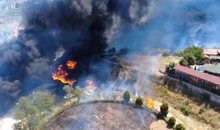
Large-scale fire in Drize, Fier, 11 families evacuated, police: Two escorted
2026-07-05 17:19:42




Kane skeptical about Ballon d'Or: Messi and Mbappé remain favorites
2026-07-05 15:30:30
The next theater of the thief clown
2026-07-05 15:28:59


"Der Spiegel": The protest that is shaking the Rama government
2026-07-05 14:56:20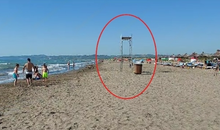
Coastline in Vlora without lifeguards, vacationers: Lack of safety
2026-07-05 14:41:01
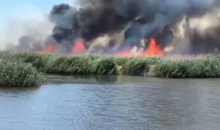
Fire near Tale beach in Lezha, wind favors the spread of flames
2026-07-05 14:22:30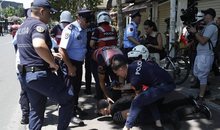
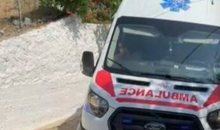
Divjakë/ "Toyota" and "Audi" collide "head to head", several injured
2026-07-05 13:52:46
Jürgen Klopp rikthehet në stol, merr drejtimin e Kombëtares së Gjermanisë
2026-07-05 13:44:04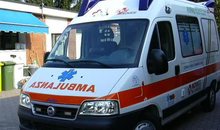
Fight in Korça ends with axe attack, one injured in hospital
2026-07-05 13:29:18
Serbian Minister in Tehran for Khamenei's Farewell Ceremony
2026-07-05 13:10:55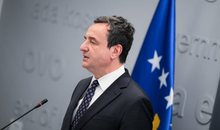
'The train has left', is there still a path for Kosovo towards the EU?
2026-07-05 13:00:09
Rubbing your eyes can lead to permanent vision problems.
2026-07-05 12:38:56
Protester shows health problems in court, doctors intervene
2026-07-05 12:29:53
What's really left of the 'American Dream'
2026-07-05 12:17:56

Kurbin/ 5 trucks deliberately burned in a quarry
2026-07-05 11:53:42

The decades it takes for the region to approach EU standards
2026-07-05 11:32:56
Strong calls in front of the Tirana Court: Rama in prison, the boys out!
2026-07-05 11:29:37
Policeman Enea Mekolli killed, Braçellari released from Trauma hospital
2026-07-05 11:14:08
Morocco "flies" into the quarterfinals, eliminates Canada by three goals
2026-07-05 11:00:38

Plan your vacation without stress, these are the steps you shouldn't neglect
2026-07-05 10:35:36

On hot days, here's how to reduce the risk of heatstroke
2026-07-05 10:01:01
The EU's half-open door to the Balkans, which country will enter first?!
2026-07-05 09:51:42
Car collides with taxi in Memaliaj, four people injured
2026-07-05 09:40:07
Car goes off the road in Korça, ends up overturned after colliding with a tree
2026-07-05 09:30:49
Associated Press: Protest repeats symbolism of February 20, Rama's bust falls
2026-07-05 09:18:42
Protesters march to Tirana Court today: Release the kids!
2026-07-05 08:58:47
Horoscope, discover the star forecast for your sign
2026-07-05 08:40:39
Weather forecast for today, July 5, 2026
2026-07-05 08:22:38
Morning Post/ In 2 lines: What mattered yesterday in Albania
2026-07-05 08:01:30
Morocco advances to World Cup quarterfinals with 3-0 win over Canada
2026-07-04 22:02:12


Citizens tear down Edi Rama's bust
2026-07-04 20:55:47
From raw meat to forest fires, serious grilling dangers to keep in mind
2026-07-04 20:36:39
Protesters wish Rama a happy birthday with a concrete cake
2026-07-04 20:25:41



"The Diaspora is with us", citizens: Rama resigns
2026-07-04 19:25:18
Erdogan attacks Israel again: They are addicted to war!
2026-07-04 19:13:30