 Flash News
From the Hoxhosmani brothers to Rraja, SPAK sends 15 people for trial
"Republic of Prosecutors", the citizen is arrested for the same crime for which he had already served his sentence!
Mother of 15-year-old involved in rape of 17-year-old: She has mental health problems
"Benz" explodes in flames on the Qafë Plloçë-Pogradec axis
Power, towers and Rama/ “The Albanian Files” as a reflection of a centralized system
Koçek speaks to Euractiv, "hits" Rama: The government has no legitimacy, Brussels should not see it as the only voice of the country

Politiko
2026-07-08 08:46:20
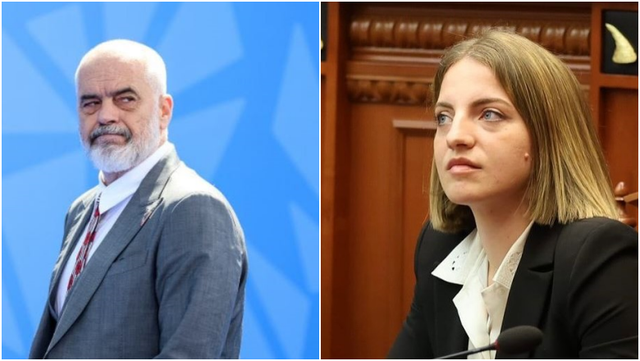
Marjana Koçeku has issued strong criticism of Prime Minister Edi Rama and the European Union's approach to Albania, in an interview with Euractiv , where she states that Brussels should stop treating Edi Rama as the country's only European voice.
"Rama is not Albania ," Koçek tells Euractiv.
Koçek left the Socialist Party last month, after concluding that he no longer had a place in it.
"I could no longer belong to a group that not only does not support the environment, but drafts policies that harm it," she says. "Yes, I have also supported the initiatives of my colleagues from the opposition, because I consider this my civil right."
On the streets of Albania, protesters have spent more than a month opposing the government's handling of proposed projects to develop luxury tourism near the Vjosa-Nartë wetland ecosystem – including projects linked to Jared Kushner, Donald Trump's son-in-law.
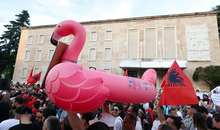
When the protests arrived in Tirana, they already had a name. People were calling them the "Flamingo Revolution," after the birds that inhabit that ecosystem, Euractiv writes.
The language of revolution also signifies an abrupt change in the way a generation understands power, representation, and the country's European future. "We believe in European values. But we do not support our prime minister and government ."
For Koçek, the protests highlight a long-standing crisis of legitimacy and a society tired of feeling left out of decision-making in its name. Decisions related to non-transparent permits, private interests, and limited public consultation.
"There is no longer any legitimacy, neither for the government nor for the traditional opposition. They have shown that they only work for a small group of interests."
The clash of narratives
On the other hand, Koçek criticizes Rama's reaction to the protests, accusing him of trying to present them as a threat to the European integration process.
" He is using the media to create the belief that, if we protest, we are damaging the entire process and the trust of the European Union ," Koceku replies. But, according to her, it is clear that "our politicians have completely lost touch with reality."
The prime minister himself has portrayed the protests as exaggerated by opponents, influencers and online activists, calling them "digital hysteria" and "an imaginary revolution."
When asked whether the protests have damaged Albania's European integration process, Koçek first focuses on the very way the question was raised.
The EU has often presented enlargement as a process based on reform, stability and institutional progress. Governments submit reports, ministers meet with European commissioners.
However, this approach risks confusing the state with society and the leader with the country. "The EU must create direct links with citizens, as European integration should not be just a bureaucratic process."
According to her, it is precisely the citizens who know the country better than anyone in power, because they can show whether the reforms are really felt in everyday life.
A new generation in politics
Koçek formulates a broad critique of the government, the opposition, the media, and the political culture that has shaped post-communist Albania. But her story is also personal.
She entered Parliament at a young age, winning her seat in 2025, when she was just 24. She had never imagined a career in politics. Before becoming an MP, she founded a sustainability and community movement in northern Albania called Neomalsore.
Koçek studied international relations and political science in Italy and, like many young Albanians, hoped to find work there.
But when she was given the opportunity to join Rama's Socialist Party, she saw it as an obligation and an opportunity to set an example.
Koçek comes from a region that, she says, has been historically underrepresented, where women and young people have traditionally had few opportunities. If she could do it, she believed others could too.
However, after joining the party, she began to feel that internal politics and a lack of transparency were creating problems. Koçek says that, ultimately, the way the party functions is also "an instrument that shows how the state is shaped."
Her break from the Socialist Party occurred gradually and then suddenly, as the protests continued.
"People will stand and not forget," she says, arguing that the protests should force the government to reflect deeply on "the way it passes laws and for what purpose they are drafted."
"The younger generation is much more politically cultured and much more European than the political elite." And this, according to Koçek, is the Albania that Brussels needs to see.
Latest news
What is expected from the NATO Summit in Turkey?
2026-07-08 10:25:56
With invoice, the government spends 4.2 million euros against the protest
2026-07-08 10:10:36
Property transfer in Dibër, former SP candidate arrested
2026-07-08 09:57:37
From the Hoxhosmani brothers to Rraja, SPAK sends 15 people for trial
2026-07-08 09:50:19
BIRN: Ownership 'red lines' are increasing self-censorship in Albanian media
2026-07-08 09:30:04

Plotësohen 8 ekipet çerekfinaliste, axhenda e plotë e katër ndeshjeve
2026-07-08 09:09:33
Sot certifikohen rezultatet e zgjedhjeve në Kosovë, çfarë pritet
2026-07-08 09:00:22

Foreign exchange, how much foreign currencies are sold and bought today
2026-07-08 08:14:56
Horoskopi, njihuni me parashikimin e yjeve
2026-07-08 07:39:50
Posta e mëngjesit/ Me 2 rreshta: Çfarë pati rëndësi dje në Shqipëri
2026-07-08 07:20:12
Parashikimi i motit, 8 korrik 2026
2026-07-08 07:04:53

Patronage activist caught "in the act" taking photos from the Parliament
2026-07-07 21:17:28
Government allocates 4 million euros from emergency fund for Kanye West concert
2026-07-07 20:06:57
A'SPAK SPAK?! Secret justice as a method
2026-07-07 19:46:24
Court releases 4 FNSH officers arrested for Hasan Ferracak's escape
2026-07-07 19:31:56
University applications start at the end of July, how will the process develop?
2026-07-07 18:28:37
WHO warns Europe of new heatwave: Could face deadlier weeks
2026-07-07 17:18:44
"Benz" explodes in flames on the Qafë Plloçë-Pogradec axis
2026-07-07 16:58:51
Triple accident on the Korça-Pogradec road, one injured
2026-07-07 16:41:54

Six issues to follow at the NATO summit in Turkey
2026-07-07 16:04:21
Murder of 20-year-old Albanian in Sweden, suspected perpetrator arrested
2026-07-07 15:40:07
Lifestyle is increasing mortality, diabetes remains the leading cause
2026-07-07 15:24:46

Appeal confirms fraud conviction, Marine Le Pen risks presidential race
2026-07-07 14:29:46
Experts warn: Phone use is changing our bodies
2026-07-07 13:52:30
WHO warns Europe of another heatwave: 'Deadliest' week ahead
2026-07-07 13:21:27


Knife fight in Tirana, three arrested, 17-year-old wanted
2026-07-07 10:15:42
Fierza drops to lowest level in recent weeks due to drought
2026-07-07 09:45:55
Serious accident in Durrës, motorcycle ends up in canal
2026-07-07 09:27:29
Trump heads to Ankara for key NATO summit
2026-07-07 09:00:17
Temperatures up to 31 degrees Celsius, weather forecast for today
2026-07-07 08:11:59
Morning Post/ In 2 lines: What mattered yesterday in Albania
2026-07-07 07:53:51

Mercury in the background continues, who wins and who loses this week
2026-07-06 21:49:56
Albania is flooded with asylum seekers from Egypt and Afghanistan
2026-07-06 21:19:30
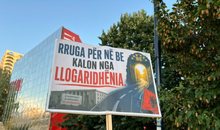
Spicy banners at the protest: The path to the EU passes through accountability!
2026-07-06 20:40:40

10 tips to boost your energy the day after a bad night's sleep
2026-07-06 20:09:11
Etna erupts again, ash covers Sicily and flights to Catania suspended
2026-07-06 19:41:24
Greece/ Albanian woman dies after giving birth
2026-07-06 19:16:41
Rising temperatures, appeal from doctors: These categories are most at risk
2026-07-06 18:57:13
"I'm a gangster, I'll tape you shut," Protester tells how he was raped by police
2026-07-06 17:43:20
Large fire in Fushë-Shijakut, flames approaching the Tirana-Durrës highway
2026-07-06 17:27:29

Farmers protest, spill milk in front of the Ministry of Agriculture in Pristina
2026-07-06 16:21:58
Extreme temperatures, IGJEUM: Red alert for fires in 3 counties!
2026-07-06 15:39:07
SPAK puts Lorena Goxhobelli and ASHK district leaders under investigation
2026-07-06 15:25:12
When a mole becomes a cause for concern - signs that should not be ignored
2026-07-06 15:07:42
Albanian executed in Sweden
2026-07-06 15:01:00
Alimehmeti: Early elections are the solution
2026-07-06 14:49:51
EU condemns Russia's destabilizing activities in the Western Balkans
2026-07-06 14:31:20
Car explodes in Shkodra, suspected to be planted with explosives
2026-07-06 14:14:50
Summer fashion according to the horoscope: The ideal outfits for each sign
2026-07-06 13:29:43
Neymar ends era with Brazil, 80 goals and a historic legacy
2026-07-06 12:50:22