 Flash News
"Albanians have killed fear", Italian media: Rama is no longer untouchable
"Go directly to Rama and get permission", the testimonies of foreign architects in "The Albanian Files"
From the Hoxhosmani brothers to Rraja, SPAK sends 15 people for trial
"Republic of Prosecutors", the citizen is arrested for the same crime for which he had already served his sentence!
Mother of 15-year-old involved in rape of 17-year-old: She has mental health problems
"Albanians have killed fear", Italian media: Rama is no longer untouchable

Politiko
2026-07-08 11:19:23
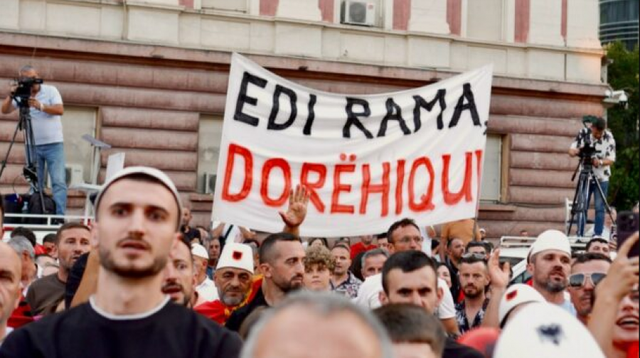
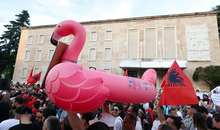
The largest popular mobilization that Albania has experienced in recent decades continues: the ability to spread through social media and efforts to delegitimize it
By Marzia Baldari, IL FATTO QUOTIDIANO
"The most important achievement of the protest is what the organizers call the killing of fear. Albanians no longer perceive the power of Prime Minister Edi Rama as untouchable. This psychological change may be the most important consequence of this movement."
For investigative journalist Jessica Tollia, who has been following the Flamingo Revolution demonstrations on the ground for more than a month for the investigative portal Shteg, this is the turning point of the largest popular mobilization that Albania has known in recent decades. More than political demands, according to her, the relationship between citizens and government has changed.
Endrin Hysa, 37, an Italian of Albanian origin, is also convinced of this. He has been living in Italy for years, but when the protests broke out, he decided to join the diaspora and return to Albania to participate in the demonstrations.
"Omerta (silence imposed by fear) has always been one of the greatest evils of this people. For decades, Albanians remained isolated from the world during communism. After its fall, many people ended up passively accepting a deeply corrupt politics," says the 37-year-old.
He then recounts several episodes from his childhood: "When I was a child, I lived in Durrës and we all knew that that multi-story building was built by the mafia, or that bar, or the one next door. For us, the presence of organized crime was normal," Endrini explains.
He then adds: "That's why I always thought that Albania could never change as long as this collective silence continued. When I saw on Instagram thousands of people taking to the streets, I realized that something extraordinary was happening. For the first time, I saw Albanians freed from fear. And I had to be here."
His story also demonstrates another distinctive element of the Flamingo Revolution: its ability to spread through social networks more than through traditional media.
"It's an unconventional protest," explains journalist Tollia. "It relies heavily on social media and uses communication methods typical of younger generations. Anyone with a smartphone and an internet connection can publish a video that can go viral within hours."
For this reason, Tollia notes, the movement has never been dependent on traditional media coverage, whether national or international.
"The protest spread through social media algorithms. And for this very reason, Prime Minister Rama has repeatedly called the algorithm 'guilty'."
According to the Albanian journalist, the prime minister tried to control the narrative from the beginning: "Initially, he tried to minimize the protests. Then, when it became clear that they represented a political reality that could no longer be ignored, he began to look for elements to delegitimize them."
According to her, Rama initially spoke of a "hybrid war".
"He claimed that the movement was influenced by Russian or Iranian interests. When these explanations did not find support in public opinion, he began identifying specific protesters, publishing their names and photos on his social media channels."
Meanwhile, the climate in the squares has become more tense.
There have been clashes and several arrests in recent days. However, one of the most frequently heard cries remains: "The police are with us."
"The use of force cannot be justified by saying that some protesters threw flour or eggs at the deputies' vehicles," says Tollia.
"So far there has been no institutional reaction regarding the violence denounced by some of the arrested. We have seen people already neutralized and lying on the ground being hit with rubber batons."
These episodes of violence, Tollia further explains, were quickly incorporated into the government narrative.
"It was predictable that these episodes would be used to strengthen the government's narrative. And that is exactly what is happening. Some communications experts believe that the Socialist Party is pursuing a coordinated strategy of message discipline and political spin."
However, according to the journalist, the clashes have not weakened support for the protest.
"The national July 4th demonstration, which brought thousands of people to the streets, showed that the protest continues to mobilize citizens just as it did on the first day. The images of parents bringing their children to the protests and letting them draw while sitting on the asphalt are the clearest proof that the majority of participants do not call for violence. They continue to support the movement with the same enthusiasm as at the beginning."
The demands of thousands of protesters remain the same: a profound political change and the resignation of Edi Rama, who at the moment has no intention of leaving office.
"I can't say whether Rama will resign or not," Tollia concludes.
"He himself has repeated several times that this possibility is not part of his plans. What I can say is that this protest will have a significant political cost for him."
Latest news
Bloomberg: NATO may cancel summit in Albania next year
2026-07-08 12:01:43
Coach Roberto Martinez leaves Portugal after World Cup elimination
2026-07-08 11:50:55
Why is nighttime heat endangering our health?
2026-07-08 11:42:59
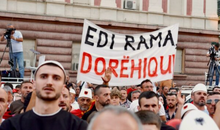
"Albanians have killed fear", Italian media: Rama is no longer untouchable
2026-07-08 11:19:23

Protests/ American economics professor: Time for Rama to open the exit door
2026-07-08 10:46:21

What is expected from the NATO Summit in Turkey?
2026-07-08 10:25:56
With invoice, the government spends 4.2 million euros against the protest
2026-07-08 10:10:36
Property transfer in Dibër, former SP candidate arrested
2026-07-08 09:57:37
From the Hoxhosmani brothers to Rraja, SPAK sends 15 people for trial
2026-07-08 09:50:19
BIRN: Ownership 'red lines' are increasing self-censorship in Albanian media
2026-07-08 09:30:04

Plotësohen 8 ekipet çerekfinaliste, axhenda e plotë e katër ndeshjeve
2026-07-08 09:09:33
Sot certifikohen rezultatet e zgjedhjeve në Kosovë, çfarë pritet
2026-07-08 09:00:22



Foreign exchange, how much foreign currencies are sold and bought today
2026-07-08 08:14:56

Horoskopi, njihuni me parashikimin e yjeve
2026-07-08 07:39:50
Posta e mëngjesit/ Me 2 rreshta: Çfarë pati rëndësi dje në Shqipëri
2026-07-08 07:20:12
Parashikimi i motit, 8 korrik 2026
2026-07-08 07:04:53


Patronage activist caught "in the act" taking photos from the Parliament
2026-07-07 21:17:28
Government allocates 4 million euros from emergency fund for Kanye West concert
2026-07-07 20:06:57
A'SPAK SPAK?! Secret justice as a method
2026-07-07 19:46:24
Court releases 4 FNSH officers arrested for Hasan Ferracak's escape
2026-07-07 19:31:56
University applications start at the end of July, how will the process develop?
2026-07-07 18:28:37
WHO warns Europe of new heatwave: Could face deadlier weeks
2026-07-07 17:18:44
"Benz" explodes in flames on the Qafë Plloçë-Pogradec axis
2026-07-07 16:58:51
Triple accident on the Korça-Pogradec road, one injured
2026-07-07 16:41:54

Six issues to follow at the NATO summit in Turkey
2026-07-07 16:04:21
Murder of 20-year-old Albanian in Sweden, suspected perpetrator arrested
2026-07-07 15:40:07
Lifestyle is increasing mortality, diabetes remains the leading cause
2026-07-07 15:24:46


Appeal confirms fraud conviction, Marine Le Pen risks presidential race
2026-07-07 14:29:46
Experts warn: Phone use is changing our bodies
2026-07-07 13:52:30
WHO warns Europe of another heatwave: 'Deadliest' week ahead
2026-07-07 13:21:27



Knife fight in Tirana, three arrested, 17-year-old wanted
2026-07-07 10:15:42
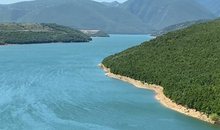
Fierza drops to lowest level in recent weeks due to drought
2026-07-07 09:45:55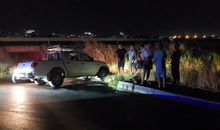
Serious accident in Durrës, motorcycle ends up in canal
2026-07-07 09:27:29
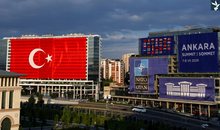
Trump heads to Ankara for key NATO summit
2026-07-07 09:00:17


Temperatures up to 31 degrees Celsius, weather forecast for today
2026-07-07 08:11:59
Morning Post/ In 2 lines: What mattered yesterday in Albania
2026-07-07 07:53:51

Mercury in the background continues, who wins and who loses this week
2026-07-06 21:49:56
Albania is flooded with asylum seekers from Egypt and Afghanistan
2026-07-06 21:19:30
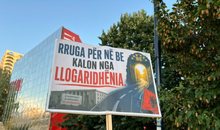
Spicy banners at the protest: The path to the EU passes through accountability!
2026-07-06 20:40:40

10 tips to boost your energy the day after a bad night's sleep
2026-07-06 20:09:11
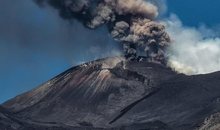
Etna erupts again, ash covers Sicily and flights to Catania suspended
2026-07-06 19:41:24
Greece/ Albanian woman dies after giving birth
2026-07-06 19:16:41
Rising temperatures, appeal from doctors: These categories are most at risk
2026-07-06 18:57:13
"I'm a gangster, I'll tape you shut," Protester tells how he was raped by police
2026-07-06 17:43:20
Large fire in Fushë-Shijakut, flames approaching the Tirana-Durrës highway
2026-07-06 17:27:29

Farmers protest, spill milk in front of the Ministry of Agriculture in Pristina
2026-07-06 16:21:58
Extreme temperatures, IGJEUM: Red alert for fires in 3 counties!
2026-07-06 15:39:07
SPAK puts Lorena Goxhobelli and ASHK district leaders under investigation
2026-07-06 15:25:12
When a mole becomes a cause for concern - signs that should not be ignored
2026-07-06 15:07:42
Albanian executed in Sweden
2026-07-06 15:01:00
Alimehmeti: Early elections are the solution
2026-07-06 14:49:51