 Flash News
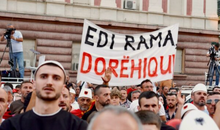
"Albanians have killed fear", Italian media: Rama is no longer untouchable
"Go directly to Rama and get permission", the testimonies of foreign architects in "The Albanian Files"
From the Hoxhosmani brothers to Rraja, SPAK sends 15 people for trial
"Republic of Prosecutors", the citizen is arrested for the same crime for which he had already served his sentence!
Mother of 15-year-old involved in rape of 17-year-old: She has mental health problems
"Go directly to Rama and get permission", the testimonies of foreign architects in "The Albanian Files"

Politiko
2026-07-08 11:08:51
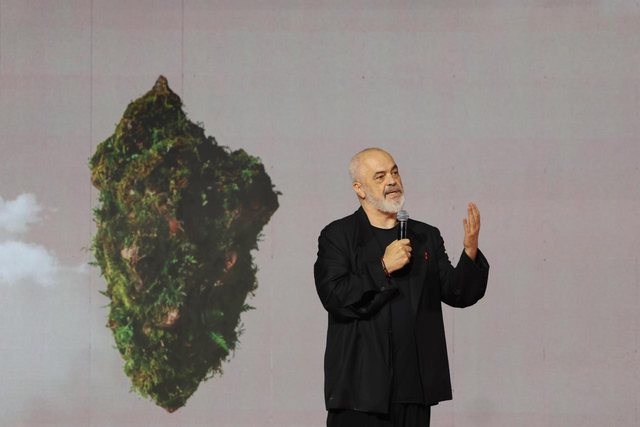
The publication of "The Albanian Files" has opened a strong debate on the way architecture and construction have developed in Albania, placing the role of Prime Minister Edi Rama in decision-making for the territory at the center.
Dutch journalist Vincent Yūsui van Gerven Oei, in an analysis, brings the accounts of international architects revealing a system where major urban and tourism projects are directly linked to access to the prime minister and centralized decision-making.
One of the strongest statements comes from architect Peter Wilson, who talks about an unusual way of operating in Albania: “There are two parallel systems. One is that you make an application to the normal planning office and it is a very long process. But the other option is that you go directly to Edi Rama. And if he likes it, then you get the permit.”
Wilson adds that this situation is seen as a privilege by foreign architects:
“It is an advantage of Albania, or perhaps a privilege that we have as foreign architects, because we can move from working as professionals and talk to politicians who can make decisions alone.”
"One man can make it happen"
Architect Olaf Schmidt, according to the author of the article, describes an extraordinary role of the prime minister in the urban development process:
“Edi Rama is essentially the driving force that makes developers choose certain architects as a condition to build or to build to a certain size.”
He adds: "Rama's blessing is a key aspect there. One person, somehow, can make it happen, right?"
"Rama controls the projects"
According to the analysis, other architects indicate that the prime minister not only has a political role, but also intervenes in the details of projects.
Wilfried Kuehn gives an example: "In Frankfurt, politicians support the bankers and you will have a three-meter lobby. While in Tirana you have a prime minister who supports you and says: we have a six-meter lobby."
While Charles Renfro, according to the author, admits that Rama personally reviews the projects: “Rama actually inspects all the projects personally.”
"This is propaganda"
The article also focuses on the way architecture is used for political imagery.
Matteo Frangi from the 51N4E studio says: “When someone is against you or wants to complain about what you are doing, I can wash my hands and say: look, I called the best architects. Who are you to judge what the best architect does?”
When he searches for the word to describe this strategy, he pauses: “It’s also a matter of… how can you say it?”
The author intervenes: “Propaganda, Matteo. That’s the word you’re looking for.”
"Rama feeds the egos of architects"
The author argues that the prime minister uses the prestige of international architects to create an image of development, while according to him the main beneficiaries are a small group of investors.
The text quotes Sam Chermayeff: “I realized that the whole system is partly related to housing, but also partly related to the fact that Edi brings money to Albania.”
He adds: “They are taking investments from abroad and returning them to finance the state.”
But he also acknowledges the risks. “In the end, there will probably be some ugly things and some urban situations that won’t work. And I hope I’m not part of them.”
"Rama is not like other politicians, he is an artist"
Architect Elizabeth Diller describes Rama differently from traditional politicians.
"What distinguishes Edi Rama from other politicians is that he is an artist. He understands it. He is not much different from people who collaborate in the creation of architectural works."
She calls this “a kind of curatorial strategy that the prime minister brings.”
Author's conclusion
According to the author of the analysis, this evidence points to a system where political power, construction, and economic interests are closely linked.
He raises the question of how a prime minister can have such a large influence over urban projects and territory, claiming that this goes beyond the normal rules of a democracy.
Latest news
Bloomberg: NATO may cancel summit in Albania next year
2026-07-08 12:01:43
Coach Roberto Martinez leaves Portugal after World Cup elimination
2026-07-08 11:50:55
Why is nighttime heat endangering our health?
2026-07-08 11:42:59
"Albanians have killed fear", Italian media: Rama is no longer untouchable
2026-07-08 11:19:23

Protests/ American economics professor: Time for Rama to open the exit door
2026-07-08 10:46:21
What is expected from the NATO Summit in Turkey?
2026-07-08 10:25:56
With invoice, the government spends 4.2 million euros against the protest
2026-07-08 10:10:36
Property transfer in Dibër, former SP candidate arrested
2026-07-08 09:57:37
From the Hoxhosmani brothers to Rraja, SPAK sends 15 people for trial
2026-07-08 09:50:19
BIRN: Ownership 'red lines' are increasing self-censorship in Albanian media
2026-07-08 09:30:04

Plotësohen 8 ekipet çerekfinaliste, axhenda e plotë e katër ndeshjeve
2026-07-08 09:09:33
Sot certifikohen rezultatet e zgjedhjeve në Kosovë, çfarë pritet
2026-07-08 09:00:22

Foreign exchange, how much foreign currencies are sold and bought today
2026-07-08 08:14:56

Horoskopi, njihuni me parashikimin e yjeve
2026-07-08 07:39:50
Posta e mëngjesit/ Me 2 rreshta: Çfarë pati rëndësi dje në Shqipëri
2026-07-08 07:20:12
Parashikimi i motit, 8 korrik 2026
2026-07-08 07:04:53

Patronage activist caught "in the act" taking photos from the Parliament
2026-07-07 21:17:28

Government allocates 4 million euros from emergency fund for Kanye West concert
2026-07-07 20:06:57
A'SPAK SPAK?! Secret justice as a method
2026-07-07 19:46:24
Court releases 4 FNSH officers arrested for Hasan Ferracak's escape
2026-07-07 19:31:56
University applications start at the end of July, how will the process develop?
2026-07-07 18:28:37
WHO warns Europe of new heatwave: Could face deadlier weeks
2026-07-07 17:18:44
"Benz" explodes in flames on the Qafë Plloçë-Pogradec axis
2026-07-07 16:58:51
Triple accident on the Korça-Pogradec road, one injured
2026-07-07 16:41:54

Six issues to follow at the NATO summit in Turkey
2026-07-07 16:04:21
Murder of 20-year-old Albanian in Sweden, suspected perpetrator arrested
2026-07-07 15:40:07
Lifestyle is increasing mortality, diabetes remains the leading cause
2026-07-07 15:24:46


Appeal confirms fraud conviction, Marine Le Pen risks presidential race
2026-07-07 14:29:46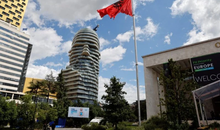

Experts warn: Phone use is changing our bodies
2026-07-07 13:52:30
WHO warns Europe of another heatwave: 'Deadliest' week ahead
2026-07-07 13:21:27




Knife fight in Tirana, three arrested, 17-year-old wanted
2026-07-07 10:15:42
Fierza drops to lowest level in recent weeks due to drought
2026-07-07 09:45:55
Serious accident in Durrës, motorcycle ends up in canal
2026-07-07 09:27:29
Trump heads to Ankara for key NATO summit
2026-07-07 09:00:17

Temperatures up to 31 degrees Celsius, weather forecast for today
2026-07-07 08:11:59
Morning Post/ In 2 lines: What mattered yesterday in Albania
2026-07-07 07:53:51

Mercury in the background continues, who wins and who loses this week
2026-07-06 21:49:56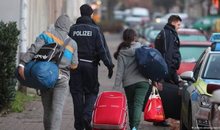
Albania is flooded with asylum seekers from Egypt and Afghanistan
2026-07-06 21:19:30
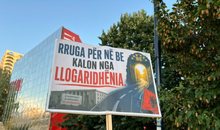
Spicy banners at the protest: The path to the EU passes through accountability!
2026-07-06 20:40:40

10 tips to boost your energy the day after a bad night's sleep
2026-07-06 20:09:11
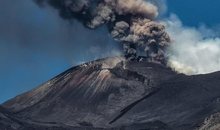
Etna erupts again, ash covers Sicily and flights to Catania suspended
2026-07-06 19:41:24
Greece/ Albanian woman dies after giving birth
2026-07-06 19:16:41
Rising temperatures, appeal from doctors: These categories are most at risk
2026-07-06 18:57:13
"I'm a gangster, I'll tape you shut," Protester tells how he was raped by police
2026-07-06 17:43:20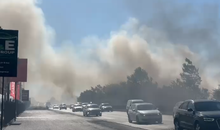
Large fire in Fushë-Shijakut, flames approaching the Tirana-Durrës highway
2026-07-06 17:27:29


Farmers protest, spill milk in front of the Ministry of Agriculture in Pristina
2026-07-06 16:21:58

Extreme temperatures, IGJEUM: Red alert for fires in 3 counties!
2026-07-06 15:39:07
SPAK puts Lorena Goxhobelli and ASHK district leaders under investigation
2026-07-06 15:25:12
When a mole becomes a cause for concern - signs that should not be ignored
2026-07-06 15:07:42
Albanian executed in Sweden
2026-07-06 15:01:00
Alimehmeti: Early elections are the solution
2026-07-06 14:49:51