 Flash News
FIFA decision shocks England, Quansah ruled out for two matches
Property alienation, 12 security measures issued for managers and officials of the Durrës Mortgage
The match between England and Norway risks being postponed, this is the reason
Domestic crime/ Wife killed with shotgun, perpetrator and victim identified
Gunfire in Shkodra, one victim suspected
Irena Beqiraj
“The euro has depreciated because the lek has strengthened,” says the socialist MP, whose existence caught my eye because in the debate opposite her was a journalist of the caliber of Lutfi Dervishi.
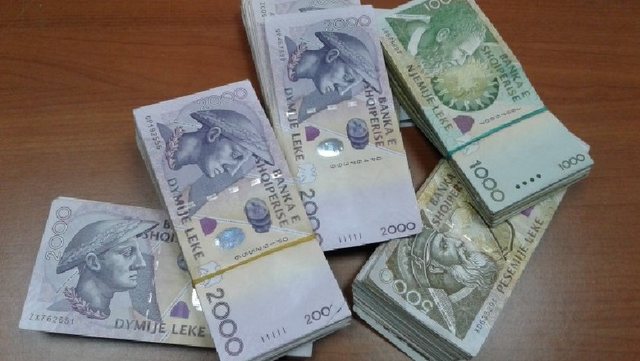
The question that a woman or man who understands economics as much as a second-year student of the Faculty of Economics asks is: Does the depreciation of the euro, or the strengthening of the lek, as the MP wants to call it, even though they are exactly the same thing, indicate a fair valuation or an overvaluation of the lek in relation to foreign currencies?
In the economy, there are not one, but two exchange rate equilibria.
The first is the “current” exchange rate equilibrium, which balances the supply and demand for foreign currency in the financial markets, and the second is the “industrial competitive” exchange rate equilibrium, which is the rate that ensures the competitiveness of domestic production in national and international markets. In the case of the lek/euro exchange rate, it is determined by comparing the productivity of the Albanian economy with the productivity of the European economy.
While strengthening refers only to the change in the current exchange rate, appreciation or overvaluation is determined by comparing the exchange rate set in financial markets with the competitive industrial exchange rate. The domestic currency is valued correctly when the current exchange rate tends to be at the levels of the exchange rate achieved in the competitive industrial equilibrium.
Whereas, when the current exchange rate is lower than the accepted values of the competitive industrial exchange rate, the currency is called overvalued.
From the econometric analysis of productivity data, the competitive industrial lek/euro exchange rate should be at the level of 1 euro = 128–134 lek. While today one euro costs 93 lek. This shows that the lek is overvalued. This is also not good news for our economy.
But why is the lek overvalued?
Many years of practice have shown that the exchange rate in financial markets, in developing countries, depends less and less on trade flows and more and more on the nature of foreign capital flows.
For example, in 2025, the total flow of foreign direct investment reached 1.64 billion euros, with an increase of 3.5% compared to 2024.
The structure of foreign direct investment is presented as follows:
* 51% of the total consists of profits made by existing companies and reinvested. In other words, 51% comes as a result of the expansion of existing companies through profits made in the country.
* 31% consists of investments by foreigners in real estate.
* The remaining part, about 18%, is invested in other sectors, such as financial intermediation, banking and energy.
Although this high level was presented by socialists as a great economic achievement, the nature of these investments shows that they are very little related to increased productivity, causing long-term damage.
To simplify the explanation a little, I am comparing them for a moment with the investment that each of us makes in our child. Investing in the education and development of the child's skills creates the opportunity for the formation of a stable, productive and independent individual. Also, in an economy, when foreign direct investments flow into productive sectors, such as manufacturing, industry and information technology, they affect the increase in the productive capacity of the economy, as they create jobs and transfer technology and knowledge, thus promoting sustainable economic growth.
Whereas, when we invest more in expensive clothes, phones, headphones or toys for the child, undoubtedly, in the short term, both the parent and the child will feel good, but the result in the long term may be “a spoiled lazy person at home”.
Likewise, investments in construction, tourism or real estate purchases by foreign individuals do not increase the productivity of the economy and do not transfer technology or knowledge. So, when foreign investments are made in sectors where jobs have low productivity and wages, or where the government offers public property and fiscal incentives, they leave the country almost empty-handed.
Can your child develop his skills faster and better than his peers, when only 18% of your investment goes to increasing his skills and 82% to appearance and entertainment? Regardless of the amount invested, when the division is such, the result is known.
So, does the Albanian economy need more construction, which, to beautify and sell as development, we dress in a tourist costume, while, to make it more profitable for the investor, we add casinos as “jewels”?
The more the domestic currency is overvalued, the lower the foreign debt seems, the higher the gross domestic product expressed in euros seems; likewise, salaries expressed in euros seem higher, so even though we live in Albania as the MP reminded the journalist, the ministers present everything in euros. EVEN though inflation is kept under control. But not neutralizing this overvaluation has undesirable effects on the production structure and, consequently, on the sustainability of long-term growth.
An overvalued domestic currency stimulates imports of intermediate and final goods, creating problems related not only to the profitability of investments, but also to the competitiveness of domestic production, and the increase in living costs for the ordinary citizen.
There is a saying from my side: “The river does not always bring logs.” The moment the inflows of capital, from formal or even informal channels (which are now accepted in SPAK files), will decrease and the “appearance” that caused the overvaluation, which you enjoy as a strengthening, will no longer exist, then you will understand what irreparable damage you have done to the country's economy.
But then it will be too late!
Latest news

Protest/Pedagogue: 4 million euros for Kanye West is "the next concession"
2026-07-09 19:45:53
French MEP joins protests in Albania: Support for the "Pink Flamingo Revolution"
2026-07-09 19:28:07


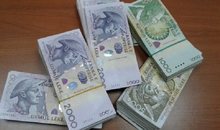
Has the lek strengthened or overvalued?
2026-07-09 17:58:05

The trial on the merits for Ilir Meta and Monika Kryemadhi is postponed
2026-07-09 16:47:58
The match between England and Norway risks being postponed, this is the reason
2026-07-09 16:12:46
Murder in Shkodra/ Relatives: Peaceful family, no problems
2026-07-09 16:10:02
Kurti invites opposition leaders to a meeting to create new institutions
2026-07-09 15:43:05

This is the 62-year-old man who killed his wife in Shkodra
2026-07-09 15:01:43

Domestic crime/ Wife killed with shotgun, perpetrator and victim identified
2026-07-09 14:05:18
Gunfire in Shkodra, one victim suspected
2026-07-09 13:49:41
Weapons cache discovered in Fier, Prosecution sends 38-year-old to trial
2026-07-09 13:35:48

Bota e muzikës në zi, ndahet nga jeta në moshën 75-vjeçare ikona Bonnie Tyler
2026-07-09 12:56:29
Monika Kryemadhi in the Criminal Court: The cell phone was seized illegally
2026-07-09 12:45:54

VALEN MP reacts after border detention: Albania is no one's property
2026-07-09 12:15:44
Albanian gang in Belgium sentenced for trafficking 7 tons of cocaine
2026-07-09 12:01:14
Justin Bieber, Shakira and Madonna to perform at 2026 World Cup final
2026-07-09 11:52:54
Euro falls, inflation rises and domestic production loses ground
2026-07-09 11:39:36
Trial at the GJKKO, Meta's new lawyer appears in the session
2026-07-09 11:29:47
Nighttime accident in Gramsh, man and woman injured
2026-07-09 11:20:25
Meta seeks 134 witnesses, GJKKO delivers decision today
2026-07-09 10:56:54

At the peak of the production season, vegetable prices 'fly'
2026-07-09 10:21:14
The African heat returns, the thermometer reaches 40 degrees this weekend
2026-07-09 10:08:08
Opinions from 'anonymous' authors target Flamingo protests
2026-07-09 10:07:15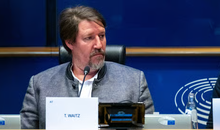
MEP Waitz: The law on protected areas endangers Albania's path to the EU
2026-07-09 09:52:55
"Le Courrier des Balkans": Edi Rama and the megalomania of power
2026-07-09 09:40:26
The economics of concerts, the prime minister's imaginary 100 million euros
2026-07-09 09:28:19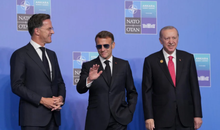
Erdogan's strange gift to NATO leaders
2026-07-09 09:11:15
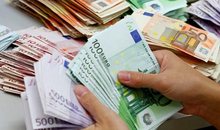
Foreign exchange, the rate at which foreign currencies are sold and bought
2026-07-09 08:30:41
“Uniteti i jashtëzakonshëm” i NATO-s dhe mesazhet kryesore nga samiti në Turqi
2026-07-09 08:11:17

Horoskopi, njihuni me parashikim e yjeve
2026-07-09 07:46:15
Alternime kthjellimesh e vranësirash, parashikimi i motit
2026-07-09 07:25:59
Posta e mëngjesit/ Me 2 rreshta: Çfarë pati rëndësi dje në Shqipëri
2026-07-09 07:02:12




Rama brings West in Tirana, using Eastern premises
2026-07-08 20:41:42


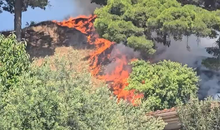
Fire on Kuzum Baba hill in Vlora, flames endanger homes and Tekke
2026-07-08 18:09:45


Shqipëria po plaket, qeveria pa plan
2026-07-08 15:57:26

Skandal te kardiologjia/ Muret e dhomave të çara dhe gërvishtura
2026-07-08 15:29:38

The calendar is published, here's when the new school year 2026-2027 will begin
2026-07-08 14:53:22
Living in Albania is unaffordable, inflation is at its highest level
2026-07-08 14:10:43

Euro reaches another historic low, drops to 93.8 lekë
2026-07-08 13:30:31
Global fertility crisis: 54 million women over 35 unable to get pregnant
2026-07-08 13:11:51
A red card "bomber" will referee the France-Morocco match
2026-07-08 13:03:57
Where is the heat wave hitting hardest in Europe?
2026-07-08 12:37:51

Bloomberg: NATO may cancel summit in Albania next year
2026-07-08 12:01:43
Coach Roberto Martinez leaves Portugal after World Cup elimination
2026-07-08 11:50:55
Why is nighttime heat endangering our health?
2026-07-08 11:42:59
"Albanians have killed fear", Italian media: Rama is no longer untouchable
2026-07-08 11:19:23

Protests/ American economics professor: Time for Rama to open the exit door
2026-07-08 10:46:21