 Flash News
Rama attacks the protest for "Corriere della Sera": Digital hysteria, megaphones don't knock me down
"Le Courrier des Balkans": Edi Rama and the megalomania of power
Shqipëria po humbet fuqinë punëtore, 67% e popullsisë në moshë pune do të emigrojë
Rama brings West in Tirana, using Eastern premises
Global fertility crisis: 54 million women over 35 unable to get pregnant
"Le Courrier des Balkans": Edi Rama and the megalomania of power

Politiko
2026-07-09 09:40:26
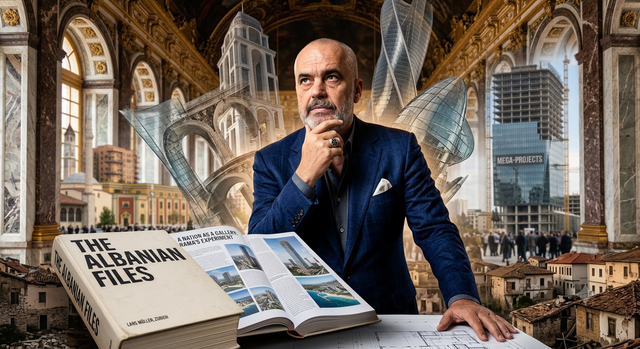
AI-generated photo
"Edi Rama or megalomania in power" - with this title, the French media "Le Courrier des Balkans" dedicates a long article to the book "The Albanian Files", presenting it as a mirror of an Albania filled with gigantic architectural projects.
The article raises debates over the country's development model, the role of the prime minister in selecting projects, and criticisms of the lack of transparency.
Article:
Edi Rama is accused of turning Albania into a personal space for experiments. In the voluminous book “The Albanian Files”, an 800-page work published by the Lars Müller publishing house in Zurich, Edi Rama is presented not only as the head of government, but above all as the main architect of an Albania transformed into an open art gallery.
This monumental catalog summarizes the projects of 60 international architecture studios and reveals a well-organized mechanism: the state paves the way, architects unveil their ideas, while private investors – often mentioned in sensitive investigations – finance the projects.
The book includes a total of 523 projects. Of these, 57 have been completed, 53 are in the implementation process, while 47 are awaiting permits. In 41% of cases, the name of the project's client or financier is not disclosed.
Between giant marinas, resorts spanning hundreds of hectares, and 40- to 70-story towers rising in the heart of Tirana, the country is awash with spectacular projects. These interventions affect both the capital and the most coveted coastal areas, especially around Tirana's artificial lake and coastline.
Edi Rama personally recruits many architects, a practice he followed even when he was mayor of Tirana.
The case of American architect Sam Chermayeff is cited as a significant example. On May 1, 2024, at 10:00 PM, he receives a call from his friend Pablo Bofill: “Edi will call you.” Moments later, Adelajda Roka, director of the Territorial Development Agency, proposes two projects in Tirana, respectively with areas of 15 thousand and 30 thousand square meters.
Chermayeff accepts “without fully understanding what was happening.” A few weeks later, he is met on the airport tarmac and taken to a villa called the “House of Comrades.” There he meets three businessmen with G-Wagon cars, Richard Mille watches and Cartier bracelets, who give him complete freedom to design a 44-story tower. The American proudly calls them “our guys.”
Rapid modernization prompts criticism
This accelerated modernization has drawn strong criticism. According to its opponents, it shows a deviation of power, which ignores the voice of citizens and privatizes the country's most valuable territories.
On the coast, the projects are gigantic in size:
Orikum Oasis – 500 thousand square meters;
Livadh Resorts – 242 thousand square meters;
MVRDV's masterplan for the Narta lagoon – 639 hectares.
Protected areas – lagoons, deltas and national parks – are directly at the focus of these projects, despite often worrying environmental assessments.
SPAK investigations have previously highlighted links between some of these developments, drug trafficking, and the forgery of property documents.
"A government conceived as a permanent spectacle"
Beyond the numbers, “The Albanian Files” presents a way of governance constructed as an ongoing performance. Festivals, renovated villas, and international interviews serve as part of a scenography that aims to attract a foreign audience.
Edi Rama describes architects as "God's privileged children", the only ones allowed to "play as if they were God".
For citizens who have been protesting for weeks against the concreting of Narta and the privatization of the coast, this book is seen as an official celebration of the disappearance of the word "no".
According to critics, it presents an Albania where the voice of citizens is hidden in the face of a spectacular, but not transparent, vision of modernization.
“The Albanian Files” is not just an architectural catalog: it is the manifesto of a government that sees itself as the curator of a gallery-place, while civil society remains a mere spectator.
The latest reaction came last week, when protesters officially handed over the book to SPAK, calling it "Rama's cursed book" and presenting it as the first material evidence in a suspected criminal case related to these urban projects.
Dokumenta bashkëngjitur
Latest news

At the peak of the production season, vegetable prices 'fly'
2026-07-09 10:21:14
The African heat returns, the thermometer reaches 40 degrees this weekend
2026-07-09 10:08:08
Opinions from 'anonymous' authors target Flamingo protests
2026-07-09 10:07:15
MEP Waitz: The law on protected areas endangers Albania's path to the EU
2026-07-09 09:52:55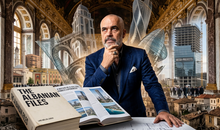
"Le Courrier des Balkans": Edi Rama and the megalomania of power
2026-07-09 09:40:26
The economics of concerts, the prime minister's imaginary 100 million euros
2026-07-09 09:28:19
Erdogan's strange gift to NATO leaders
2026-07-09 09:11:15
Foreign exchange, the rate at which foreign currencies are sold and bought
2026-07-09 08:30:41
“Uniteti i jashtëzakonshëm” i NATO-s dhe mesazhet kryesore nga samiti në Turqi
2026-07-09 08:11:17
Horoskopi, njihuni me parashikim e yjeve
2026-07-09 07:46:15
Alternime kthjellimesh e vranësirash, parashikimi i motit
2026-07-09 07:25:59
Posta e mëngjesit/ Me 2 rreshta: Çfarë pati rëndësi dje në Shqipëri
2026-07-09 07:02:12

Rama brings West in Tirana, using Eastern premises
2026-07-08 20:41:42

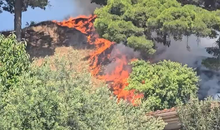
Fire on Kuzum Baba hill in Vlora, flames endanger homes and Tekke
2026-07-08 18:09:45

Shqipëria po plaket, qeveria pa plan
2026-07-08 15:57:26
Skandal te kardiologjia/ Muret e dhomave të çara dhe gërvishtura
2026-07-08 15:29:38
The calendar is published, here's when the new school year 2026-2027 will begin
2026-07-08 14:53:22
Living in Albania is unaffordable, inflation is at its highest level
2026-07-08 14:10:43

Euro reaches another historic low, drops to 93.8 lekë
2026-07-08 13:30:31

Global fertility crisis: 54 million women over 35 unable to get pregnant
2026-07-08 13:11:51
A red card "bomber" will referee the France-Morocco match
2026-07-08 13:03:57
Where is the heat wave hitting hardest in Europe?
2026-07-08 12:37:51
Bloomberg: NATO may cancel summit in Albania next year
2026-07-08 12:01:43
Coach Roberto Martinez leaves Portugal after World Cup elimination
2026-07-08 11:50:55
Why is nighttime heat endangering our health?
2026-07-08 11:42:59
"Albanians have killed fear", Italian media: Rama is no longer untouchable
2026-07-08 11:19:23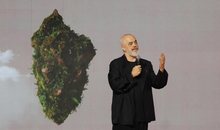

Protests/ American economics professor: Time for Rama to open the exit door
2026-07-08 10:46:21
What is expected from the NATO Summit in Turkey?
2026-07-08 10:25:56
With invoice, the government spends 4.2 million euros against the protest
2026-07-08 10:10:36
Property transfer in Dibër, former SP candidate arrested
2026-07-08 09:57:37
From the Hoxhosmani brothers to Rraja, SPAK sends 15 people for trial
2026-07-08 09:50:19
BIRN: Ownership 'red lines' are increasing self-censorship in Albanian media
2026-07-08 09:30:04

Plotësohen 8 ekipet çerekfinaliste, axhenda e plotë e katër ndeshjeve
2026-07-08 09:09:33
Sot certifikohen rezultatet e zgjedhjeve në Kosovë, çfarë pritet
2026-07-08 09:00:22
Foreign exchange, how much foreign currencies are sold and bought today
2026-07-08 08:14:56
Horoskopi, njihuni me parashikimin e yjeve
2026-07-08 07:39:50
Posta e mëngjesit/ Me 2 rreshta: Çfarë pati rëndësi dje në Shqipëri
2026-07-08 07:20:12
Parashikimi i motit, 8 korrik 2026
2026-07-08 07:04:53

Patronage activist caught "in the act" taking photos from the Parliament
2026-07-07 21:17:28
Government allocates 4 million euros from emergency fund for Kanye West concert
2026-07-07 20:06:57
A'SPAK SPAK?! Secret justice as a method
2026-07-07 19:46:24
Court releases 4 FNSH officers arrested for Hasan Ferracak's escape
2026-07-07 19:31:56
University applications start at the end of July, how will the process develop?
2026-07-07 18:28:37
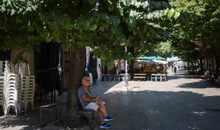
WHO warns Europe of new heatwave: Could face deadlier weeks
2026-07-07 17:18:44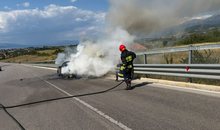
"Benz" explodes in flames on the Qafë Plloçë-Pogradec axis
2026-07-07 16:58:51
Triple accident on the Korça-Pogradec road, one injured
2026-07-07 16:41:54

Six issues to follow at the NATO summit in Turkey
2026-07-07 16:04:21
Murder of 20-year-old Albanian in Sweden, suspected perpetrator arrested
2026-07-07 15:40:07
Lifestyle is increasing mortality, diabetes remains the leading cause
2026-07-07 15:24:46