 Flash News
Rama attacks the protest for "Corriere della Sera": Digital hysteria, megaphones don't knock me down
"Le Courrier des Balkans": Edi Rama and the megalomania of power
Shqipëria po humbet fuqinë punëtore, 67% e popullsisë në moshë pune do të emigrojë
Rama brings West in Tirana, using Eastern premises
Global fertility crisis: 54 million women over 35 unable to get pregnant
"The Guardian" editorial on protests: Democracy with "bulldozers" is angering Albanians

Politiko
2026-07-09 08:43:53
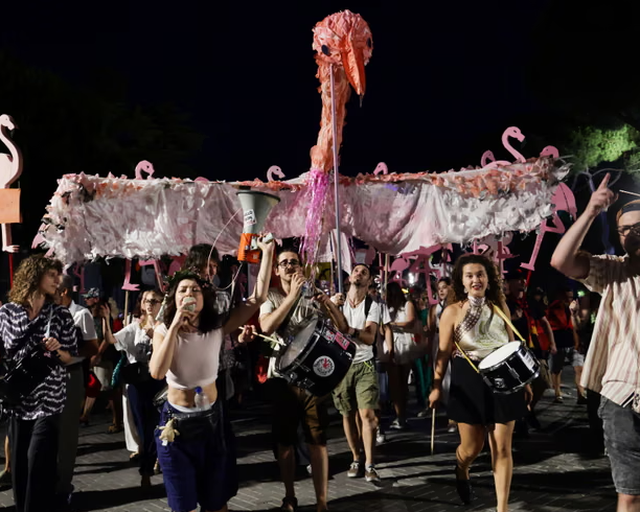
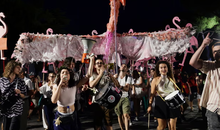
The editorial of the prestigious British newspaper "The Guardian" pays attention to the recent protests in Albania, describing them as the "flamingo revolution".
British media writes that what began as a movement to protect nature in the area of Zvërnec, Sazan and the surrounding lagoon has turned into a broader revolt against the way of governance and the lack of transparency.
In its analysis, The Guardian emphasizes that Albanians are not opposing investments, but are demanding that development not be done at the expense of natural heritage and public interest. According to the newspaper, citizens' anger is linked to a deeper dissatisfaction with the development model and agreements that are perceived as unclear.
ARTICLE:
For more than a month, thousands of people have taken to the streets of Tirana to protest against their government, in the biggest outbreak of discontent in Albania since the fall of communism more than three decades ago. What began as an environmental concern for the protection of a nature reserve and the more than 2,500 species it shelters has morphed into a “flamingo revolution,” questioning the very direction the country is taking.
Albanians are angry that multi-billion dollar luxury developments, backed by Jared Kushner and Ivanka Trump, are endangering one of the Adriatic’s last wild areas – Zvernec, its lagoon and the nearby island of Sazan – and are outraged by the lack of transparency about the projects. The government says the deals have not been finalized. But videos of bulldozers on beaches have sparked mass protests.
Now protesters are demanding the resignation of Prime Minister Edi Rama, who won a fourth term only last year, albeit with a voter turnout of just 45%. Rama has insisted that “there is absolutely no chance that investment will stop as long as I am here”. The leader of the Socialist Party has enthusiastically sought business investment and foreign capital, arguing that they are essential for one of Europe’s poorest countries to prosper. Albanians welcome the investment, but that does not mean they want to sell their heritage – especially when the terms of the deal remain unclear. Rama has been presented as a leader who is pulling the country into the modern world. Critics at home speak of a “bulldozer democracy” that looks more attractive from afar than up close.
Rama blames anti-Trump sentiment for the backlash against the project. But, according to the editorial, the movement has much more to do with disappointment with Rama’s government and the conservative opposition led by Sali Berisha, a former president and prime minister who was once declared persona non grata in the US by the Biden administration over alleged corruption charges.
The development in Zvërnec was made possible by a 2024 legal change that allows construction in nature reserves for five-star projects. For many, this is the clearest evidence yet that ordinary citizens are being sacrificed for the benefit of the super-rich. As one elderly Albanian protester told the Guardian: “It’s been more than 30 years and our hospitals are still bad, the education system is a disaster, there are no jobs and everyone is leaving… We have learned from experience that such projects only benefit a wealthy minority.”
According to the newspaper, Albanians are demanding that politics offer them something better. There are similarities with the long-running protests in Serbia against clientelism and lack of accountability. Particularly significant is the fact that a country known for high emigration has seen educated young people return from abroad to participate in the protests. Albanians who once thought they had no future in their country are now trying to build one.
MEPs have called for an immediate halt to construction in fragile areas and warned that the resort project risks undermining Albania’s plans to join the European Union. For the Guardian, this should be a serious message to Rama, who has promised membership by 2030. But, according to the editorial, the prime minister must first listen to his citizens.
This is not just a battle to protect a precious piece of nature, however important it may be. It is a battle to decide whether the country can find a better path than short-term growth that enriches a few through shady deals.
Latest news

At the peak of the production season, vegetable prices 'fly'
2026-07-09 10:21:14
The African heat returns, the thermometer reaches 40 degrees this weekend
2026-07-09 10:08:08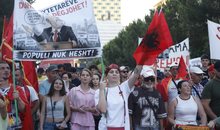
Opinions from 'anonymous' authors target Flamingo protests
2026-07-09 10:07:15
MEP Waitz: The law on protected areas endangers Albania's path to the EU
2026-07-09 09:52:55
"Le Courrier des Balkans": Edi Rama and the megalomania of power
2026-07-09 09:40:26
The economics of concerts, the prime minister's imaginary 100 million euros
2026-07-09 09:28:19
Erdogan's strange gift to NATO leaders
2026-07-09 09:11:15
Foreign exchange, the rate at which foreign currencies are sold and bought
2026-07-09 08:30:41
“Uniteti i jashtëzakonshëm” i NATO-s dhe mesazhet kryesore nga samiti në Turqi
2026-07-09 08:11:17

Horoskopi, njihuni me parashikim e yjeve
2026-07-09 07:46:15
Alternime kthjellimesh e vranësirash, parashikimi i motit
2026-07-09 07:25:59
Posta e mëngjesit/ Me 2 rreshta: Çfarë pati rëndësi dje në Shqipëri
2026-07-09 07:02:12





Rama brings West in Tirana, using Eastern premises
2026-07-08 20:41:42


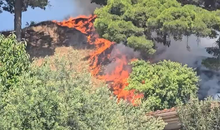
Fire on Kuzum Baba hill in Vlora, flames endanger homes and Tekke
2026-07-08 18:09:45

Shqipëria po plaket, qeveria pa plan
2026-07-08 15:57:26

Skandal te kardiologjia/ Muret e dhomave të çara dhe gërvishtura
2026-07-08 15:29:38

The calendar is published, here's when the new school year 2026-2027 will begin
2026-07-08 14:53:22

Living in Albania is unaffordable, inflation is at its highest level
2026-07-08 14:10:43


Euro reaches another historic low, drops to 93.8 lekë
2026-07-08 13:30:31

Global fertility crisis: 54 million women over 35 unable to get pregnant
2026-07-08 13:11:51
A red card "bomber" will referee the France-Morocco match
2026-07-08 13:03:57
Where is the heat wave hitting hardest in Europe?
2026-07-08 12:37:51

Bloomberg: NATO may cancel summit in Albania next year
2026-07-08 12:01:43
Coach Roberto Martinez leaves Portugal after World Cup elimination
2026-07-08 11:50:55
Why is nighttime heat endangering our health?
2026-07-08 11:42:59
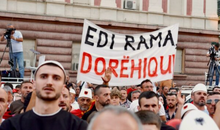
"Albanians have killed fear", Italian media: Rama is no longer untouchable
2026-07-08 11:19:23

Protests/ American economics professor: Time for Rama to open the exit door
2026-07-08 10:46:21

What is expected from the NATO Summit in Turkey?
2026-07-08 10:25:56
With invoice, the government spends 4.2 million euros against the protest
2026-07-08 10:10:36
Property transfer in Dibër, former SP candidate arrested
2026-07-08 09:57:37
From the Hoxhosmani brothers to Rraja, SPAK sends 15 people for trial
2026-07-08 09:50:19

BIRN: Ownership 'red lines' are increasing self-censorship in Albanian media
2026-07-08 09:30:04


Plotësohen 8 ekipet çerekfinaliste, axhenda e plotë e katër ndeshjeve
2026-07-08 09:09:33
Sot certifikohen rezultatet e zgjedhjeve në Kosovë, çfarë pritet
2026-07-08 09:00:22



Foreign exchange, how much foreign currencies are sold and bought today
2026-07-08 08:14:56

Horoskopi, njihuni me parashikimin e yjeve
2026-07-08 07:39:50
Posta e mëngjesit/ Me 2 rreshta: Çfarë pati rëndësi dje në Shqipëri
2026-07-08 07:20:12
Parashikimi i motit, 8 korrik 2026
2026-07-08 07:04:53


Patronage activist caught "in the act" taking photos from the Parliament
2026-07-07 21:17:28

Government allocates 4 million euros from emergency fund for Kanye West concert
2026-07-07 20:06:57
A'SPAK SPAK?! Secret justice as a method
2026-07-07 19:46:24
Court releases 4 FNSH officers arrested for Hasan Ferracak's escape
2026-07-07 19:31:56
University applications start at the end of July, how will the process develop?
2026-07-07 18:28:37
WHO warns Europe of new heatwave: Could face deadlier weeks
2026-07-07 17:18:44
"Benz" explodes in flames on the Qafë Plloçë-Pogradec axis
2026-07-07 16:58:51
Triple accident on the Korça-Pogradec road, one injured
2026-07-07 16:41:54

Six issues to follow at the NATO summit in Turkey
2026-07-07 16:04:21
Murder of 20-year-old Albanian in Sweden, suspected perpetrator arrested
2026-07-07 15:40:07
Lifestyle is increasing mortality, diabetes remains the leading cause
2026-07-07 15:24:46