 Flash News
There is no consensus on the resolution, the DP amendments are supported by MEPs, the SP rejects them
Rama attacks the protest for "Corriere della Sera": Digital hysteria, megaphones don't knock me down
At the peak of the production season, vegetable prices 'fly'
"Le Courrier des Balkans": Edi Rama and the megalomania of power
Shqipëria po humbet fuqinë punëtore, 67% e popullsisë në moshë pune do të emigrojë
Cocaine trafficking in Albania increased by 27.6% in 2025, profits invested in construction and tourism

Politiko
2026-07-09 10:36:24
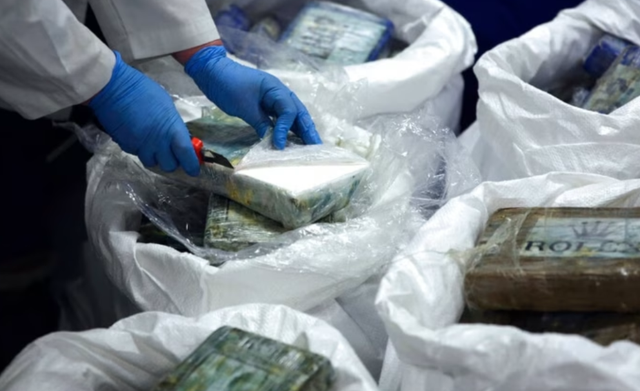
Cocaine trafficking cases in Albania increased by almost 27.6% during 2025, while the quantities seized decreased, a development that authorities link to the changing modus operandi of criminal networks and the use of more covert methods of drug trafficking.
According to the National Strategy for the Prevention and Fight against Organized Crime and Serious Crime 2026–2030, cocaine trafficking remains one of the most important threats to the country, due to high profits, connections to international criminal networks, and the use of proceeds for money laundering.
The document says that, despite the increase in detected cases, the decrease in seized quantities may indicate that criminal groups are adapting to pressure from law enforcement institutions. They are using more sophisticated methods for transporting, hiding, processing and distributing narcotics.
During the period 2024–2025, about 58% of organized crime groups operating nationwide were involved in narcotics-related activities. Drug production and trafficking are considered the dominant and most profitable criminal activity for these structures.
Profits are invested in construction and tourism.
The strategy assesses that cocaine trafficking is not only a problem of public order and security. The profits generated from this activity increase the financial power of criminal groups and fuel corruption and money laundering.
Construction and tourism are mentioned among the sectors where illicit income could be injected. The large amounts of money generated by cocaine are reinvested in sectors of the legal economy, creating risks for competition, the real estate market and the integrity of businesses.
The document also raises concerns about the involvement of young people in the distribution and trade of cocaine in consumption doses. Trafficking is also associated with the use of violence and weapons, due to conflicts between groups that control markets and supply routes.
Investigations will target organizers, logistics and money
In the face of this trend, the strategy foresees a shift from investigations focused solely on the seizure of narcotics to operations led by intelligence and technology.
The State Police should make more extensive use of criminal intelligence, analytical tools, and surveillance capabilities to identify and crack down on drug-related networks.
In areas assessed as high risk, the installation and use of technological detection systems is envisaged, including scanners, drones and mobile surveillance units.
For this reason, one of the main measures envisaged is the initiation of proactive investigations and the use of special investigative techniques. Priority should be given to cases with cross-border elements and those involving significant financial gains.
Investigations will target not only the people who transport or distribute drugs, but also the organizers, financiers, facilitators, logistical chains and assets generated by criminal activity.
Strengthening cooperation between the State Police, SPAK, the National Bureau of Investigation, the General Prosecutor's Office, Customs, the State Intelligence Service and international partners is also envisaged.
Medical cannabis and money laundering controls
The strategy also includes measures to control cannabis cultivated under license for medical or industrial purposes.
The National Cannabis Control Agency must identify cases where cultivated quantities deviate from the permits issued, verify the destruction of unauthorized production, and refer violations for administrative or criminal measures.
Information collected under the cannabis law should be exchanged with the State Police, SPAK, BKH and prosecutors, to identify illegal production, trafficking and money laundering that may be related to this activity.
The document also provides for amending the law on the control of substances used in the illegal manufacture of narcotics and its approximation with European Union legislation.
For the objective of reducing the production, availability and trafficking of narcotics, a total cost of 1.66 billion lek is foreseen for the period 2026–2030, or about 17.9 million euros. /Ekofin.al
Latest news
Euro falls, inflation rises and domestic production loses ground
2026-07-09 11:39:36
Trial at the GJKKO, Meta's new lawyer appears in the session
2026-07-09 11:29:47
Nighttime accident in Gramsh, man and woman injured
2026-07-09 11:20:25
Meta seeks 134 witnesses, GJKKO delivers decision today
2026-07-09 10:56:54
At the peak of the production season, vegetable prices 'fly'
2026-07-09 10:21:14
The African heat returns, the thermometer reaches 40 degrees this weekend
2026-07-09 10:08:08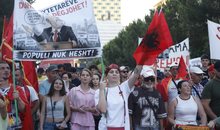
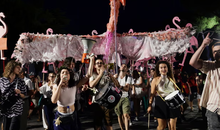
Opinions from 'anonymous' authors target Flamingo protests
2026-07-09 10:07:15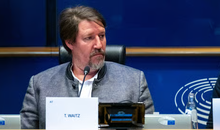
MEP Waitz: The law on protected areas endangers Albania's path to the EU
2026-07-09 09:52:55
"Le Courrier des Balkans": Edi Rama and the megalomania of power
2026-07-09 09:40:26
The economics of concerts, the prime minister's imaginary 100 million euros
2026-07-09 09:28:19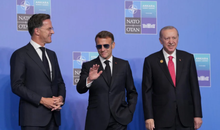
Erdogan's strange gift to NATO leaders
2026-07-09 09:11:15
Foreign exchange, the rate at which foreign currencies are sold and bought
2026-07-09 08:30:41
“Uniteti i jashtëzakonshëm” i NATO-s dhe mesazhet kryesore nga samiti në Turqi
2026-07-09 08:11:17
Horoskopi, njihuni me parashikim e yjeve
2026-07-09 07:46:15
Alternime kthjellimesh e vranësirash, parashikimi i motit
2026-07-09 07:25:59
Posta e mëngjesit/ Me 2 rreshta: Çfarë pati rëndësi dje në Shqipëri
2026-07-09 07:02:12



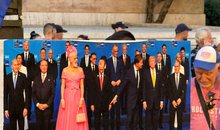

Rama brings West in Tirana, using Eastern premises
2026-07-08 20:41:42
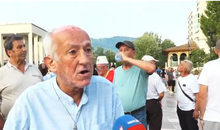
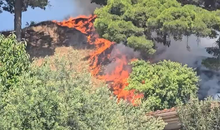
Fire on Kuzum Baba hill in Vlora, flames endanger homes and Tekke
2026-07-08 18:09:45

Shqipëria po plaket, qeveria pa plan
2026-07-08 15:57:26
Skandal te kardiologjia/ Muret e dhomave të çara dhe gërvishtura
2026-07-08 15:29:38

The calendar is published, here's when the new school year 2026-2027 will begin
2026-07-08 14:53:22
Living in Albania is unaffordable, inflation is at its highest level
2026-07-08 14:10:43

Euro reaches another historic low, drops to 93.8 lekë
2026-07-08 13:30:31
Global fertility crisis: 54 million women over 35 unable to get pregnant
2026-07-08 13:11:51
A red card "bomber" will referee the France-Morocco match
2026-07-08 13:03:57
Where is the heat wave hitting hardest in Europe?
2026-07-08 12:37:51
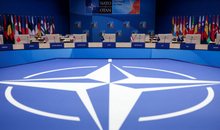
Bloomberg: NATO may cancel summit in Albania next year
2026-07-08 12:01:43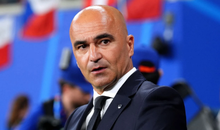
Coach Roberto Martinez leaves Portugal after World Cup elimination
2026-07-08 11:50:55
Why is nighttime heat endangering our health?
2026-07-08 11:42:59
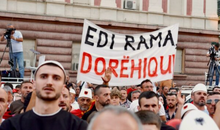
"Albanians have killed fear", Italian media: Rama is no longer untouchable
2026-07-08 11:19:23

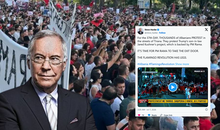
Protests/ American economics professor: Time for Rama to open the exit door
2026-07-08 10:46:21
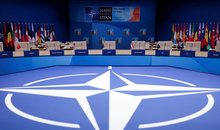
What is expected from the NATO Summit in Turkey?
2026-07-08 10:25:56
With invoice, the government spends 4.2 million euros against the protest
2026-07-08 10:10:36
Property transfer in Dibër, former SP candidate arrested
2026-07-08 09:57:37
From the Hoxhosmani brothers to Rraja, SPAK sends 15 people for trial
2026-07-08 09:50:19
BIRN: Ownership 'red lines' are increasing self-censorship in Albanian media
2026-07-08 09:30:04

Plotësohen 8 ekipet çerekfinaliste, axhenda e plotë e katër ndeshjeve
2026-07-08 09:09:33
Sot certifikohen rezultatet e zgjedhjeve në Kosovë, çfarë pritet
2026-07-08 09:00:22


Foreign exchange, how much foreign currencies are sold and bought today
2026-07-08 08:14:56
Horoskopi, njihuni me parashikimin e yjeve
2026-07-08 07:39:50
Posta e mëngjesit/ Me 2 rreshta: Çfarë pati rëndësi dje në Shqipëri
2026-07-08 07:20:12
Parashikimi i motit, 8 korrik 2026
2026-07-08 07:04:53

Patronage activist caught "in the act" taking photos from the Parliament
2026-07-07 21:17:28

Government allocates 4 million euros from emergency fund for Kanye West concert
2026-07-07 20:06:57
A'SPAK SPAK?! Secret justice as a method
2026-07-07 19:46:24
Court releases 4 FNSH officers arrested for Hasan Ferracak's escape
2026-07-07 19:31:56
University applications start at the end of July, how will the process develop?
2026-07-07 18:28:37
WHO warns Europe of new heatwave: Could face deadlier weeks
2026-07-07 17:18:44