 Flash News
There is no consensus on the resolution, the DP amendments are supported by MEPs, the SP rejects them
Rama attacks the protest for "Corriere della Sera": Digital hysteria, megaphones don't knock me down
At the peak of the production season, vegetable prices 'fly'
"Le Courrier des Balkans": Edi Rama and the megalomania of power
Shqipëria po humbet fuqinë punëtore, 67% e popullsisë në moshë pune do të emigrojë
Bardhi in the European Parliament: In Albania, the law stops in the face of power

Politiko
2026-07-09 11:08:31
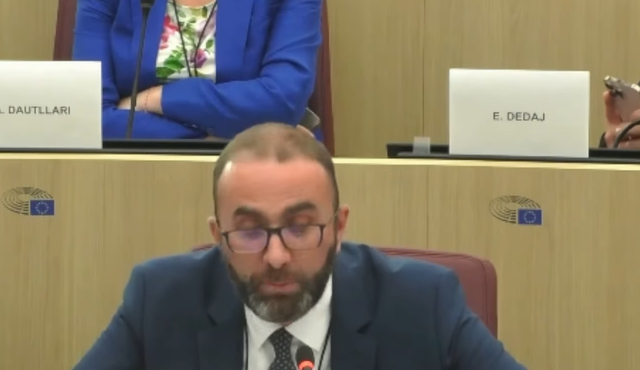
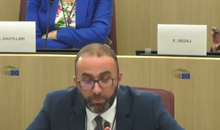
The head of the Democratic Party Parliamentary Group, Gazment Bardhi, stated at the joint EU-Albania meeting at the European Parliament that the rule of law has been violated in Albania and that the law is not applied equally to everyone.
Bardhi cited the case of Deputy Prime Minister Belinda Balluku as an example, accusing the parliamentary majority of obstructing SPAK's actions for political reasons. He also raised concerns about the non-execution of several arrest warrants against individuals linked to organized crime, claiming that this is related to political interests.
In his speech, Bardhi accused Edi Rama's government of allowing the laundering of organized crime money through investments in construction and tourism, referring to investigations by European authorities and SPAK files.
According to him, the Prime Minister's refusal to interpellate and the failure to establish a parliamentary investigative commission are indications that the law stops where power begins.
Below is the full speech delivered at the joint EU-Albania meeting;
Dear colleagues,
When we talk about fundamental rights, the rule of law, the fight against corruption and organized crime, we are actually trying to answer a fundamental question:
Is the law stronger than power?
Laws can be written well. But their true test comes at the moment when they have to act against the power itself. That is precisely where it becomes clear whether the rule of law is real, or only formal.
I am bringing you two concrete cases that show what happens in Albania when the law confronts the power.
The first is related to the fight against corruption.
When SPAK requested the authorization of the Assembly to continue the procedures against one of the highest officials of the Albanian government, Deputy Prime Minister Belinda Balluku, the parliamentary majority used the vote as a political shield. The Prime Minister ordered the majority to protect his right wing, even after SPAK itself publicly declared that the lack of security measures was harming the investigation.
This is a moment that raises a fundamental question: is the parliamentary majority used to protect institutions or to protect the power from the action of the law?
The Balluku case was not just an internal political debate. It exposed a problem that is now reflected in the European Union’s benchmarks for the closure of the Fundamental Rights Group: the need for the executive and legislature not to interfere in justice and for decisions on immunity to be guided by the standards of the Venice Commission.
The second case is related to the fight against organized crime and money laundering.
Two of the most important arrest warrants for organized crime in Albania, the one against the leader of the Elbasan gang and the one against the person considered the Prime Minister’s unofficial coordinator, still remain unexecuted. Their location has long been a public secret in the heart of Albania, but the police cannot find them. This is difficult to explain with a lack of information. It feeds the belief that the law stops where the political interest of the government begins.
Equally worrying is the phenomenon of money laundering. Investigations by law enforcement authorities in Belgium, the Netherlands, Italy, Germany and France have uncovered Albanian international cocaine trafficking organizations that invest their profits in Albania, through construction and tourism projects. Investments that cannot be realized without the decision-making and approval of the Albanian government.
I am quoting the latest file of the Albanian Special Prosecution Office against Organized Crime, SPAK: evidence received from Belgian authorities has documented with film footage meetings of senior Albanian state officials with persons involved in international drug trafficking. According to the same file, in these meetings the use of real estate and investments in construction and tourism to launder income from cocaine trafficking is discussed.
Even before this shocking fact became public, the opposition had requested an interpellation with the Prime Minister on the issue of money laundering from organized crime and corruption in construction and tourism. The Prime Minister refused to appear in Parliament.
We requested the establishment of a parliamentary investigative commission.
That was also rejected.
All these cases lead to the same question: does the law apply equally to the government, or does it cease to operate there? Because this is the true proof of the rule of law.
Dear colleagues,
Unfortunately, Albania has not yet fully passed the most difficult test of the rule of law: that the law be equally strong for all and not become weaker every time it confronts power.
Thank you.
Latest news
Euro falls, inflation rises and domestic production loses ground
2026-07-09 11:39:36
Trial at the GJKKO, Meta's new lawyer appears in the session
2026-07-09 11:29:47
Nighttime accident in Gramsh, man and woman injured
2026-07-09 11:20:25
Meta seeks 134 witnesses, GJKKO delivers decision today
2026-07-09 10:56:54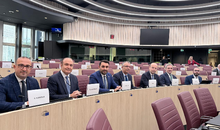

At the peak of the production season, vegetable prices 'fly'
2026-07-09 10:21:14
The African heat returns, the thermometer reaches 40 degrees this weekend
2026-07-09 10:08:08
Opinions from 'anonymous' authors target Flamingo protests
2026-07-09 10:07:15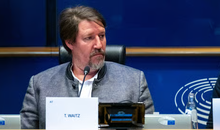
MEP Waitz: The law on protected areas endangers Albania's path to the EU
2026-07-09 09:52:55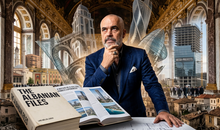
"Le Courrier des Balkans": Edi Rama and the megalomania of power
2026-07-09 09:40:26
The economics of concerts, the prime minister's imaginary 100 million euros
2026-07-09 09:28:19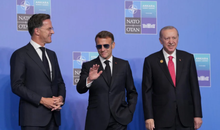
Erdogan's strange gift to NATO leaders
2026-07-09 09:11:15
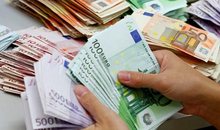
Foreign exchange, the rate at which foreign currencies are sold and bought
2026-07-09 08:30:41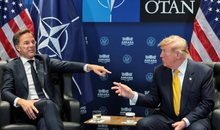
“Uniteti i jashtëzakonshëm” i NATO-s dhe mesazhet kryesore nga samiti në Turqi
2026-07-09 08:11:17

Horoskopi, njihuni me parashikim e yjeve
2026-07-09 07:46:15
Alternime kthjellimesh e vranësirash, parashikimi i motit
2026-07-09 07:25:59
Posta e mëngjesit/ Me 2 rreshta: Çfarë pati rëndësi dje në Shqipëri
2026-07-09 07:02:12



Rama brings West in Tirana, using Eastern premises
2026-07-08 20:41:42
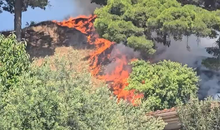
Fire on Kuzum Baba hill in Vlora, flames endanger homes and Tekke
2026-07-08 18:09:45

Shqipëria po plaket, qeveria pa plan
2026-07-08 15:57:26

Skandal te kardiologjia/ Muret e dhomave të çara dhe gërvishtura
2026-07-08 15:29:38

The calendar is published, here's when the new school year 2026-2027 will begin
2026-07-08 14:53:22
Living in Albania is unaffordable, inflation is at its highest level
2026-07-08 14:10:43


Euro reaches another historic low, drops to 93.8 lekë
2026-07-08 13:30:31

Global fertility crisis: 54 million women over 35 unable to get pregnant
2026-07-08 13:11:51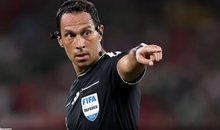
A red card "bomber" will referee the France-Morocco match
2026-07-08 13:03:57
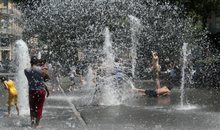
Where is the heat wave hitting hardest in Europe?
2026-07-08 12:37:51
Bloomberg: NATO may cancel summit in Albania next year
2026-07-08 12:01:43
Coach Roberto Martinez leaves Portugal after World Cup elimination
2026-07-08 11:50:55
Why is nighttime heat endangering our health?
2026-07-08 11:42:59
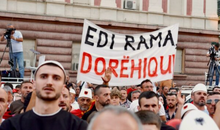
"Albanians have killed fear", Italian media: Rama is no longer untouchable
2026-07-08 11:19:23

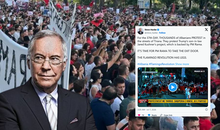
Protests/ American economics professor: Time for Rama to open the exit door
2026-07-08 10:46:21
What is expected from the NATO Summit in Turkey?
2026-07-08 10:25:56
With invoice, the government spends 4.2 million euros against the protest
2026-07-08 10:10:36
Property transfer in Dibër, former SP candidate arrested
2026-07-08 09:57:37
From the Hoxhosmani brothers to Rraja, SPAK sends 15 people for trial
2026-07-08 09:50:19
BIRN: Ownership 'red lines' are increasing self-censorship in Albanian media
2026-07-08 09:30:04

Plotësohen 8 ekipet çerekfinaliste, axhenda e plotë e katër ndeshjeve
2026-07-08 09:09:33
Sot certifikohen rezultatet e zgjedhjeve në Kosovë, çfarë pritet
2026-07-08 09:00:22

Foreign exchange, how much foreign currencies are sold and bought today
2026-07-08 08:14:56

Horoskopi, njihuni me parashikimin e yjeve
2026-07-08 07:39:50
Posta e mëngjesit/ Me 2 rreshta: Çfarë pati rëndësi dje në Shqipëri
2026-07-08 07:20:12
Parashikimi i motit, 8 korrik 2026
2026-07-08 07:04:53


Patronage activist caught "in the act" taking photos from the Parliament
2026-07-07 21:17:28
Government allocates 4 million euros from emergency fund for Kanye West concert
2026-07-07 20:06:57
A'SPAK SPAK?! Secret justice as a method
2026-07-07 19:46:24
Court releases 4 FNSH officers arrested for Hasan Ferracak's escape
2026-07-07 19:31:56
University applications start at the end of July, how will the process develop?
2026-07-07 18:28:37
WHO warns Europe of new heatwave: Could face deadlier weeks
2026-07-07 17:18:44