Spiropali lists governance problems: The government is overriding the institutions

Politiko
2026-06-05 13:51:03
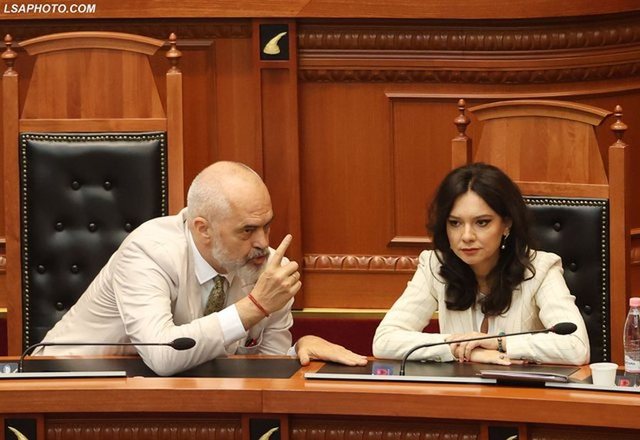
Socialist MP and former Foreign Minister Elisa Spiropali has reacted to the Zvërnec protest, which has been ongoing for 6 days in the capital.
In a post on social media, she lists a number of issues related to the way the state functions and the balance between institutions.
Speaking about the need for a "new deal for Albania," she raises concerns that the government risks overriding the system's checks and balances, weakening accountability and the role of democratic institutions.
At the core of its message lies the warning that today's challenge is no longer state-building, but limiting power within the state itself.
Full post:
A New Deal for Albania
I was a child when, through the whispers of family members and the gossip of relatives, I learned that something incredible, but true, had happened in Skanderbeg Square.
Later, I realized that something extraordinary that until that day could not even be dreamed of was a stubborn fact, a tangible reality, a "heresy" that no one was allowed to see even in their dreams: it was a spontaneous and silent protest of the citizens of Tirana against the dictatorial regime of that time.
The noisy and creative protests of these days, compared to the silent protest of that time, are not psychological slips, they are not déjà vu, they are not cerebral aberrations. They are facts so different and similar that in their time and circumstances, each has its own importance and effects, to draw the respective lessons, and, as such, must be examined with the seriousness and responsibility they deserve.
What's done cannot be undone. What is done cannot be undone, says Lady Macbeth in the sleepwalking scene with a candle in her hand.
It is easy to surround today's protests with empty talk, with conspiracies and barren conjectures: What crime did Lady Macbeth commit, why did she lose sleep, why did she get up at night sleepwalking, why did she hold a candle in her hand?
Now that all the murderous Macbeths and suspicious Hamlets have come out and entered the game, now that the murder has been done, the blood has been shed, the consciences have been shaken, the sleep has been broken, what else is there to be done? Not just anything. Something Shakespearean. Something lasting. Something that is being done cannot be undone.
Fortunately, this question has an answer.
What needs to be done today is a new agreement for Albania.
Every era has its own fundamental question. For many years, Albania's question was how to build a state. Today, the question is different. How to make the state bigger than the power and the institution stronger than the one who exercises the power. This is where the need for a new agreement for Albania begins.
Albania has already entered a phase in its history where the biggest challenge is no longer building power. The power has been built. The institutions exist. The administration exists. The laws exist. The economy is stronger than ever. Democracy is more consolidated than in the first years of transition. Albania has increased its reputation in the world and must protect its name at all costs. The challenge of our time is something else. It is the ability of the power to set boundaries within itself.
For more than thirty years, Albania has lived with the anxiety of lack. Institutions were lacking. Roads were lacking. Investments were lacking. Security was lacking. The state was lacking. Entire generations grew up with the conviction that the country's main problem was, if not the absence of the state, then the weakness of the state.
Today, for the first time, we are facing another question. What happens when power becomes stronger than the mechanisms of the same state that are supposed to control it. What happens when administrative problems increase faster than accountability. What happens when stability begins to be confused with unrelated, unaddressed causes and consequences.
This is why Albania needs a new agreement with itself.
An agreement where the strength of the state is not measured only by what it builds, but also by the reduction of its ability to control, or what it consciously agrees not to control. An agreement where the institutions that oversee power are as capable as, and more capable than, power itself.
An agreement where parliament is not just the place where decisions are made, but the place where society is heard.
An agreement where the parliamentary republic exercises all its representative, controlling and monitoring functions, because democracy weakens whenever a power grows faster than the control over it.
At the heart of this agreement lies a simple idea. No one is above the law and no one is under the law. All three powers must remain within their constitutional limits. Justice must have the power to investigate and judge. Parliament must have the power to control. The government must have the power to govern. But no one should take the power of the other. Because that is where the deformation of the state begins.
A democratic society is not measured only by the government it has. It is also measured by the opposition it produces. The opposition is not an accident of the system. It is not an obstacle to development. It is not a problem for stability. The opposition is the sense that warns when the government loses touch with reality. Societies that lose oppositionism do not only lose debate. They lose the ability to correct themselves.
Therefore, Albania needs more competition, not less. It needs a new electoral system that produces real representation and not just the reproduction of existing elites. There is a need for elections where citizens feel that their vote changes the balance, and not just statistics. There is a need for a political culture where rotation is not seen as a catastrophe and victory is not seen as ownership.
Equally important is media freedom. Because there is no strong democracy with unreliable media. There is no free citizen without free information. There is no control over power when information becomes dependent on power or disinformation. Albania needs a public space where journalists do not need permission to ask questions and where the media do not need favors to survive.
In the same way, the relationship between economy and politics must change. The coming years will not be won by the one who has the most assets. They will be won by the one who has the most knowledge. By the one who has the most technology. By the one who has the most ideas. Albania cannot remain a country where proximity to power is worth more than the ability to create value. A modern economy begins when the one who produces better and cheaper wins, and not the one who is favored by power.
This is directly related to the new generation. Albania no longer has the luxury of losing its most capable people. Competition, merit, opportunity, and not control, are the essence of change. Every young person who leaves does not take with them just a job. They take with them energy, knowledge, creativity and a future. The country needs to create conditions where mind, work and talent have more value than connection, intervention, inventory or privilege.
Equally crucial is the quality of public services. Education cannot continue to be treated as an administrative sector. It is the factory where the future of the country is produced. It is the essence of everything that surrounds us, in the present and in the future. Health cannot be measured only by investment figures, buildings, tools, etc. It is measured by the security that the citizen feels when he needs it. A modern state is not built only with mortar and bricks. It is built with knowledge, health, trust and dignity.
This is where the battle against corruption begins. Not only in courtrooms. Not only in investigative files. But in the daily culture of the state. Corruption is the ingrained belief that the rule can be bypassed without consequences. That the law can be negotiated. That power can be used as a privilege. That abuse can be normalized and glorified. The fight against it is above all a moral battle for the way we understand the state.
Albania has entered a moment where it does not need to prove that it wants to move forward. It has proven this. It needs to show that it knows how to build a state that functions even when power changes, even when interests clash, even when no one notices.
A country does not become European when it convinces others of what it is European. It becomes European when its citizens feel protected by law, respected by the state, free to build their lives without asking permission from anyone.
This is the new agreement that Albania must realize within itself.
Latest news

Citizen puts knife to the neck of a street police officer
2026-06-05 15:03:38
A comparison of problematic projects in Belgrade and Zvërnec
2026-06-05 14:19:49
Berisha: We support the citizen protest for Zvërnec, but the DP is not involved
2026-06-05 13:29:19
Beautiful ugly protest
2026-06-05 13:10:56
Berisha: Enea Mekolli is a hero twice, his killer was financed with state funds
2026-06-05 12:25:45
Transparency Board sets new fuel prices
2026-06-05 11:38:15

The Director of the Albanian Railways, Ergys Verdho, appears again at SPAK
2026-06-05 11:02:56

Foreign exchange/ How much foreign currencies are bought and sold today
2026-06-05 09:49:44
From Rama's hands to the ministries, 16 institutions change their dependence
2026-06-05 09:37:06

Two cars collide on the Kardhiq-Delvinë axis, one dead and 3 injured
2026-06-05 08:35:38
With alternating clouds, what is the weather forecast for today?
2026-06-05 08:20:50

Morning Post/ In 2 lines: What mattered yesterday in Albania
2026-06-05 07:57:11
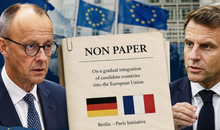
Hasimja: Albania is losing a historic chance for EU integration
2026-06-04 22:57:39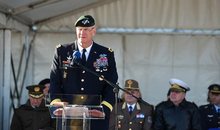
US Senate confirms Eric Wendt as US ambassador to Albania
2026-06-04 22:30:33

Andoni Iraola is officially Liverpool manager
2026-06-04 20:52:27
Killed in the line of duty, family refuses to bury officer in Martyrs' Cemetery
2026-06-04 20:26:26

EU to provide $116 million in aid to Lebanese army
2026-06-04 18:12:12
Plane crashes in Croatia, at least 4 dead
2026-06-04 16:31:32
Berisha: Lands in Zvërnec were seized by Pjerini from Lezha and Agaç from Berat
2026-06-04 16:26:52
Minatorët e Bulqizës vijojnë bojkotin e punës, kërkojnë rritje pagash
2026-06-04 16:17:31
Former Montenegrin police chief banned from entering Serbia
2026-06-04 16:05:34


The moment when Gjesti enters the record company's offices armed
2026-06-04 15:03:29

The Euro-Lek exchange rate falls again, heading towards the threshold of 95 Lek
2026-06-04 14:33:00

Balluk's wealth "collapses", SPAK seizes his villa in Dhërmi
2026-06-04 14:00:13
Watermelon, the heart's ally in summer
2026-06-04 13:56:33
The board continues to "ping pong" with fuel prices, oil increases again
2026-06-04 13:39:24
Bardhi asks Rama to the Assembly: The interpellation is not delegated!
2026-06-04 13:21:54
House of Representatives approves measure to end Iran war
2026-06-04 13:14:35
Car ends up in canal, residents save father and son
2026-06-04 12:55:58
SPAK requests 98 years in prison for Durim Bami, Aldo Avdyli and 5 others
2026-06-04 12:39:43


Video/View from the scene where the policeman was killed in Maliq
2026-06-04 11:52:46

SPAK knocks on Igli Tare, former footballer included in Balluku file
2026-06-04 11:16:36


Four ways your attention is manipulated
2026-06-04 10:52:57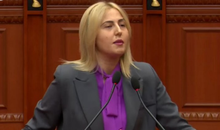
Policeman's murder, Bardhi reacts: Shocked, I strongly condemn the serious act
2026-06-04 10:30:35
Parliament holds a minute of silence for the officer killed in Maliq
2026-06-04 10:25:48

Photos of two young men who drowned in the sea in Lezha emerge
2026-06-04 09:44:40
What anxiety is really trying to tell you
2026-06-04 09:24:37

Maliq/ Officer killed during police operation, another injured
2026-06-04 08:31:21
Horoscope, get to know the star forecast
2026-06-04 08:21:37
Unstable weather conditions, weather forecast for this Thursday
2026-06-04 08:06:35
Morning Post/ In 2 lines: What mattered yesterday in Albania
2026-06-04 07:50:52

Tension in "Air Albania" after Israel's goal, Hysaj clashes with Gloukh
2026-06-03 22:21:33
Debutim i hidhur për Maran, Shqipëria mposhtet nga Izraeli
2026-06-03 22:01:35
Këlliçi: Rama është sot një Kryeministër i ezauruar totalisht
2026-06-03 21:38:01
Costa porosit liderët: BE-ja s’mund të bëjë detyrat e shtëpisë të Kosovës
2026-06-03 21:16:35
6 në 10 persona përdorin AI për shëndetin mendor
2026-06-03 20:56:11
Tifozët kuqezinj fërshëllejnë himnin izraelit
2026-06-03 20:34:01