 Flash News
Two cars collide on the Kardhiq-Delvinë axis, one dead and 3 injured
From Holocaust heroes to ‘Albania for Albanians’: A NATO ally’s dangerous crossroads
Balluk's wealth "collapses", SPAK seizes his villa in Dhërmi
The officer was killed during the action, the Korça police did not assess the dangerousness of the perpetrator, only 6 police officers were on the ground
Car ends up in canal, residents save father and son
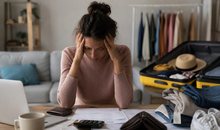
Eurostat: 35% of Albanians cannot afford rent, bills, vacations, or buying new clothes

Politiko
2026-06-05 08:58:12

Albania is the country with the highest level of severe material and social deprivation in Europe, according to the latest Eurostat data for 2024.
The indicator measures the percentage of the population that cannot afford at least 7 out of 13 goods, services, or activities considered necessary for an adequate standard of living.
These include paying rent and bills, meeting unexpected expenses, regularly consuming meat or fish, a week's vacation away from home, owning a vehicle, replacing worn-out furniture, buying new clothes and shoes, being able to spend a small amount on yourself, participating in social activities, and accessing the internet.
Data show that around 35% of the population in Albania (34.8%) lived in conditions of severe material and social deprivation in 2024, the highest level in Europe.
The figures show that the gap between Albania and the European Union countries remains very large. The EU average was around 6.3% in 2024, about five times lower than the level recorded in Albania.
Albanians are very deprived not only in relation to EU countries, but also in comparison to other countries in the region. North Macedonia has material deprivation at the level of 11.6%, Serbia 10.3% and the indicator is slightly higher in Montenegro, at 12.3%. There is no data for Bosnia and Herzegovina and Kosovo.
Compared to previous years, the rate of material deprivation has decreased (in 2018, the indicator was almost 46%), but it still remains at least twice as high and second only to us.
Fewer Europeans in difficulty than a decade ago
At the European Union level, the number of people living in conditions of severe material and social deprivation has fallen from around 41 million in 2015 to 27.5 million in 2024.
On average in the EU, about 6.3% of the population exhibits a high level of material deprivation, with the leading countries being Romania (16.8%), Greece (14.9%), Bulgaria (15%) and the lowest level being in Poland (2%), the Netherlands (2.6%), Austria (2.9%), and the Czech Republic (2.6%).
How is the material deprivation indicator measured?
The material deprivation indicator, according to Eurostat's definition, measures the enforced lack of certain elements that are considered necessary and desirable for a decent life.
It measures the percentage of the population that cannot afford at least 7 of the following 13 elements:
paying rent, bills, installments on deferred purchases or other loans;
keeping the home sufficiently warm;
meeting unexpected expenses;
consuming meat, chicken, fish or vegetarian alternatives every other day;
a week's vacation away from home;
access to a car or van for personal use;
replacing worn-out furniture;
replacing worn-out clothes with new ones;
owning two pairs of suitable shoes;
spending a small amount of money each week on oneself;
participating in regular recreational activities;
meeting friends or family for a drink or meal at least once a month;
connecting to the Internet.
Items 1 to 7 relate to the household level, while items 8 to 13 relate to the individual level. Monitor
Latest news

Foreign exchange/ How much foreign currencies are bought and sold today
2026-06-05 09:49:44
From Rama's hands to the ministries, 16 institutions change their dependence
2026-06-05 09:37:06
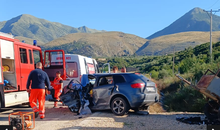
Two cars collide on the Kardhiq-Delvinë axis, one dead and 3 injured
2026-06-05 08:35:38
With alternating clouds, what is the weather forecast for today?
2026-06-05 08:20:50
Morning Post/ In 2 lines: What mattered yesterday in Albania
2026-06-05 07:57:11
Hasimja: Albania is losing a historic chance for EU integration
2026-06-04 22:57:39
US Senate confirms Eric Wendt as US ambassador to Albania
2026-06-04 22:30:33
Andoni Iraola is officially Liverpool manager
2026-06-04 20:52:27
Killed in the line of duty, family refuses to bury officer in Martyrs' Cemetery
2026-06-04 20:26:26


EU to provide $116 million in aid to Lebanese army
2026-06-04 18:12:12
Plane crashes in Croatia, at least 4 dead
2026-06-04 16:31:32
Berisha: Lands in Zvërnec were seized by Pjerini from Lezha and Agaç from Berat
2026-06-04 16:26:52
Minatorët e Bulqizës vijojnë bojkotin e punës, kërkojnë rritje pagash
2026-06-04 16:17:31
Former Montenegrin police chief banned from entering Serbia
2026-06-04 16:05:34
The moment when Gjesti enters the record company's offices armed
2026-06-04 15:03:29
The Euro-Lek exchange rate falls again, heading towards the threshold of 95 Lek
2026-06-04 14:33:00
Balluk's wealth "collapses", SPAK seizes his villa in Dhërmi
2026-06-04 14:00:13
Watermelon, the heart's ally in summer
2026-06-04 13:56:33
The board continues to "ping pong" with fuel prices, oil increases again
2026-06-04 13:39:24
Bardhi asks Rama to the Assembly: The interpellation is not delegated!
2026-06-04 13:21:54
House of Representatives approves measure to end Iran war
2026-06-04 13:14:35
Car ends up in canal, residents save father and son
2026-06-04 12:55:58
SPAK requests 98 years in prison for Durim Bami, Aldo Avdyli and 5 others
2026-06-04 12:39:43


Video/View from the scene where the policeman was killed in Maliq
2026-06-04 11:52:46
SPAK knocks on Igli Tare, former footballer included in Balluku file
2026-06-04 11:16:36


Four ways your attention is manipulated
2026-06-04 10:52:57
Policeman's murder, Bardhi reacts: Shocked, I strongly condemn the serious act
2026-06-04 10:30:35
Parliament holds a minute of silence for the officer killed in Maliq
2026-06-04 10:25:48

Photos of two young men who drowned in the sea in Lezha emerge
2026-06-04 09:44:40
What anxiety is really trying to tell you
2026-06-04 09:24:37
Maliq/ Officer killed during police operation, another injured
2026-06-04 08:31:21
Horoscope, get to know the star forecast
2026-06-04 08:21:37
Unstable weather conditions, weather forecast for this Thursday
2026-06-04 08:06:35
Morning Post/ In 2 lines: What mattered yesterday in Albania
2026-06-04 07:50:52
Tension in "Air Albania" after Israel's goal, Hysaj clashes with Gloukh
2026-06-03 22:21:33
Debutim i hidhur për Maran, Shqipëria mposhtet nga Izraeli
2026-06-03 22:01:35
Këlliçi: Rama është sot një Kryeministër i ezauruar totalisht
2026-06-03 21:38:01
Costa porosit liderët: BE-ja s’mund të bëjë detyrat e shtëpisë të Kosovës
2026-06-03 21:16:35
6 në 10 persona përdorin AI për shëndetin mendor
2026-06-03 20:56:11
Tifozët kuqezinj fërshëllejnë himnin izraelit
2026-06-03 20:34:01
"Resign, we want revolution", citizens chant outside Rama's office
2026-06-03 19:58:32
The two young men who lost their lives in Shëngjin are identified
2026-06-03 19:43:35
Official lineups for the Albania-Israel friendly are published
2026-06-03 19:18:56
Video/ Police throw water on the crowd, protesters break the metal fence
2026-06-03 18:59:00
The best professions for free time and less stress
2026-06-03 18:48:43
The Federation of North Macedonia excludes Shkëndija Tetovo from the Cup
2026-06-03 18:16:04
Blow for Broja, his value on "Transfermarkt" drops to 5 million euros
2026-06-03 17:53:09
Bulqiza miners in protest, miners demand improved working conditions
2026-06-03 17:29:39

Trump admits clash with Netanyahu: I asked him to stop the escalation in Lebanon
2026-06-03 16:30:32
By 2030, 45% of women are expected to be single and childless
2026-06-03 16:19:53
Alarm for the Rossoneri! Uzun risks the challenge against Israel
2026-06-03 15:52:21