
 Flash News
Balluk's wealth "collapses", SPAK seizes his villa in Dhërmi
The officer was killed during the action, the Korça police did not assess the dangerousness of the perpetrator, only 6 police officers were on the ground
Car ends up in canal, residents save father and son
Where does justice begin?/ Between Gog's speeches and the bullets on the ground, who protects the policeman?
Pëllumb Gjoka speaks about the accusations in the "Metamorphosis" file: They held a public trial for me, I have no connection to the murder of Gjin Ndoji
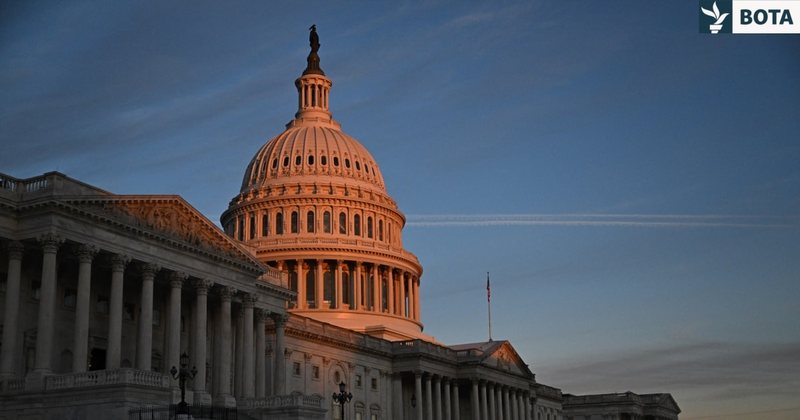
The United States House of Representatives has approved a war powers resolution aimed at curbing US President Donald Trump's military campaign against Iran, as US Secretary of State Marco Rubio insisted that US operations against Tehran have ended.
The House passed the resolution by a vote of 215 to 208 on June 3, with four Republicans joining all Democrats in supporting the resolution.
The resolution, introduced by Representative Gregory Meeks of New York, directs Trump to remove US armed forces from hostilities with Iran unless Congress formally declares war or authorizes the use of force.
The measure now heads to the Senate, where lawmakers are considering a separate war powers resolution. Even if passed by both houses of Congress, Trump is expected to defy efforts to limit his authority, and the House measure is widely seen as symbolic because it lacks the force of law.
The vote marked Congress' strongest opposition yet to the conflict, which has dragged on for more than three months and has sparked concerns about its economic and geopolitical consequences.
In a statement after the vote, Meeks argued that the military campaign had not achieved its stated objectives and, on the contrary, had harmed diplomatic efforts to resolve disputes over Iran's nuclear program.
"If anything, it has further removed the possibility of a diplomatic solution to Iran's nuclear program," he said.
The New York Democrat also highlighted rising fuel prices and the financial cost of the conflict, saying that Americans were paying significantly more for gasoline while simultaneously bearing the burden of the costs of a war that many of them oppose.
Democratic leaders in the House of Representatives echoed these concerns, arguing that the conflict ran counter to Trump's campaign promises to avoid wars abroad and reduce costs for American families.
However, Republican leaders insisted that the military campaign did not constitute a war that required authorization from Congress and warned that limiting the president's authority could play into the hands of the Iranian leadership.
However, opposition within the Republican ranks has grown. Representatives Thomas Massie of Kentucky, Brian Fitzpatrick of Pennsylvania, Tom Barrett of Michigan and Warren Davidson of Ohio broke from their party's majority position to support the measure.
A few hours before the vote in the House of Representatives, US Secretary of State Marco Rubio defended the administration's handling of the conflict during a hearing before the House Foreign Affairs Committee.
"We are no longer conducting sustained strikes inside Iran to degrade its military capabilities, because Operation Epic Fury is over," Rubio said, referring to the US military campaign. He added that Washington had achieved its objectives.
Rubio argued that the administration's goal had never been regime change in Tehran.
"We would like to see a change in Iran and for it to be governed by the people, but that was not the purpose of our mission," Rubio told lawmakers.
The Secretary of State said the US aims to eliminate Iran's ability to threaten the region with large-scale missile and drone attacks , arguing that this capability would reduce international influence over Tehran's nuclear ambitions.
Rubio also said that any easing of US sanctions on Iran would depend on concessions that Tehran makes regarding its nuclear program.
"They will not benefit from any sanctions relief unless they give up uranium enrichment and eliminate their highly enriched uranium stockpiles," he told lawmakers.
According to Rubio, discussions between Washington and Tehran are continuing to focus on the framework for future negotiations. He said Iran has shown more willingness to discuss the issue of uranium enrichment than in previous talks , but has not yet made commitments that meet US demands.
“A few months ago they refused to discuss the issues of uranium enrichment and highly enriched uranium,” Rubio said. “I think now, in some of the documents that have been exchanged between the parties, these issues are clearly addressed, but we still don’t have the final approval from their system, at least as of this morning [June 3].”
Rubio added that the United States would consider lifting its naval blockade only if Iran restores freedom of navigation through the Strait of Hormuz .
The US administration has argued that the conflict effectively ended after Trump ordered a ceasefire in early April. The White House has also rejected the House resolution, calling it an unconstitutional attempt to limit executive authority, saying there are currently no active hostilities from which US forces should withdraw.
The Senate has not yet set a date for a final vote on its special resolution on war powers./ REL
Latest news


The Euro-Lek exchange rate falls again, heading towards the threshold of 95 Lek
2026-06-04 14:33:00

Balluk's wealth "collapses", SPAK seizes his villa in Dhërmi
2026-06-04 14:00:13
Watermelon, the heart's ally in summer
2026-06-04 13:56:33
The board continues to "ping pong" with fuel prices, oil increases again
2026-06-04 13:39:24

Bardhi asks Rama to the Assembly: The interpellation is not delegated!
2026-06-04 13:21:54
House of Representatives approves measure to end Iran war
2026-06-04 13:14:35
Car ends up in canal, residents save father and son
2026-06-04 12:55:58

SPAK requests 98 years in prison for Durim Bami, Aldo Avdyli and 5 others
2026-06-04 12:39:43



Video/View from the scene where the policeman was killed in Maliq
2026-06-04 11:52:46



SPAK knocks on Igli Tare, former footballer included in Balluku file
2026-06-04 11:16:36


Four ways your attention is manipulated
2026-06-04 10:52:57

Policeman's murder, Bardhi reacts: Shocked, I strongly condemn the serious act
2026-06-04 10:30:35
Parliament holds a minute of silence for the officer killed in Maliq
2026-06-04 10:25:48


Photos of two young men who drowned in the sea in Lezha emerge
2026-06-04 09:44:40

What anxiety is really trying to tell you
2026-06-04 09:24:37


Maliq/ Officer killed during police operation, another injured
2026-06-04 08:31:21
Horoscope, get to know the star forecast
2026-06-04 08:21:37
Unstable weather conditions, weather forecast for this Thursday
2026-06-04 08:06:35
Morning Post/ In 2 lines: What mattered yesterday in Albania
2026-06-04 07:50:52


Tension in "Air Albania" after Israel's goal, Hysaj clashes with Gloukh
2026-06-03 22:21:33
Debutim i hidhur për Maran, Shqipëria mposhtet nga Izraeli
2026-06-03 22:01:35

Këlliçi: Rama është sot një Kryeministër i ezauruar totalisht
2026-06-03 21:38:01
Costa porosit liderët: BE-ja s’mund të bëjë detyrat e shtëpisë të Kosovës
2026-06-03 21:16:35
6 në 10 persona përdorin AI për shëndetin mendor
2026-06-03 20:56:11
Tifozët kuqezinj fërshëllejnë himnin izraelit
2026-06-03 20:34:01

"Resign, we want revolution", citizens chant outside Rama's office
2026-06-03 19:58:32
The two young men who lost their lives in Shëngjin are identified
2026-06-03 19:43:35
Official lineups for the Albania-Israel friendly are published
2026-06-03 19:18:56
Video/ Police throw water on the crowd, protesters break the metal fence
2026-06-03 18:59:00
The best professions for free time and less stress
2026-06-03 18:48:43

The Federation of North Macedonia excludes Shkëndija Tetovo from the Cup
2026-06-03 18:16:04
Blow for Broja, his value on "Transfermarkt" drops to 5 million euros
2026-06-03 17:53:09
Bulqiza miners in protest, miners demand improved working conditions
2026-06-03 17:29:39


Trump admits clash with Netanyahu: I asked him to stop the escalation in Lebanon
2026-06-03 16:30:32
By 2030, 45% of women are expected to be single and childless
2026-06-03 16:19:53


Alarm for the Rossoneri! Uzun risks the challenge against Israel
2026-06-03 15:52:21
Two people were injured by a bomb explosion in Përmet, police provide details
2026-06-03 15:35:24

The heat wave does not spare Spain, 101 people lost their lives in May alone
2026-06-03 15:09:35
Hearing for the defendants in the Veliaj case, SPAK gives its claim
2026-06-03 14:56:31

Murder of Martin Can, Appeal decision for Mario Përlleshaj postponed
2026-06-03 14:18:24
Can hackers steal fingerprints from photos on social media?
2026-06-03 14:02:14

Explosion in Përmet, two people seriously injured, one urgently sent to Tirana
2026-06-03 13:41:21

Berlin signals opening of Europe-Russia talks on Ukraine
2026-06-03 13:27:09
Explosions at oil terminal, footage from the attack in St. Petersburg
2026-06-03 13:01:14
CNN: US-Iran ceasefire is straining, oil prices rise again
2026-06-03 12:42:57


Albania becomes the second most expensive in the Balkans for daily rentals
2026-06-03 12:13:35


Berisha on the trial against Meta: Political farce ordered by Rama
2026-06-03 11:36:15

Accident in Levan-Tepelena, car ends up in canal
2026-06-03 11:16:34



Antonio Costa in Kosovo today, meets Haxhiu, Kurti and party leaders
2026-06-03 10:18:56
'1 million lek to put a cell phone in prison', Beci: 'Flash' checks to seize it
2026-06-03 10:06:29

Horoscope June 3, 2026, discover the star predictions
2026-06-03 09:51:56
Traumat në fëmijëri lënë gjurmë në tru
2026-06-03 09:34:20
Bank robbery in Tirana, guard arrested: He did not act to neutralize the robber
2026-06-03 09:23:25