 Flash News
Debutim i hidhur për Maran, Shqipëria mposhtet nga Izraeli
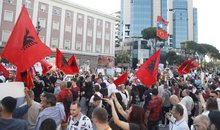
"We will bring the curly pelican to Surrel", tearful little girl's message to Rama from the protest
Video/ Police throw water on the crowd, protesters break the metal fence
Tragedy in Shëngjin, 2 young people from Kosovo lose their lives, 3 others end up in hospital
They went in to bathe, 4 young people are swept away by the waves at 'Rana e Hedhun', suspected victims
Health project, WB takes stock: From the "collapse" of financing reform to digitalization

Politiko
2026-06-03 13:09:14

The World Bank project to improve the health system in Albania, which lasted more than a decade, ended with the rehabilitation of hospital infrastructure and the deployment of digital systems, but without implementing the main reform initially envisaged, which was related to changing the way the sector was financed.
In the final report, the World Bank identifies the lack of institutional conditions for implementing complex reforms as the main problem. According to the report, “Component 3 was removed due to the excessive complexity of its reforms,” referring to the provider payment reform and the pharmaceutical reform.
The document says the component was designed “without the necessary enabling conditions,” while implementation was hampered by “weak institutional capacity,” “unstable leadership,” and a “politically resistant” environment within the Mandatory Health Insurance Fund.
Until the first restructuring, at the end of 2018, all indicators related to the financing reform had remained at the baseline level, leading to the “elimination of the entire component”.
This decision came at a time when the project had only realized 10% of disbursements, more than three years after approval.
The World Bank says the 2018 restructuring aimed to "simplify an overly ambitious design," while the focus shifted from institutional reforms to building core capacities.
The project was approved in January 2015 and was due to be completed in February 2021. It was postponed four times and was only completed in September 2025, after an implementation period of “10 years and 7 months.”
Although the financing reform was abandoned, the project realized some of the investments in digitalization.
The Regional Hospital Information System was deployed in 11 regional hospitals. The report says the system was “established and operational,” but usage remained below target.
Electronic patient registration reached 37.75%, against the target of 40%. The bank assesses this indicator as “almost achieved”, while noting that data was available for only four hospitals. Another problem identified is related to procurement.
The report cites “initial delays due to poor planning and coordination.” The Hospital Masterplan failed to be procured three times between 2016 and 2018 due to “insufficient budget” and inappropriate terms of reference.
The tender for the RHIS system also faced delays. The procedure started in 2019, the contract was signed only in March 2021, and the system became fully operational in all 11 hospitals only in 2025.
In conclusion, the World Bank assesses the overall outcome of the project as "modest", while the quality of monitoring and evaluation as "modest".
The report assesses that in the future, "major components of reform should be preceded by an assessment of political economy and institutional readiness."
Project information
The World Bank project to improve the health system in Albania was approved in January 2015, with an initial financing of 32.1 million euros, and was subsequently expanded with 25 million euros of additional financing, bringing the revised value to 57.1 million euros.
It was conceived on four main pillars: improving hospital services and infrastructure, expanding health information systems, reforming sector financing, and managing and monitoring the project.
Originally scheduled to close on February 28, 2021, the project was postponed four times and ended on September 30, 2025. According to the report, implementation took a total of 127 months, or “10 years and 7 months,” with a cumulative delay of 55 months.
The actual cost of the project amounted to 54.68 million euros. The most sensitive component, the health financing reform, was removed during implementation, as according to the report it was designed “without the necessary enabling conditions”./MONITOR
Latest news


Tension in "Air Albania" after Israel's goal, Hysaj clashes with Gloukh
2026-06-03 22:21:33
Debutim i hidhur për Maran, Shqipëria mposhtet nga Izraeli
2026-06-03 22:01:35
Këlliçi: Rama është sot një Kryeministër i ezauruar totalisht
2026-06-03 21:38:01
Costa porosit liderët: BE-ja s’mund të bëjë detyrat e shtëpisë të Kosovës
2026-06-03 21:16:35
6 në 10 persona përdorin AI për shëndetin mendor
2026-06-03 20:56:11
Tifozët kuqezinj fërshëllejnë himnin izraelit
2026-06-03 20:34:01
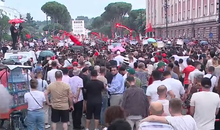
"Resign, we want revolution", citizens chant outside Rama's office
2026-06-03 19:58:32
The two young men who lost their lives in Shëngjin are identified
2026-06-03 19:43:35
Official lineups for the Albania-Israel friendly are published
2026-06-03 19:18:56
Video/ Police throw water on the crowd, protesters break the metal fence
2026-06-03 18:59:00
The best professions for free time and less stress
2026-06-03 18:48:43

The Federation of North Macedonia excludes Shkëndija Tetovo from the Cup
2026-06-03 18:16:04
Blow for Broja, his value on "Transfermarkt" drops to 5 million euros
2026-06-03 17:53:09
Bulqiza miners in protest, miners demand improved working conditions
2026-06-03 17:29:39


Trump admits clash with Netanyahu: I asked him to stop the escalation in Lebanon
2026-06-03 16:30:32
By 2030, 45% of women are expected to be single and childless
2026-06-03 16:19:53

Alarm for the Rossoneri! Uzun risks the challenge against Israel
2026-06-03 15:52:21
Two people were injured by a bomb explosion in Përmet, police provide details
2026-06-03 15:35:24

The heat wave does not spare Spain, 101 people lost their lives in May alone
2026-06-03 15:09:35
Hearing for the defendants in the Veliaj case, SPAK gives its claim
2026-06-03 14:56:31

Murder of Martin Can, Appeal decision for Mario Përlleshaj postponed
2026-06-03 14:18:24
Can hackers steal fingerprints from photos on social media?
2026-06-03 14:02:14
Explosion in Përmet, two people seriously injured, one urgently sent to Tirana
2026-06-03 13:41:21
Berlin signals opening of Europe-Russia talks on Ukraine
2026-06-03 13:27:09
Explosions at oil terminal, footage from the attack in St. Petersburg
2026-06-03 13:01:14
CNN: US-Iran ceasefire is straining, oil prices rise again
2026-06-03 12:42:57
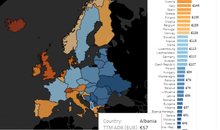
Albania becomes the second most expensive in the Balkans for daily rentals
2026-06-03 12:13:35

Berisha on the trial against Meta: Political farce ordered by Rama
2026-06-03 11:36:15
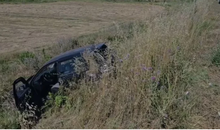
Accident in Levan-Tepelena, car ends up in canal
2026-06-03 11:16:34


Antonio Costa in Kosovo today, meets Haxhiu, Kurti and party leaders
2026-06-03 10:18:56
'1 million lek to put a cell phone in prison', Beci: 'Flash' checks to seize it
2026-06-03 10:06:29

Horoscope June 3, 2026, discover the star predictions
2026-06-03 09:51:56
Traumat në fëmijëri lënë gjurmë në tru
2026-06-03 09:34:20
Bank robbery in Tirana, guard arrested: He did not act to neutralize the robber
2026-06-03 09:23:25


Foreign exchange/ How much foreign currencies are bought and sold today
2026-06-03 08:25:50
Long note for those who can't read
2026-06-03 08:03:50

33 degrees Celsius in some areas, as the weather forecast is for today
2026-06-03 07:25:07
Morning Post/ In 2 lines: What mattered yesterday in Albania
2026-06-03 07:01:04
American professor: US priority for Albania remains security and the rule of law
2026-06-02 23:01:00

Appeal removes Ergys Agas' apartment from seizure
2026-06-02 20:39:08

Negotiations could unblock Ukraine's bid for EU membership
2026-06-02 18:55:18
Why does the government only invest offshore money in Albania?
2026-06-02 17:11:26
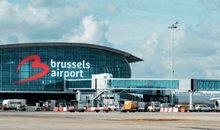
"We will cancel every flight," Brussels airport is suddenly blocked
2026-06-02 16:30:11


Germany worried about poverty, the elderly are the most affected!
2026-06-02 15:16:09

Pentagon restricts media access to press office
2026-06-02 14:48:08

6 ways social media can reveal a narcissist
2026-06-02 14:30:44
Italy, Albanian truck driver loses his life at the port of Ancona
2026-06-02 14:22:10

Bank robbery in Tirana, masked perpetrator stole 10-15 thousand pounds
2026-06-02 14:03:33
US: Agreement with Iran expected to be reached next week
2026-06-02 13:50:57
Accident in Patoku Valley, motorcycle driver seriously injured
2026-06-02 13:39:19
The Transparency Board "seals" the new oil and gasoline prices
2026-06-02 13:17:38

Armed robbery at a second-tier bank in Tirana
2026-06-02 13:05:59