 Flash News
Debutim i hidhur për Maran, Shqipëria mposhtet nga Izraeli
"We will bring the curly pelican to Surrel", tearful little girl's message to Rama from the protest
Video/ Police throw water on the crowd, protesters break the metal fence
Tragedy in Shëngjin, 2 young people from Kosovo lose their lives, 3 others end up in hospital
They went in to bathe, 4 young people are swept away by the waves at 'Rana e Hedhun', suspected victims
"The happiest moment in his political life", Sali Berisha's stories about Kosovo and world leaders according to Malltez

Politiko
2026-06-02 19:25:26

Albania's historical memory and international diplomatic relations have often been kept out of the public eye, but a special window on these events is offered through the stories of Sali Berisha, narrated by Jamarbër Malltezi.
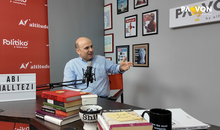
In an interview on Alfred Lela's 'Pasvon' podcast, some of the key events that have marked the orientation of Albanian foreign policy and especially the decisive impact on the essential national issue: Kosovo's independence were revealed.
According to Malltezi, when asked when Sali Berisha's happiest moment in his political life was, the answer is immediate and unequivocal: the day of the Declaration of Independence of Kosovo.
This issue was not simply a political goal, but a historical dream, especially for the generation born and raised in dictatorship, when Kosovo was treated by the communist regime as a "foreign country" and nothing more.
Malltezi recalls a significant moment from the mid-1990s, when the former historic President of Kosovo, Ibrahim Rugova, visited Berisha at the Government Villas in Dajt. In an informal conversation, Rugova pragmatically stated that, at best, Milosevic was ready to divide Kosovo.
Rugova’s deeply pragmatic and painful approach conflicted with Berisha’s strict vision of Kosovo’s full territorial integrity. This philosophy of Berisha was clearly seen when, two decades later, he came out openly and aggressively against the idea of border revision or partition of Kosovo in 2017. His stance treated every square meter of Kosovo as inviolable.
Meanwhile, one of the most intriguing diplomatic behind-the-scenes stories revealed in this interview is the historic visit of United States President George W. Bush to Tirana in 2007. Malltezi reveals the background to this visit, where prior to his arrival, European leaders such as French President Jacques Chirac had intervened, demanding the postponement of Kosovo's independence in the name of preserving peaceful regional relations and balances with Russia.
Under this pressure, Bush's visit to Albania was surrounded by geopolitical dilemmas. However, Berisha organized a perfect reception ground, avoiding any domestic political controversy (including conflicts with the opposition leader Edi Rama), with the sole aim of making the agenda exclusively dominated by Kosovo. In this atmosphere, Bush broke the framework by declaring the monumental sentence: "Time is now".
This did not happen without a political cost for the American administration, which took on the task of resolving this global impasse. In a frank conversation between the two, Berisha expressed his deep historical gratitude to the Albanians and left it in the hands of the American President to choose the easiest diplomatic path for Washington, demonstrating high statesmanship maturity.
But the ties with the Bush family had already begun in the early 1990s. During the first meetings with former President George HW Bush, the situation was completely different. Malltezi recounts a remarkable detail: during that first meeting, the US administration opened a large atlas on the table to show the President exactly where Kosovo was geographically located. This shows how unknown this problem was to the Western world before the Albanian leadership firmly placed it on the oval tables, ultimately turning it into an absolute priority for US foreign policy.
Another powerful geopolitical lesson came through a meeting between Berisha and the historic German Chancellor Helmut Kohl. Kohl had told him that after World War II, almost a quarter of German territories had remained outside its borders, mostly in Poland. Before German unification and integration into the European Union, Kohl had faced pressure on whether Germany should return these properties or territories.
He showed that when he proposed to the leadership of his CDU party to leave this chapter open, only two people supported him; all the others were against. Thus, Germany decided that the chapter of losses should be closed forever so as not to hinder the future and international cooperation. This story, followed with admiration by Berisha, highlights his capacity to absorb the principles of international relations and the historical compromises that ensure the development of nations.
Latest news
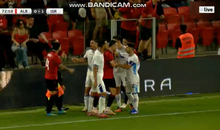
Tension in "Air Albania" after Israel's goal, Hysaj clashes with Gloukh
2026-06-03 22:21:33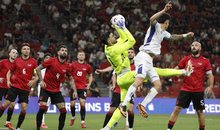
Debutim i hidhur për Maran, Shqipëria mposhtet nga Izraeli
2026-06-03 22:01:35
Këlliçi: Rama është sot një Kryeministër i ezauruar totalisht
2026-06-03 21:38:01
Costa porosit liderët: BE-ja s’mund të bëjë detyrat e shtëpisë të Kosovës
2026-06-03 21:16:35
6 në 10 persona përdorin AI për shëndetin mendor
2026-06-03 20:56:11
Tifozët kuqezinj fërshëllejnë himnin izraelit
2026-06-03 20:34:01
"Resign, we want revolution", citizens chant outside Rama's office
2026-06-03 19:58:32
The two young men who lost their lives in Shëngjin are identified
2026-06-03 19:43:35
Official lineups for the Albania-Israel friendly are published
2026-06-03 19:18:56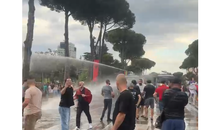
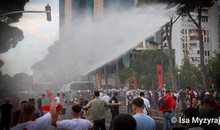
Video/ Police throw water on the crowd, protesters break the metal fence
2026-06-03 18:59:00
The best professions for free time and less stress
2026-06-03 18:48:43
The Federation of North Macedonia excludes Shkëndija Tetovo from the Cup
2026-06-03 18:16:04
Blow for Broja, his value on "Transfermarkt" drops to 5 million euros
2026-06-03 17:53:09
Bulqiza miners in protest, miners demand improved working conditions
2026-06-03 17:29:39
Trump admits clash with Netanyahu: I asked him to stop the escalation in Lebanon
2026-06-03 16:30:32
By 2030, 45% of women are expected to be single and childless
2026-06-03 16:19:53

Alarm for the Rossoneri! Uzun risks the challenge against Israel
2026-06-03 15:52:21
Two people were injured by a bomb explosion in Përmet, police provide details
2026-06-03 15:35:24
The heat wave does not spare Spain, 101 people lost their lives in May alone
2026-06-03 15:09:35
Hearing for the defendants in the Veliaj case, SPAK gives its claim
2026-06-03 14:56:31

Murder of Martin Can, Appeal decision for Mario Përlleshaj postponed
2026-06-03 14:18:24
Can hackers steal fingerprints from photos on social media?
2026-06-03 14:02:14
Explosion in Përmet, two people seriously injured, one urgently sent to Tirana
2026-06-03 13:41:21
Berlin signals opening of Europe-Russia talks on Ukraine
2026-06-03 13:27:09
Explosions at oil terminal, footage from the attack in St. Petersburg
2026-06-03 13:01:14
CNN: US-Iran ceasefire is straining, oil prices rise again
2026-06-03 12:42:57
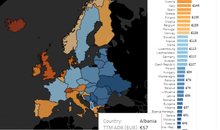
Albania becomes the second most expensive in the Balkans for daily rentals
2026-06-03 12:13:35
Berisha on the trial against Meta: Political farce ordered by Rama
2026-06-03 11:36:15
Accident in Levan-Tepelena, car ends up in canal
2026-06-03 11:16:34

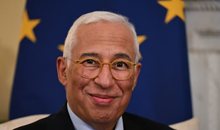
Antonio Costa in Kosovo today, meets Haxhiu, Kurti and party leaders
2026-06-03 10:18:56
'1 million lek to put a cell phone in prison', Beci: 'Flash' checks to seize it
2026-06-03 10:06:29

Horoscope June 3, 2026, discover the star predictions
2026-06-03 09:51:56
Traumat në fëmijëri lënë gjurmë në tru
2026-06-03 09:34:20
Bank robbery in Tirana, guard arrested: He did not act to neutralize the robber
2026-06-03 09:23:25


Foreign exchange/ How much foreign currencies are bought and sold today
2026-06-03 08:25:50
Long note for those who can't read
2026-06-03 08:03:50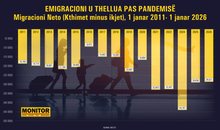
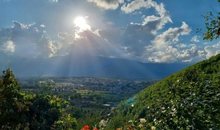
33 degrees Celsius in some areas, as the weather forecast is for today
2026-06-03 07:25:07
Morning Post/ In 2 lines: What mattered yesterday in Albania
2026-06-03 07:01:04
American professor: US priority for Albania remains security and the rule of law
2026-06-02 23:01:00


Appeal removes Ergys Agas' apartment from seizure
2026-06-02 20:39:08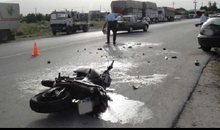

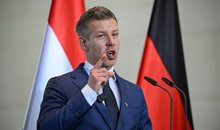
Negotiations could unblock Ukraine's bid for EU membership
2026-06-02 18:55:18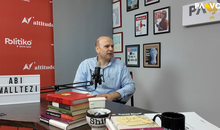
Why does the government only invest offshore money in Albania?
2026-06-02 17:11:26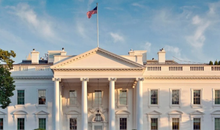
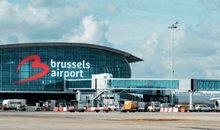
"We will cancel every flight," Brussels airport is suddenly blocked
2026-06-02 16:30:11

Germany worried about poverty, the elderly are the most affected!
2026-06-02 15:16:09

Pentagon restricts media access to press office
2026-06-02 14:48:08

6 ways social media can reveal a narcissist
2026-06-02 14:30:44
Italy, Albanian truck driver loses his life at the port of Ancona
2026-06-02 14:22:10
Bank robbery in Tirana, masked perpetrator stole 10-15 thousand pounds
2026-06-02 14:03:33
US: Agreement with Iran expected to be reached next week
2026-06-02 13:50:57
Accident in Patoku Valley, motorcycle driver seriously injured
2026-06-02 13:39:19
The Transparency Board "seals" the new oil and gasoline prices
2026-06-02 13:17:38

Armed robbery at a second-tier bank in Tirana
2026-06-02 13:05:59