 Flash News
Debutim i hidhur për Maran, Shqipëria mposhtet nga Izraeli
"We will bring the curly pelican to Surrel", tearful little girl's message to Rama from the protest
Video/ Police throw water on the crowd, protesters break the metal fence
Tragedy in Shëngjin, 2 young people from Kosovo lose their lives, 3 others end up in hospital
They went in to bathe, 4 young people are swept away by the waves at 'Rana e Hedhun', suspected victims
"European integration is not the government's property", Vokshi denounces the Socialist Party: The opposition is being excluded, an act against the EU

Politiko
2026-06-03 11:58:26
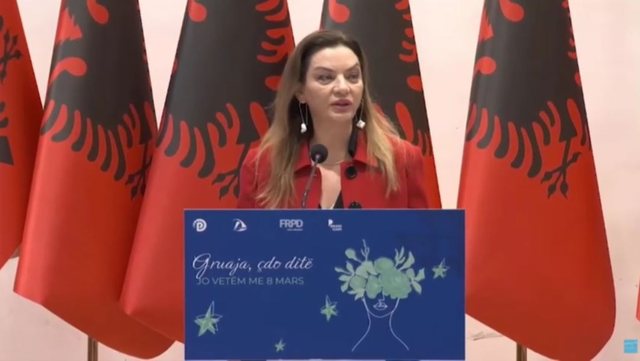
The Vice President of the Democratic Party, also MP Albana Vokshi, today denounced the socialist majority and the Parliament for blocking the opposition from being fully involved in the integration process and being transparent, according to two of the basic criteria and conditions set by the EU towards Albania.
She called the Foreign Affairs Committee's decision at the last meeting to interrupt the live meeting the moment Vokshi asked to speak to point out the alarming fact that the Assembly was refusing to make negotiating positions for two groups of chapters available to the opposition a deliberate act.
Vokshi described it as a deliberate and non-procedural act: "This is not a procedural action. It is a deliberate act to avoid transparency and to exclude the opposition from a process that belongs to all Albanians."
The opposition MP underlined that the integration process requires inclusivity and not exclusion, as it is not "the property of the government."
She states that this is precisely why the doors of transparency are being closed and parliamentary control is being hindered.
Albana Vokshi's full reaction:
"Today we are faced with an alarming development, which not only affects the parliamentary opposition, but also strikes at the very foundation of democracy, institutional transparency and the very process of Albania's European Integration.
The majority refused to make the negotiating positions for Chapter Groups III and VI available to the opposition, openly denying the constitutional and legal right of the Assembly to exercise parliamentary control over the European Union accession process.
This is not a procedural action. It is a deliberate act to avoid transparency and exclude the opposition from a process that belongs to all Albanians.
Even more worrying is the fact that this behavior directly contradicts the principles that the European Union itself requires from candidate countries: inclusiveness, transparency, accountability, and respect for democratic institutions. Instead, we are seeing a model of governance that restricts information, marginalizes the opposition, and weakens democratic control mechanisms.
The other day, in the Foreign Policy Committee, we were faced with an unacceptable and unprecedented act. The moment I asked for a point of order to raise concerns about the non-disclosure of negotiating positions and the lack of transparency, the live broadcast of the meeting was interrupted.
This was a clear act of censorship.
Not only to the opposition, but to Albanian citizens who have the right to be informed about a process that determines the European future of the country. The interruption of the broadcast was not intended to silence a member of parliament, it was intended to prevent the public from hearing the truth.
European integration is not the property of the government. It is not the property of the majority. It is not a process that can be managed with the logic of secrecy, political control or filtered information.
European integration is Albania's most important national strategic project and, precisely for this reason, the law has clearly defined the role of the Parliament and the opposition in its oversight.
The law is clear. The minister responsible for negotiations has the obligation to present the full negotiating positions to the European Affairs Committee. Not selected summaries. Not partial information. Not filtered versions.
Yesterday, this legal obligation was rejected.
This refusal constitutes not only a violation of the spirit of the law, but an open attempt to exclude the opposition from the integration process and to destroy the parliamentary control mechanism that guarantees transparency and accountability.
Some basic questions arise:
Why this lack of transparency?
Why this refusal to inform the Parliament?
Why this insistence on treating European integration as a closed and politically controlled process?
The answer is clear.
The government does not want Albanian citizens to learn what the European Union really requires from Albania and what are the problems that continue to remain serious obstacles on the path to integration.
It does not want the issues highlighted in European reports and in the monitoring process to become the subject of public debate: issues related to electoral standards, corruption, capture of institutions, respect for Constitutional Court decisions, independence of institutions, interference in the justice system, and lack of accountability at the highest levels of government.
It is precisely for this reason that the doors of transparency are being closed and parliamentary control is being hindered.
We will continue to demand the implementation of the law, full transparency and respect for the constitutional role of the Assembly. European integration cannot be built on censorship, exclusion and concealment of information. It can only be built on democracy, transparency and respect for institutions.”
Latest news
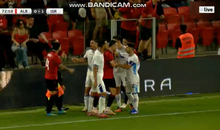
Tension in "Air Albania" after Israel's goal, Hysaj clashes with Gloukh
2026-06-03 22:21:33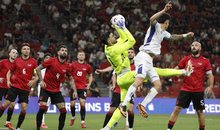
Debutim i hidhur për Maran, Shqipëria mposhtet nga Izraeli
2026-06-03 22:01:35
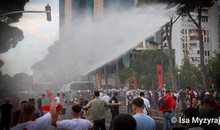
Këlliçi: Rama është sot një Kryeministër i ezauruar totalisht
2026-06-03 21:38:01
Costa porosit liderët: BE-ja s’mund të bëjë detyrat e shtëpisë të Kosovës
2026-06-03 21:16:35
6 në 10 persona përdorin AI për shëndetin mendor
2026-06-03 20:56:11
Tifozët kuqezinj fërshëllejnë himnin izraelit
2026-06-03 20:34:01
"Resign, we want revolution", citizens chant outside Rama's office
2026-06-03 19:58:32
The two young men who lost their lives in Shëngjin are identified
2026-06-03 19:43:35
Official lineups for the Albania-Israel friendly are published
2026-06-03 19:18:56
Video/ Police throw water on the crowd, protesters break the metal fence
2026-06-03 18:59:00
The best professions for free time and less stress
2026-06-03 18:48:43
The Federation of North Macedonia excludes Shkëndija Tetovo from the Cup
2026-06-03 18:16:04
Blow for Broja, his value on "Transfermarkt" drops to 5 million euros
2026-06-03 17:53:09
Bulqiza miners in protest, miners demand improved working conditions
2026-06-03 17:29:39


Trump admits clash with Netanyahu: I asked him to stop the escalation in Lebanon
2026-06-03 16:30:32
By 2030, 45% of women are expected to be single and childless
2026-06-03 16:19:53
Alarm for the Rossoneri! Uzun risks the challenge against Israel
2026-06-03 15:52:21
Two people were injured by a bomb explosion in Përmet, police provide details
2026-06-03 15:35:24
The heat wave does not spare Spain, 101 people lost their lives in May alone
2026-06-03 15:09:35
Hearing for the defendants in the Veliaj case, SPAK gives its claim
2026-06-03 14:56:31

Murder of Martin Can, Appeal decision for Mario Përlleshaj postponed
2026-06-03 14:18:24
Can hackers steal fingerprints from photos on social media?
2026-06-03 14:02:14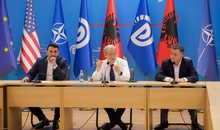
Explosion in Përmet, two people seriously injured, one urgently sent to Tirana
2026-06-03 13:41:21
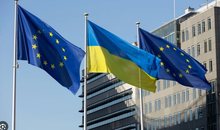
Berlin signals opening of Europe-Russia talks on Ukraine
2026-06-03 13:27:09
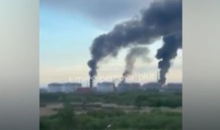
Explosions at oil terminal, footage from the attack in St. Petersburg
2026-06-03 13:01:14
CNN: US-Iran ceasefire is straining, oil prices rise again
2026-06-03 12:42:57
Albania becomes the second most expensive in the Balkans for daily rentals
2026-06-03 12:13:35
Berisha on the trial against Meta: Political farce ordered by Rama
2026-06-03 11:36:15
Accident in Levan-Tepelena, car ends up in canal
2026-06-03 11:16:34
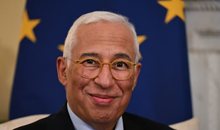
Antonio Costa in Kosovo today, meets Haxhiu, Kurti and party leaders
2026-06-03 10:18:56
'1 million lek to put a cell phone in prison', Beci: 'Flash' checks to seize it
2026-06-03 10:06:29

Horoscope June 3, 2026, discover the star predictions
2026-06-03 09:51:56
Traumat në fëmijëri lënë gjurmë në tru
2026-06-03 09:34:20
Bank robbery in Tirana, guard arrested: He did not act to neutralize the robber
2026-06-03 09:23:25

Foreign exchange/ How much foreign currencies are bought and sold today
2026-06-03 08:25:50
Long note for those who can't read
2026-06-03 08:03:50
33 degrees Celsius in some areas, as the weather forecast is for today
2026-06-03 07:25:07
Morning Post/ In 2 lines: What mattered yesterday in Albania
2026-06-03 07:01:04
American professor: US priority for Albania remains security and the rule of law
2026-06-02 23:01:00
Appeal removes Ergys Agas' apartment from seizure
2026-06-02 20:39:08
Negotiations could unblock Ukraine's bid for EU membership
2026-06-02 18:55:18
Why does the government only invest offshore money in Albania?
2026-06-02 17:11:26
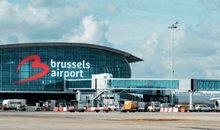
"We will cancel every flight," Brussels airport is suddenly blocked
2026-06-02 16:30:11


Germany worried about poverty, the elderly are the most affected!
2026-06-02 15:16:09
Pentagon restricts media access to press office
2026-06-02 14:48:08

6 ways social media can reveal a narcissist
2026-06-02 14:30:44
Italy, Albanian truck driver loses his life at the port of Ancona
2026-06-02 14:22:10
Bank robbery in Tirana, masked perpetrator stole 10-15 thousand pounds
2026-06-02 14:03:33
US: Agreement with Iran expected to be reached next week
2026-06-02 13:50:57
Accident in Patoku Valley, motorcycle driver seriously injured
2026-06-02 13:39:19
The Transparency Board "seals" the new oil and gasoline prices
2026-06-02 13:17:38
Armed robbery at a second-tier bank in Tirana
2026-06-02 13:05:59