 Flash News
Debutim i hidhur për Maran, Shqipëria mposhtet nga Izraeli
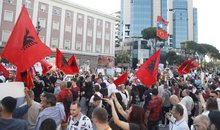
"We will bring the curly pelican to Surrel", tearful little girl's message to Rama from the protest
Video/ Police throw water on the crowd, protesters break the metal fence
Tragedy in Shëngjin, 2 young people from Kosovo lose their lives, 3 others end up in hospital
They went in to bathe, 4 young people are swept away by the waves at 'Rana e Hedhun', suspected victims
Why does corruption survive in Albania? CSDG report: Handcuffing officials is not enough, the system must be attacked

Politiko
2026-06-03 16:08:17
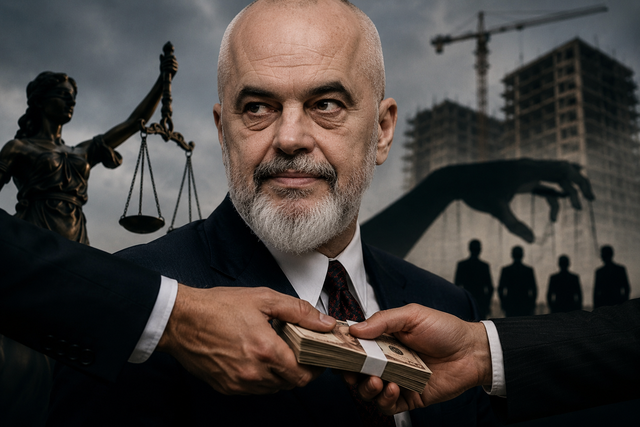
AI-generated photo
Almost every day for the past 5 years, the news has reported on officials or criminal groups being investigated and brought to justice. But is this enough? The biggest question remains: why does corruption continue to survive in Albania?
The report published by the Center for the Study of Democracy and Governance (CSDG) highlights that there has been improvement in the criminal investigation of corruption cases. However, the report underlines that the fight against corruption should not be limited to targeting officials or criminal groups, but should go further, to targeting the very system that produces and sustains it.
One of the report's main findings is that many cases are classified as high-level corruption only because they involve senior officials, while the real economic and institutional damage caused is often not analyzed.
The EU Ambassador to Albania, Silvio Gonzato, emphasized that more should be said about the economic damage caused by corruption.
"There is a lot of talk about the costs of justice, but not about the costs of corruption and the damage it causes," Gonzato said.
Another element highlighted in the report is the evolution of corruption and organized crime schemes. Today, corruption no longer manifests itself only through classic bribery, but also through the use of legal procedures and institutional mechanisms to legitimize predetermined decisions.
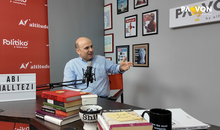
For SPAK prosecutor Vladimir Mara, this makes corruption more difficult to detect and prove.
However, Mara emphasized that SPAK has already put into practice the parallel launch of criminal and property investigations.
"Asset tracing, confiscations and seizures still remain a challenge and require sophisticated tools," Mara said.
The report emphasizes that the main problem remains the system and not just individuals, as corruption in Albania is considered a structural phenomenon.
Mara also added that asset freeze is a key element in the fight against corruption and organized crime.
"An official can be replaced, a criminal group can be restructured, but if their assets are taken away, then they are really hit," he said.
Another finding of the report is the close connection between corruption and organized crime.
For the GJKKO judge, Engert Pellumbi, corruption and organized crime should be treated as an integrated phenomenon, as corruption serves as a bridge for criminal activities.
"Attention should be focused on the triangle: Business - Senior Officials - Organized Crime," said Pellumbi.
He also emphasized that we should not be satisfied with the results achieved so far, but that the fight against corruption and organized crime must be consistent and long-term, showing that the special structures have no intention of stopping.
Money laundering continues to be a major problem, while the main focus of corruption remains on public contracts and projects.
For the Ambassador of the Netherlands, Reinout Vos, reforms should not remain just theories or signatures on paper, but must be applicable and long-term to guarantee the functioning of a democratic state.
In closing, judge Engert Pellumbi brought a message inspired by Victor Hugo:
"The opening of a school brings the closing of a prison."
This message reminds us that the fight against corruption and crime is not won only by counting those arrested or convicted, but by educating society and creating conscious citizens.
A more educated and aware society produces more responsible individuals than corrupt officials./acqj.al
Dokumenta bashkëngjitur
Latest news
Tension in "Air Albania" after Israel's goal, Hysaj clashes with Gloukh
2026-06-03 22:21:33
Debutim i hidhur për Maran, Shqipëria mposhtet nga Izraeli
2026-06-03 22:01:35
Këlliçi: Rama është sot një Kryeministër i ezauruar totalisht
2026-06-03 21:38:01
Costa porosit liderët: BE-ja s’mund të bëjë detyrat e shtëpisë të Kosovës
2026-06-03 21:16:35
6 në 10 persona përdorin AI për shëndetin mendor
2026-06-03 20:56:11
Tifozët kuqezinj fërshëllejnë himnin izraelit
2026-06-03 20:34:01
"Resign, we want revolution", citizens chant outside Rama's office
2026-06-03 19:58:32
The two young men who lost their lives in Shëngjin are identified
2026-06-03 19:43:35
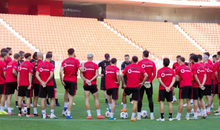
Official lineups for the Albania-Israel friendly are published
2026-06-03 19:18:56
Video/ Police throw water on the crowd, protesters break the metal fence
2026-06-03 18:59:00
The best professions for free time and less stress
2026-06-03 18:48:43
The Federation of North Macedonia excludes Shkëndija Tetovo from the Cup
2026-06-03 18:16:04
Blow for Broja, his value on "Transfermarkt" drops to 5 million euros
2026-06-03 17:53:09
Bulqiza miners in protest, miners demand improved working conditions
2026-06-03 17:29:39
Trump admits clash with Netanyahu: I asked him to stop the escalation in Lebanon
2026-06-03 16:30:32
By 2030, 45% of women are expected to be single and childless
2026-06-03 16:19:53
Alarm for the Rossoneri! Uzun risks the challenge against Israel
2026-06-03 15:52:21
Two people were injured by a bomb explosion in Përmet, police provide details
2026-06-03 15:35:24
The heat wave does not spare Spain, 101 people lost their lives in May alone
2026-06-03 15:09:35
Hearing for the defendants in the Veliaj case, SPAK gives its claim
2026-06-03 14:56:31

Murder of Martin Can, Appeal decision for Mario Përlleshaj postponed
2026-06-03 14:18:24
Can hackers steal fingerprints from photos on social media?
2026-06-03 14:02:14
Explosion in Përmet, two people seriously injured, one urgently sent to Tirana
2026-06-03 13:41:21
Berlin signals opening of Europe-Russia talks on Ukraine
2026-06-03 13:27:09
Explosions at oil terminal, footage from the attack in St. Petersburg
2026-06-03 13:01:14
CNN: US-Iran ceasefire is straining, oil prices rise again
2026-06-03 12:42:57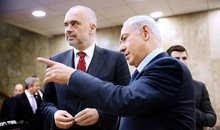
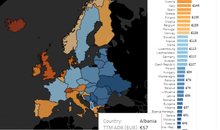
Albania becomes the second most expensive in the Balkans for daily rentals
2026-06-03 12:13:35
Berisha on the trial against Meta: Political farce ordered by Rama
2026-06-03 11:36:15
Accident in Levan-Tepelena, car ends up in canal
2026-06-03 11:16:34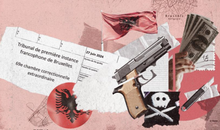

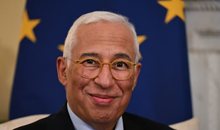
Antonio Costa in Kosovo today, meets Haxhiu, Kurti and party leaders
2026-06-03 10:18:56
'1 million lek to put a cell phone in prison', Beci: 'Flash' checks to seize it
2026-06-03 10:06:29

Horoscope June 3, 2026, discover the star predictions
2026-06-03 09:51:56
Traumat në fëmijëri lënë gjurmë në tru
2026-06-03 09:34:20
Bank robbery in Tirana, guard arrested: He did not act to neutralize the robber
2026-06-03 09:23:25


Foreign exchange/ How much foreign currencies are bought and sold today
2026-06-03 08:25:50
Long note for those who can't read
2026-06-03 08:03:50
33 degrees Celsius in some areas, as the weather forecast is for today
2026-06-03 07:25:07
Morning Post/ In 2 lines: What mattered yesterday in Albania
2026-06-03 07:01:04
American professor: US priority for Albania remains security and the rule of law
2026-06-02 23:01:00


Appeal removes Ergys Agas' apartment from seizure
2026-06-02 20:39:08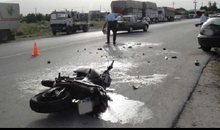
Negotiations could unblock Ukraine's bid for EU membership
2026-06-02 18:55:18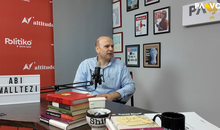
Why does the government only invest offshore money in Albania?
2026-06-02 17:11:26
"We will cancel every flight," Brussels airport is suddenly blocked
2026-06-02 16:30:11

Germany worried about poverty, the elderly are the most affected!
2026-06-02 15:16:09
Pentagon restricts media access to press office
2026-06-02 14:48:08

6 ways social media can reveal a narcissist
2026-06-02 14:30:44
Italy, Albanian truck driver loses his life at the port of Ancona
2026-06-02 14:22:10
Bank robbery in Tirana, masked perpetrator stole 10-15 thousand pounds
2026-06-02 14:03:33
US: Agreement with Iran expected to be reached next week
2026-06-02 13:50:57
Accident in Patoku Valley, motorcycle driver seriously injured
2026-06-02 13:39:19
The Transparency Board "seals" the new oil and gasoline prices
2026-06-02 13:17:38

Armed robbery at a second-tier bank in Tirana
2026-06-02 13:05:59