
 Flash News
Two cars collide on the Kardhiq-Delvinë axis, one dead and 3 injured
From Holocaust heroes to ‘Albania for Albanians’: A NATO ally’s dangerous crossroads
Balluk's wealth "collapses", SPAK seizes his villa in Dhërmi
The officer was killed during the action, the Korça police did not assess the dangerousness of the perpetrator, only 6 police officers were on the ground
Car ends up in canal, residents save father and son
From Rama's hands to the ministries, 16 institutions change their dependence

Politiko
2026-06-05 09:37:06
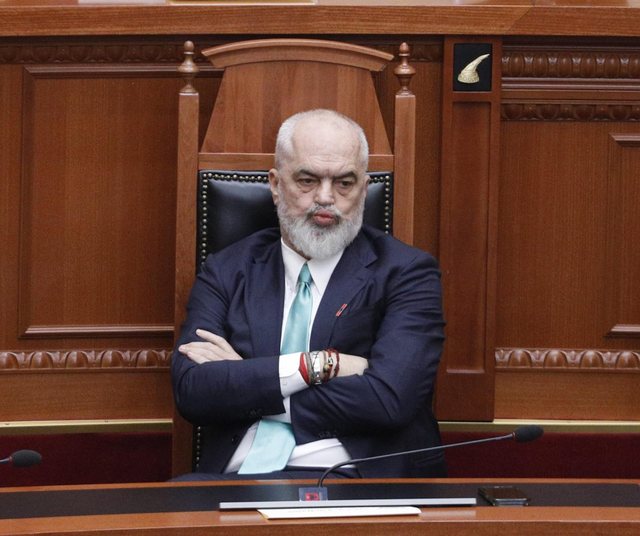
Two weeks ago, parliament approved three draft laws that provided for the legal manner of functioning of several state agencies, moving them from direct dependence on the Prime Minister and the Council of Ministers to dependence on line ministries.
In the reports accompanying the initiatives brought by the government, it was argued that the changes were related to a 2025 report by SIGMA, an EU and OECD program to support good governance, which criticized the centralization of power in the hands of the prime minister, causing problems in the functionality of the administration and its fragmentation.
"The organizational structure is highly centralized," the report noted, adding that several agencies under the Prime Minister cover areas of activity related to the responsibilities of existing ministries, thus limiting the possibility of effective ministerial direction and control.
For civil society experts, the model created by Rama has brought not only the concentration of power in 'one hand', but also institutional instability and a lack of accountability.
Even the Prime Minister's Office acknowledges that the reform in the administration aims to increase efficiency and coordination and strengthen institutional performance in the function of policymaking and the European integration process.
“SIGMA’s assessment focused on identifying the optimal balance between centralized coordination and strategic oversight, on the one hand, and effective delegation of sectoral functions and inter-ministerial cooperation, on the other, with the aim of strengthening public policy coherence, administrative efficiency and governance effectiveness,” the prime minister told BIRN.
According to the government, the reform will reduce the 29 state authorities that are subordinate to the prime minister to 13, and the rest will be subordinate to various ministries according to profiling.
Agencies with strategic, cross-sectoral functions, those expressly provided for in the Constitution, national security functions, as well as those of government priority areas, will continue to be subordinate to the Prime Minister's office, while sectoral, coordinating functions will be subordinate to the ministries according to their functions.
"At the conclusion of this assessment exercise, it was considered that 13 institutions should continue to remain subordinate to the Prime Minister, due to their role in exercising the functions listed above as functions belonging to the center of government," said the Prime Minister's Office, while listing the new organization for 16 other institutions.
The separation provides that; the Water Resources Management Agency will be subordinated to the minister responsible for the environment; the State Authority for Geospatial Information will be subordinated to the Ministry of Defense; the Central Inspectorate, the Technical Secretariat of the National Economic Council and Startup Albania will be subordinated to the Minister responsible for the economy; the Agency for Dialogue and Co-Governance, the Department of Public Administration, the Albanian School of Public Administration and the General Directorate for Anti-Corruption will be subordinated to the Minister for Public Administration and Anti-Corruption; the Agency for Civil Society Support will be subordinated to the Minister responsible for social welfare; the State Attorney's Office will be subordinated to the Minister of Justice; the General Directorate of Archives, the State Committee for Cults and the National Youth Agency will be subordinated to the Minister responsible for culture, tourism and sports and the Agency for Local Self-Government Support will be subordinated to the Minister for Local Government;
According to the Prime Minister's Office, the Albanian Telegraphic Agency is still in the evaluation process.
During his long reign, Prime Minister Edi Rama has created a model of centralizing power in his hands over various sectors, creating new 'satellite' agencies for specific areas of communication, coordination and institutional innovation, such as the Media and Information Agency (MIA) and the Center for Openness and Dialogue, COD, strengthening existing agencies and giving these structures functions that were previously distributed across ministries.
These agencies will continue to remain subordinate to the Prime Minister's office along with other important institutions: the Public Procurement Agency, the Territorial Development Agency, the Agency for the Coordination of Foreign Aid (SASPAC), the National Agency for the Information Society (AKSHI), the State Cadastre Agency (ASHK), the National Authority for the Security of Classified Information (AKSIK), the National Authority for Cyber Security (AKSK), the State Intelligence Service (SHISH), the Academy of Sciences, etc. Reporter.al
Latest news


Foreign exchange/ How much foreign currencies are bought and sold today
2026-06-05 09:49:44
From Rama's hands to the ministries, 16 institutions change their dependence
2026-06-05 09:37:06

Two cars collide on the Kardhiq-Delvinë axis, one dead and 3 injured
2026-06-05 08:35:38
With alternating clouds, what is the weather forecast for today?
2026-06-05 08:20:50

Morning Post/ In 2 lines: What mattered yesterday in Albania
2026-06-05 07:57:11
Hasimja: Albania is losing a historic chance for EU integration
2026-06-04 22:57:39
US Senate confirms Eric Wendt as US ambassador to Albania
2026-06-04 22:30:33


Andoni Iraola is officially Liverpool manager
2026-06-04 20:52:27
Killed in the line of duty, family refuses to bury officer in Martyrs' Cemetery
2026-06-04 20:26:26


EU to provide $116 million in aid to Lebanese army
2026-06-04 18:12:12

Plane crashes in Croatia, at least 4 dead
2026-06-04 16:31:32
Berisha: Lands in Zvërnec were seized by Pjerini from Lezha and Agaç from Berat
2026-06-04 16:26:52
Minatorët e Bulqizës vijojnë bojkotin e punës, kërkojnë rritje pagash
2026-06-04 16:17:31

Former Montenegrin police chief banned from entering Serbia
2026-06-04 16:05:34


The moment when Gjesti enters the record company's offices armed
2026-06-04 15:03:29

The Euro-Lek exchange rate falls again, heading towards the threshold of 95 Lek
2026-06-04 14:33:00

Balluk's wealth "collapses", SPAK seizes his villa in Dhërmi
2026-06-04 14:00:13
Watermelon, the heart's ally in summer
2026-06-04 13:56:33
The board continues to "ping pong" with fuel prices, oil increases again
2026-06-04 13:39:24
Bardhi asks Rama to the Assembly: The interpellation is not delegated!
2026-06-04 13:21:54
House of Representatives approves measure to end Iran war
2026-06-04 13:14:35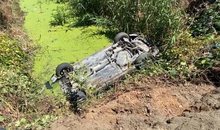
Car ends up in canal, residents save father and son
2026-06-04 12:55:58
SPAK requests 98 years in prison for Durim Bami, Aldo Avdyli and 5 others
2026-06-04 12:39:43



Video/View from the scene where the policeman was killed in Maliq
2026-06-04 11:52:46

SPAK knocks on Igli Tare, former footballer included in Balluku file
2026-06-04 11:16:36


Four ways your attention is manipulated
2026-06-04 10:52:57
Policeman's murder, Bardhi reacts: Shocked, I strongly condemn the serious act
2026-06-04 10:30:35
Parliament holds a minute of silence for the officer killed in Maliq
2026-06-04 10:25:48


Photos of two young men who drowned in the sea in Lezha emerge
2026-06-04 09:44:40

What anxiety is really trying to tell you
2026-06-04 09:24:37

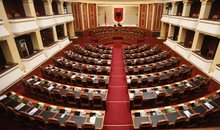

Maliq/ Officer killed during police operation, another injured
2026-06-04 08:31:21
Horoscope, get to know the star forecast
2026-06-04 08:21:37
Unstable weather conditions, weather forecast for this Thursday
2026-06-04 08:06:35
Morning Post/ In 2 lines: What mattered yesterday in Albania
2026-06-04 07:50:52


Tension in "Air Albania" after Israel's goal, Hysaj clashes with Gloukh
2026-06-03 22:21:33
Debutim i hidhur për Maran, Shqipëria mposhtet nga Izraeli
2026-06-03 22:01:35
Këlliçi: Rama është sot një Kryeministër i ezauruar totalisht
2026-06-03 21:38:01
Costa porosit liderët: BE-ja s’mund të bëjë detyrat e shtëpisë të Kosovës
2026-06-03 21:16:35
6 në 10 persona përdorin AI për shëndetin mendor
2026-06-03 20:56:11
Tifozët kuqezinj fërshëllejnë himnin izraelit
2026-06-03 20:34:01
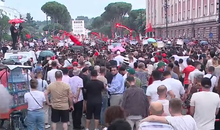
"Resign, we want revolution", citizens chant outside Rama's office
2026-06-03 19:58:32
The two young men who lost their lives in Shëngjin are identified
2026-06-03 19:43:35
Official lineups for the Albania-Israel friendly are published
2026-06-03 19:18:56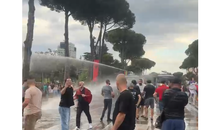
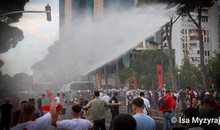
Video/ Police throw water on the crowd, protesters break the metal fence
2026-06-03 18:59:00
The best professions for free time and less stress
2026-06-03 18:48:43
The Federation of North Macedonia excludes Shkëndija Tetovo from the Cup
2026-06-03 18:16:04
Blow for Broja, his value on "Transfermarkt" drops to 5 million euros
2026-06-03 17:53:09
Bulqiza miners in protest, miners demand improved working conditions
2026-06-03 17:29:39


Trump admits clash with Netanyahu: I asked him to stop the escalation in Lebanon
2026-06-03 16:30:32
By 2030, 45% of women are expected to be single and childless
2026-06-03 16:19:53