 Flash News
"Rama is gone", German Albanians protest in Berlin against the government
World Cup 2026/ Germany and the Netherlands take to the field today
Përplasen dy mjete në aksin Pogradec–Lin, humb jetën një pasagjere, plagosen tre të tjerë
25-year-old found dead in Astir
Police provide details from the arrest of Moisi Habilaj in Borsh: How the drug trafficking convict was located
BIRN: Albanian Parliament 'honors' figure of dictator Enver Hoxha, unprecedented act

Politiko
2025-10-07 09:50:33
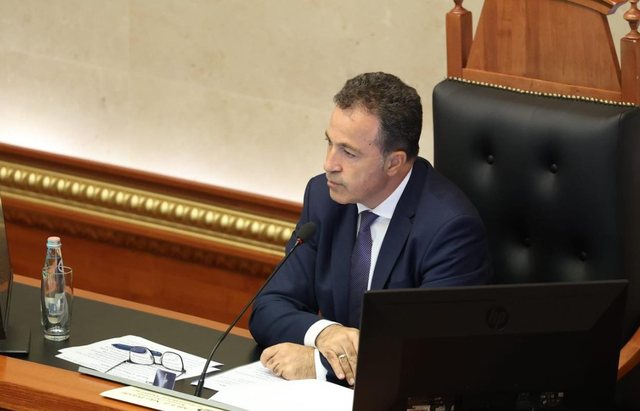
In an unprecedented act, the Albanian Parliament produced an official document on Friday honoring, among national figures, dictator Enver Hoxha, who led the totalitarian communist regime for almost half a century, isolating Albanians, suppressing human rights, and causing thousands of victims.
In a document considered 'informative' for MPs entitled "National Figures (October) sent by the office of the Parliamentary Institute to the email of 140 MPs of the Parliament, Hoxha is described as "Hero of the People" and "Hero of Socialist Labor", while in the biography he is mentioned as the leader of the Albanian state, of the Communist Party and then of the Party of Labor.
His name is placed in a row with other personalities of Albanian history who were born or died in the month of October, such as Sulejman Delvina, prime minister of the government that emerged from the Congress of Lushnja, Franciscan priests with contributions to ethnology and literature, Father Shtjefën Gjeçovi, Father Gjergj Fishta, the Renaissance men Abdyl and Naim Frashëri, King Zog I, the writer Dritëro Agolli, etc.
The email brought immediate reaction from opposition MPs, historians, and civil society organizations, who described the action of the Parliament services as an unprecedented act that created division and insulted the victims of communism.
MP Erald Kapri of the Opportunity Party officially asked the Assembly to withdraw the documents and apologize, while describing the act as "scandalous" in a public reaction.
"How can the Albanian Parliament ask its members to respect the former dictator who is responsible for thousands of people killed, imprisoned, and exiled?" Kapri wrote in an email sent to the office responsible for producing the document.
Even Belind Këlliçi from the Democratic Party described the document as an attempt to 'revive' the dictator.
"Such tendencies of manipulating history point to a diabolical attempt to revive the myths of communist historiography, where criminals are considered heroes of the people and the totalitarian mindset poisons the minds of young people, making the monist regime not only acceptable but also desirable," Këlliçi writes, among other things, in a Facebook status.
The organization "Civic Center" also took a stand, calling it a "scandalous act" that "incites division and insults."
"Including Enver Hoxha's name in the list of personalities of October in the Assembly is like inserting Hitler's name into the halls of the Bundestag," the organization's response states.
The Albanian Parliament did not withdraw from the document nor did it apologize for the incident.
In a brief response to the media, the press office described the case as a "routine practice" of the work of the Parliament's library sector, "which periodically informs deputies with historical and archival data, with the aim of providing general information on events, dates or other elements of a historical nature."
Further, the Assembly justified that the material was based entirely on the data of the Albanian Encyclopedic Dictionary, published by the Academy of Sciences of Albania (2008).
"The Assembly of Albania has not planned to develop any special activity regarding the figures mentioned in this material and has not expressed any evaluative stance, positive or negative, towards any of them," the reaction suggests.
Niko Peleshi, the speaker of the Assembly, did not respond to BIRN's question about how the institution he heads, which has condemned Hoxha's crimes with at least two previously adopted resolutions (2006; 2016), describes the dictator in glorifying terms.
Meanwhile, Pelesh's cabinet made available several pages of the Encyclopedia of the Academy of Sciences to justify what they called "a specialist's blunder."
The Encyclopedia contains two pages dedicated to Hoxha, where it is stated, among other things, that the system he led was of the 'Stalinist' model with harsh class struggle, which plunged the country into economic crisis through the disappearance of private property and total isolation. At the end of the description, the contributing author of the encyclopedia notes that Hoxha held the titles of "hero", but does not mention the fact that these titles were removed after the year "90" nor the resolution of the parliament (2006) that condemns the crimes committed by the communist state under his leadership.
For history researcher and lecturer Enriketa Papa, this act cannot be ignored.
"This is not only an insult to the victims, but an act that reopens wounds and undermines efforts for a democratic culture and social reconciliation," the Pope wrote in a Facebook reaction.
Albania was ruled by Enver Hoxha from 1944 until his death in 1985, during which time Albanians were deprived of basic human rights. In the prisons, internment camps, internment camps and forced labor camps set up by this regime, archival documents report thousands of deaths from starvation, torture, deportations, forced labor, physical and psychological terror. During the communist regime, the right to religious belief was banned and an unprecedented repression was undertaken against clergy, mainly Catholic ones, a repression for which the Albanian Parliament adopted a special resolution in 2016 that preceded the Beatification ceremony of several Albanian Catholic clergy unjustly killed by the communist regime./BIRN
Latest news
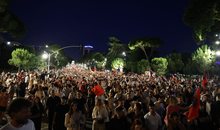
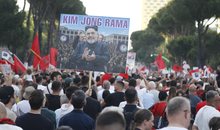
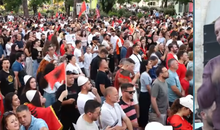
Protest ends, march begins in the streets of Tirana: Revolution! Rama must go!
2026-06-14 21:40:41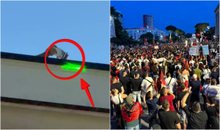
Masked people film the crowd, citizens identify them with lasers
2026-06-14 21:18:36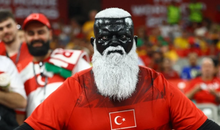

2026 World Cup referees to receive record salaries
2026-06-14 17:59:47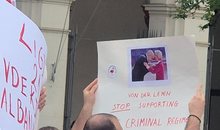
"Rama goes" echoes in Munich, Albanian diaspora in protest in Germany
2026-06-14 17:38:23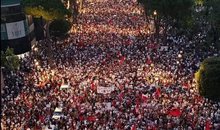
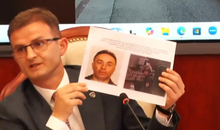
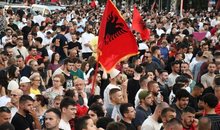

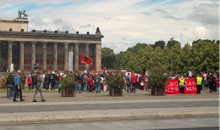
"Rama is gone", German Albanians protest in Berlin against the government
2026-06-14 15:38:41
World Cup 2026/ Germany and the Netherlands take to the field today
2026-06-14 15:20:29
Mes kritikave, BE-ja pret talibanët për herë të parë në Bruksel
2026-06-14 15:01:48
Tragedy in Prizren, 27-year-old stabbed to death after fight between cousins
2026-06-14 14:41:11
Haiti – Skocia, një ndeshje që riktheu magjinë e futbollit
2026-06-14 14:18:57
Shqipëria jashtë fushës, por në lojën e milionave të Botërorit
2026-06-14 13:58:01
Berisha - Ramës: Jep dorëheqjen, protestat nuk do të ndalen
2026-06-14 13:25:06
Marrëveshja për t’i dhënë fund luftës Iran-SHBA shumë afër
2026-06-14 12:58:53
Si u trafikuan tonelata me kokainë nga Amerika Latine në portet e Europës
2026-06-14 12:51:12
Barazimi në debutim, Ancelotti: Kupa nuk fitohet në ndeshjen e parë
2026-06-14 12:30:43


25-year-old found dead in Astir
2026-06-14 11:28:53
Albania, with a high percentage of girls who excel in mathematics
2026-06-14 11:14:10
From Tirana to New York, the Albanian diaspora rises in protest against Rama
2026-06-14 10:51:50
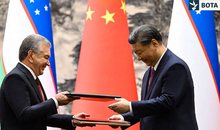
China surpasses Russia as the largest foreign investor in Central Asia
2026-06-14 09:54:58
Tirana/ Officer ends his life with his service weapon
2026-06-14 09:37:23
Foreign exchange, the rate at which foreign currencies are sold and bought
2026-06-14 09:17:06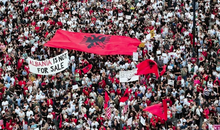
Revolta e “të përjashtuarve”
2026-06-14 08:59:46
Horoskopi, njihuni me parashikimin e yjeve
2026-06-14 08:40:25
Temperatura deri në 34 gradë celsius, si parashikohet moti për sot
2026-06-14 08:28:06
Posta e mëngjesit/ Me 2 rreshta: Çfarë pati rëndësi dje në Shqipëri
2026-06-14 08:07:11


Berisha: Let's follow Rama a minute ago, he doesn't think only about Albanians
2026-06-13 18:40:24

Berisha: Albania can never be called a developed country with a backward village
2026-06-13 18:03:24


Elon Musk becomes the world's first trillionaire
2026-06-13 16:53:03
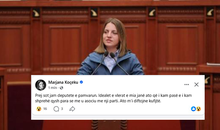
Former Rama supporter, famous actress joins mass protest in Tirana
2026-06-13 16:30:04
Saranda Police officer under house arrest for building without a permit
2026-06-13 15:39:15
Messi, Maradona or Pele? Ranking the 10 best World Cup legends
2026-06-13 15:18:50
11 robberies within a few days in Lezha, 21-year-old arrested, his friend wanted
2026-06-13 15:00:05
10 little tricks that make plane travel more comfortable
2026-06-13 14:51:56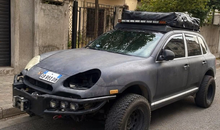
This is the vehicle in which Eglant Koç's body was allegedly transported.
2026-06-13 14:31:46
Valuables trafficking scheme busted, assets worth around 2 million euros seized
2026-06-13 14:10:15

Slogans against him in protest, Berisha: Don't let the leaves hinder the trunk
2026-06-13 13:30:29
Builder Ilir Shtufi's connections to cocaine trafficking money
2026-06-13 13:12:48
Fuel prices are reduced, here's how much diesel and gasoline will be sold for
2026-06-13 12:24:08
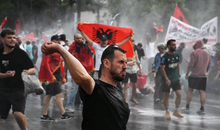
American television: Protests are turning into an open challenge to Rama
2026-06-13 11:41:41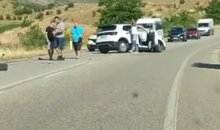
Accident in Tepelena, three vehicles collide
2026-06-13 11:23:56




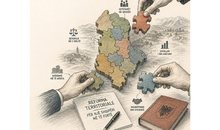
Territorial reform, battle for borders or for governance
2026-06-13 09:00:26
Horoscope, discover the star forecast for your sign
2026-06-13 08:39:34
Weather forecast, how temperatures will vary throughout the day
2026-06-13 08:19:26
Morning Post/ In 2 lines: What mattered yesterday in Albania
2026-06-13 07:56:59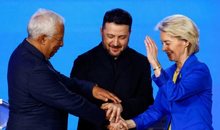
EU paves the way for Ukraine and Moldova to join
2026-06-12 22:07:27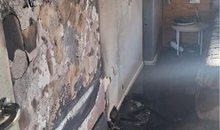
Fire in an apartment in Vlora
2026-06-12 21:52:12
Stop eating like this now!/ Alimehmeti breaks myths about the modern diet
2026-06-12 21:32:30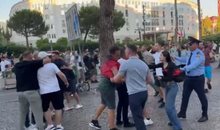
Tensions at the protest, citizens clash with SP supporters
2026-06-12 21:18:18
Knife wound in Vlora/ One person is urgently transported to hospital
2026-06-12 20:59:13
SPAK closes investigations into socialist mayor Erion Isai
2026-06-12 20:42:16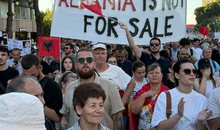
'Spicy' banners from citizens' protest: This government has expired
2026-06-12 20:19:46
Law on Protected Areas, Civil Society Boycotts Consultation Processes
2026-06-12 19:46:37

Kosovo remains "blocked" in European integration
2026-06-12 19:00:57
Thousands of citizens demand his removal, Rama: Influenced by disinformation
2026-06-12 18:49:56
Goditja e 2 grupeve kriminale nga SPAK, Bardhi: Të hetohet roli i Ramës
2026-06-12 18:16:04