 Flash News
Eglant Koç's disappearance, police: A special structure is dealing with finding the body
World Cup 2026/ USA starts with a spectacle, Americans dominate Paraguay with four goals
Weather forecast, how temperatures will vary throughout the day
Stop eating like this now!/ Alimehmeti breaks myths about the modern diet
'Spicy' banners from citizens' protest: This government has expired
"National Geographic": Sazani, the island desired for thousands of years by the powerful

Politiko
2026-06-13 10:18:37
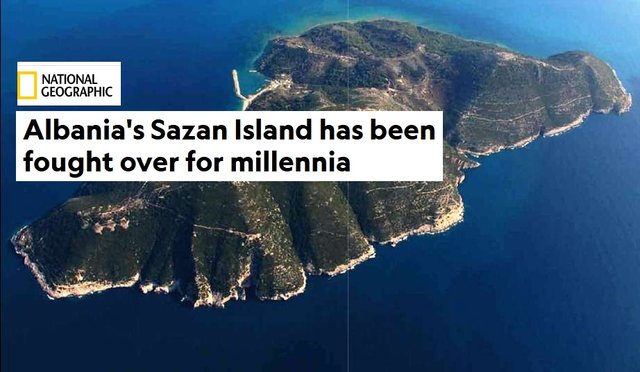
For thousands of years, world powers have traded control over a small, lush island off the southwestern coast of Albania.
Sazan Island, a 2.2 square mile expanse of land, lies within the Strait of Otranto, a narrow channel separating Italy and Albania, and which has served as an important base for powers seeking to dominate the Adriatic and Ionian seas.
There are no permanent residents in Sazan, yet it has played a key role in the history of Albania for more than a century.
“The island certainly has a long and complicated history,” says Theodora Dragostinova, a history professor at Ohio State University who specializes in Balkan studies. With its strategic location on the edge of the Gulf of Vlora in Albania, various empires — including the Romans, Venetians, British and Ottomans — have controlled it.
“It is certainly one of the best examples of how location can disproportionately determine the importance of a particular place ,” Petar Kure?i?, a professor of political science at the Northern University in Croatia, notes in an email.
“There has been no significant historical power in the region (or even outside it) that has not controlled or attempted to control Sazan.” Possession of the island once helped determine control of the Adriatic, and with it countless port cities, such as Venice, Dubrovnik, and Trieste. (Today, the area is valued primarily for its ecological beauty and potential to attract tourists.)
In antiquity, the Romans used the Gulf of Vlora as a resting place for their ships. Several key battles during the Roman Civil War – a fierce struggle between Julius Caesar and Pompey the Great from 49-45 BC – took place along the coast of mainland Albania.
More than a millennium later, in 1264, the Venetians and Genoese, fighting for dominance in trade, staged a naval battle off the coast of Sazan. And by the 15th century, Sazan had become an official naval outpost for the Ottoman Empire, explains Steven Seegel, professor of European and Eurasian Studies at the University of Texas at Austin.
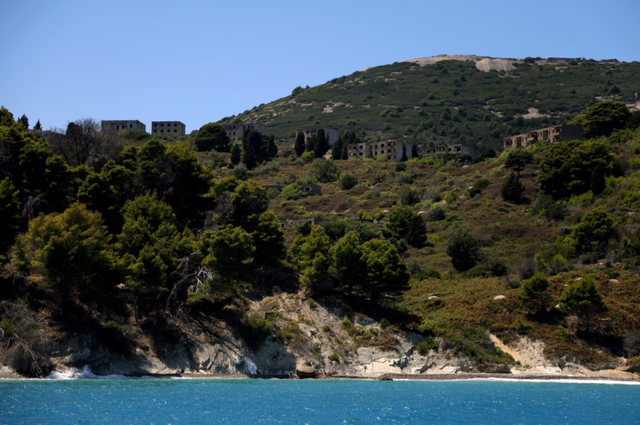
Sazan Island is home to an extensive network of tunnels, barracks, and other abandoned military infrastructure. Since few people have visited the island in recent decades, the ecosystem has flourished.
Fast forward to 1912, when Albania declared independence from the Ottomans. Suddenly, Sazan became a disputed territory, with many nations – Greece, Albania, and Italy – vying for control.
8 vjet më vonë, Italia mori në zotërim ishullin, të cilin e mbajti pasi Musolini erdhi në pushtet në vitin 1922.
“Forcat [e tij] në periudhën midis dy luftërave ndërtuan infrastrukturë mbrojtjeje atje, duke përfshirë kazerma dhe instalime ushtarake që rezultuan të rëndësishme për kontrollin e Detit Adriatik”, – thotë Seegel. Gjatë Luftës së Dytë Botërore, italianët dhe, për një periudhë të shkurtër, gjermanët e pushtuan ishullin.
Kur Lufta e Dytë Botërore mbaroi, Shqipëria më në fund fitoi pronësinë e Sazanit si pjesë e Traktatit të Paqes së Parisit në vitin 1947. Ishulli më pas luajti një rol të spikatur në regjimin e Enver Hoxhës, i cili e udhëhoqi vendin nga viti 1944 deri në vdekjen e tij në vitin 1985. Qeveria e tij komuniste ishte izolacioniste dhe shtypëse. Figurat fetare dhe individë të tjerë që shiheshin si kërcënues për shtetin u burgosën, u internuan ose u ekzekutuan, dhe qeveria sekuestroi pronën private.
“Hoxha ishte i fiksuar pas idesë së një sulmi ushtarak kundër Shqipërisë”, – thotë Elidor Mëhilli, një profesor i asociuar i historisë në “Hunter College”. Me ndihmën e Bashkimit Sovjetik, një aleat i Shqipërisë, ai ndërtoi mbrojtjen e Sazanit, duke përfshirë mijëra bunkerë për t’u mbrojtur nga pushtimet dhe një rrjet sekret tunelesh të përdorur për të ruajtur nëndetëset. (Një memo sekrete e CIA-s nga viti 1961 i referohej Sazanit si një “Gjibraltar i Kuq në Mesdhe.”)
Kur marrëdhënia e Hoxhës me BRSS-në u shpërbë përfundimisht, thuhet se ai refuzoi të hiqte dorë nga disa nga nëndetëset. Sovjetikët, duke mos dashur të shkaktonin një konflikt duke kaluar ujërat e NATO-s për t’i rimarrë ato, i lanë anijet e tyre të çmuara të iknin.
Gjatë gjithë regjimit të tij, infrastruktura ushtarake në Sazan kishte funksione të dyfishta: mbrojtjen nga kërcënimet e perceptuara dhe ndihmën në parandalimin e largimit të shqiptarëve nga vendi, thotë Dragostinova. “Nga mënyra se si e shoh unë, ajo u bë një simbol i brutalitetit, fshehtësisë dhe paranojës së regjimit.”
Kur qeveria komuniste e Hoxhës ra përfundimisht në vitet 1990, “ishulli u rimor për kombin dhe natyrën”, thotë Dragostinova, dhe nga ana tjetër u bë një simbol i çlirimit për shumë shqiptarë. Në vitin 2010, qeveria shqiptare krijoi Parkun Kombëtar Detar Karaburun – Sazan, i cili përfshin Sazanin dhe është shtëpia e rreth 300 llojeve të bimëve dhe 40 llojeve të zogjve, të tilla si devija alpine dhe bufja euroaziatike, një nga llojet më të mëdha të bufëve. Me kalimin e kohës, parku kombëtar është bërë gjithashtu një strehë për fokat mesdhetare të rrezikuara, breshkat e detit Loggerhead që folezojnë dhe qindra flamingo.
Five years later, says Mehilli, Sazani was demilitarized and opened to the public. (Technically, it is still a military exclusion zone, placing it under the jurisdiction of Albania’s Ministry of Defense.) Although parts of Sazani have been opened to tourism, it still lacks significant infrastructure, and overnight stays are usually prohibited. Visitors hoping to see its limestone cliffs must travel by boat during the day.
Today, Sazani is “a unique Cold War time capsule in the middle of the sea,” says Mehilli. Its network of tunnels still remains there, as well as relics of command bunkers, weapons depots, and nuclear shelters.
Unexploded mines and other munitions have been found on and near the island, according to several media reports. Since Sazani once housed military officers and several families, it also had a collection of houses, schools and medical clinics, Mehilli says. (Parts of Sazani, he notes, were looted during civil unrest in 1997.)
Due to the region's long history of war, the waters surrounding Sazan and the Gulf of Vlora are littered with shipwrecks, mainly from World War I and II. The area has yielded several important archaeological discoveries and has become popular with divers.
Because few people had access to the island for decades, its ecosystems are largely untouched. “From a historian’s perspective,” says Mehilli, “this is one of the few relatively untouched places left in Albania that speaks to its deep history.”
Latest news







Territorial reform, battle for borders or for governance
2026-06-13 09:00:26
Horoscope, discover the star forecast for your sign
2026-06-13 08:39:34
Weather forecast, how temperatures will vary throughout the day
2026-06-13 08:19:26
Morning Post/ In 2 lines: What mattered yesterday in Albania
2026-06-13 07:56:59
EU paves the way for Ukraine and Moldova to join
2026-06-12 22:07:27
Fire in an apartment in Vlora
2026-06-12 21:52:12
Stop eating like this now!/ Alimehmeti breaks myths about the modern diet
2026-06-12 21:32:30
Tensions at the protest, citizens clash with SP supporters
2026-06-12 21:18:18
Knife wound in Vlora/ One person is urgently transported to hospital
2026-06-12 20:59:13
SPAK closes investigations into socialist mayor Erion Isai
2026-06-12 20:42:16
'Spicy' banners from citizens' protest: This government has expired
2026-06-12 20:19:46
Law on Protected Areas, Civil Society Boycotts Consultation Processes
2026-06-12 19:46:37

Kosovo remains "blocked" in European integration
2026-06-12 19:00:57
Thousands of citizens demand his removal, Rama: Influenced by disinformation
2026-06-12 18:49:56

Goditja e 2 grupeve kriminale nga SPAK, Bardhi: Të hetohet roli i Ramës
2026-06-12 18:16:04

Businessman Ilir Shtufi arrested in Greece on money laundering charges
2026-06-12 17:30:42

A Secretary of State who elevates the United States of America
2026-06-12 16:58:04
The economy is pushing young people to become parents later
2026-06-12 16:40:37

Facebook down for millions of users
2026-06-12 16:08:21
Maliq, 12-year-old boy found dead in apartment
2026-06-12 16:02:47
Rama donates the "Zyber Hallulli" Children's Home to build a 35-story tower
2026-06-12 15:40:32
I ate the grass, did you?
2026-06-12 15:22:18
Peqin Prison like Dubai, Artan Hoxha releases video: 7-star hotel cell
2026-06-12 15:01:07
Heat wave is coming, thermometer expected to reach up to 35°C
2026-06-12 14:50:05

Why is the birth rate falling? Two new studies blame smartphones
2026-06-12 14:37:35
Inversion of the population pyramid, more retirees than young people in work
2026-06-12 14:19:21
Photo/ Who is Luçiano Koçeku, the 'head' of the drug gang hit by SPAK?
2026-06-12 13:32:43




They had rented apartments for prostitution, 3 foreigners arrested in Tirana
2026-06-12 12:19:38





SPAK operation, arrest warrants issued revealed; who are the people targeted?
2026-06-12 10:31:45

SPAK operation, 20 security measures executed, businessman in handcuffs
2026-06-12 09:55:39

Foreign exchange, how much foreign currencies are sold and bought today
2026-06-12 09:07:19

Horoscope, what do the stars have in store for you today?
2026-06-12 08:43:15
Cloudy and light rain, weather forecast
2026-06-12 08:12:28
Posta e mëngjesit/ Me 2 rreshta: Çfarë pati rëndësi dje në Shqipëri
2026-06-12 07:55:47
Protesters 'challenge' the World Cup, a flood of people in the streets of Tirana
2026-06-11 22:01:36



"We spent everything on hospitals," young woman bursts into tears in protest
2026-06-11 20:09:50
"Edi, the end is coming", the spicy banners of the 12th protest
2026-06-11 19:50:44
DASH reacts to the lifting of the "non grata" measure against Sali Berisha
2026-06-11 19:27:27

From Germany on the protest in Tirana: We will not stop until there is change
2026-06-11 18:38:52

Serbia risks EU security by granting Russians citizenship
2026-06-11 18:07:47

"The Guardian" chooses the protest in Tirana as "Photo of the Day"
2026-06-11 17:17:01



10 myths about cleaning that you should stop believing
2026-06-11 16:19:47
Peter Lucas in the Boston Herald: "Rama Government", the best that money can buy
2026-06-11 16:14:17


The Democratic Party releases the 'dossier' of Rama's 13 years of government
2026-06-11 15:37:52
Directors of Serbian institutions in Kosovo released from detention
2026-06-11 15:17:18
Correcting an injustice...
2026-06-11 14:59:47
Non grata from Tirana, the chronology of a history of manipulation
2026-06-11 14:50:22
TNT explosion near Nikulaj family, one of the suspected perpetrators arrested
2026-06-11 14:19:52
GJKKO convicts 12 defendants for terrorism and participation in the war in Syria
2026-06-11 14:09:30
e-Albania in healthcare: The challenges faced by citizens
2026-06-11 13:58:21
Heroin from the Republic of Macedonia to Albania, 2 people arrested
2026-06-11 13:49:17
The World Cup starts tonight, 48 teams competing for a trophy
2026-06-11 13:37:05