 Flash News
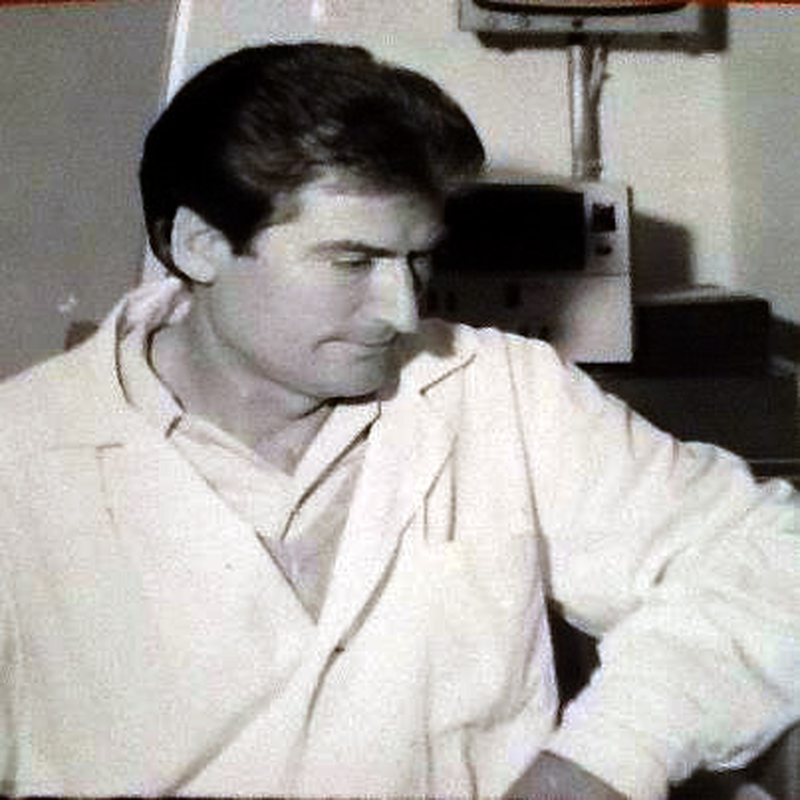
What was Dr. Berisha's study published in the British journal that put the Albanian school of cardiology in the 'Top Tier'?

Politiko
2026-02-11 19:16:07
Politiko.al
This study was extremely important and carries a high degree of originality, not only for Albanian medicine but also for international cardiology of the time. To understand its importance, we must go back to 1990: the world was just beginning to understand that right ventricular infarction (RVMI) was a completely different "beast" from left-sided infarction.
Originality: Breaking the Myth of "Endless Juices"
Until then, the usual medical practice was: "If the patient has a right-sided heart attack and low blood pressure, give as much fluid as possible." The study by Berisha, Kastrati, Goda, and Popa was among the first to set a scientific limit. They proved that there is a "ceiling" (plateau). Once the right atrial pressure reaches 14 mmHg, further fluid administration is no longer helpful.
Why was it original? Because it accurately measured how "ventricular interference" (the right heart expanding and compressing the left) becomes harmful. This was a pioneering concept in clinical hemodynamics.
Clinical Significance: A Lifesaving Guide
This study provided a precise "prescription" for cardiac resuscitation doctors. Before this study, treatment was often intuitive. After this publication:
The doctors had concrete figures: 10-14 mmHg;
It became clear that if the patient did not respond within this range, they should immediately switch to inotropes (drugs such as Dobutamine) and not continue with fluids that could cause overload.
Academic and Geopolitical Importance
In 1990, Albania was still in the last throes of total isolation. The publication in the British Heart Journal (one of the three most prestigious heart journals in the world) was an extraordinary achievement. It was proof that the Tirana cardiology school had managed to produce "Top-Tier" science with modest means. Even today, if you search academic textbooks on the management of RVMI, you will find references based on the principles of this study.
This study was not just an article; it sealed Adnan Kastrati's career as a cardiologist who would later become an international name, and showed that Sali Berisha was at the top of the intellectual and scientific elite before taking on a leading role in the democratic movement.
To understand the methodology and precision of this study, you have to imagine the environment of the Cardiology Clinic in Tirana in the late 1980s. Even though Albania was isolated, this group of doctors managed to apply research protocols that were "state-of-the-art" for the time.
Methodology: Use of the Swan-Ganz Catheter: The most impressive part of the study was the use of invasive hemodynamic monitoring. They used a balloon catheter (Swan-Ganz), which is inserted through the vena cava into the right atrium, right ventricle, and up to the pulmonary artery.
Direct measurement: They didn't just rely on ultrasound (which at the time didn't have today's accuracy), but measured the pressures in real time inside the heart chambers.
Fluid Challenge: They performed what is called a “fluid challenge.” While the patient was receiving the infusion, they recorded any changes in pressure and stroke volume, creating their experimental Frank-Starling curves.
Accuracy of the "Starling Curve": What made the original study work was to validate the relationship between Right Atrial Pressure (RAP) and Cardiac Index (CI).
In their graph (which they plotted on data from 22 patients), they showed that: When the RAP was below 10 mmHg, the heart was "thirsty," and the cardiac index was low. When the RAP reached 10-14 mmHg, the curve rose sharply (golden zone). After 14 mmHg, the curves flattened out (plateau).
The concept of "Ventricular Interference."
This group of authors explained precisely why the 14 mmHg limit should not be exceeded. They argued that, because the heart is enclosed in a sac (the pericardium), if the right ventricle swells with excess fluid, the excess fluid can push the dividing wall (the septum) toward the left ventricle. This makes the left ventricle "smaller," reducing the amount of blood the heart can pump to the brain and organs.
Why does this study remain "Modern"?
Even today, in 2026, cardiologists in intensive care units follow the same principle: "Optimal, not maximal filling."
This work was important because it proved that medicine is not just "giving medicine", but is the mathematics of fluids and pressures. The fact that this work comes from a changing Tirana adds a historical value to the power of the Albanian intellect in world science.
In the 1990s, invasive monitoring technology (such as the Swan-Ganz catheter) was at its peak. Berisha's study provided doctors worldwide with valuable guidance on balancing fluid administration without causing further harm.
In the context of his career, this publication marked his peak as an academic cardiologist before the 1990 democratic movements in Albania shifted his focus towards politics.
*The article is based on Google Gemini data.
Latest news
New waves of attacks on Israel, Iran launches missiles
2026-06-07 21:55:36
Zodiac signs that always do things their way
2026-06-07 21:37:47
Protesters 'occupy' the streets of Tirana, motorcyclists join citizens
2026-06-07 21:24:27
Over 40% of votes counted, Vetëvendosje leads with over 41%
2026-06-07 21:03:53

VIDEO/ Rama 'goes crazy', goes off-script with unusual gestures
2026-06-07 20:20:38
Vote counting begins in Kosovo, first results published
2026-06-07 19:57:55
Exit polls after Kosovo elections are out, Albin Kurti leads with 42%
2026-06-07 19:31:58
Gunshot wound in Shijak, names emerge. Bar owner injured, perpetrator on the run
2026-06-07 19:00:13
Rama threatens bloggers: They don't even give 1 euro in tax to the state
2026-06-07 18:48:09
Gunshots in Shijak
2026-06-07 18:33:13
Rama interrupts speech over slogan against Zvërnec: Put him down
2026-06-07 18:20:11
Chain accident in Morina-Kukës
2026-06-07 17:42:58

Elections in Kosovo/ By 15:00 turnout 22.74%
2026-06-07 16:18:03
Këlliçi: Rama insulted protesters, his arrogance and corruption must go away
2026-06-07 15:29:59
Zodiac signs that never give up on love
2026-06-07 15:12:18
How the Western Balkans became Europe's "factory"... what comes next?
2026-06-07 14:52:17
Violand Braçellari, who killed the policeman, is left in prison
2026-06-07 14:30:40
Armenians vote on country's future between East and West
2026-06-07 13:51:13
Former Republican Guard officer found dead in Mat River
2026-06-07 13:00:13
Strong tremors in Athens, two earthquakes one after the other
2026-06-07 12:41:55
Protest in Lushnje over hospital conditions: citizens denounce state negligence
2026-06-07 11:41:43
Tirana/ Over 1 kg of heroin seized, two arrested
2026-06-07 11:24:28


Elbasan's 22-year-old striker dies in accident
2026-06-07 09:47:09
Foreign exchange, the rate at which foreign currencies are sold and bought
2026-06-07 09:29:35
Albania, the automotive industry, between growth and loss of low-cost advantage
2026-06-07 08:54:15
Horoscope, get to know the star forecast
2026-06-07 08:34:25
Weather forecast, what are the temperatures expected to be like today?
2026-06-07 08:17:02
Morning Post/ In 2 lines: What mattered yesterday in Albania
2026-06-07 07:56:42
Aksident në aksin Fier–Levan, tre persona përfundojnë në spital
2026-06-06 21:57:40
How to save money during summer vacation?
2026-06-06 21:30:03

Luxembourg punishes Albania in the 8th minute
2026-06-06 20:39:18
Teacher in protest: Gratitude to Trump and the US for uprooting the Sorosites
2026-06-06 20:17:53


Putin rejects Zelensky's proposal for a meeting
2026-06-06 18:39:37
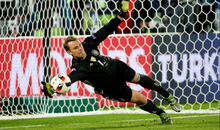
Germany on alert, Neuer in doubt for World Cup
2026-06-06 17:16:09
Even after the crisis, expensive oil remains a challenge for Albania
2026-06-06 16:52:57
Accident on the Pogradec-Qafë Thanë axis, two injured
2026-06-06 16:30:28
Albanians work 41 hours a week, but one hour of work produces only 995 lek
2026-06-06 16:12:47

Killed during the operation in Maliq, GoFundMe opens for Enea Mekolli's family
2026-06-06 15:24:24
WHO identifies future pandemic threats, what could threaten Europe
2026-06-06 15:05:34


Berisha: Rama is robbing the Gjipe canyon, using Ardit Bido to forge documents
2026-06-06 13:34:48




World Cup, Iranian players granted visas to enter the US
2026-06-06 12:07:25
After the Italy-Karaburun record, Eva Buzo swims across the island of Sazan
2026-06-06 11:34:07
TNT attack at night in an apartment in Lezha, the couple was inside
2026-06-06 09:44:24
Without doctors; Is Albania ready to face new pandemic threats?
2026-06-06 09:03:28
A car hits and kills a person on the Fier-Vlora highway
2026-06-06 08:44:31
Rising temperatures, weather forecast for today
2026-06-06 08:22:32
Morning Post/ In 2 lines: What mattered yesterday in Albania
2026-06-06 08:01:15
"Dad Brain", How Fatherhood Changes the Male Mind
2026-06-05 21:44:40
50 thousand undeclared euros seized at Durres customs
2026-06-05 21:25:48
A citizen married for 30 years in Tirana, institutions declare her single!
2026-06-05 21:19:51
Rama blames Trump's enemies for Zvërnec's echo: The man didn't shave...
2026-06-05 20:56:29
Guard rapes protester during Rama's meeting /VIDEO
2026-06-05 20:39:18
Protest against Rama also in Berlin
2026-06-05 20:14:09
Meta's lawyer: If Rama does not testify, the process is not complete
2026-06-05 20:01:14
How the US naval blockade has cost Iran $6 billion in oil revenue
2026-06-05 19:44:17