 Flash News
The anti-smoking law, from enthusiastic implementation to silent failure

Politiko
2025-08-18 16:15:15
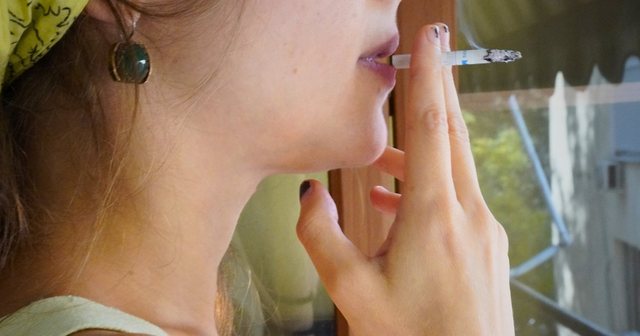
In August 2019, a photo shared by the satirical website “Brryli Broadway” sparked debate on social media. It showed Prime Minister Edi Rama sitting in a restaurant on the Vlora Promenade, smoking a lit cigarette.
The prime minister was violating the anti-smoking law, which began to be enforced with great fanfare in the summer of 2014 and was tightened again five years later.
Rama denied the violation, arguing that he was outside the bar. But the details in the photo 'burned' him. Commentators noted that the wine bottles, seen in the background, were kept on shelves, which only happens in closed spaces, especially at the height of the scorching August heat.
"How many restaurants keep wine outside when the temperature reaches 40 degrees? None," wrote one citizen.
This was not an isolated case. In its five years of existence, the new anti-smoking law was showing the first signs of failure. One of the most important laws for public health, year after year, turned into a formal act, ignored by everyone.
From strict enforcement to state indifference
When the new anti-smoking law came into effect in August 2014, it had an immediate effect. Bars cleared tables of cigarette butts, owners put up prohibition signs, and citizens got used to the idea that indoor spaces should be smoke-free. Control was tight at the time. The State Health Inspectorate (ISSH) fined violators.
But official figures show that this zeal did not last long. From the data provided by “Faktoje”, the ISSH has carried out 94,355 national inspections in the period 2015-2025. In 2015, 22,125 inspections were carried out, but in 2025, until May, only 2,319. So, a dramatic drop of about 90% within a decade. Even compared to 2024, the drop in inspections is significant, marking 74% compared to the peak of 2015.
Tirana, the capital with the largest number of bars, follows the same trend. In 2015, 4,985 inspections were carried out, while in the first five months of 2025 only 693 were carried out, a reduction of 86%. The law, which started out being strictly enforced, was gradually abandoned, becoming almost non-existent especially in the last five years.
In addition to inspections, the situation with fines is equally worrying as it reflects the lack of effective enforcement of the law. A total of 2,073 fines have been issued in ten years. Their peak was in 2019, when, after the expansion of the detention areas, 466 fines were issued, more than double the number of years before and after. But this was a short moment. After 2019, the number of fines has also dropped significantly. Only 12 fines in 2021 and the same in the first five months of 2025.
Even more worrying is the fact that fines, even when imposed, are not enforced. Of the over 2,000 fines imposed in the last decade, only 262, or 12.6%, have been collected. The value collected is 786 million lek, while the rest is hostage to enforcement delays.
Experts: Public health at risk
Expert Roland Shuperka, one of the drafters of the anti-smoking law, sums up the problem in a nutshell: “In many public spaces, especially in bars and cafes, the law is not implemented in practice.”
Shuperka lists several reasons: lack of political will, lack of real monitoring, unequal treatment of subjects and, paradoxically, very high fines that have created room for abuse by the inspectors themselves.
But perhaps most importantly, there is a lack of a consistent awareness campaign. At first, anti-smoking messages appeared in every bar, school, and media outlet. Today, these messages have disappeared, leaving room for a normalization of indoor smoking.
"The law has been a cornerstone for public health in Albania, but a strong commitment to implementation and control is needed," concludes Roland Shuperka, an expert on tobacco control in Albania.
The consequences are measurable. Albania has one of the highest smoking rates in the region: about 38% of the population. Smoking is the main cause of 7 cancers, including lung cancer (90%), larynx (90%), pharynx and esophagus (80%), oral cavity and lip, and bladder (70%).
Doctors warn that the increase in the number of young smokers will have catastrophic consequences. By 2030, the number of tumors in the country is expected to increase by 60% compared to 2020, mainly due to tobacco consumption. Instead of awareness and prevention, young people are exposed to a culture where cigarettes are seen as a normal part of social life.
The history of the anti-smoking law in Albania is the story of an initiative that began with zeal and ended in failure. In 2014, it was an example of how the state could establish strong rules to protect public health. But ten years later, it is an example of how the lack of political will, everyday petty corruption and social indifference can undo any initiative./Faktoje.al
Latest news
New waves of attacks on Israel, Iran launches missiles
2026-06-07 21:55:36
Zodiac signs that always do things their way
2026-06-07 21:37:47
Protesters 'occupy' the streets of Tirana, motorcyclists join citizens
2026-06-07 21:24:27
Over 40% of votes counted, Vetëvendosje leads with over 41%
2026-06-07 21:03:53

VIDEO/ Rama 'goes crazy', goes off-script with unusual gestures
2026-06-07 20:20:38
Vote counting begins in Kosovo, first results published
2026-06-07 19:57:55
Exit polls after Kosovo elections are out, Albin Kurti leads with 42%
2026-06-07 19:31:58
Gunshot wound in Shijak, names emerge. Bar owner injured, perpetrator on the run
2026-06-07 19:00:13
Rama threatens bloggers: They don't even give 1 euro in tax to the state
2026-06-07 18:48:09
Gunshots in Shijak
2026-06-07 18:33:13
Rama interrupts speech over slogan against Zvërnec: Put him down
2026-06-07 18:20:11
Chain accident in Morina-Kukës
2026-06-07 17:42:58


Elections in Kosovo/ By 15:00 turnout 22.74%
2026-06-07 16:18:03
Këlliçi: Rama insulted protesters, his arrogance and corruption must go away
2026-06-07 15:29:59
Zodiac signs that never give up on love
2026-06-07 15:12:18
How the Western Balkans became Europe's "factory"... what comes next?
2026-06-07 14:52:17
Violand Braçellari, who killed the policeman, is left in prison
2026-06-07 14:30:40
Armenians vote on country's future between East and West
2026-06-07 13:51:13
Former Republican Guard officer found dead in Mat River
2026-06-07 13:00:13
Strong tremors in Athens, two earthquakes one after the other
2026-06-07 12:41:55
Protest in Lushnje over hospital conditions: citizens denounce state negligence
2026-06-07 11:41:43
Tirana/ Over 1 kg of heroin seized, two arrested
2026-06-07 11:24:28



Elbasan's 22-year-old striker dies in accident
2026-06-07 09:47:09
Foreign exchange, the rate at which foreign currencies are sold and bought
2026-06-07 09:29:35
Albania, the automotive industry, between growth and loss of low-cost advantage
2026-06-07 08:54:15
Horoscope, get to know the star forecast
2026-06-07 08:34:25
Weather forecast, what are the temperatures expected to be like today?
2026-06-07 08:17:02
Morning Post/ In 2 lines: What mattered yesterday in Albania
2026-06-07 07:56:42
Aksident në aksin Fier–Levan, tre persona përfundojnë në spital
2026-06-06 21:57:40
How to save money during summer vacation?
2026-06-06 21:30:03

Luxembourg punishes Albania in the 8th minute
2026-06-06 20:39:18
Teacher in protest: Gratitude to Trump and the US for uprooting the Sorosites
2026-06-06 20:17:53

Putin rejects Zelensky's proposal for a meeting
2026-06-06 18:39:37


Germany on alert, Neuer in doubt for World Cup
2026-06-06 17:16:09
Even after the crisis, expensive oil remains a challenge for Albania
2026-06-06 16:52:57
Accident on the Pogradec-Qafë Thanë axis, two injured
2026-06-06 16:30:28
Albanians work 41 hours a week, but one hour of work produces only 995 lek
2026-06-06 16:12:47


Killed during the operation in Maliq, GoFundMe opens for Enea Mekolli's family
2026-06-06 15:24:24
WHO identifies future pandemic threats, what could threaten Europe
2026-06-06 15:05:34


Berisha: Rama is robbing the Gjipe canyon, using Ardit Bido to forge documents
2026-06-06 13:34:48



World Cup, Iranian players granted visas to enter the US
2026-06-06 12:07:25
After the Italy-Karaburun record, Eva Buzo swims across the island of Sazan
2026-06-06 11:34:07


TNT attack at night in an apartment in Lezha, the couple was inside
2026-06-06 09:44:24
Without doctors; Is Albania ready to face new pandemic threats?
2026-06-06 09:03:28
A car hits and kills a person on the Fier-Vlora highway
2026-06-06 08:44:31
Rising temperatures, weather forecast for today
2026-06-06 08:22:32
Morning Post/ In 2 lines: What mattered yesterday in Albania
2026-06-06 08:01:15
"Dad Brain", How Fatherhood Changes the Male Mind
2026-06-05 21:44:40
50 thousand undeclared euros seized at Durres customs
2026-06-05 21:25:48
A citizen married for 30 years in Tirana, institutions declare her single!
2026-06-05 21:19:51
Rama blames Trump's enemies for Zvërnec's echo: The man didn't shave...
2026-06-05 20:56:29
Guard rapes protester during Rama's meeting /VIDEO
2026-06-05 20:39:18
Protest against Rama also in Berlin
2026-06-05 20:14:09
Meta's lawyer: If Rama does not testify, the process is not complete
2026-06-05 20:01:14
How the US naval blockade has cost Iran $6 billion in oil revenue
2026-06-05 19:44:17