 Flash News
Rape of couple in Fushë-Arrëz, injured person speaks out: 5 people introduced themselves as police officers...
Transparency Board sets new fuel prices, diesel and gasoline prices decrease
Search continues in Ulza Lake for missing 37-year-old
Foreign exchange rate June 17/ How much the dollar and euro are bought and sold
Analysis by "The Brussels Times": Why did Rama and Vučić benefit more from delay than from membership?
EP report on Albania, alarm on elections, corruption, media and environment

Politiko
2026-06-17 13:46:15
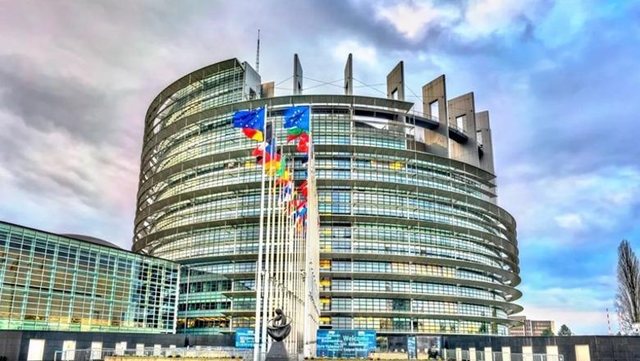
The European Parliament's Committee on Foreign Affairs (AFET) adopted this Wednesday the report on Albania for 2026, a document that includes over 300 amendments compared to the initial draft and addresses a wide range of issues related to the democratic process, the rule of law, corruption, media freedom, human rights and environmental protection.
The final version also includes two new amendments related to protected areas and European Union requirements for environmental impact assessment, issues that have been at the center of public debates in recent months.
In the chapter on elections , the report highlights concerns about the use of state resources during electoral processes, emphasizing that the boundary between public administration and the ruling party remains unclear.
The document also raises concerns about the transparency of political party financing, allegations of vote buying and pressure on voters, as well as the failure to fully implement the recommendations of the OSCE/ODIHR and the Venice Commission following the elections of May 11, 2025.
The report also focuses on the political polarization in the country, assessing that the ongoing climate of conflict between parties undermines the normal functioning of democratic institutions, reduces public trust and limits the oversight role of the Assembly towards the government. AFET calls for a more meaningful involvement of the opposition in parliamentary processes and more transparency in the drafting of legislation.
As regards the rule of law , MEPs express concern about political pressures on the judicial system and the challenges related to the efficiency of courts, the implementation of final decisions and attempts to unfairly influence the judiciary. The report calls for the full implementation of the decisions of the Constitutional Court and the respect of constitutional procedures in matters related to parliamentary immunity.
An important part of the document is dedicated to corruption and organized crime.
The report highlights that Albania has marked a decline in Transparency International's Corruption Perceptions Index, moving from 80th place in 2024 to 91st place in 2025. According to AFET, corruption remains a serious concern and more concrete results are needed in the investigation and conviction of high-level corruption cases. It also requires guaranteeing the independence and capacities of SPAK, as well as strengthening mechanisms for the seizure and confiscation of assets of criminal origin.
The report also addresses ownership issues, emphasizing that the process of initial property registration remains incomplete and that citizens must be guaranteed the right to a fair trial in cases of expropriation.
In the field of media , AFET strongly condemns anti-media rhetoric and verbal attacks on journalists, expressing concern about the high number of lawsuits against them and the lack of transparency in media ownership and the distribution of state advertising.
In terms of public administration and governance, the report highlights the need to depoliticize the civil service, strengthen meritocracy, and increase transparency in public procurement. It also notes that the public internal financial control system remains only partially effective.
One of the most critical chapters is on the environment . The report cites the European Commission’s assessment that Albania has made no progress in the field of environment and climate change over the last year. AFET regrets the extension of the Strategic Investments Law and calls for the repeal of the 2024 amendments that allow large-scale tourism developments within protected areas, arguing that they weaken environmental oversight.
The report also raises concerns about the irregularities identified by OLAF in the implementation of the IPARD II programme and calls for immediate corrective measures to ensure the correct use of European Union funds.
On foreign policy, MEPs warn that regional initiatives outside the European Union framework, including the “Open Balkans”, could create parallel structures that weaken the Berlin Process and the EU-backed Regional Common Market.
The AFET report is considered one of the most important political documents for Albania's progress on the path of European integration, as it highlights the main challenges that the country must address within the framework of the European Union membership process.
Latest news

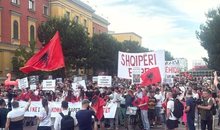
Protest/ Police prosecute 16 citizens and announce 2 others wanted
2026-06-17 14:01:20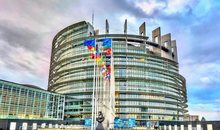
EP report on Albania, alarm on elections, corruption, media and environment
2026-06-17 13:46:15


Renowned actor Gjergji Lala dies
2026-06-17 12:30:31
45-year-old man in Memaliaj injured after falling from scaffolding at work
2026-06-17 12:14:54
Eurostat: Albania, penultimate in Europe for well-being
2026-06-17 12:00:59
Berisha: DP supports the protest, Rama leads a regime without legitimacy
2026-06-17 11:34:55
Transparency Board sets new fuel prices, diesel and gasoline prices decrease
2026-06-17 11:24:32

Search continues in Ulza Lake for missing 37-year-old
2026-06-17 10:40:55

Nosebleeds and stress: what you need to know
2026-06-17 10:21:39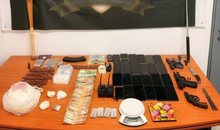
Cocaine trafficking network dismantled in Athens, 11 Albanians involved
2026-06-17 10:11:29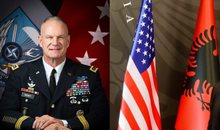
General Eric Wendt confirmed as US Ambassador to Albania
2026-06-17 09:58:32
Brazil-Morocco match breaks World Cup viewership record
2026-06-17 09:49:50
Accident in Fier-Lushnjë, two people end up in hospital
2026-06-17 09:12:44
Foreign exchange rate June 17/ How much the dollar and euro are bought and sold
2026-06-17 08:56:35
MEP raises voice on protests in Albania: Where is public money going?
2026-06-17 08:12:17
17 countries support US-Iran deal, call for immediate implementation
2026-06-17 07:53:26
Rain is expected in some areas, according to the weather forecast today
2026-06-17 07:19:03
Morning Post/ In 2 lines: What mattered yesterday in Albania
2026-06-17 06:59:23
Alimehmeti: Rama's resignation would pave the way for a transitional government
2026-06-16 22:51:14
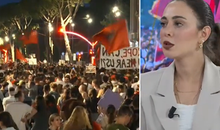

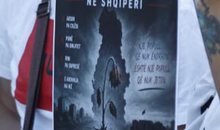
"Killed dreams in Albania", the spicy banners from the 17th protest
2026-06-16 21:17:28
No alarm, no emergency exit: how students live in Student City dormitories
2026-06-16 21:02:08
Yamal's World Cup debut comes with a special dedication
2026-06-16 20:38:10
Protest schedule postponed due to high temperatures
2026-06-16 19:15:32
These 3 zodiac signs are considered ideal vacation companions
2026-06-16 18:54:57
With the red and black flag, tourists join the protest against Rama
2026-06-16 18:31:36
Secret destination in Europe where US-Iran deal expected to be signed revealed
2026-06-16 18:20:34
SPAK "freezes" the criminal group's luxury, seizing 150 million euros of assets
2026-06-16 17:44:56
Zhupa: Berisha will soon have meetings in the US
2026-06-16 17:22:37

Trump: The deal clearly states that Iran will not have nuclear weapons
2026-06-16 16:27:56
Why our brains don't function well in high-pressure situations
2026-06-16 16:19:13
How to stay safe while traveling in extreme heat
2026-06-16 15:39:24
Who is Dritan Gjika, the Albanian drug trafficking mafia in Ecuador?
2026-06-16 15:16:09
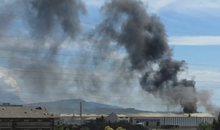
Large-scale fire at the former Metallurgical Plant in Elbasan
2026-06-16 14:43:46

World Cup icon signals end of career after 2026 World Cup
2026-06-16 13:53:07
Albanian Fake Civil Society and the Real One
2026-06-16 13:46:40
Berisha: Dumani is hiding Aruba's governors to protect Rama
2026-06-16 12:58:05
Who could be afraid of flamingos?!
2026-06-16 12:38:13
Albania protests and demands his removal, Rama presents his sculptures in Zurich
2026-06-16 12:30:08
Transparency Board announces new fuel prices
2026-06-16 12:12:58
"Fox" shark surprises vacationers in Borsh, gets caught in fishermen's nets
2026-06-16 11:59:00
A gas station in Kruja is robbed at gunpoint.
2026-06-16 11:42:43
Kosovo/ The Vetevendosje Movement reaches 52 mandates thanks to the diaspora
2026-06-16 11:21:12
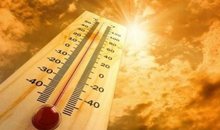
Weekend temperatures could reach 39 degrees in Albania
2026-06-16 10:22:02
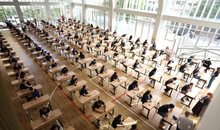
State Matura/ 26 thousand students take the Mathematics exam today
2026-06-16 10:06:10

What do the stars have in store? Love smiles on singles, be careful with money
2026-06-16 09:46:25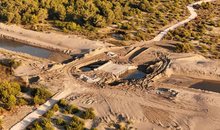
Environmental experts refute Rama's arguments about Zvërnec
2026-06-16 09:34:33

Can trauma be inherited through genes?
2026-06-16 09:20:41