 Flash News
Analysis by "The Brussels Times": Why did Rama and Vučić benefit more from delay than from membership?
Who is Shpëtim Aliu, the key link in the cocaine trafficking that was hidden behind the name "Salvadore"?
From Dritan Gjika to Armando Pacani, the names of those accused of cocaine trafficking are published
Albanian Fake Civil Society and the Real One
Transparency Board announces new fuel prices
Analysis by "The Brussels Times": Why did Rama and Vučić benefit more from delay than from membership?

Politiko
2026-06-16 17:57:33
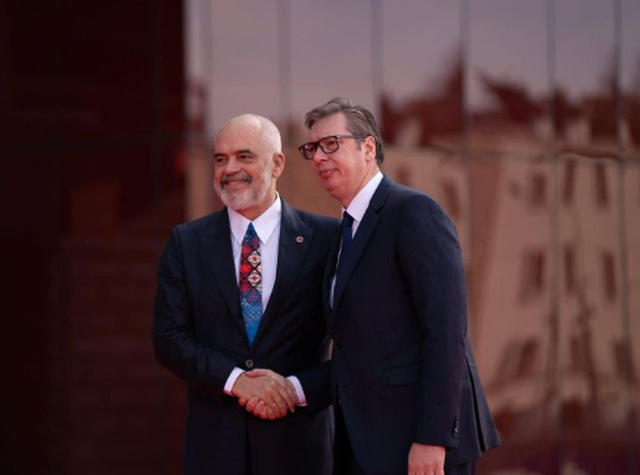
An analysis published by "The Brussels Times" raises questions about how Albania and Serbia are progressing in the European integration process, suggesting that delaying membership in the European Union may serve their leaders more than its actual implementation.
According to the article, both in Tirana and Belgrade, civic discontent is growing, with ongoing protests and demands for political change. In Albania, protests have focused on issues related to corruption, the environment, and controversial investment projects, while in Serbia, similar movements have been seen against major development projects.
The analysis highlights that in both countries, citizens' trust in national institutions is low, while the European Union is increasingly seen as a point of reference and stability. However, this contrast is used politically by governments, which, according to the article, rely on the slow integration process to maintain room for maneuver in power.
"The Brussels Times" analysis:
Day after day, for two weeks in a row, people have gathered in Skanderbeg Square in Tirana—every evening at six o'clock sharp, with the insistence of a nation that survived nearly fifty years of dictatorship and is still waiting for what is supposed to come after it.
Protests are growing. So are calls for the prime minister to resign. Serbia, not long ago, experienced the same thing: mass protests that lasted for weeks. European assessments consistently show the same pattern: environmental standards are being sacrificed, corruption persists, and the media remains under political pressure.
The two countries share a common antagonist: Jared Kushner. In Albania, his plans for luxury resorts in environmentally sensitive areas sparked protests. In Serbia, protesters forced the abandonment of plans to demolish a former army headquarters for a luxury hotel.
But Kushner is not Rama and Vučić’s biggest problem. They have a more fundamental problem: their citizens no longer trust them; they trust the EU more. Albania remains one of the most pro-European countries in the region—more than 90% of the population supports EU membership—but only a small minority still trusts its own institutions.
Serbia reflects the same pattern: citizens distrust national institutions, while continuing to see EU membership as a national aspiration. The European Union has become the anchor precisely because everything in the country has collapsed.
Meanwhile, the political theater around enlargement continues unabated. At European summits, Rama presents himself as Albania’s great champion for Europe. “There is no alternative,” he declared recently in Montenegro. “Albania belongs to the European Union.” Vučić plays a different game, keeping one eye on the EU and the other on Moscow. Both leaders are undermining the standards required for membership, while ignoring warnings from the European Commission.
Rama has called the protests a “hybrid war” orchestrated by foreign enemies. The thousands who gather every evening in Skanderbeg Square will undoubtedly find comfort in that explanation. He has denied any significant developments in the Kushner case and has become increasingly confrontational with journalists. History suggests that politicians who begin to treat the press as the enemy are usually showing weakness, not strength. Rama’s recent interviews with CNN and Top Channel in Albania fit this pattern well.
Beneath this theater lies a political strategy with no way out. For years, these leaders have believed that a slow accession process would serve them better than full membership. Full EU membership would impose a binding regulatory framework and significantly limit their political space—a procedure that none seem entirely willing to accept. Candidate status, by contrast, keeps all options open. It allows them to choose political allies opportunistically, using the promise of Europe as a source of legitimacy without ever fully realizing it. For Rama, who secured his third term in office partly on a platform of European integration, the promise itself is the product. Real membership could weaken the very power he helps to maintain.
But every political strategy has an expiration date. Theirs is approaching. Slow accession may buy time, but it does not freeze the societies they govern. In both countries, young people have been at the forefront of the protests. They have grown up among departures—friends, relatives, and neighbors fleeing because they see no future in the country. They have waited for educational opportunities and jobs that never came. Their patience has run out, and, unlike the previous generation, they no longer trust domestic politics.
Rama and Vučić still have a choice—though we might ask whether it is already too late. They can align themselves with the EU standards they once pledged to uphold, or they can continue on their path until the political bill comes. That bill will come. The only question is when.
The accession process could take years. But on the streets, Albanian and Serbian citizens are already holding their governments to European laws and values. The fact that this pressure is coming from below is no small sign for a European Union whose public is divided on enlargement.
Latest news
Protest schedule postponed due to high temperatures
2026-06-16 19:15:32
These 3 zodiac signs are considered ideal vacation companions
2026-06-16 18:54:57
With the red and black flag, tourists join the protest against Rama
2026-06-16 18:31:36
Secret destination in Europe where US-Iran deal expected to be signed revealed
2026-06-16 18:20:34
SPAK "freezes" the criminal group's luxury, seizing 150 million euros of assets
2026-06-16 17:44:56
Zhupa: Berisha will soon have meetings in the US
2026-06-16 17:22:37

Trump: The deal clearly states that Iran will not have nuclear weapons
2026-06-16 16:27:56
Why our brains don't function well in high-pressure situations
2026-06-16 16:19:13

How to stay safe while traveling in extreme heat
2026-06-16 15:39:24

Who is Dritan Gjika, the Albanian drug trafficking mafia in Ecuador?
2026-06-16 15:16:09
Large-scale fire at the former Metallurgical Plant in Elbasan
2026-06-16 14:43:46

World Cup icon signals end of career after 2026 World Cup
2026-06-16 13:53:07
Albanian Fake Civil Society and the Real One
2026-06-16 13:46:40
Berisha: Dumani is hiding Aruba's governors to protect Rama
2026-06-16 12:58:05
Who could be afraid of flamingos?!
2026-06-16 12:38:13
Albania protests and demands his removal, Rama presents his sculptures in Zurich
2026-06-16 12:30:08
Transparency Board announces new fuel prices
2026-06-16 12:12:58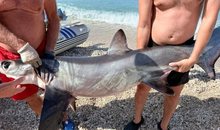
"Fox" shark surprises vacationers in Borsh, gets caught in fishermen's nets
2026-06-16 11:59:00
A gas station in Kruja is robbed at gunpoint.
2026-06-16 11:42:43
Kosovo/ The Vetevendosje Movement reaches 52 mandates thanks to the diaspora
2026-06-16 11:21:12
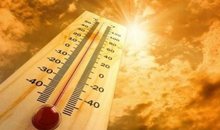
Weekend temperatures could reach 39 degrees in Albania
2026-06-16 10:22:02
State Matura/ 26 thousand students take the Mathematics exam today
2026-06-16 10:06:10

What do the stars have in store? Love smiles on singles, be careful with money
2026-06-16 09:46:25
Environmental experts refute Rama's arguments about Zvërnec
2026-06-16 09:34:33

Can trauma be inherited through genes?
2026-06-16 09:20:41
Suspected of drowning in Lake Ulza, still no trace of the 37-year-old
2026-06-16 09:12:34
Surprise at the World Cup, Egypt holds Belgium to a draw
2026-06-16 08:56:41
Foreign exchange rate June 16/ How much the dollar and euro are bought and sold
2026-06-16 08:33:11
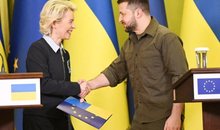
EU opens first chapter of Ukraine's membership negotiations
2026-06-16 07:32:43
Check out the weather forecast for today.
2026-06-16 07:17:37
Morning Post/ In 2 lines: What mattered yesterday in Albania
2026-06-16 07:00:04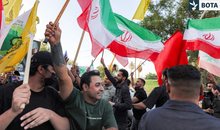
US and Iran sign deal electronically ahead of official ceremony
2026-06-15 22:51:40

Protestuesit marshojnë drejt ish-Bllokut, thirrje kundër qeverisë gjatë tubimit
2026-06-15 21:19:21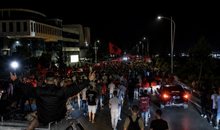
Marshuan drejt Rinasit, policia procedon penalisht 19 protestues
2026-06-15 20:55:47
Paqartësi sa i përket tarifave për kalim nëpër Ngushticën e Hormuzit
2026-06-15 20:15:19
Çfarë e bën një këngë të Botërorit të paharrueshme?
2026-06-15 19:59:13
New directors appointed in Lezha, Vlora and Fier
2026-06-15 19:38:52
On the historic EU day, Albania is 'ignored' by Marta Kos
2026-06-15 19:24:05
Young man loses his life while sailing on a jet ski on Lake Ulza
2026-06-15 19:03:17
Day 16, citizens begin march towards the Prime Minister's Office: Rama resigns!
2026-06-15 18:47:26
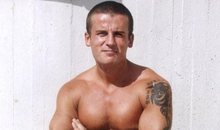
Arrested in Belgium, 'Gert the General' appears transformed
2026-06-15 17:58:26
Marriage on the back burner, Millennials are choosing to live with friends
2026-06-15 17:33:38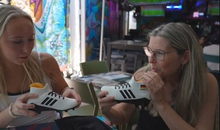
World Cup madness, Miami bar offers cocktails in shoes
2026-06-15 17:12:01
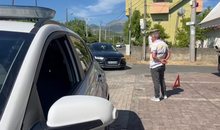
Accident in Shëngjin, car collides with motorcycle, two injured
2026-06-15 16:35:15
11 days after Eglant Koç's disappearance, Armando Shakaj still on the run
2026-06-15 16:20:48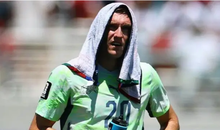
Hydration or tactical advantage? New World Cup rule sparks debate
2026-06-15 16:11:33
Rama continues with attacks and insults against protesters, Lubonja: Desperate
2026-06-15 15:59:54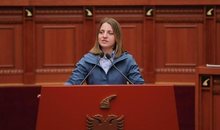
After leaving the SP, Marjana Koçeku joins the protest against Rama
2026-06-15 15:51:48
Why should you leave the closet open on hot days?
2026-06-15 15:40:05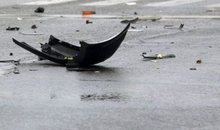
Accident on the Fier-Libofshë road, 4 injured
2026-06-15 15:22:39

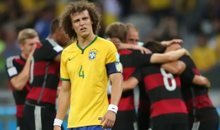
The biggest failures in World Cup history, Curaçao added to the list
2026-06-15 14:32:47
Extradited from Spain, GJKKO leaves Erzen Breçani's son in prison
2026-06-15 14:20:21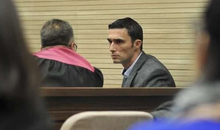
Former Kosovo minister sentenced to two years in prison for conflict of interest
2026-06-15 14:12:43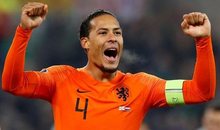
Virgil van Dijk plays final tournament with Netherlands
2026-06-15 13:59:58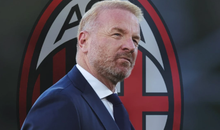
Milan finds Igli Tara's replacement after dismissal
2026-06-15 13:47:14
Euro breaks new records, drops below 94.9 lek
2026-06-15 13:42:47
Spain and Belgium take to the field, De la Fuente saves Lamine Yamal
2026-06-15 13:28:09