 Flash News
Rape of couple in Fushë-Arrëz, injured person speaks out: 5 people introduced themselves as police officers...
Transparency Board sets new fuel prices, diesel and gasoline prices decrease
Search continues in Ulza Lake for missing 37-year-old
Foreign exchange rate June 17/ How much the dollar and euro are bought and sold
Analysis by "The Brussels Times": Why did Rama and Vučić benefit more from delay than from membership?
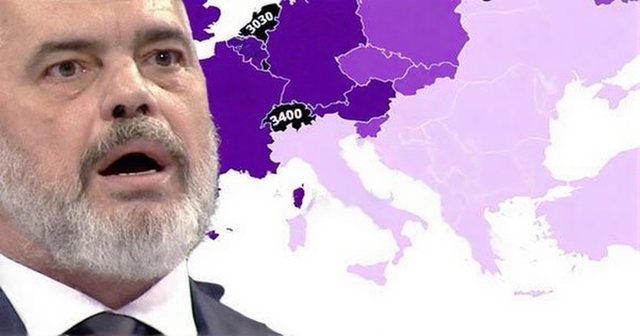
A chart republished by the Ministry of Finance a few days ago highlighted that Albania is confirmed as one of the strongest and most stable economies in the region, as it is expected to have a growth of 3.4% in 2026, the second highest in the region after Kosovo (chart at the bottom).
But, it seems that neither this economic growth nor the reduction in population that dropped from 2.8 million to 2.38 million in a decade over two censuses have managed to improve the per capita income indicator nor the quality of life of Albanians.
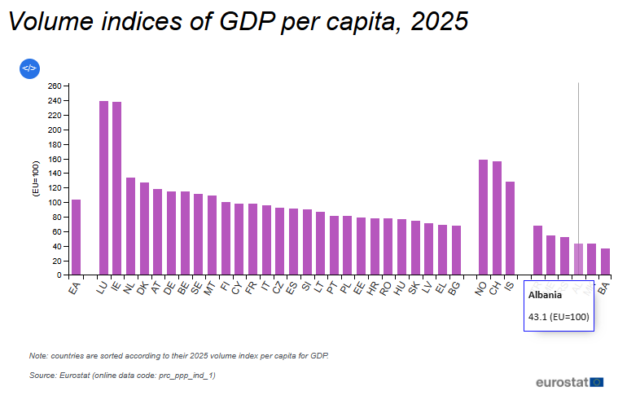
Newly published data from Eurostat show that Albania's per capita income, measured by gross domestic product per capita, was 43% of the European Union average, with a slight improvement of 1 percentage point by 2024.
Albania is on par with North Macedonia and is only behind Bosnia and Herzegovina (36% of the EU average). The region is led by Montenegro with 54%, followed by Serbia with 52%.
In the other indicator, that of actual individual consumption (AIC), which according to Eurostat is a better indicator for measuring well-being, as it takes purchasing power into account, Albania ranks lower than North Macedonia, with the indicator being 48% of the EU average, compared to 50% for North Macedonia, which shows that although they have the same income, the purchasing power of Albanians is lower.
In the region, Montenegro is again in the lead, with 71% of the EU average and a difference of over 20 percentage points with us, which shows how little value money has in Albania. For Serbia, the indicator is 57% and the last is Bosnia and Herzegovina with 44%. Data for Kosovo is missing.
Actual Individual Consumption (AIC) measures the goods and services that individuals actually consume, regardless of whether they are paid for directly by households or financed by the state, such as education and healthcare.
For this reason, Eurostat uses the AIC as a closer indicator of household material well-being and real purchasing power, compared to GDP per capita, which measures economic output.
europe
In 2025, real individual consumption per capita, measured in purchasing power standards (PPS), ranged from 73% to 145% of the European Union average in the 27 member states.
Eight EU countries recorded per capita consumption levels above the EU average. The highest levels were recorded in Luxembourg, where consumption was 45% above the EU average, followed by Germany with 20% and the Netherlands with 19%.
On the other hand, 19 countries remained below the European average. The lowest levels were recorded in Hungary and Latvia, where per capita consumption was 27% lower than the EU average, while Estonia ranked right behind them at 26% below the average.
Large differences also in GDP per capita
Even Gross Domestic Product (GDP) per capita, one of the main indicators of economic activity, showed significant differences between EU countries.
Ten member states recorded GDP per capita above the EU average. Luxembourg leads with a level 139% higher than the EU average, followed by Ireland with 138% and the Netherlands with 33%.
At the bottom of the ranking are Greece and Bulgaria, where GDP per capita was 32% below the EU average, while Latvia ranked next with 29% below the European average./Monitor
Latest news


Renowned actor Gjergji Lala dies
2026-06-17 12:30:31
45-year-old man in Memaliaj injured after falling from scaffolding at work
2026-06-17 12:14:54
Eurostat: Albania, penultimate in Europe for well-being
2026-06-17 12:00:59
Berisha: DP supports the protest, Rama leads a regime without legitimacy
2026-06-17 11:34:55
Transparency Board sets new fuel prices, diesel and gasoline prices decrease
2026-06-17 11:24:32
Search continues in Ulza Lake for missing 37-year-old
2026-06-17 10:40:55
Nosebleeds and stress: what you need to know
2026-06-17 10:21:39
Cocaine trafficking network dismantled in Athens, 11 Albanians involved
2026-06-17 10:11:29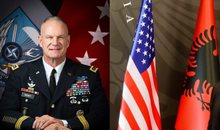
General Eric Wendt confirmed as US Ambassador to Albania
2026-06-17 09:58:32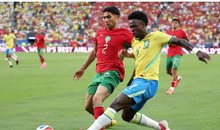
Brazil-Morocco match breaks World Cup viewership record
2026-06-17 09:49:50
Accident in Fier-Lushnjë, two people end up in hospital
2026-06-17 09:12:44
Foreign exchange rate June 17/ How much the dollar and euro are bought and sold
2026-06-17 08:56:35
MEP raises voice on protests in Albania: Where is public money going?
2026-06-17 08:12:17
17 countries support US-Iran deal, call for immediate implementation
2026-06-17 07:53:26
Rain is expected in some areas, according to the weather forecast today
2026-06-17 07:19:03
Morning Post/ In 2 lines: What mattered yesterday in Albania
2026-06-17 06:59:23
Alimehmeti: Rama's resignation would pave the way for a transitional government
2026-06-16 22:51:14


"Killed dreams in Albania", the spicy banners from the 17th protest
2026-06-16 21:17:28
No alarm, no emergency exit: how students live in Student City dormitories
2026-06-16 21:02:08
Yamal's World Cup debut comes with a special dedication
2026-06-16 20:38:10
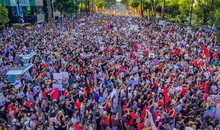
Protest schedule postponed due to high temperatures
2026-06-16 19:15:32
These 3 zodiac signs are considered ideal vacation companions
2026-06-16 18:54:57
With the red and black flag, tourists join the protest against Rama
2026-06-16 18:31:36
Secret destination in Europe where US-Iran deal expected to be signed revealed
2026-06-16 18:20:34
SPAK "freezes" the criminal group's luxury, seizing 150 million euros of assets
2026-06-16 17:44:56
Zhupa: Berisha will soon have meetings in the US
2026-06-16 17:22:37

Trump: The deal clearly states that Iran will not have nuclear weapons
2026-06-16 16:27:56
Why our brains don't function well in high-pressure situations
2026-06-16 16:19:13
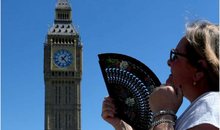
How to stay safe while traveling in extreme heat
2026-06-16 15:39:24

Who is Dritan Gjika, the Albanian drug trafficking mafia in Ecuador?
2026-06-16 15:16:09
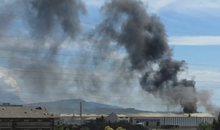
Large-scale fire at the former Metallurgical Plant in Elbasan
2026-06-16 14:43:46


World Cup icon signals end of career after 2026 World Cup
2026-06-16 13:53:07
Albanian Fake Civil Society and the Real One
2026-06-16 13:46:40
Berisha: Dumani is hiding Aruba's governors to protect Rama
2026-06-16 12:58:05
Who could be afraid of flamingos?!
2026-06-16 12:38:13
Albania protests and demands his removal, Rama presents his sculptures in Zurich
2026-06-16 12:30:08
Transparency Board announces new fuel prices
2026-06-16 12:12:58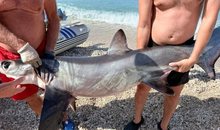
"Fox" shark surprises vacationers in Borsh, gets caught in fishermen's nets
2026-06-16 11:59:00
A gas station in Kruja is robbed at gunpoint.
2026-06-16 11:42:43
Kosovo/ The Vetevendosje Movement reaches 52 mandates thanks to the diaspora
2026-06-16 11:21:12

Weekend temperatures could reach 39 degrees in Albania
2026-06-16 10:22:02
State Matura/ 26 thousand students take the Mathematics exam today
2026-06-16 10:06:10

What do the stars have in store? Love smiles on singles, be careful with money
2026-06-16 09:46:25
Environmental experts refute Rama's arguments about Zvërnec
2026-06-16 09:34:33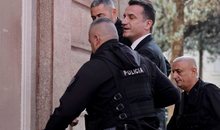

Can trauma be inherited through genes?
2026-06-16 09:20:41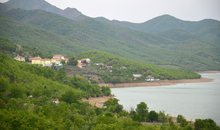
Suspected of drowning in Lake Ulza, still no trace of the 37-year-old
2026-06-16 09:12:34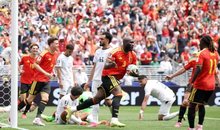
Surprise at the World Cup, Egypt holds Belgium to a draw
2026-06-16 08:56:41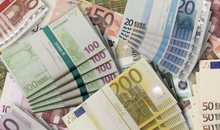
Foreign exchange rate June 16/ How much the dollar and euro are bought and sold
2026-06-16 08:33:11