 Flash News
Balluk's wealth "collapses", SPAK seizes his villa in Dhërmi
The officer was killed during the action, the Korça police did not assess the dangerousness of the perpetrator, only 6 police officers were on the ground
Car ends up in canal, residents save father and son
Where does justice begin?/ Between Gog's speeches and the bullets on the ground, who protects the policeman?
Pëllumb Gjoka speaks about the accusations in the "Metamorphosis" file: They held a public trial for me, I have no connection to the murder of Gjin Ndoji
Under the shadow of tender investigations, AKSHI becomes the "brain" of artificial intelligence in Albania

Politiko
2026-05-29 09:57:40
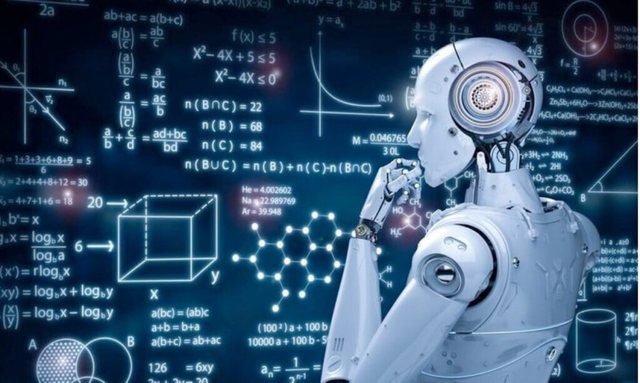
The National Agency for the Information Society (AKSHI) is expected to take on the role of the coordinating authority for artificial intelligence in Albania, according to the draft law "On Artificial Intelligence", issued for public consultation by the government.
The draft law aims to create the first complete legal framework for the development, commercialization and use of artificial intelligence systems in the country, fully aligning with European Union Regulation 2024/1689 (AI Act).
In Article 3 of the draft law, the NAASHI is defined as the “coordinating authority/Structure for AI”, while its role in the implementation and monitoring of artificial intelligence systems is also defined. The draft law defines that the “AI Structure” is the function of the authority that “has the task of implementing, monitoring and supervising AI systems and general-purpose AI models”.
According to the draft, the AKSHI will be part of the group of competent authorities together with the Commissioner for the Right to Information and Personal Data Protection, market surveillance authorities and other institutions that may be determined by decision of the Council of Ministers.
Rules also apply to foreign providers, some AI practices are prohibited
The draft law provides for a broad scope of application that extends beyond companies located in Albania. According to Article 2, the law will apply to “providers that place on the market or put into service AI systems or place on the market general-purpose AI models, regardless of whether these providers are established or located within Albania or in another country.”
The draft also provides that the law also applies to providers and users located outside Albania "when the result produced by the AI system is used in Albania".
The draft also establishes a list of prohibited artificial intelligence practices, similar to those provided for in the European Union's AI Act.
These include systems that use manipulative or deceptive techniques to influence the behavior of individuals, systems that exploit people's weaknesses due to age, disability, or economic status, as well as systems of social evaluation of individuals.
It also prohibits the use of systems that create facial recognition databases through the indefinite collection of images from the internet or security cameras.
Another ban relates to the use of artificial intelligence systems to elicit the emotions of individuals in workplaces and educational institutions, except when they are used for medical or security purposes.
Limitations on real-time biometric identification, what about high-risk systems?
The draft law places specific restrictions on the use of real-time biometric identification systems in public spaces.
According to Article 5, their use for law enforcement purposes will be permitted only in special cases, including the search for victims of kidnapping or trafficking, the prevention of serious threats to life and security, and the identification of persons suspected of serious criminal offenses.
The use of these systems will require prior authorization from the competent court. The draft stipulates that “no decision with a negative legal effect on a person may be taken solely based on the result of the real-time biometric identification system.”
The bill creates a special category for high-risk artificial intelligence systems.
These systems will be subject to obligations for risk management, technical documentation, automatic event recording (logs), transparency and post-market monitoring.
The draft requires that for high-risk systems, “a continuous and iterative process” of risk management be established throughout the product life cycle.
Likewise, systems must be developed on databases that are “relevant, sufficiently representative, and as much as possible, error-free and complete,” with measures to identify and mitigate algorithmic biases.
Measures for startups and testing environments
The draft law includes provisions aimed at supporting innovation and the development of new technologies.
It envisages the creation of “regulatory AI sandboxes”, which are defined as controlled environments where providers can develop, train and test innovative artificial intelligence systems under the supervision of authorities.
For small and medium-sized enterprises, including startups, the draft also provides for simplified forms of technical documentation for conformity assessment processes.
In the introduction to the draft law, the government emphasizes that the law is "fully aligned" with Regulation (EU) 2024/1689 of the European Parliament and of the Council, known as the AI Act.
The purpose of the law, according to Article 1, is to promote "the development, commercialization, deployment and use of human-centered and trustworthy artificial intelligence", while guaranteeing a high level of protection for health, safety, fundamental rights, democracy, the rule of law and the environment./ Monitor
Latest news

Watermelon, the heart's ally in summer
2026-06-04 13:56:33
The board continues to "ping pong" with fuel prices, oil increases again
2026-06-04 13:39:24
Bardhi asks Rama to the Assembly: The interpellation is not delegated!
2026-06-04 13:21:54
House of Representatives approves measure to end Iran war
2026-06-04 13:14:35
Car ends up in canal, residents save father and son
2026-06-04 12:55:58
SPAK requests 98 years in prison for Durim Bami, Aldo Avdyli and 5 others
2026-06-04 12:39:43



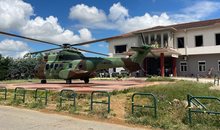
Video/View from the scene where the policeman was killed in Maliq
2026-06-04 11:52:46


SPAK knocks on Igli Tare, former footballer included in Balluku file
2026-06-04 11:16:36


Four ways your attention is manipulated
2026-06-04 10:52:57

Policeman's murder, Bardhi reacts: Shocked, I strongly condemn the serious act
2026-06-04 10:30:35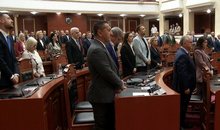
Parliament holds a minute of silence for the officer killed in Maliq
2026-06-04 10:25:48


Photos of two young men who drowned in the sea in Lezha emerge
2026-06-04 09:44:40

What anxiety is really trying to tell you
2026-06-04 09:24:37


Maliq/ Officer killed during police operation, another injured
2026-06-04 08:31:21
Horoscope, get to know the star forecast
2026-06-04 08:21:37
Unstable weather conditions, weather forecast for this Thursday
2026-06-04 08:06:35
Morning Post/ In 2 lines: What mattered yesterday in Albania
2026-06-04 07:50:52


Tension in "Air Albania" after Israel's goal, Hysaj clashes with Gloukh
2026-06-03 22:21:33
Debutim i hidhur për Maran, Shqipëria mposhtet nga Izraeli
2026-06-03 22:01:35
Këlliçi: Rama është sot një Kryeministër i ezauruar totalisht
2026-06-03 21:38:01
Costa porosit liderët: BE-ja s’mund të bëjë detyrat e shtëpisë të Kosovës
2026-06-03 21:16:35
6 në 10 persona përdorin AI për shëndetin mendor
2026-06-03 20:56:11
Tifozët kuqezinj fërshëllejnë himnin izraelit
2026-06-03 20:34:01
"Resign, we want revolution", citizens chant outside Rama's office
2026-06-03 19:58:32
The two young men who lost their lives in Shëngjin are identified
2026-06-03 19:43:35
Official lineups for the Albania-Israel friendly are published
2026-06-03 19:18:56
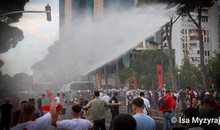
Video/ Police throw water on the crowd, protesters break the metal fence
2026-06-03 18:59:00
The best professions for free time and less stress
2026-06-03 18:48:43
The Federation of North Macedonia excludes Shkëndija Tetovo from the Cup
2026-06-03 18:16:04
Blow for Broja, his value on "Transfermarkt" drops to 5 million euros
2026-06-03 17:53:09
Bulqiza miners in protest, miners demand improved working conditions
2026-06-03 17:29:39


Trump admits clash with Netanyahu: I asked him to stop the escalation in Lebanon
2026-06-03 16:30:32
By 2030, 45% of women are expected to be single and childless
2026-06-03 16:19:53


Alarm for the Rossoneri! Uzun risks the challenge against Israel
2026-06-03 15:52:21
Two people were injured by a bomb explosion in Përmet, police provide details
2026-06-03 15:35:24

The heat wave does not spare Spain, 101 people lost their lives in May alone
2026-06-03 15:09:35
Hearing for the defendants in the Veliaj case, SPAK gives its claim
2026-06-03 14:56:31

Murder of Martin Can, Appeal decision for Mario Përlleshaj postponed
2026-06-03 14:18:24
Can hackers steal fingerprints from photos on social media?
2026-06-03 14:02:14

Explosion in Përmet, two people seriously injured, one urgently sent to Tirana
2026-06-03 13:41:21
Berlin signals opening of Europe-Russia talks on Ukraine
2026-06-03 13:27:09
Explosions at oil terminal, footage from the attack in St. Petersburg
2026-06-03 13:01:14
CNN: US-Iran ceasefire is straining, oil prices rise again
2026-06-03 12:42:57

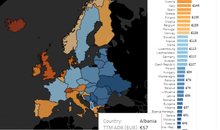
Albania becomes the second most expensive in the Balkans for daily rentals
2026-06-03 12:13:35


Berisha on the trial against Meta: Political farce ordered by Rama
2026-06-03 11:36:15
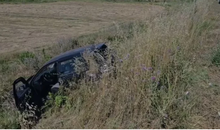
Accident in Levan-Tepelena, car ends up in canal
2026-06-03 11:16:34


Antonio Costa in Kosovo today, meets Haxhiu, Kurti and party leaders
2026-06-03 10:18:56
'1 million lek to put a cell phone in prison', Beci: 'Flash' checks to seize it
2026-06-03 10:06:29

Horoscope June 3, 2026, discover the star predictions
2026-06-03 09:51:56
Traumat në fëmijëri lënë gjurmë në tru
2026-06-03 09:34:20
Bank robbery in Tirana, guard arrested: He did not act to neutralize the robber
2026-06-03 09:23:25


Foreign exchange/ How much foreign currencies are bought and sold today
2026-06-03 08:25:50
Long note for those who can't read
2026-06-03 08:03:50

33 degrees Celsius in some areas, as the weather forecast is for today
2026-06-03 07:25:07