
 Flash News
Balluk's wealth "collapses", SPAK seizes his villa in Dhërmi
The officer was killed during the action, the Korça police did not assess the dangerousness of the perpetrator, only 6 police officers were on the ground
Car ends up in canal, residents save father and son
Where does justice begin?/ Between Gog's speeches and the bullets on the ground, who protects the policeman?
Pëllumb Gjoka speaks about the accusations in the "Metamorphosis" file: They held a public trial for me, I have no connection to the murder of Gjin Ndoji
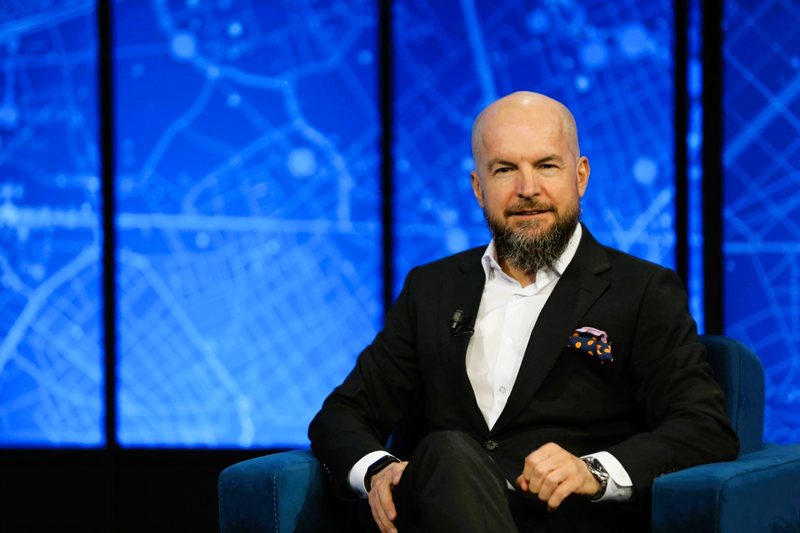
Alfred Lela
Alexis de Tocqueville once observed that in a revolution, as in a novel, the hardest part to invent is the ending. In her debut novel Indignity, Lea Ypi not only manages to craft such an ending but is, in a sense, rescued by it. Without those final pages, she might have been dismissed as a writer whose work was merely a vehicle for ideology.
This risk was not insignificant. Ypi, a self-professed neo-Marxist teaching at the London School of Economics—a cradle of global progressivism—was already associated with a certain intellectual milieu. Her first book, the memoir Free, while successful, carried the marks of a political agenda. A novel of similar tenor could easily have branded her as just another progressive intellectual, indistinguishable from a chorus of multiculturalist writers who continue to insist that all cultures are not merely worthy of respect, but equal in value.
In Indignity, Ypi recreates Salonica le Magnifique—the cosmopolitan city of her grandparents’ memory—where Greeks, Turks, Jews, Albanians, and others lived together in apparent harmony. This idyll collapses, predictably, under the weight of Italian fascism and German Nazism. The implication, though never stated outright, is clear: Ottoman multiculturalism disintegrated, leaving behind a Pandora’s box from which only nostalgia for a lost past could be salvaged.
The book leans into its agenda in other ways. There is a vignette in which Ypi’s grandmother, as a young girl, introduces herself both as Leman Ypi and as Ibrahim Bey—both female and male, suspended on a rainbow bridge toward today’s trans identities. It is a moment that cements Ypi’s standing as a darling of ultra-progressive literary circles, from London to New York. In this sense, she emerges as a kind of Ayaan Hirsi Ali of the left: someone who, from a deeply conservative Albanian family, carries the Ottoman legacy, survives the Soviet-style socialism of Enver Hoxha, and then reappears on Western shores as an emblem of progressive thought. Where Oriana Fallaci once defended the West’s unique, Judeo-Greco-Christian culture, and Arianna Huffington tried (and failed) to capture the American liberal moment, Ypi arrives to reopen Pandora’s box—only this time to leave inside not the hope of the past, but the hope of a utopian future. As ever with the left, utopia is the only inheritance.
And yet, Ypi is saved by her ending. At a time when Trump and a renewed conservatism make her hoped-for Marxist-progressive revolution appear increasingly implausible, she nevertheless secures a conclusion for her novel that redeems both book and author. The final pages reveal two characters who are, in essence, doubles—sharing the same names, fates, and cultural inheritance. In this twist, Ypi, the apostle of multiculturalism and transgender fluidity, becomes Ypi the writer of transcendence and mystery. For 390 pages, her protagonists move through a godless world, but in the end, she builds a closure that points beyond ideology—toward something resembling the sacred. Humanity, the novel suggests at the very last, is not the child of absurdity but of mystery.
The irony is that the strongest part of the book—the last ten pages—feels least bound to political fashion. It is as though Ypi, or the text itself, could not resist breaking free of the “agenda novel” and instead reached for transcendence. Perhaps this explains why Indignity is not a sequel to Free: Ypi needed the imaginative liberty of fiction to escape the confines of memoir.
The result is a novel that is, unmistakably, autobiographical—but also something more. Only literature, it seems, could give Ypi the spark and the craft to shape that ending. Which leaves her with one lingering dilemma: is she, after all, a better philosopher—a social construct—or a better novelist, a creature of transcendence?
Latest news


The Euro-Lek exchange rate falls again, heading towards the threshold of 95 Lek
2026-06-04 14:33:00

Balluk's wealth "collapses", SPAK seizes his villa in Dhërmi
2026-06-04 14:00:13
Watermelon, the heart's ally in summer
2026-06-04 13:56:33
The board continues to "ping pong" with fuel prices, oil increases again
2026-06-04 13:39:24

Bardhi asks Rama to the Assembly: The interpellation is not delegated!
2026-06-04 13:21:54
House of Representatives approves measure to end Iran war
2026-06-04 13:14:35
Car ends up in canal, residents save father and son
2026-06-04 12:55:58
SPAK requests 98 years in prison for Durim Bami, Aldo Avdyli and 5 others
2026-06-04 12:39:43



Video/View from the scene where the policeman was killed in Maliq
2026-06-04 11:52:46

SPAK knocks on Igli Tare, former footballer included in Balluku file
2026-06-04 11:16:36


Four ways your attention is manipulated
2026-06-04 10:52:57

Policeman's murder, Bardhi reacts: Shocked, I strongly condemn the serious act
2026-06-04 10:30:35
Parliament holds a minute of silence for the officer killed in Maliq
2026-06-04 10:25:48


Photos of two young men who drowned in the sea in Lezha emerge
2026-06-04 09:44:40
What anxiety is really trying to tell you
2026-06-04 09:24:37
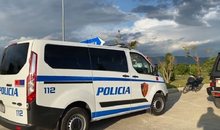
Maliq/ Officer killed during police operation, another injured
2026-06-04 08:31:21
Horoscope, get to know the star forecast
2026-06-04 08:21:37
Unstable weather conditions, weather forecast for this Thursday
2026-06-04 08:06:35
Morning Post/ In 2 lines: What mattered yesterday in Albania
2026-06-04 07:50:52


Tension in "Air Albania" after Israel's goal, Hysaj clashes with Gloukh
2026-06-03 22:21:33
Debutim i hidhur për Maran, Shqipëria mposhtet nga Izraeli
2026-06-03 22:01:35
Këlliçi: Rama është sot një Kryeministër i ezauruar totalisht
2026-06-03 21:38:01
Costa porosit liderët: BE-ja s’mund të bëjë detyrat e shtëpisë të Kosovës
2026-06-03 21:16:35
6 në 10 persona përdorin AI për shëndetin mendor
2026-06-03 20:56:11
Tifozët kuqezinj fërshëllejnë himnin izraelit
2026-06-03 20:34:01
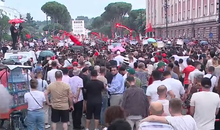
"Resign, we want revolution", citizens chant outside Rama's office
2026-06-03 19:58:32
The two young men who lost their lives in Shëngjin are identified
2026-06-03 19:43:35
Official lineups for the Albania-Israel friendly are published
2026-06-03 19:18:56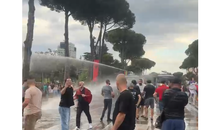
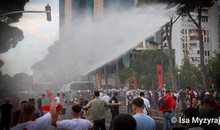
Video/ Police throw water on the crowd, protesters break the metal fence
2026-06-03 18:59:00
The best professions for free time and less stress
2026-06-03 18:48:43

The Federation of North Macedonia excludes Shkëndija Tetovo from the Cup
2026-06-03 18:16:04
Blow for Broja, his value on "Transfermarkt" drops to 5 million euros
2026-06-03 17:53:09
Bulqiza miners in protest, miners demand improved working conditions
2026-06-03 17:29:39


Trump admits clash with Netanyahu: I asked him to stop the escalation in Lebanon
2026-06-03 16:30:32
By 2030, 45% of women are expected to be single and childless
2026-06-03 16:19:53


Alarm for the Rossoneri! Uzun risks the challenge against Israel
2026-06-03 15:52:21
Two people were injured by a bomb explosion in Përmet, police provide details
2026-06-03 15:35:24
The heat wave does not spare Spain, 101 people lost their lives in May alone
2026-06-03 15:09:35
Hearing for the defendants in the Veliaj case, SPAK gives its claim
2026-06-03 14:56:31

Murder of Martin Can, Appeal decision for Mario Përlleshaj postponed
2026-06-03 14:18:24
Can hackers steal fingerprints from photos on social media?
2026-06-03 14:02:14

Explosion in Përmet, two people seriously injured, one urgently sent to Tirana
2026-06-03 13:41:21
Berlin signals opening of Europe-Russia talks on Ukraine
2026-06-03 13:27:09
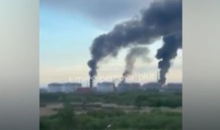
Explosions at oil terminal, footage from the attack in St. Petersburg
2026-06-03 13:01:14
CNN: US-Iran ceasefire is straining, oil prices rise again
2026-06-03 12:42:57

Albania becomes the second most expensive in the Balkans for daily rentals
2026-06-03 12:13:35

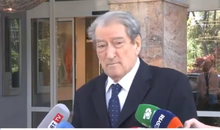
Berisha on the trial against Meta: Political farce ordered by Rama
2026-06-03 11:36:15
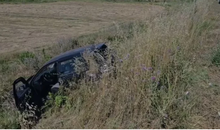
Accident in Levan-Tepelena, car ends up in canal
2026-06-03 11:16:34



Antonio Costa in Kosovo today, meets Haxhiu, Kurti and party leaders
2026-06-03 10:18:56
'1 million lek to put a cell phone in prison', Beci: 'Flash' checks to seize it
2026-06-03 10:06:29

Horoscope June 3, 2026, discover the star predictions
2026-06-03 09:51:56
Traumat në fëmijëri lënë gjurmë në tru
2026-06-03 09:34:20
Bank robbery in Tirana, guard arrested: He did not act to neutralize the robber
2026-06-03 09:23:25