 Flash News
Heat wave comes to Albania, temperatures up to 40 degrees
Panic in power? Rama attacks protesters demanding his removal: Fools, shallow minds
Foreign exchange rate June 15/ How much the dollar and euro are bought and sold for
"Rama is gone", German Albanians protest in Berlin against the government
World Cup 2026/ Germany and the Netherlands take to the field today
Honoring King Zog - obligation and respect for the history of the Albanian state (130th anniversary of his birth)

Politiko
2025-10-08 10:36:59
by Ekrem Spahiu
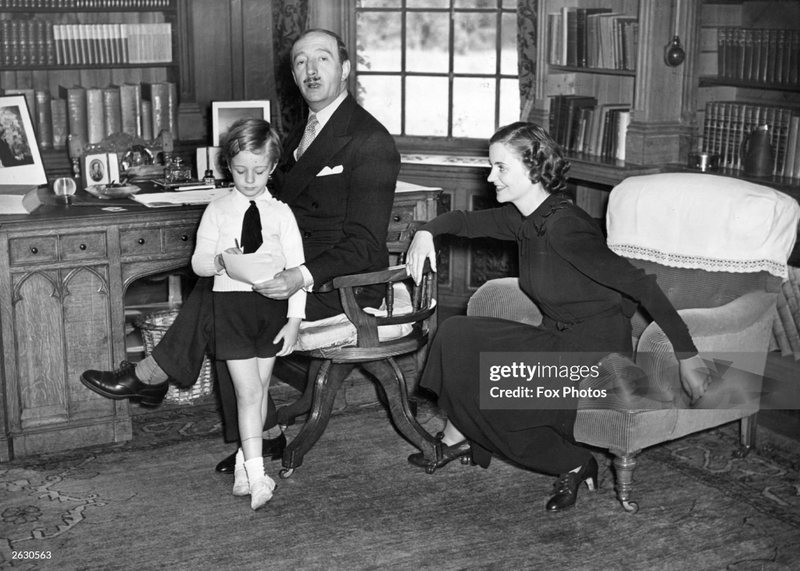
Ahmet Zogu - King of the Albanians, in terms of his stature as a political personality, in terms of his length of time at the head of state, and especially in terms of the key historical moment when he governed Albania, constitutes the reference of the political history of the Albanian state.
He was called by time to dedicate himself to the Albanian nation and Albania at crucial historical moments. His national consciousness, inherited and cultivated by his ancestors and by the education he received, made him a great fighter for the national cause.
Ahmet Zogu represented the province of Mat in the Vlora Assembly and, in defense of the country's newly declared independence, organized and engaged his forces against the Serbo-Montenegrin forces in Kakarric, laying his life on the altar of sacrifice for the freedom of the Homeland.
Ahmet Zogu, besides being one of the main protagonists in convening and organizing the Lushnja Congress, was also entrusted with securing it. In appreciation of his exceptional commitment to this historical event, Ahmet Zogu was appointed Minister of the Interior in the government that emerged from that Congress. Some time later, having also been elected to the high position of Prime Minister, he faced an assassination attempt against him within the Constituent Assembly. But, in order to prevent the further political complication of the situation and, consequently, the destabilization and security of the country, he set the example of a responsible statesman, who, first of all, evaluating the fate of the country, resigned from the post of Prime Minister.
Having in mind the demands for a democratic state in which the will of the people, determined by elections, cannot be alienated in any other form, as was the case with the “revolution” of June 1924, Ahmet Zogu, by decision of the “Vrioni” government, but also with the support of the Great Powers, on December 24, 1924, restored legitimacy to the state. In appreciation of this constitutional contribution, on January 6, 1925, the High Council decreed Ahmet Zogu Prime Minister and Minister of the Interior.
In these high positions, Ahmet Zogu gave the message appreciated both at home and abroad that legitimacy is the only and irreplaceable reference for a state, as time required. This allowed him to immediately restore stability in the country, while also enabling the signing of important economic, political, and military agreements, significantly strengthening Albania's position.
In the last seven years after the First World War, 14 governments had changed, most of them in the years 1920-1924. The High Council, as the main institution in the fate of governments, under the pressure of the politics of the time, also made decisions that were not in the interest of the stability of the country. To resolve this impasse once and for all, but also for other reasons, on January 21, 1925, the Constituent Assembly proclaimed the “Albanian Republic”, while ten days later, (January 31, 1925) Ahmet Zogu was elected President of the Republic, being at the same time also the head of the executive branch.
The proclamation of Albania as a "Kingdom" and of Ahmet Zog as "King of the Albanians" constituted another historical necessity, as the only alternative to avert the various dangers and threats, from within and without the country, that attacked Albania between the two world wars.
In this high mission, King Zog I carried out a complete reform of the legal framework, institutions and the entire life of the country, consolidated order and security, created the missing state administration, sanctified private property, etc. With the policies followed, free movement was guaranteed with a passport worthy of presenting the Albanian identity in any country in the world, national education was massified, etc. It was precisely the Albanian Kingdom that created the necessary state framework to give individuality and institutional dignity to religious beliefs, just as they enjoyed in other countries.
Western countries, including the USA, not only immediately recognized the Albanian Kingdom, but also developed ever-increasing relations, something Albania had almost lacked until that time, and even lacked half a century later.
King Zog committed all his potential to sensitize the Albanian people, to create a comprehensive national resistance background to the Italian fascist occupation and, in the meantime, mobilized military and gendarmerie forces, with which armed military resistance was organized. He left no room for fascist Italy, did not surrender to its ultimatums, which is why it planned and implemented the occupation of Albania only through a military operation. In the conditions of the impossibility of stopping the fascist expansion that did not only covet Albania, King Zog, after keeping the resistance alive for as long as possible, by decision of Parliament left the country, believing in international legal law according to which, when the invader is met with organized military resistance and the legitimate government does not surrender, that government continues to preserve its legitimate rights.
During his forced displacement from his homeland, King Zog was welcomed in several countries, but his longest stay, starting in 1941, was in the United Kingdom of Great Britain, which was among the three Great Allies in the war against Nazi-fascism. He remained there until the end of the war.
King Zog passed away outside the homeland to which he dedicated his life. With the fall of the communist regime, which aimed to erase his personality, contributions, and historical and national heritage, he has been memorialized and immortalized throughout Albania.
For all these reasons, King Zog I has occupied a central place in the history of Albania. He built a modern Albanian state, with a clear Western orientation. He linked his entire life with the fate of the nation, of Albania, and of the Albanians; therefore, commemorating his birthday and appreciating his personality and contributions as a great statesman is an obligation and respect for our national and state history.
Latest news

House burns down, four brothers lose their lives in fire in Greece
2026-06-15 10:32:13
Received payments for applications and studies abroad, administrator faces court
2026-06-15 10:25:07
Murder in Mirdita, victim had escaped an assassination attempt three months ago
2026-06-15 10:07:08

Why did Bulgaria stop supplying weapons to Ukraine?
2026-06-15 09:37:19

A person was shot dead in Mirdita, the victim was identified
2026-06-15 08:54:56

Maximum temperatures reach 30°C, weather forecast for today
2026-06-15 07:57:16
The American umbrella begins to close for the Balkans
2026-06-15 07:35:40

Morning Post/ In 2 lines: What mattered yesterday in Albania
2026-06-15 07:00:19
Germany kicks off 2026 World Cup with a bang, defeats debutants Curacao 7-1
2026-06-14 21:53:29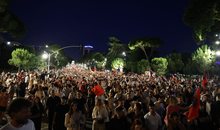
Protest ends, march begins in the streets of Tirana: Revolution! Rama must go!
2026-06-14 21:40:41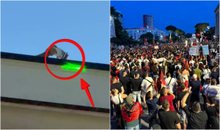
Masked people film the crowd, citizens identify them with lasers
2026-06-14 21:18:36



2026 World Cup referees to receive record salaries
2026-06-14 17:59:47
"Rama goes" echoes in Munich, Albanian diaspora in protest in Germany
2026-06-14 17:38:23
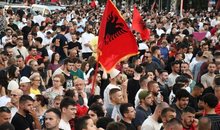

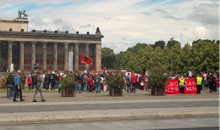
"Rama is gone", German Albanians protest in Berlin against the government
2026-06-14 15:38:41
World Cup 2026/ Germany and the Netherlands take to the field today
2026-06-14 15:20:29
Mes kritikave, BE-ja pret talibanët për herë të parë në Bruksel
2026-06-14 15:01:48
Tragedy in Prizren, 27-year-old stabbed to death after fight between cousins
2026-06-14 14:41:11
Haiti – Skocia, një ndeshje që riktheu magjinë e futbollit
2026-06-14 14:18:57
Shqipëria jashtë fushës, por në lojën e milionave të Botërorit
2026-06-14 13:58:01
Berisha - Ramës: Jep dorëheqjen, protestat nuk do të ndalen
2026-06-14 13:25:06
Marrëveshja për t’i dhënë fund luftës Iran-SHBA shumë afër
2026-06-14 12:58:53
Si u trafikuan tonelata me kokainë nga Amerika Latine në portet e Europës
2026-06-14 12:51:12
Barazimi në debutim, Ancelotti: Kupa nuk fitohet në ndeshjen e parë
2026-06-14 12:30:43


25-year-old found dead in Astir
2026-06-14 11:28:53
Albania, with a high percentage of girls who excel in mathematics
2026-06-14 11:14:10
From Tirana to New York, the Albanian diaspora rises in protest against Rama
2026-06-14 10:51:50
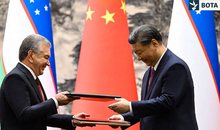
China surpasses Russia as the largest foreign investor in Central Asia
2026-06-14 09:54:58
Tirana/ Officer ends his life with his service weapon
2026-06-14 09:37:23
Foreign exchange, the rate at which foreign currencies are sold and bought
2026-06-14 09:17:06
Revolta e “të përjashtuarve”
2026-06-14 08:59:46
Horoskopi, njihuni me parashikimin e yjeve
2026-06-14 08:40:25
Temperatura deri në 34 gradë celsius, si parashikohet moti për sot
2026-06-14 08:28:06
Posta e mëngjesit/ Me 2 rreshta: Çfarë pati rëndësi dje në Shqipëri
2026-06-14 08:07:11








Berisha: Let's follow Rama a minute ago, he doesn't think only about Albanians
2026-06-13 18:40:24
Berisha: Albania can never be called a developed country with a backward village
2026-06-13 18:03:24


Elon Musk becomes the world's first trillionaire
2026-06-13 16:53:03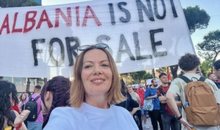
Former Rama supporter, famous actress joins mass protest in Tirana
2026-06-13 16:30:04
Saranda Police officer under house arrest for building without a permit
2026-06-13 15:39:15
Messi, Maradona or Pele? Ranking the 10 best World Cup legends
2026-06-13 15:18:50
11 robberies within a few days in Lezha, 21-year-old arrested, his friend wanted
2026-06-13 15:00:05
10 little tricks that make plane travel more comfortable
2026-06-13 14:51:56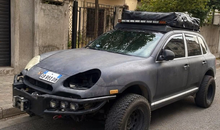
This is the vehicle in which Eglant Koç's body was allegedly transported.
2026-06-13 14:31:46
Valuables trafficking scheme busted, assets worth around 2 million euros seized
2026-06-13 14:10:15

Slogans against him in protest, Berisha: Don't let the leaves hinder the trunk
2026-06-13 13:30:29
Builder Ilir Shtufi's connections to cocaine trafficking money
2026-06-13 13:12:48
Fuel prices are reduced, here's how much diesel and gasoline will be sold for
2026-06-13 12:24:08
American television: Protests are turning into an open challenge to Rama
2026-06-13 11:41:41
Accident in Tepelena, three vehicles collide
2026-06-13 11:23:56