 Flash News
Rain and massive landslides on the Moglica-Gramsh axis, traffic is limited on one side
Killed after a conflict in Kamëz, this is the 27-year-old who passed away
Photo/ This is the perpetrator of the murder of the 27-year-old in Paskuqan
Anti-Rama petition, over 395 thousand citizens sign for the removal of the Prime Minister
Daytime murder in Kamëz, police react: No others injured in the incident
Ana Otashevic, Demostat
Two unofficial documents with proposals for resolving geopolitical crises in the region had an echo that was not expected in public opinion. A few days after the document on changing the borders according to ethnic bases in the Balkans was published, which was billed to the Slovenian Prime Minister Janez Jansha, the document was published in which proposals were presented for resolving the Kosovo issue, which was billed to Paris and Berlin. France and Germany, through their ambassadors in Pristina, denied the authorship of the text, just as Jansha, whose country will chair the European Union from July this year, claimed that he is not the author of the first document. Official documents "leaked" in the media, but it is not known who wrote them and for what purpose.
However, these two documents sparked a lively discussion in the region regarding the proposals presented in them as well as the reactions of politicians from the European Union and the United States dealing with the Balkans.
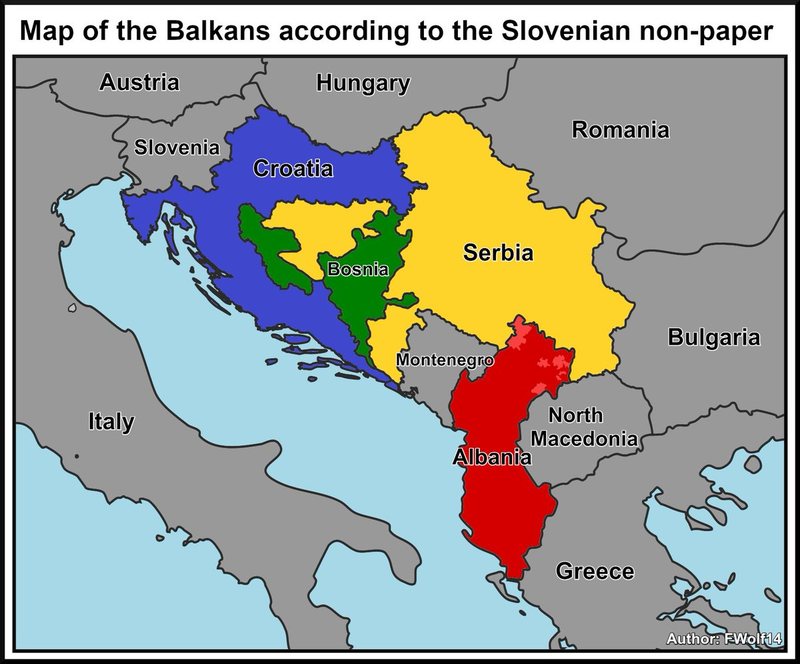
The "Jansha" document proposes that the Serbian, Croatian and Albanian "national question" be resolved by changing the borders according to ethnic grounds. "Most of the territory of Republika Srpska should be annexed to Serbia", while Serbia, in this case, "would accept Kosovo to be annexed to Albania". The "Croatian national question", according to the same source, would be resolved "through the annexation of the Croatian cantons of Bosnia and Herzegovina to Croatia", or through the granting of "special status to the Croatian part of Bosnia and Herzegovina". In this way, "Bosniaks would gain an independent and functional state and take full responsibility" to lead it, while through a referendum they would express whether they are "for a European or non-European future (Turkey)". "If the chaos and the extremely strong pressure of Turkey and radical Islam continue, the situation would worsen significantly in the next decade," the document reads. It is further stated that the "border between Albania and Kosovo" does not exist and that "95 percent of Albanians in Kosovo want to unite" with Albania. "The Serbian part of Kosovo would receive a special status," reads the text, following the model of South Tyrol in Italy. This idea was liked by the European Union Rapporteur for Kosovo Viola von Cramon, who is a member of the German Greens and an MEP. "This could be a successful model if we consider the situation in Kosovo," she told RTV Dukagjini from Pristina. South Tyrol is an autonomous province in northern Italy, between Austria and Switzerland. in which lives a majority of German-speaking inhabitants. The German MP's comment caused dissatisfaction in the Kosovar public opinion, where analysts asked why this status should not be given to others, Albanians in the Presevo Valley or Macedonia, and why the Sandzak should not have this status. Viola von Kramoni then stated before the European Parliament that she does not pay much attention to unofficial documents about Kosovo because they aim to spread fear and provocation, and that Kosovo will have full support and assistance (from the European Union) in it. all aspects. Albanians in the Presevo Valley or Macedonia and why the Sandzak should not have this status. Viola von Kramoni then stated before the European Parliament that she does not pay much attention to unofficial documents about Kosovo because they aim to spread fear and provocation, and that Kosovo will have full support and assistance (from the European Union) in it. all aspects. Albanians in the Presevo Valley or Macedonia and why the Sandzak should not have this status. Viola von Kramoni then stated before the European Parliament that she does not pay much attention to unofficial documents about Kosovo because they aim to spread fear and provocation, and that Kosovo will have full support and assistance (from the European Union) in it. all aspects.
The second document, which went to "Koha 'Ditore" (did you say by chance?) Caught the attention of Serbian President Aleksandar Vucic, who commented that this document was probably written by "a fantastically wise woman", which to the tabloids and Serbian daily newspapers opened the hunting season for the potential perpetrator. This document, which presents the proposal for the agreement between Belgrade and Pristina, leaked to the public two weeks before the scheduled and announced a meeting of Vucic and Kosovo Prime Minister Albin Kurti in Brussels, where talks on Kosovo under the auspices of the European Union will have to be renewed.
The proposal envisages mutual recognition and demarcation with EU mediation, respecting all previously reached agreements, including the one on the formation of the Association of Serbian Municipalities, with their governing bodies and competencies. This also includes the proposal to form the “Autonomous Zone of Northern Kosovo as a unique administrative unit of local self-government in Kosovo, whose competencies would be economy, finance, property, infrastructure, culture, education, health, social protection, courts, police administration, housing, urban development, and European cooperation, following the Constitution and the laws of Kosovo on local administration ”. The autonomous zone would include the municipalities of Zvecan, Leposavic, North Mitrovica, and Zubin Potok.
The same solution - more autonomy for Serbs within Kosovo - is supported by the International Crisis Group think tank with offices in Brussels, Washington, New York, and London, which, at the end of January this year, published a report on possible scenarios. but Kosovo. Leading the International Crisis Group are Martti Ahtisaari, the former president of Finland and author of the Kosovo Plan that paved the way for Kosovo's declaration of independence, and George John Mitchell, a former US senator, collaborator with Barack Obama and Hillary Clinton. According to this proposal, which is in a way the Ahtisaari Plan completed, the Serbs would have the parliament, the justice system, the police, the courts, and the finances, while Pristina would lead the defense, foreign and monetary policy. The Presevo Valley would gain the same or similar rights. The autonomous zones in both cases will be able to maintain relations with the neighboring country - the Serbian entity to receive financial assistance from Serbia (which is actually happening), while the Albanian entity in the Serbian territory from Kosovo. The International Crisis Group thinks that Serbia would not accept autonomy in vain, but through "a generous offer from the European Union".
The proposal for greater autonomy for Serbs in northern Kosovo means that the idea of exchanging territories, an idea that Vuçiçi and Hashim Thaçi talked about intensively behind closed doors in 2018 and that was current until the former KLA leader ended in The Hague, has passed into the background. The third scenario of the Crisis Group is for Serbia to be persuaded to recognize Kosovo's independence in exchange for "donor assistance for accelerated development and membership in the European Union". But even the authors of this report do not believe in this possibility as they state that even the talks so far, such as the formation of the Association of Serbian Municipalities, have not been realized.
While the proposal to change the borders in the first unofficial document mentioned above to the Slovenian Prime Minister is close to right-wing political circles in the European Union, the second document is closer to the Brussels mainstream, or rather to the politicians who participate in the process of talks with Belgrade and Pristina.
What does Serbian President Vucic say about this? Commenting on the unofficial document published by Koha Ditore, he said that "this is by far the biggest offer, at least informally" that Serbia could receive, "more than in the Ahtisaari Plan, much more", but that it continues to be "terribly bad" and rejected the possibility of recognizing Kosovo and "accepting self-humiliation". He said vaguely that "North Mitrovica should be taken by the Serbs."
The reactions of Pristina, which rejects any possibility of autonomy for northern Kosovo, where Serbs are in the majority, were already harsh. The authorship of this document, for local consumption, was billed to Serbia.
Marko Preleci, a Balkan analyst at the International Crisis Group, commented on the unofficial letters circulating in the Balkans on his Twitter account. "Why are these official letters now appearing in the Balkans?" "Maybe because in the spring air there is a feeling that the Great Terrible Problems that arose in the late 1990s are melting?" "The question is whether it should be addressed to door no. 1, that of the refrigerator, or (we choose) door no. 2 (which is) the incredible visionary society, or is there another door that I have forgotten? ”, Asks Preleci. What does this route number 2 look like? Posted on his Twitter account, it looks like this: "Gains public trust thanks to good administration and prosperity, while silently building bridges that lead to rival leaders, then goes public with the visionary solution and at the same time reserves tickets for the Stockholm plane to receive the Nobel Prize. Simple as a penny dish right?
According to this scenario, Vuçiçi and Kurti accept the solution that they did not come up with themselves and which they themselves would never have achieved, become "wonderful visionaries" and win the Nobel Peace Prize. The third door, Preleci points out, is “to sign an unofficial document or publicly criticize someone else. But these are doors that have been closed. "In both cases, there is talk of a vacuum." However, the International Crisis Group sees the status quo as the most likely scenario, because both sides believe that in the future "they will win a better deal", or rather "lose more". much more than they would gain from the solution through compromise ”.
Talks between the two sides will most likely continue in June, as Kurti will not travel to Brussels on May 11 when the meeting is due to take place. In order not to "err" in the assessments, an advisory team is being gathered which includes dialogues with experience in international and European issues - Bernard Nikaj, Leon Malazogu, Robert Muharremi, Muhamet Mustafa, Blerim Shala, and Veton Surroi, journalist and publicist, owner of Daily Time. According to the document published by his newspaper, the talks will have to be concluded in February 2022. Daniel Server, professor at Johns Hopkins University, former senior State Department official and space envoy for Bosnia, diplomas he attended in the talks leading up to the Dayton Accords, thinks that the renewal of the dialogue between Belgrade and Pristina should not be accelerated. "President Vuçiç has made it clear that he will not recognize Kosovo as an independent state before the next Serbian elections in 2022," Server wrote in his blog, in which he posted ideas on resolving the situation in Bosnia and Kosovo. It is not clear how he concluded that Vucic could recognize Kosovo after the elections. Server thinks that Kosovo's unification with Albania "is not only a bad idea but also destructive", unlike another US diplomat of Bill Clinton's time, William Walker, former head of the OSCE Verification Mission in Kosovo in 1999, which in recent years is promoting the idea of unification of all Albanians - in Kosovo, in Albania, and the diaspora. "President Vuçiç has made it clear that he will not recognize Kosovo as an independent state before the next Serbian elections in 2022," Server wrote in his blog, in which he posted ideas on resolving the situation in Bosnia and Kosovo. It is not clear how he concluded that Vucic could recognize Kosovo after the elections. Server thinks that Kosovo's unification with Albania "is not only a bad idea but also destructive", unlike another US diplomat of Bill Clinton's time, William Walker, former head of the OSCE Verification Mission in Kosovo in 1999, which in recent years is promoting the idea of unification of all Albanians - in Kosovo, in Albania, and the diaspora. "President Vuçiç has made it clear that he will not recognize Kosovo as an independent state before the next Serbian elections in 2022," Server wrote in his blog, in which he posted ideas on resolving the situation in Bosnia and Kosovo. It is not clear how he concluded that Vucic could recognize Kosovo after the elections. Server thinks that Kosovo's unification with Albania "is not only a bad idea but also destructive", unlike another US diplomat of Bill Clinton's time, William Walker, former head of the OSCE Verification Mission in Kosovo in 1999, which in recent years is promoting the idea of unification of all Albanians - in Kosovo, in Albania, and the diaspora. in which he throws ideas on resolving the situation in Bosnia and Kosovo. It is not clear how he concluded that Vucic could recognize Kosovo after the elections. Server thinks that Kosovo's unification with Albania "is not only a bad idea but also destructive", unlike another US diplomat of Bill Clinton's time, William Walker, former head of the OSCE Verification Mission in Kosovo in 1999, which in recent years is promoting the idea of unification of all Albanians - in Kosovo, in Albania, and the diaspora. in which he throws ideas on resolving the situation in Bosnia and Kosovo. It is not clear how he concluded that Vucic could recognize Kosovo after the elections. Server thinks that Kosovo's unification with Albania "is not only a bad idea but also destructive", unlike another US diplomat of Bill Clinton's time, William Walker, former head of the OSCE Verification Mission in Kosovo in 1999, which in recent years is promoting the idea of unification of all Albanians - in Kosovo, in Albania, and the diaspora.
Meanwhile, a process is taking place on the ground that is more in favor of the "Jan Jana" document on the division of territories along ethnic lines than the idea of a new organization of Kosovo outside Serbia proposed in the second document. The fact that the borders with Albania are only a formality was demonstrated by Albin Kurti, who, being the Prime Minister of Kosovo, on April 25, 2021 voted in, the parliamentary elections in Albania for the local parliament, elections in which his Vetëvendosje Movement fielded three candidates for deputies. With this, he showed that Kosovo and Albania are for him a unique political space. Viola von Kramoni, who has to explain to the EU what is happening in Kosovo, expressed her surprise on Twitter with the words: "I can not understand why this is the case ...".
Translated for Politiko.al: Xhelal Fejza
Latest news



Nard Ndoka gives the news: Sali Berisha's "non grata" status has been lifted
2026-06-08 21:59:42

Kaja Kallas proposes Portuguese diplomat as EU ambassador to Albania
2026-06-08 20:28:55

Tensions between Iran and Israel, EU: Region stuck between war and ceasefires
2026-06-08 17:42:47

Retirement age even more difficult than working life
2026-06-08 17:03:32

Euro starts the week in further decline, drops towards the threshold of 95 lek
2026-06-08 16:34:43

Nga kullat te lumenjtë/ Kostoja e padukshme e etheve të ndërtimit
2026-06-08 15:56:47

Criminal amnesty approved in principle, 380 convicts released immediately
2026-06-08 15:11:42
Abuses with "SASPAC" funds, Appeal leaves Ilir Beqaj in prison
2026-06-08 14:58:54

Killed after a conflict in Kamëz, this is the 27-year-old who passed away
2026-06-08 14:43:04
Gunshots in Velipoja
2026-06-08 14:38:01
Photo/ This is the perpetrator of the murder of the 27-year-old in Paskuqan
2026-06-08 13:59:22
Rama appears in a miniskirt, commentators 'massacre' him: Is the boy sick?
2026-06-08 13:46:47

Daytime murder in Kamëz, police react: No others injured in the incident
2026-06-08 13:21:38
DP takes the "anti-Rama package" to Parliament, demands the repeal of 4 laws
2026-06-08 13:02:58

EU: Elections in Kosovo pave the way for overcoming political deadlock
2026-06-08 12:33:32
Shooting in Kamëz, injured person dies in Trauma
2026-06-08 12:17:24
Berisha publishes video: 2 million slaps will come to Rama from Albanians
2026-06-08 12:09:26
Gunshot wound in Kamza
2026-06-08 12:00:47

Bullets on the police 'Eagles', how officer Enea Mekollli was killed by 5 shots
2026-06-08 11:44:05


EU 'scolds' Rama for Zvërnec: Protect nature before you destroy it
2026-06-08 11:14:01
Journalist warns: Campaign to remove students from protest has begun
2026-06-08 11:00:46


Albanian drug trafficker "Maradona" buys his freedom with 1.5 million euros
2026-06-08 10:31:34

Foreign exchange, how much foreign currencies are sold and bought today
2026-06-08 09:27:27
From Tirana to Toronto, Albanians in Canada join calls for Rama's removal
2026-06-08 09:12:05
Horoscope, what do the stars have in store for you today?
2026-06-08 08:15:47
Sun and high temperatures, the weather forecast for this Monday
2026-06-08 07:59:00
Morning Post/ In 2 lines: What mattered yesterday in Albania
2026-06-08 07:46:35
Rama complains about insults after the meeting in Elbasan: B*tcheater, thief
2026-06-07 22:18:16
New waves of attacks on Israel, Iran launches missiles
2026-06-07 21:55:36
Zodiac signs that always do things their way
2026-06-07 21:37:47
Protesters 'occupy' the streets of Tirana, motorcyclists join citizens
2026-06-07 21:24:27
Over 40% of votes counted, Vetëvendosje leads with over 41%
2026-06-07 21:03:53

VIDEO/ Rama 'goes crazy', goes off-script with unusual gestures
2026-06-07 20:20:38
Vote counting begins in Kosovo, first results published
2026-06-07 19:57:55
Exit polls after Kosovo elections are out, Albin Kurti leads with 42%
2026-06-07 19:31:58
Gunshot wound in Shijak, names emerge. Bar owner injured, perpetrator on the run
2026-06-07 19:00:13
Rama threatens bloggers: They don't even give 1 euro in tax to the state
2026-06-07 18:48:09
Gunshots in Shijak
2026-06-07 18:33:13
Rama interrupts speech over slogan against Zvërnec: Put him down
2026-06-07 18:20:11
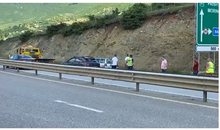
Chain accident in Morina-Kukës
2026-06-07 17:42:58


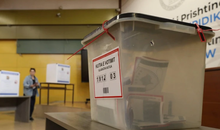
Elections in Kosovo/ By 15:00 turnout 22.74%
2026-06-07 16:18:03
Këlliçi: Rama insulted protesters, his arrogance and corruption must go away
2026-06-07 15:29:59
Zodiac signs that never give up on love
2026-06-07 15:12:18
How the Western Balkans became Europe's "factory"... what comes next?
2026-06-07 14:52:17
Violand Braçellari, who killed the policeman, is left in prison
2026-06-07 14:30:40
Armenians vote on country's future between East and West
2026-06-07 13:51:13
Former Republican Guard officer found dead in Mat River
2026-06-07 13:00:13
Strong tremors in Athens, two earthquakes one after the other
2026-06-07 12:41:55