 Flash News
Balluk's wealth "collapses", SPAK seizes his villa in Dhërmi
The officer was killed during the action, the Korça police did not assess the dangerousness of the perpetrator, only 6 police officers were on the ground
Car ends up in canal, residents save father and son
Where does justice begin?/ Between Gog's speeches and the bullets on the ground, who protects the policeman?
Pëllumb Gjoka speaks about the accusations in the "Metamorphosis" file: They held a public trial for me, I have no connection to the murder of Gjin Ndoji
The History of the Italo-Albanian Catholic Church EXPLAINED: from the Turkish invasion and the displacement of Albanians in Italy to the present day
Kjo Kishë përbëhet kryesisht nga pasardhësit e shqiptarëve të mërguar që ikën drejt Italisë gjatë persekutimit turk të shekullit XV ndaj të krishterëve në Shqipëri, duke u vendosur kryesisht në Italinë e Jugut dhe që njihen sot si komuniteti Arbëresh.

Politiko
2025-09-04 11:28:57
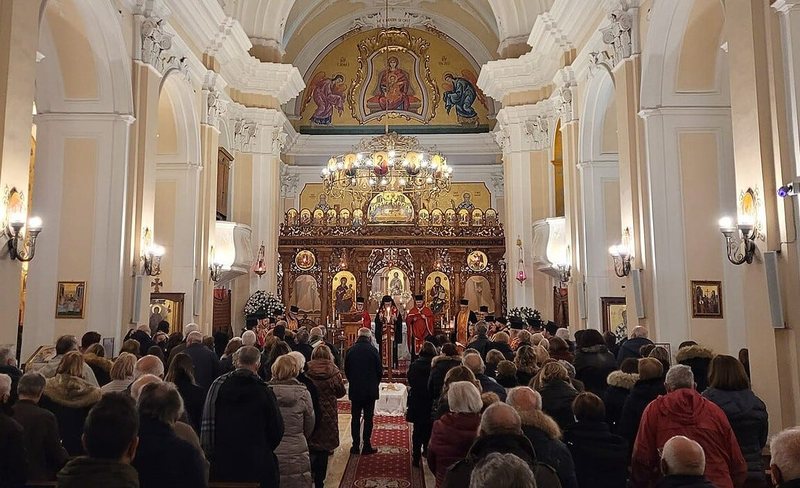
Edgar Beltrán/ The Pillar
Pope Leo XIV on Saturday appointed Father Raffaele De Angelis as Bishop of Piana degli Albanesi of the Italo-Albanian Catholic Church, located in Sicily.
The appointment comes after a five-year vacancy at the head of the diocese. In February 2020, the last bishop, Giorgio Demetrio Gallaro, was appointed as the then secretary of the Congregation for the Eastern Churches.
De Angelis, born in 1979, was ordained a priest of the Diocese of Lungros in 2006 after studying at the Gregorian University, receiving a doctorate in moral theology.
De Angelis has served in several senior episcopal positions, as vice-rector of the local seminary, member of the priests' council, and part of the commission for the protection of minors.
If you're wondering what the Diocese of Piana degli Albanesi is — and what the Italo-Albanian Catholic Church is — you're not alone.
What is the Italo-Albanian Catholic Church?
The Italo-Albanian Catholic Church is one of the 23 Eastern Churches sui iuris in full communion with the Pope.
Italo-Albanians use the Byzantine rite, both in classical Greek and in Albanian.
This Church is composed mainly of the descendants of exiled Albanians who fled to Italy during the 15th-century Turkish persecution of Christians in Albania, settling mainly in Southern Italy, and who are known today as the Arbëresh community.
While many in northern Albania were Latin Catholics due to Venetian influence, many Albanians in the rest of the country were Eastern Catholics, as some Albanian Orthodox communities had entered into full communion with the Catholic Church after the Council of Florence.
The church has 80,000 members, organized into two dioceses and one territorial abbey. It has 45 parishes, 82 priests, five deacons, and over 200 religious brothers and sisters.
The Italo-Albanian Catholic Church operates mainly in Southern Italy, but also has communities in other Italian cities, such as Milan, Turin, and Rome, as well as in countries with large Italian and Albanian diasporas, such as Switzerland, Argentina, Brazil, and the United States.
In fact, the Italo-Albanian Church had a parish in Manhattan until 1946, led by Father Ciro Pinnola, an Italo-Albanian priest who migrated to the US in 1903. However, the parish was closed after Pinnola died in 1946, as the archdiocese could not find other Italo-Albanian priests to serve it.
The Italo-Albanian Church has several parishes that are under non-Italo-Albanian jurisdictions. For example, the Church has a parish in Las Vegas that is under the jurisdiction of the Byzantine Diocese of Phoenix.
Italo-Albanians have been important in preserving the Byzantine rite in Italy.
While this rite was important in the early Middle Ages, due to the Hellenization of Southern Italy, it began to disappear after the Norman conquest of the 11th century.
When the Arbëresh arrived in the 15th century, the Monastery of Grottaferrata was one of the few places preserving the Byzantine rite in Italy, but it had become increasingly Latinized.
However, the monastery became an epicenter of Albanian Catholicism, gradually reviving since the 18th century, as most of the monks and students were and remain members of the Italo-Albanian Church.
Was the Church known as sui iuris at that time?
After the Council of Florence and the exile of many Albanians to Italy, the Italo-Albanians did not immediately become a Church sui iuris .
The Holy See first created an ordinariate for Albanians in Sicily only in 1784 — almost 300 years after the first arrival of the Arbëresh — and appointed a titular archbishop with residence in Rome to ordain their priests, who studied mainly at the Greek College in Rome. However, the Italo-Albanians in the rest of the country remained under the jurisdiction of Latin bishops.
Finally, in 1919, the Holy See established the Diocese of Lungro, in Calabria, as the first Italo-Albanian diocese, and in 1937 it established the Diocese of Piana dei Greci, later called Piana degli Albanesi, and the territorial abbey of the Monastery of Saint Mary of Grottaferrata, about 35 km from Rome.
These are still the three jurisdictions of the Italo-Albanian Church today.
What is the Diocese of Piana degli Albanesi?
The jurisdiction originated in a 1937 bull of Pius XI, organizing pastoral care for the faithful of the Byzantine rite in Sicily through the establishment of a bishopric, so that the Arbëresh community would have a stable structure that protected its liturgical, pastoral, and cultural heritage.
The diocese includes five municipalities in the province of Palermo with a majority of Catholics of the Byzantine rite: Piana degli Albanesi, Contessa Entellina, Mezzojuso, Palazzo Adriano and Santa Cristina Gela, and also includes a personal parish in Palermo. The diocese had 23,400 baptized and 16 parishes in 2023.
The cathedral is located in Piana degli Albanesi and is dedicated to Saint Demetrius the Great Martyr, while the co-cathedral is the Church of Saint Mary of the Admiral in Palermo.
The diocese is one of the few Eastern Catholic jurisdictions in the world to have Latin Catholics under its pastoral care, as there are five Latin Rite parishes belonging to the diocese.
This also occurs in some parts of the Middle East, where Latin Catholics may fall under the jurisdiction of a Chaldean or Melkite patriarch, as well as in Eritrea, where all Catholics, including Latin ones, are under the care of the bishops of the Eritrean Catholic Church.
The Holy See established an Italo-Albanian seminary in 1734, which meant that the Italo-Albanians needed a bishop who could ordain Italo-Albanian priests. For this reason, Pope Pius VI established an ordinariate of the Byzantine rite for Albanians in Sicily in 1784, appointing a titular bishop who could ordain and organize Italo-Albanian priests in the territory.
Upon its establishment in 1937, the diocese had jurisdiction over only two Latin rite parishes, but Saint John XXIII granted it jurisdiction over all the Latin parishes of Contessa Entellina, Mezzojuso, and Palazzo Adriano in 1965.
Although founded in 1937, the diocese did not immediately have its own bishop — the Archbishop of Palermo served as apostolic administrator for 30 years, with an Italo-Albanian bishop serving as auxiliary bishop and vicar general.
In 1967, Bishop Giuseppe Perniciaro was finally appointed Bishop of the Diocese of Piana degli Albanesi.
What about other Italo-Albanian jurisdictions?
The Diocese of Lungro is the first and largest Italo-Albanian jurisdiction, covering parts of five regions of Southern Italy, especially Calabria.
It is home to the only Italo-Albanian seminary, in the city of Cosenza, and has 48 priests in 30 parishes serving over 30,000 Catholics.
The diocese also has several parishes in other parts of Italy, such as Turin and Milan, as well as in Argentina, Brazil and the United States.
It was established in 1919, with jurisdiction over Catholics of the Byzantine and Latin rite in parts of Calabria, Basilicata and Villa Baldessa, and over Catholics of the Byzantine rite in Lecce, Pescara and Bari.
The Territorial Abbey of Saint Mary of Grottaferrata is located about 35 km from Rome and is the only monastery of the Basilian Order of Grottaferrata, the first religious order of the Italo-Albanian Church, and an epicenter of the culture of the Albanian diaspora.
The monastery was founded in 1004 by Saint Nile of Rossano, a Calabrian Greek Catholic monk, and the Basilian Order of Grottaferrata was established in 1571. The monks subsequently established many centers in Southern Italy.
However, Italo-Greeks and Italo-Albanians gradually Latinized over time. Many were forced to do so by the local hierarchy.
Meanwhile, the Kingdom of the Two Sicilies in the 18th century and the new Kingdom of Italy in the late 19th century confiscated lands and forced them to close many Eastern Rite monasteries, allowing only the monastery of Grottaferrata to continue functioning.
This led to the arrival of many exiled monks from other communities and a revival of the local Italo-Albanian tradition.
The monastery was established as a territorial abbey in 1937 and currently has nine monks. However, the abbey has been vacant since 2013, when Pope Francis appointed then-Bishop Marcello Semeraro as apostolic administrator.
Is the Italo-Albanian Church the same as the Albanian Greek Catholic Church?
No. They are two separate Churches sui iuris in full communion with the Pope.
The Albanian Greek Catholic Church originated in the late 19th century, when a group of Albanians sought the protection of a Catholic bishop from forced conversions to Islam ordered by Sultan Abdul Hamid II in 1895. That same year, Archimandrite George Germanos asked the Archbishop of Durrës, a Latin jurisdiction, to join the 5,000-member Catholic Church, preserving the Byzantine liturgy and cultural heritage.
The Holy See accepted Germano's request in 1898, and they entered into full union in 1900.
However, Ottoman authorities continued to persecute Albanian Catholics, making it difficult for the community to have sustainable pastoral care. This dynamism continued even after Albania's independence in 1912.
Germanos was exiled to Italy in 1914, leaving the community without a pastor by 1918 and shrinking to fewer than 100 members.
However, the Italo-Albanian Catholic Church played a major role in preserving the Albanian Greek Catholic Church, as Father Pietro Scarpelli, an Italo-Albanian priest, traveled to Albania in 1928 to serve the communities until his arrest and expulsion a year later.
In 1938, two monks from Grottaferrata went to Albania to study the establishment of a mission, noting that there were about 200 Greek-Albanian Catholics in the region. The community grew to 400 after the Italian occupation of Albania during World War II, but the post-war communist regime expelled all foreign priests from the country and persecuted local Catholics.
Father Josif Papamihali, a priest of the Albanian Greek Catholic Church who had studied at the Italo-Albanian Seminary of Lungros, was arrested in 1946 and interned in a labor camp by the communists in 1948 — he died after collapsing from exhaustion and being buried alive by camp guards. He was declared a martyr and beatified along with 35 other Albanian Catholics in 2016 by Pope Francis.
The communist regime's systematic persecution brought the Albanian Greek Catholic Church to the brink of extinction, and its numbers remain small, so much so that it has not appeared as a Church sui iuris in the Annuario Pontificio since 2020.
However, Italo-Albanian efforts have helped revive several communities and churches in Albania, such as the Church of Saint Peter in Elbasan, originally built by the monks of Grottaferrata.
Currently, members of the Albanian Greek Catholic Church are under the Apostolic Administration of Southern Albania, which has 2,000 Catholics, including both Latin and Eastern.
Latest news
EU to provide $116 million in aid to Lebanese army
2026-06-04 18:12:12
Plane crashes in Croatia, at least 4 dead
2026-06-04 16:31:32
Berisha: Lands in Zvërnec were seized by Pjerini from Lezha and Agaç from Berat
2026-06-04 16:26:52
Minatorët e Bulqizës vijojnë bojkotin e punës, kërkojnë rritje pagash
2026-06-04 16:17:31
Former Montenegrin police chief banned from entering Serbia
2026-06-04 16:05:34

The moment when Gjesti enters the record company's offices armed
2026-06-04 15:03:29

The Euro-Lek exchange rate falls again, heading towards the threshold of 95 Lek
2026-06-04 14:33:00
Balluk's wealth "collapses", SPAK seizes his villa in Dhërmi
2026-06-04 14:00:13
Watermelon, the heart's ally in summer
2026-06-04 13:56:33
The board continues to "ping pong" with fuel prices, oil increases again
2026-06-04 13:39:24
Bardhi asks Rama to the Assembly: The interpellation is not delegated!
2026-06-04 13:21:54
House of Representatives approves measure to end Iran war
2026-06-04 13:14:35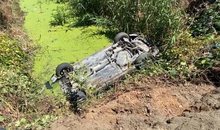
Car ends up in canal, residents save father and son
2026-06-04 12:55:58
SPAK requests 98 years in prison for Durim Bami, Aldo Avdyli and 5 others
2026-06-04 12:39:43

Video/View from the scene where the policeman was killed in Maliq
2026-06-04 11:52:46

SPAK knocks on Igli Tare, former footballer included in Balluku file
2026-06-04 11:16:36


Four ways your attention is manipulated
2026-06-04 10:52:57
Policeman's murder, Bardhi reacts: Shocked, I strongly condemn the serious act
2026-06-04 10:30:35
Parliament holds a minute of silence for the officer killed in Maliq
2026-06-04 10:25:48

Photos of two young men who drowned in the sea in Lezha emerge
2026-06-04 09:44:40

What anxiety is really trying to tell you
2026-06-04 09:24:37
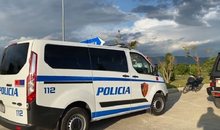
Maliq/ Officer killed during police operation, another injured
2026-06-04 08:31:21
Horoscope, get to know the star forecast
2026-06-04 08:21:37
Unstable weather conditions, weather forecast for this Thursday
2026-06-04 08:06:35
Morning Post/ In 2 lines: What mattered yesterday in Albania
2026-06-04 07:50:52

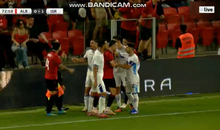
Tension in "Air Albania" after Israel's goal, Hysaj clashes with Gloukh
2026-06-03 22:21:33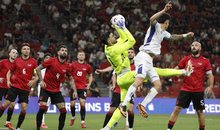
Debutim i hidhur për Maran, Shqipëria mposhtet nga Izraeli
2026-06-03 22:01:35
Këlliçi: Rama është sot një Kryeministër i ezauruar totalisht
2026-06-03 21:38:01
Costa porosit liderët: BE-ja s’mund të bëjë detyrat e shtëpisë të Kosovës
2026-06-03 21:16:35
6 në 10 persona përdorin AI për shëndetin mendor
2026-06-03 20:56:11
Tifozët kuqezinj fërshëllejnë himnin izraelit
2026-06-03 20:34:01
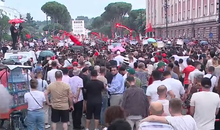
"Resign, we want revolution", citizens chant outside Rama's office
2026-06-03 19:58:32
The two young men who lost their lives in Shëngjin are identified
2026-06-03 19:43:35
Official lineups for the Albania-Israel friendly are published
2026-06-03 19:18:56
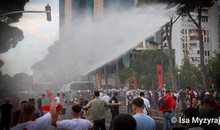
Video/ Police throw water on the crowd, protesters break the metal fence
2026-06-03 18:59:00
The best professions for free time and less stress
2026-06-03 18:48:43
The Federation of North Macedonia excludes Shkëndija Tetovo from the Cup
2026-06-03 18:16:04
Blow for Broja, his value on "Transfermarkt" drops to 5 million euros
2026-06-03 17:53:09
Bulqiza miners in protest, miners demand improved working conditions
2026-06-03 17:29:39

Trump admits clash with Netanyahu: I asked him to stop the escalation in Lebanon
2026-06-03 16:30:32
By 2030, 45% of women are expected to be single and childless
2026-06-03 16:19:53
Alarm for the Rossoneri! Uzun risks the challenge against Israel
2026-06-03 15:52:21
Two people were injured by a bomb explosion in Përmet, police provide details
2026-06-03 15:35:24
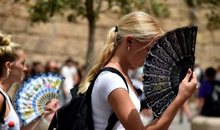
The heat wave does not spare Spain, 101 people lost their lives in May alone
2026-06-03 15:09:35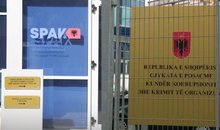
Hearing for the defendants in the Veliaj case, SPAK gives its claim
2026-06-03 14:56:31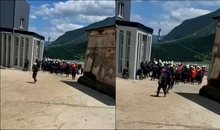

Murder of Martin Can, Appeal decision for Mario Përlleshaj postponed
2026-06-03 14:18:24
Can hackers steal fingerprints from photos on social media?
2026-06-03 14:02:14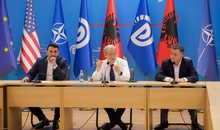

Explosion in Përmet, two people seriously injured, one urgently sent to Tirana
2026-06-03 13:41:21
Berlin signals opening of Europe-Russia talks on Ukraine
2026-06-03 13:27:09
Explosions at oil terminal, footage from the attack in St. Petersburg
2026-06-03 13:01:14
CNN: US-Iran ceasefire is straining, oil prices rise again
2026-06-03 12:42:57
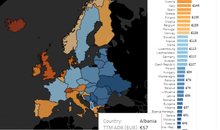
Albania becomes the second most expensive in the Balkans for daily rentals
2026-06-03 12:13:35