 Flash News
Denounced that he was threatened with his life, Bajrat reports Marjana Koçek to SPAK
A dead body was found in Ibë, suspected to belong to Eglant Koçi
Anti-cannabis operation in Kurbin, one person arrested, accomplice sought
Accident at the entrance to Elbasan, bus collides with fuel sign
The mayor of Roskovec appears before SPAK
GI-TOC Report / Notaries and "Real Estate" drug money laundering mechanisms under construction in the Western Balkans!

Politiko
2026-06-18 15:59:43
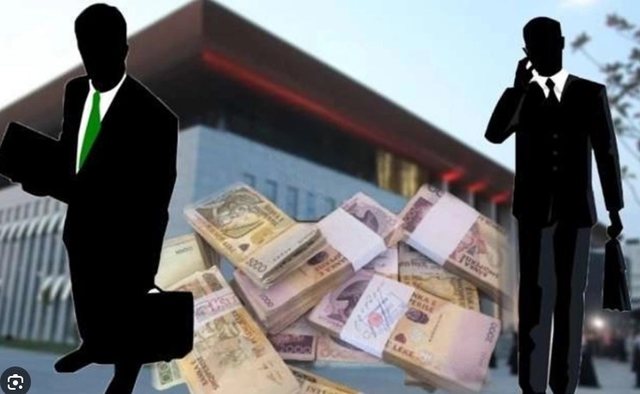
In the Western Balkans, illicit money rarely moves on its own. It passes through notarized contracts, property deeds, loan agreements, invoices, and audited financial statements, documents that require the signature, certification, or stamp of a licensed professional to appear legitimate.
This report examines the professionals who provide that signature: notaries, lawyers, accountants, auditors and real estate brokers.
Drawing on 89 interviews conducted in Albania, Bosnia and Herzegovina, Kosovo, Montenegro, North Macedonia and Serbia between December 2024 and January 2026, as well as court files, national risk assessments and MONEYVAL reports, the report analyses how these “gatekeepers” can stop illicit financing at the source or, on the contrary, pave the way for it.
Real estate remains the main channel for money laundering. The same patterns are repeated in all six countries: undervalued or overvalued purchase contracts, quick resales between related parties, notarized loans without a reliable source of funds, and nominal buyers acting on behalf of the true beneficial owner.
Shell companies, fictitious invoices and cross-border corporate structures add further layers of concealment. These schemes are usually not managed by a single individual, but are facilitated by the same close circle of notaries, lawyers and accountants who appear in numerous transactions. An Italian accountant, recorded discussing the movement of funds through Albania and Montenegro, described the process in no uncertain terms: “First we will make them disappear, then we will transfer them to Hong Kong or somewhere else.”
Western Balkan countries have largely aligned their anti-money laundering frameworks with the recommendations of the Financial Action Task Force (FATF) and European Union standards. The weakest link remains supervision. Professional associations often lack the authority, resources or staff to effectively monitor their members, while professional secrecy is often interpreted so broadly that transactions that should have raised suspicions go unreported. In Montenegro, for example, notaries processed approximately 19,857 property sales with an estimated value of 1.6 billion euros in 2024, while submitting only two suspicious transaction reports.
The report concludes by identifying the elements of a more effective system: clearer boundaries for professional secrecy, stronger integrity and background checks for notaries and accountants, standardized reporting forms, and functional communication mechanisms between financial intelligence units and professionals reporting suspicious transactions.
The full findings, country analysis, and case studies are presented below/ Globalinitiative.net
Latest news
Doja "Metamorphosis", GJKKO sentences Pëllumb Gjoka to 6 years in prison
2026-06-18 16:17:35

A dead body was found in Ibë, suspected to belong to Eglant Koçi
2026-06-18 15:51:17
Shehaj against protesters' demands: We will go to the elections with Rama
2026-06-18 15:38:06
How the protests in Tirana gained international media attention
2026-06-18 14:21:14
Anti-cannabis operation in Kurbin, one person arrested, accomplice sought
2026-06-18 14:00:21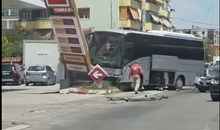
Accident at the entrance to Elbasan, bus collides with fuel sign
2026-06-18 13:51:19
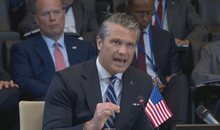
Hegseth explodes against NATO: We are reviewing our presence in Europe
2026-06-18 13:13:44
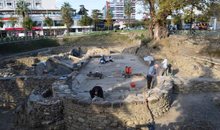
Excavations reveal mosaics from an early phase of the Elbasan Basilica
2026-06-18 12:55:41
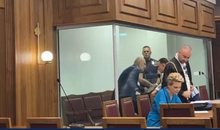
Tensions in the trial against Meta, Kryemadhi and lawyer Cakrani fined
2026-06-18 12:37:26
56 million euros spent, no functional plant: Tirana "floats" in sewage
2026-06-18 12:29:00
The mayor of Roskovec appears before SPAK
2026-06-18 12:19:46
"Don't point the finger at me," parliamentary session is interrupted again
2026-06-18 12:05:28

The banner that "touched" Klosi: Rama or Bela, who was the reason?
2026-06-18 10:41:15

The signing of the US-Iran agreement lowers the price of oil on world markets
2026-06-18 09:49:07
Eating these foods helps cool the body during the summer heat
2026-06-18 09:41:18

Long lines and missed flights: EU warns of border easing during summer
2026-06-18 08:58:04

Prices 'fly', wages lag behind/ Albania surpasses the EU in food prices
2026-06-18 08:16:14

Weather forecast for today
2026-06-18 07:45:37
Horoscope June 18, 2026, discover the star predictions
2026-06-18 07:26:13
Morning Post/ In 2 lines: What mattered yesterday in Albania
2026-06-18 07:00:51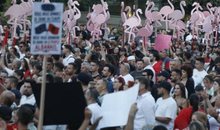
"We will be given capital", the spicy banners from the protest
2026-06-17 22:58:52
Actor and director Gjergji Lala dies at the age of 79
2026-06-17 22:14:10
Marta Kos's statement, DP reacts: It is based on Rama's false information
2026-06-17 21:37:31
A debut to forget, Ronaldo fails to make the difference in Portugal's equalizer
2026-06-17 21:22:15

Neo-mountaineering and Neo-security
2026-06-17 20:16:49
Ronaldo continues to defy time, sets new World Cup record
2026-06-17 19:52:19

Does Botox go to the brain? Here's what doctors say
2026-06-17 19:00:18

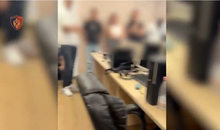
Suspected call center fraud scheme busted in Tirana, 7 arrested
2026-06-17 16:51:11
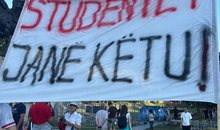
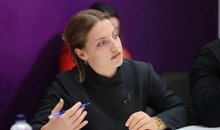
SP reacts after Koçek's statement about Eid
2026-06-17 14:51:45

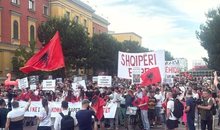
Protest/ Police prosecute 16 citizens and announce 2 others wanted
2026-06-17 14:01:20
EP report on Albania, alarm on elections, corruption, media and environment
2026-06-17 13:46:15


Renowned actor Gjergji Lala dies
2026-06-17 12:30:31
45-year-old man in Memaliaj injured after falling from scaffolding at work
2026-06-17 12:14:54
Eurostat: Albania, penultimate in Europe for well-being
2026-06-17 12:00:59

Berisha: DP supports the protest, Rama leads a regime without legitimacy
2026-06-17 11:34:55