 Flash News
VIDEO-scandal in Saranda/ Director of AMP Vlora and officials sexually harass tourists
"The New York Times" about Ye's concert: How Rama justifies the $4.5 million in funding
The suspected perpetrator of the murder in Laç is identified, he shot the 40-year-old 7 times near the palace
7 bullets on the doorstep, who is the 40-year-old with 4 surnames who was killed in Laç
Morning Post/ In 2 lines: What mattered yesterday in Albania
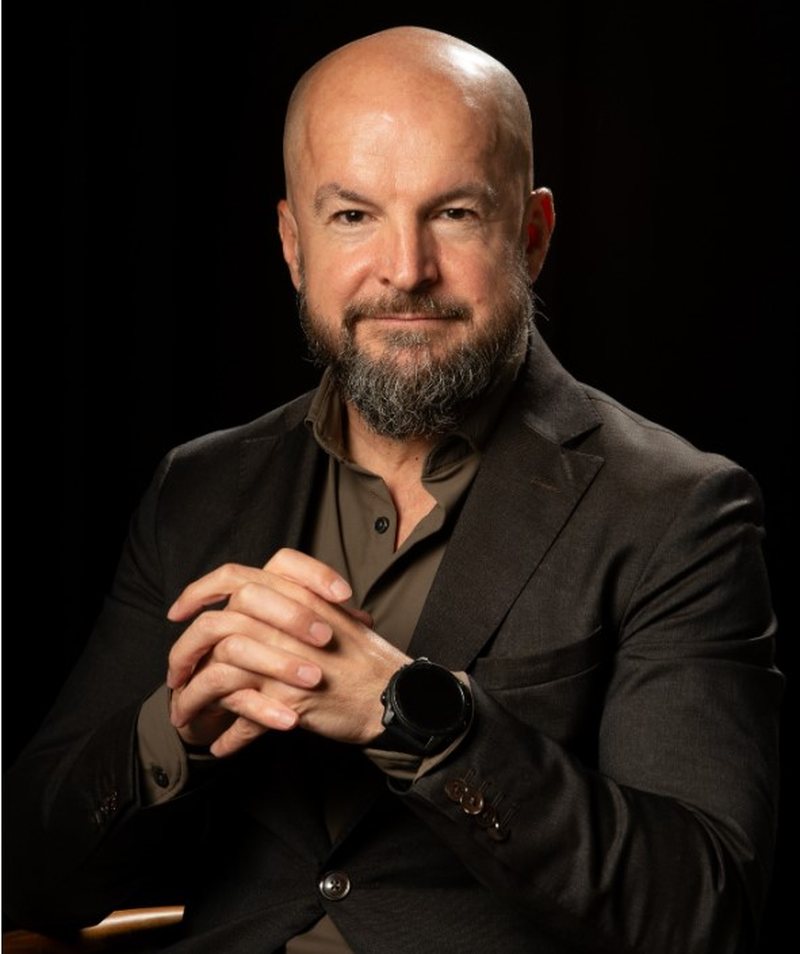
Alfred Lela
Marjana Koçeku and Frrok Çupi are two people with very different stories. This is not the place to compare their respective journeys in life and work. For this article, it is enough to look at the relationship each has built with the civic protest movement of recent weeks.
Koçeku has taken two significant steps over the last two days: she has broken with the Socialist Party and declared war on what she calls the “Bajras” — the powerful clan-gang from Shkodra, widely regarded as Prime Minister Edi Rama’s economic and electoral allies in the city.
Çupi, meanwhile, has written two articles. In one, he attacks the Catholic Church and its clergy; in the other, he attacks the Ghegs. Curiously, he is himself both a Gheg and a Catholic.
In his anti-Church piece, he draws from a repertoire one might expect from a former journalist of Zëri i Popullit, who has been publicly accused of having served as an agent of the communist-era Sigurimi. The article resembles less a commentary than a freshly raised pickaxe against churches and places of worship, carrying the dark legacy of the period when Enver Hoxha ordered them demolished or converted into warehouses. Deep within Frrok’s subconscious, now in old age, have surfaced those old mutilations that people try to hide but can never fully suppress. It is precisely what the far left traditionally embodies: the absence of enduring values, concealed behind globalist themes expressed through terms that promise everything while meaning little, emptied of substance through overuse.
In his second article, Frrok turns against the Ghegs, fanning the same fire he enthusiastically helped ignite at Koha Jonë in 1997, when he warned of a “northern threat to the rebellious south.” At the time, amid gunfire and civil collapse, such cries could perhaps be understood. But where exactly is this conflict between north and south today — except in his own mind? For what reasons? Under what motives? Where is the actual conflict?
Following Rama’s own quasi-Enverist obsession with “foreign enemies,” Frrok has recalibrated the theory of the internal enemy: the Gheg and the priest of socialist-realist films — characters which, according to him, were apparently not portrayed inaccurately after all. There are no facts supporting such claims, no visible signs of any such threat. But those who have decided to cloak themselves in disgrace in old age rarely concern themselves with reason.
Marjana, on the other hand, has chosen to stand alongside the Catholic Church, the only religious institution to have taken a public position on the protests — and not for the first time on sensitive social issues. Frrok, meanwhile, has brought forth from the darkest corners of his conscience the crippled remnants of his communist self and turned his anger against those who dared tell Edi Rama, on behalf of believers and ordinary Albanians alike: “Stop for a moment.”
Frrok and Marjana are not merely two individual stories. They represent two standards. Two Albanias are colliding at the gates of protest. Two mindsets are struggling for legitimacy in an age increasingly defined by the refusal to recognize any legitimacy or authority at all. This is the most fertile ground for the contemporary left, and it is precisely in the sulfurous atmosphere of such terrain that Frrok and those like him rise.
They are echoes from a distant past, hostile both to faith in God and faith in man.
Today, those in the square and those watching from their sofas face a choice: Marjana, who leaves the Socialist Party and moves toward the Citizens’ Alliance; or Frrok, who sacrifices himself as a stone laid upon the grave of what can only be called the Alliance of Filth.
Latest news

Heatwave hits Germany, over 5,400 heat-related deaths
2026-07-10 10:45:33

Land in "foreign hands"
2026-07-10 10:26:15

Mbappe the hero of France, the "Roosters" knock out Morocco in the quarterfinals
2026-07-10 09:54:33
Durrës/ 40-year-old man stabs his wife
2026-07-10 09:48:03



How much could the amount of drug money in the Albanian economy be?!
2026-07-10 09:08:34
Government reduces funds for farmers, increases ADF by 75 million euros
2026-07-10 08:55:46
Horoscope, get to know the star forecast
2026-07-10 08:32:54

Morning Post/ In 2 lines: What mattered yesterday in Albania
2026-07-10 07:52:04
A person was shot dead in Kurbin, first details
2026-07-09 22:54:48


Will the Police also stop those who criticize Rama online?
2026-07-09 21:57:02


FIFA decision shocks England, Quansah ruled out for two matches
2026-07-09 20:51:00
Protest/Pedagogue: 4 million euros for Kanye West is "the next concession"
2026-07-09 19:45:53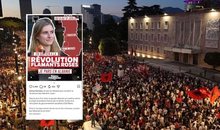
French MEP joins protests in Albania: Support for the "Pink Flamingo Revolution"
2026-07-09 19:28:07


Has the lek strengthened or overvalued?
2026-07-09 17:58:05

The trial on the merits for Ilir Meta and Monika Kryemadhi is postponed
2026-07-09 16:47:58

The match between England and Norway risks being postponed, this is the reason
2026-07-09 16:12:46
Murder in Shkodra/ Relatives: Peaceful family, no problems
2026-07-09 16:10:02
Kurti invites opposition leaders to a meeting to create new institutions
2026-07-09 15:43:05

This is the 62-year-old man who killed his wife in Shkodra
2026-07-09 15:01:43

Domestic crime/ Wife killed with shotgun, perpetrator and victim identified
2026-07-09 14:05:18
Gunfire in Shkodra, one victim suspected
2026-07-09 13:49:41
Weapons cache discovered in Fier, Prosecution sends 38-year-old to trial
2026-07-09 13:35:48

Bota e muzikës në zi, ndahet nga jeta në moshën 75-vjeçare ikona Bonnie Tyler
2026-07-09 12:56:29
Monika Kryemadhi in the Criminal Court: The cell phone was seized illegally
2026-07-09 12:45:54

VALEN MP reacts after border detention: Albania is no one's property
2026-07-09 12:15:44
Albanian gang in Belgium sentenced for trafficking 7 tons of cocaine
2026-07-09 12:01:14
Justin Bieber, Shakira and Madonna to perform at 2026 World Cup final
2026-07-09 11:52:54
Euro falls, inflation rises and domestic production loses ground
2026-07-09 11:39:36
Trial at the GJKKO, Meta's new lawyer appears in the session
2026-07-09 11:29:47
Nighttime accident in Gramsh, man and woman injured
2026-07-09 11:20:25
Meta seeks 134 witnesses, GJKKO delivers decision today
2026-07-09 10:56:54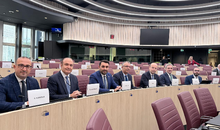
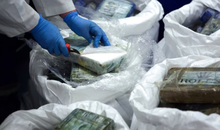


At the peak of the production season, vegetable prices 'fly'
2026-07-09 10:21:14
The African heat returns, the thermometer reaches 40 degrees this weekend
2026-07-09 10:08:08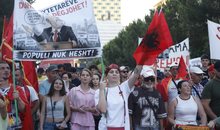
Opinions from 'anonymous' authors target Flamingo protests
2026-07-09 10:07:15
MEP Waitz: The law on protected areas endangers Albania's path to the EU
2026-07-09 09:52:55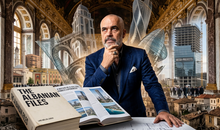
"Le Courrier des Balkans": Edi Rama and the megalomania of power
2026-07-09 09:40:26
The economics of concerts, the prime minister's imaginary 100 million euros
2026-07-09 09:28:19
Erdogan's strange gift to NATO leaders
2026-07-09 09:11:15


Foreign exchange, the rate at which foreign currencies are sold and bought
2026-07-09 08:30:41
“Uniteti i jashtëzakonshëm” i NATO-s dhe mesazhet kryesore nga samiti në Turqi
2026-07-09 08:11:17

Horoskopi, njihuni me parashikim e yjeve
2026-07-09 07:46:15
Alternime kthjellimesh e vranësirash, parashikimi i motit
2026-07-09 07:25:59
Posta e mëngjesit/ Me 2 rreshta: Çfarë pati rëndësi dje në Shqipëri
2026-07-09 07:02:12





Rama brings West in Tirana, using Eastern premises
2026-07-08 20:41:42


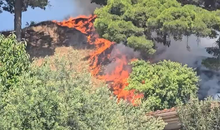
Fire on Kuzum Baba hill in Vlora, flames endanger homes and Tekke
2026-07-08 18:09:45


Shqipëria po plaket, qeveria pa plan
2026-07-08 15:57:26