 Flash News
Quarrel in Vlora, Ukrainian woman denounces Albanian couple: They beat us because of the dog
Truck collides with vehicle on Lezhë-Milot road, one dead and two injured
"No offense", Evis Kushi worries about the language of the protesters, forgets Rama's vocabulary
Morning Post/ In 2 lines: What mattered yesterday in Albania
Day 24 of the protest, I came from America, thousands will come!
BIRN: Rama's rhetoric against regional Albanians criticized as divisive

Politiko
2026-06-24 09:01:01
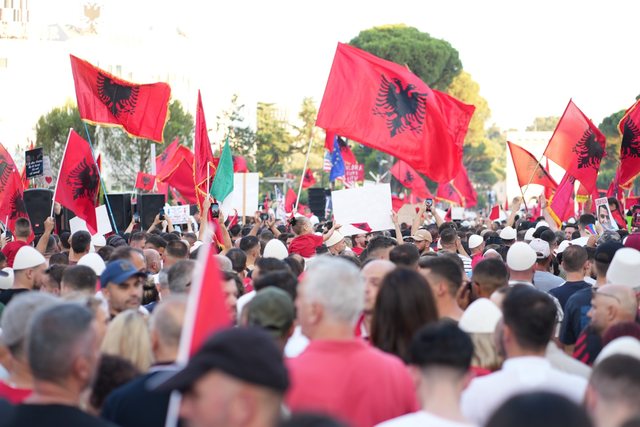
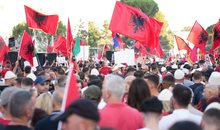
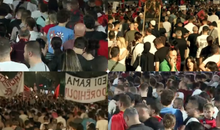
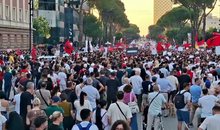
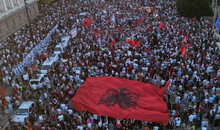
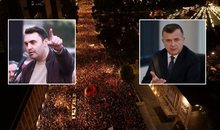
On June 20, tens of thousands of citizens from Albania and the diaspora gathered in Tirana in the largest protest the country had seen in decades, in an unusual nationwide mobilization against the government of Prime Minister Edi Rama.
Dominated by national symbols and patriotic slogans, that night's protest was considered the largest in a series of nightly protests since May 31.
In a continued attempt to anathema the protest and the protesters, Prime Minister Rama labeled it an 'invading horde' – an unacceptable interference in the affairs of another state, according to him.
As an illustration of this, he used the participation of some Albanians from Kosovo and North Macedonia, presenting them as political instruments used to destabilize Albania. In his statement, Rama suggested that the participation of Albanians from Kosovo and North Macedonia in the protest damaged the international image of Albanians and served the opponents of Kosovo.
He went further by calling the use of the KLA flag in the protest “desecration,” presenting it not as a national or political symbol, but as an instrument of hatred against the Tirana government. He repeatedly used derogatory terms for activists associated with Vetëvendosje, although he ultimately exonerated Vetëvendosje leader Albin Kurti from responsibility.
Rama's message was also reinforced by MP Ulsi Manja, who publicly demanded that the Kosovo government distance itself from the protesters, calling their participation a "shame" and "abomination."
The language used by the prime minister and other exponents of the Socialist Party is considered to be inciting division among Albanians in the region as well as an attempt to divert the political crisis.
Switzerland-based journalist Enver Robelli told BIRN that attacks on Albanians in the region are part of Rama's attempt to build the image of an external enemy, at a time when protests are directly challenging the legitimacy of his government.
He believes that the participation of Kosovars in protests held in Albania should be seen as normal, in the context of a communication space of the 'Albanosphere', while the focus should be on the reasons why people protest.
“Among the 70,000 protesters in Tirana, there could be 70 from Kosovo. Those 70,000 are protesting against the three “Ks” of the government that are destroying Albanian society: corruption, criminality and clientelism,” Robelli told BIRN.
“After trying to label protesters as foreign agents and comparing them to Mussolini's phalanxes, and this brutal language has only angered people even more, now it's the turn of the Kosovo Albanians as the guilty guardians,” he added.
Even Kim Mehmeti, a writer and publicist from North Macedonia and a vocal critic of Prime Minister Edi Rama, considers it right for Albanians to participate wherever they are to defend Albania "whether from foreigners or from Albanian thieves."
Mehmeti compares Rama's statements with those of Enver, which according to him demonstrate the mindset that Albanians outside Albania are a "harmful and hostile surplus."
"The damage that Piktori has done to Albanianism now culminates in his attempts to divide us, to make us a people who speak the same language, but who dare not think Albanian and act pan-Albanian," said Mehmeti.
Mehmeti emphasizes that Albania is very important for Albanians living outside its borders, but accused Rama of not knowing this, since for him "the Albanian world begins and ends where he can roam unhindered."
While Mehmeti sees the problem mainly in terms of identity and nationalism, writer Primo Shllaku reads Rama's reaction to the internal political crisis and his rhetoric towards protesters from Kosovo and North Macedonia as a sign of the pressure produced by the mobilization of the protest with a common denominator, which is the abuse of power.
Shllaku reads the engagement of Albanians from other countries in the region in the Albanian protest against the 'Rama' government as justified and appropriate, while Rama's reaction as a sign of "deep anxiety".
"First, let's not forget that the preamble of our Constitution stipulates that the Republic of Albania has the duty to care for its compatriots wherever they are in the world. But there is also a constitutional article in the Constitution of Kosovo, which expressly states that the Albanians of Kosovo, the Republic of Kosovo, has the duty to care for their compatriots wherever they are in the world," said Shllaku, considering the joining of the protest as legitimate.
Shllaku also points out the fact that many of those who were in the square are Kosovo Albanians, who are also citizens of the Republic of Albania and vice versa, and reminds Rama that when he needed them for "showcase and formality" he appointed ministers from Kosovo to the government.
Considering the statements as an "attempt to mend the situation and reduce the pressure", Shllaku assesses that these statements also target the Prime Minister of Kosovo, Albin Kurti.
"The words he says about Albin are mostly hypocritical, because he indirectly accuses Albin Kurti of that work," said Shllaku, adding that the fight against the abuse of power is "the holy war of today's Albanians."
According to Robelli, the intimidating language of Rama and his ministers is fueling even more division among Albanians and hatred towards Kosovo Albanians, a fact that, according to him, is evident in the comments of readers of pro-government portals in Tirana.
“This is a racist devaluation within the members of a nation,” he concluded./ BIRN
Latest news

Men or women, who earned more in 2025, salaries for 36 professions
2026-06-24 09:46:36

World Cup 2026/ Croatia takes three golden points, England disappoints
2026-06-24 09:21:57
BIRN: Rama's rhetoric against regional Albanians criticized as divisive
2026-06-24 09:01:01
Truck collides with vehicle on Lezhë-Milot road, one dead and two injured
2026-06-24 08:52:27

Horoscope, what do the stars have in store for you today?
2026-06-24 08:14:21
Temperatures up to 33 degrees, weather forecast for today
2026-06-24 08:00:33
Morning Post/ In 2 lines: What mattered yesterday in Albania
2026-06-24 07:46:05


Tourists join protest: We are not afraid, you are wonderful
2026-06-23 21:11:35
Protester: On July 4th, the diaspora will be here with us in the square
2026-06-23 20:45:34
Ronaldo sets historic World Cup record
2026-06-23 20:25:50
Former OSCE Deputy Ambassador in Tirana joins protest for Edi Rama's resignation
2026-06-23 20:07:37

Day 24 of the protest, I came from America, thousands will come!
2026-06-23 19:31:29
Librazhd-Prrenjas road blocked again
2026-06-23 19:16:06
Equality before the law: the deputy and the guardian
2026-06-23 18:10:28
Modric makes history, plays 200th match with Croatia tonight against Panama
2026-06-23 17:50:24
Accident in Gjirokastra, a tourist van collides, two injured
2026-06-23 17:29:07
Tonight England-Ghana for first place in the group, Croatia also on the field
2026-06-23 17:08:42


Si u kthye një investim në një lëvizje antikorrupsion në Shqipëri?
2026-06-23 16:00:13
Italia sekuestron dy miliardë euro asete të oligarkëve rusë
2026-06-23 15:36:38
Piktori ndërton një Shqipëri ku nuk do të ketë vend për shqiptarët!
2026-06-23 15:20:27

Fresh, elegant and bold: the color that is challenging summer
2026-06-23 14:45:21
Ylli Zalla escapes from RENEA, another pistol is found in her apartment
2026-06-23 14:36:22
He who curses his people in English
2026-06-23 14:17:17
The 2026 World Cup takes over the screens, breaking viewership records
2026-06-23 13:59:22
Heatwave hits France, at least 40 dead
2026-06-23 13:40:48
The first thing women see in a man
2026-06-23 13:30:03
Accident in Fier-Vlora, three injured near Mifoli
2026-06-23 13:17:05


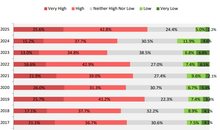
Business perception of corruption reaches historic high in AmCham Index
2026-06-23 12:20:36
Tabaku: Corruption and lack of competition are holding back the Albanian economy
2026-06-23 12:10:20
Spiropali mocks Rama: Lightning bolts, algorithmic control and lewd language
2026-06-23 12:00:54

Norway secures World Cup round of 16
2026-06-23 11:24:25



Three online scams that are taking millions of people
2026-06-23 10:20:07
Brussels issues arrest warrant for former EU commissioner
2026-06-23 10:09:05

Changes in the State Police, names of 8 new leaders
2026-06-23 09:20:37

Vance: 'Good progress' made on plan for final Iran deal
2026-06-23 09:06:27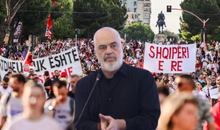
Three weeks of resistance, DW: What is keeping the protest alive in Albania?
2026-06-23 08:39:55
Horoscope, get to know the star forecast
2026-06-23 08:22:33

Clear weather and high temperatures, here's the forecast for this Tuesday
2026-06-23 07:56:53
Morning Post/ In 2 lines: What mattered yesterday in Albania
2026-06-23 07:43:15

Thousands of citizens continue the march through Tirana: Edi Rama is finished!
2026-06-22 22:42:49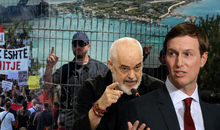
Kushner's company opposes Rama on Zvërnec: We are not involved
2026-06-22 22:20:13

Argentina secures qualification for the 2026 World Cup knockout stage
2026-06-22 21:21:21
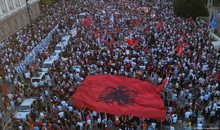
What is keeping the protest alive in Albania?
2026-06-22 20:34:23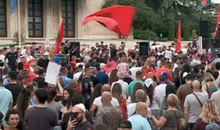
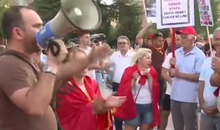
Day 23/ Tomorrow, unions protest in front of the Ministry of Economy
2026-06-22 19:53:15
Why the France-Iraq match risks not being played tonight
2026-06-22 18:48:29
Vetevendosje responds to Rama: We have no role in the protests in Albania
2026-06-22 18:28:30
Accident in Berat, motorbike hits Dutch tourist at white lines
2026-06-22 18:08:24
DW: Why is Bulgaria threatening to veto EU sanctions against Russia?
2026-06-22 17:49:13


The architect of the modern American economy passes away
2026-06-22 16:37:43
Germany loses defender, player ends World Cup early
2026-06-22 16:29:33