 Flash News
Foreign exchange, the rate at which foreign currencies are sold and bought
Clear skies throughout Albania, here's what the weather is expected to be like today
Conflict between young people in Fushë-Krujë, 22-year-old injured with knife
Kanye West's state-funded concert, OCCRP: Government accused of using the concert to stifle protests
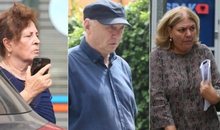
Here are the years of imprisonment requested for Monika's mother
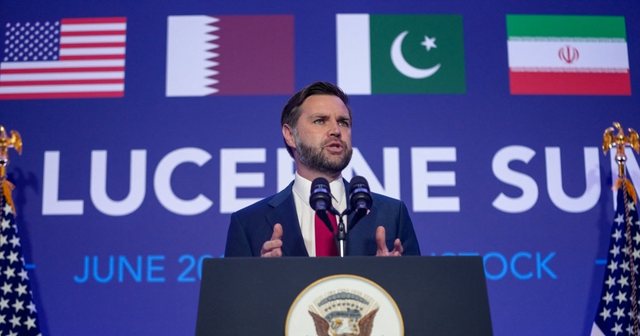
US Vice President JD Vance said "good progress" has been made in talks on a roadmap to a final peace deal within 60 days. The progress includes ensuring safe passage through the Strait of Hormuz, ending fighting in Lebanon and allowing international nuclear inspectors to visit Tehran.
"We laid a very good foundation for a successful final agreement," Vance told reporters on June 22 at the Burgenstock resort in central Switzerland, after talks between the parties ran through the night.
"The final agreement is the house. We laid the foundation; we haven't built the house yet, but we have created a successful foundation to achieve a good outcome for the American people," he said.
Few key details have been released, but the agreement appears to reflect the ambitious goals announced in the memorandum of understanding (MOU) signed last week by the presidents of the US and Iran.
This memorandum left many of the terms of a 14-point agreement open to interpretation.
Vance said Tehran has agreed to allow the return of International Atomic Energy Agency (IAEA) inspectors to the country and that the parties have worked to create a "coordination mechanism" to keep the Strait of Hormuz open for energy transport, as well as to clear mines in the area, in order to avoid disruptions to global oil and gas flows.
Earlier, the mediators of these talks from Qatar and Pakistan said that although the formal negotiations for the first session had concluded, further technical discussions will be held by the delegations over the next week.
According to them, "working groups" will be created to address nuclear issues, sanctions, as well as a group for monitoring and resolving disputes, with the aim of ensuring the effective implementation of the memorandum of understanding and other issues.
Iran's Foreign Ministry, in comments reported by Iranian state media, said the US blockade of ports had been lifted, that "some frozen assets" had been released and that a "major development and reconstruction plan for Iran" had been launched.
A ministry spokesman said that, regarding the safe passage of ships through the Strait of Hormuz, "it was agreed to organize a mechanism," without providing further details.
Officials said the talks lasted 18 hours.
Vance, special envoy Steve Witkoff and Jared Kushner – US President Donald Trump’s son-in-law – led the US negotiating team. Iranian Parliament Speaker Mohammad Baqer Qalibaf and Foreign Minister Abbas Araqchi led the Tehran delegation.
The mediators added that, based on the memorandum of understanding between Washington and Tehran, "the parties have agreed to establish a High-Level Committee, which will provide political oversight of the mediation process."
"The committee has agreed on a roadmap towards reaching "a final agreement within 60 days, laying the foundation for the immediate start of further technical talks," the statement said.
According to what is further stated in the statement, a "line of communication" has been established for a 60-day period, "to avoid incidents and misunderstandings", with the aim of ensuring the safe passage of commercial ships through the Strait of Hormuz.
Likewise, a "deconfliction cell" will be created with the involvement of the US, Iran and Lebanon - facilitated by mediators - to ensure the end of military operations in Lebanon, as envisaged in the memorandum of understanding.
Araqchi echoed Vance's comments in a post on X, saying that "great progress" has been made in the talks.
"Mediation by Pakistan and Qatar has brought great progress to end the war in Lebanon," Araqchi wrote.
"Exports of oil and petrochemical products have been exempted from restrictions, the blockade has been lifted, some frozen assets have been released, and a major reconstruction and development plan for Iran has been launched," he said.
Washington has pledged to facilitate the release of a $300 billion reconstruction fund, backed by countries in the region, once a broader final agreement is reached on Iran's nuclear program.
The agreement – particularly the creation of the reconstruction fund and the lack of clarity on the Iranian nuclear program – has been met with anger by American Democrats and many Republicans.
Vance responded to these concerns by saying that, if Iranian funds are ever unblocked, the US will ensure that "Iranian money is used to help the people of Iran and not to fund terrorism."
Many Israeli leaders have also expressed doubts about some aspects of the talks, stressing that their country is not a party to the agreement and vowing to continue attacks on Hezbollah positions in Lebanon.
Hezbollah, backed by Iran, is a militant group and political party that controls most of southern Lebanon. It is considered a terrorist organization by the United States, while the European Union has blacklisted its military wing, but not its political branch./ REL
Latest news



Speaking multiple languages can keep your brain up to 13 years younger
2026-07-14 09:35:11
Strait of Hormuz becomes key battleground again, oil prices rise
2026-07-14 09:20:09

73.4% of Albanians' out-of-pocket health expenses go to medicines
2026-07-14 09:02:28
Over 10,000 dead from extreme heat wave in Europe, elderly most affected
2026-07-14 08:59:36
Foreign exchange, the rate at which foreign currencies are sold and bought
2026-07-14 08:24:50
The ten challenges Spain must win to eliminate France and Mbappé
2026-07-14 08:04:02

Morning Post/ In 2 lines: What mattered yesterday in Albania
2026-07-14 07:00:35
Ukraine strengthens air defense, Macron announces deal for 16 Rafale jets
2026-07-13 22:26:00
Shkullaku: Qeveria përdori koncertin e Kanye West për të eklipsuar protestën
2026-07-13 22:11:36
Conflict between young people in Fushë-Krujë, 22-year-old injured with knife
2026-07-13 21:47:26

Haaland, the phenomenon of the 2026 World Cup
2026-07-13 20:19:12
Citizens take to the streets again, protest enters 44th day
2026-07-13 20:01:25
Large fire in Himara, flames engulf the hills of the Llaman area
2026-07-13 19:28:11


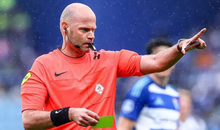
Dutch referee dies, weeks after being banned from 2026 World Cup
2026-07-13 18:22:39

What professions make people the happiest?
2026-07-13 17:51:54
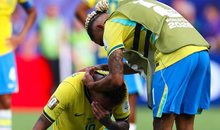
Brazil still in crisis, fans attack Federation after motivational video
2026-07-13 16:42:07
The Special Court returns the file against former mayor Elvis Roshi to SPAK
2026-07-13 16:22:11
IDC-CDI meets in Brussels, Berisha participates as Vice President
2026-07-13 16:05:10
"Washington Examiner": Anger against Rama's enrichment has reached its peak
2026-07-13 14:28:00
Here are the years of imprisonment requested for Monika's mother
2026-07-13 14:09:46
EU appoints German diplomat as new special envoy for Kosovo
2026-07-13 13:55:29
Property alienation in Durrës/ Court confirms security measures for suspects
2026-07-13 13:25:00
70 people with poisoning symptoms in Pristina, 22 hospitalized
2026-07-13 13:16:00


Erkin Lika's lifeless body found after falling into Mat River sinkhole
2026-07-13 12:32:00
Over 500 babies named after Haaland after World Cup matches
2026-07-13 12:28:00
18 arrested in Spain, who is the Albanian known as 'Daci'?
2026-07-13 12:22:00
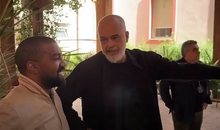
4.2 million euros for Kanye West, DP reports Rama and Gonxha to SPAK
2026-07-13 11:27:03


Heatwave hits Germany, over 5,400 heat-related deaths
2026-07-10 10:45:33
Land in "foreign hands"
2026-07-10 10:26:15

Mbappe the hero of France, the "Roosters" knock out Morocco in the quarterfinals
2026-07-10 09:54:33
Durrës/ 40-year-old man stabs his wife
2026-07-10 09:48:03

How much could the amount of drug money in the Albanian economy be?!
2026-07-10 09:08:34
Government reduces funds for farmers, increases ADF by 75 million euros
2026-07-10 08:55:46
Horoscope, get to know the star forecast
2026-07-10 08:32:54

Morning Post/ In 2 lines: What mattered yesterday in Albania
2026-07-10 07:52:04
A person was shot dead in Kurbin, first details
2026-07-09 22:54:48

Will the Police also stop those who criticize Rama online?
2026-07-09 21:57:02


FIFA decision shocks England, Quansah ruled out for two matches
2026-07-09 20:51:00
Protest/Pedagogue: 4 million euros for Kanye West is "the next concession"
2026-07-09 19:45:53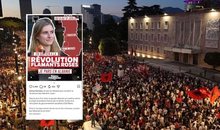
French MEP joins protests in Albania: Support for the "Pink Flamingo Revolution"
2026-07-09 19:28:07


Has the lek strengthened or overvalued?
2026-07-09 17:58:05

The trial on the merits for Ilir Meta and Monika Kryemadhi is postponed
2026-07-09 16:47:58

The match between England and Norway risks being postponed, this is the reason
2026-07-09 16:12:46
Murder in Shkodra/ Relatives: Peaceful family, no problems
2026-07-09 16:10:02
Kurti invites opposition leaders to a meeting to create new institutions
2026-07-09 15:43:05