 Flash News
Foreign exchange, the rate at which foreign currencies are sold and bought
Clear skies throughout Albania, here's what the weather is expected to be like today
Conflict between young people in Fushë-Krujë, 22-year-old injured with knife
Kanye West's state-funded concert, OCCRP: Government accused of using the concert to stifle protests
Here are the years of imprisonment requested for Monika's mother
Foreign investments in the Region are creating fewer jobs for the invested capital

Politiko
2026-07-14 09:59:17
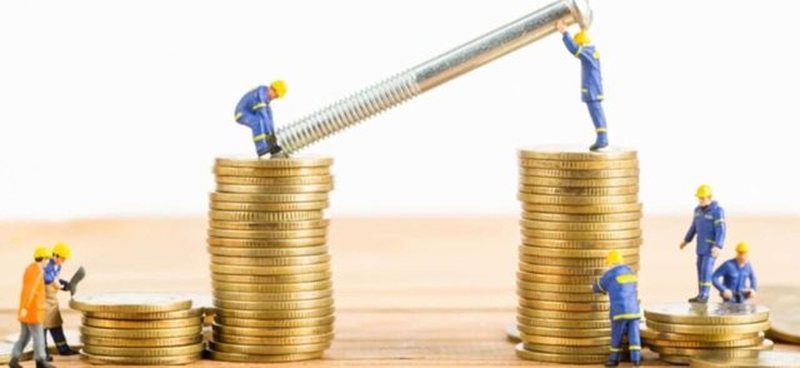
Foreign investments in the Western Balkans are becoming increasingly capital-intensive, while for each amount invested, fewer jobs are being generated than before.
The World Bank in its latest Regional report noted that foreign direct investment per job has increased in most countries in the region during the period 2021–2025, compared to 2016–2020.
The indicator measures the ratio between the value of investment and the number of jobs created. Its increase means that new projects require more capital for each job created, signaling a shift towards larger, more costly, and less employment-intensive investments.
The amount invested per job after the pandemic marked the strongest growth in Albania, with over 300% compared to the period 2016-2020, while Serbia ranked second, with around 190%. Montenegro and North Macedonia recorded more moderate increases, in the range of around 80–90%.
In Bosnia and Herzegovina, capital expenditure per job remained almost unchanged, indicating that the structure of investment projects has not changed significantly compared to the previous period. Kosovo showed a different performance, as foreign investment per job slowed down in the period 2021–2025.
The size of investment projects increased in most Western Balkan countries between 2010 and 2025, with the exception of Bosnia and Herzegovina and Montenegro.
The increase became more noticeable in Albania after 2020, while in North Macedonia and Kosovo it had started since 2018. In absolute terms, the largest projects were registered in Montenegro, followed by Serbia.
This trend shows that foreign investment is increasingly directed towards projects that require large sums of money for buildings, equipment, technology and infrastructure, but that are not creating a large number of jobs. As a result, the invested capital is growing faster than the employment generated by it.
Increasing capital spending per job can also have positive effects, if it is linked to more advanced technology, automation and increased productivity. But in the case of the Balkan countries, the indicator does not prove that the projects are more productive or that they are creating better quality jobs.
Investments in the energy sector, especially photovoltaic parks, energy production or real estate, generate capital but not employment./Monitor.al
Latest news
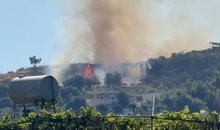
A pine forest area in Vlora is engulfed in flames, several homes are at risk
2026-07-14 10:28:04
World Cup turns into nightmare for Senegal, sexual harassment allegations raised
2026-07-14 10:20:12

Speaking multiple languages can keep your brain up to 13 years younger
2026-07-14 09:35:11
Strait of Hormuz becomes key battleground again, oil prices rise
2026-07-14 09:20:09

73.4% of Albanians' out-of-pocket health expenses go to medicines
2026-07-14 09:02:28
Over 10,000 dead from extreme heat wave in Europe, elderly most affected
2026-07-14 08:59:36
Foreign exchange, the rate at which foreign currencies are sold and bought
2026-07-14 08:24:50
The ten challenges Spain must win to eliminate France and Mbappé
2026-07-14 08:04:02

Morning Post/ In 2 lines: What mattered yesterday in Albania
2026-07-14 07:00:35
Ukraine strengthens air defense, Macron announces deal for 16 Rafale jets
2026-07-13 22:26:00
Shkullaku: Qeveria përdori koncertin e Kanye West për të eklipsuar protestën
2026-07-13 22:11:36
Conflict between young people in Fushë-Krujë, 22-year-old injured with knife
2026-07-13 21:47:26

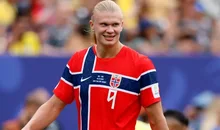
Haaland, the phenomenon of the 2026 World Cup
2026-07-13 20:19:12
Citizens take to the streets again, protest enters 44th day
2026-07-13 20:01:25
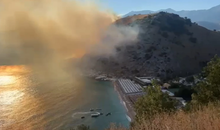
Large fire in Himara, flames engulf the hills of the Llaman area
2026-07-13 19:28:11
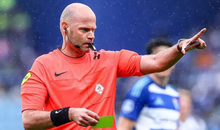
Dutch referee dies, weeks after being banned from 2026 World Cup
2026-07-13 18:22:39
What professions make people the happiest?
2026-07-13 17:51:54
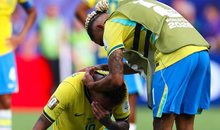
Brazil still in crisis, fans attack Federation after motivational video
2026-07-13 16:42:07
The Special Court returns the file against former mayor Elvis Roshi to SPAK
2026-07-13 16:22:11
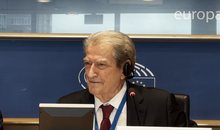
IDC-CDI meets in Brussels, Berisha participates as Vice President
2026-07-13 16:05:10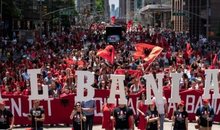
"Washington Examiner": Anger against Rama's enrichment has reached its peak
2026-07-13 14:28:00
Here are the years of imprisonment requested for Monika's mother
2026-07-13 14:09:46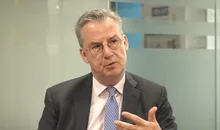
EU appoints German diplomat as new special envoy for Kosovo
2026-07-13 13:55:29

Property alienation in Durrës/ Court confirms security measures for suspects
2026-07-13 13:25:00
70 people with poisoning symptoms in Pristina, 22 hospitalized
2026-07-13 13:16:00


Erkin Lika's lifeless body found after falling into Mat River sinkhole
2026-07-13 12:32:00
Over 500 babies named after Haaland after World Cup matches
2026-07-13 12:28:00
18 arrested in Spain, who is the Albanian known as 'Daci'?
2026-07-13 12:22:00
4.2 million euros for Kanye West, DP reports Rama and Gonxha to SPAK
2026-07-13 11:27:03


Heatwave hits Germany, over 5,400 heat-related deaths
2026-07-10 10:45:33
Land in "foreign hands"
2026-07-10 10:26:15
Mbappe the hero of France, the "Roosters" knock out Morocco in the quarterfinals
2026-07-10 09:54:33
Durrës/ 40-year-old man stabs his wife
2026-07-10 09:48:03



How much could the amount of drug money in the Albanian economy be?!
2026-07-10 09:08:34
Government reduces funds for farmers, increases ADF by 75 million euros
2026-07-10 08:55:46
Horoscope, get to know the star forecast
2026-07-10 08:32:54

Morning Post/ In 2 lines: What mattered yesterday in Albania
2026-07-10 07:52:04
A person was shot dead in Kurbin, first details
2026-07-09 22:54:48

Will the Police also stop those who criticize Rama online?
2026-07-09 21:57:02


FIFA decision shocks England, Quansah ruled out for two matches
2026-07-09 20:51:00
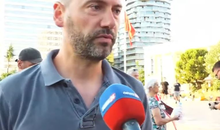
Protest/Pedagogue: 4 million euros for Kanye West is "the next concession"
2026-07-09 19:45:53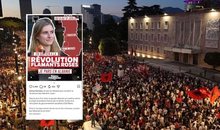
French MEP joins protests in Albania: Support for the "Pink Flamingo Revolution"
2026-07-09 19:28:07


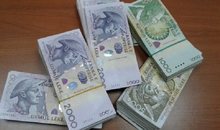
Has the lek strengthened or overvalued?
2026-07-09 17:58:05
The trial on the merits for Ilir Meta and Monika Kryemadhi is postponed
2026-07-09 16:47:58