
 Flash News
Foreign exchange, the rate at which foreign currencies are sold and bought
Clear skies throughout Albania, here's what the weather is expected to be like today
Conflict between young people in Fushë-Krujë, 22-year-old injured with knife
Kanye West's state-funded concert, OCCRP: Government accused of using the concert to stifle protests
Here are the years of imprisonment requested for Monika's mother
Speaking multiple languages can keep your brain up to 13 years younger

Politiko
2026-07-14 09:35:11
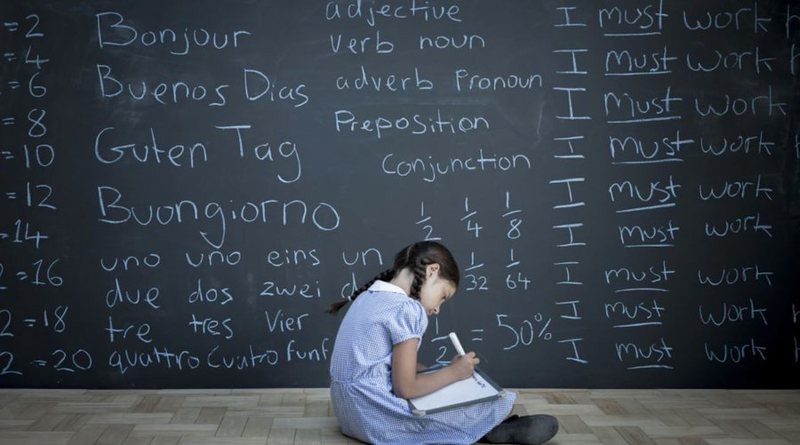
A new study finds that speaking multiple languages can "rejuvenate" your brain by up to 13 years. This is according to the authors of a study presented in Barcelona at the FENS 2026 Forum (Federation of European Neuroscience Societies). For the first time, the benefits of learning one or more languages other than your native tongue have been measured over the years, revealing that the earlier you start and the deeper you study, the better.
The study involved nearly 900 people from the Basque Country, a region in the north of the Iberian Peninsula, who spoke one or more of Spanish, Basque, French and English. Comparing biological brain age with actual brain age, it emerged that multilingualism brings exponential benefits. Specifically, those who spoke two languages had brains that were six years younger, those who spoke three languages seven years younger and those who spoke four languages thirteen years younger.
According to the researchers, the effect was not only related to the number of languages spoken, but also to the level of language proficiency and the age at which it was learned.
"Greater linguistic competence and earlier second language acquisition were associated with slower brain aging," explains Lucia Amoruso, who presented the research at the conference.
Does this mean that learning a language as an adult has no positive effects? Absolutely not. While the greatest benefits occur when multiple languages are learned during childhood, learning it as an adult has very positive effects on brain health.
Although they took into account factors such as the age, gender and education level of the participants, the authors caution that it is not possible to completely rule out the influence of other factors that may affect brain health, such as lifestyle and level of social engagement.
The team's next goal is to conduct a similar study in people with neurodegenerative diseases like Alzheimer's disease, where brain aging is even more important.
Latest news


A pine forest area in Vlora is engulfed in flames, several homes are at risk
2026-07-14 10:28:04
World Cup turns into nightmare for Senegal, sexual harassment allegations raised
2026-07-14 10:20:12




Speaking multiple languages can keep your brain up to 13 years younger
2026-07-14 09:35:11
Strait of Hormuz becomes key battleground again, oil prices rise
2026-07-14 09:20:09

73.4% of Albanians' out-of-pocket health expenses go to medicines
2026-07-14 09:02:28
Over 10,000 dead from extreme heat wave in Europe, elderly most affected
2026-07-14 08:59:36

Foreign exchange, the rate at which foreign currencies are sold and bought
2026-07-14 08:24:50
The ten challenges Spain must win to eliminate France and Mbappé
2026-07-14 08:04:02

Morning Post/ In 2 lines: What mattered yesterday in Albania
2026-07-14 07:00:35
Ukraine strengthens air defense, Macron announces deal for 16 Rafale jets
2026-07-13 22:26:00
Shkullaku: Qeveria përdori koncertin e Kanye West për të eklipsuar protestën
2026-07-13 22:11:36
Conflict between young people in Fushë-Krujë, 22-year-old injured with knife
2026-07-13 21:47:26



Haaland, the phenomenon of the 2026 World Cup
2026-07-13 20:19:12
Citizens take to the streets again, protest enters 44th day
2026-07-13 20:01:25

Large fire in Himara, flames engulf the hills of the Llaman area
2026-07-13 19:28:11


Dutch referee dies, weeks after being banned from 2026 World Cup
2026-07-13 18:22:39

What professions make people the happiest?
2026-07-13 17:51:54


Brazil still in crisis, fans attack Federation after motivational video
2026-07-13 16:42:07
The Special Court returns the file against former mayor Elvis Roshi to SPAK
2026-07-13 16:22:11
IDC-CDI meets in Brussels, Berisha participates as Vice President
2026-07-13 16:05:10
"Washington Examiner": Anger against Rama's enrichment has reached its peak
2026-07-13 14:28:00
Here are the years of imprisonment requested for Monika's mother
2026-07-13 14:09:46
EU appoints German diplomat as new special envoy for Kosovo
2026-07-13 13:55:29

Property alienation in Durrës/ Court confirms security measures for suspects
2026-07-13 13:25:00
70 people with poisoning symptoms in Pristina, 22 hospitalized
2026-07-13 13:16:00


Erkin Lika's lifeless body found after falling into Mat River sinkhole
2026-07-13 12:32:00
Over 500 babies named after Haaland after World Cup matches
2026-07-13 12:28:00
18 arrested in Spain, who is the Albanian known as 'Daci'?
2026-07-13 12:22:00

4.2 million euros for Kanye West, DP reports Rama and Gonxha to SPAK
2026-07-13 11:27:03



Heatwave hits Germany, over 5,400 heat-related deaths
2026-07-10 10:45:33

Land in "foreign hands"
2026-07-10 10:26:15

Mbappe the hero of France, the "Roosters" knock out Morocco in the quarterfinals
2026-07-10 09:54:33
Durrës/ 40-year-old man stabs his wife
2026-07-10 09:48:03



How much could the amount of drug money in the Albanian economy be?!
2026-07-10 09:08:34
Government reduces funds for farmers, increases ADF by 75 million euros
2026-07-10 08:55:46
Horoscope, get to know the star forecast
2026-07-10 08:32:54


Morning Post/ In 2 lines: What mattered yesterday in Albania
2026-07-10 07:52:04
A person was shot dead in Kurbin, first details
2026-07-09 22:54:48

Will the Police also stop those who criticize Rama online?
2026-07-09 21:57:02

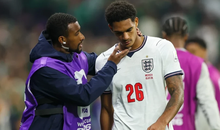
FIFA decision shocks England, Quansah ruled out for two matches
2026-07-09 20:51:00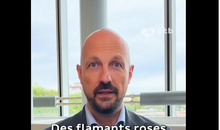


Protest/Pedagogue: 4 million euros for Kanye West is "the next concession"
2026-07-09 19:45:53
French MEP joins protests in Albania: Support for the "Pink Flamingo Revolution"
2026-07-09 19:28:07


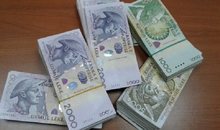
Has the lek strengthened or overvalued?
2026-07-09 17:58:05

The trial on the merits for Ilir Meta and Monika Kryemadhi is postponed
2026-07-09 16:47:58

The match between England and Norway risks being postponed, this is the reason
2026-07-09 16:12:46