 Flash News
Shocking in Prrenjas/ 69-year-old man sets his wife on fire, jealousy as the reason
Spiropali mocks Rama: Lightning bolts, algorithmic control and lewd language
American Chamber of Commerce raises alarm: Corruption and monopoly are hitting businesses in Albania
Rama speaks to 'Financial Times', curses protesters: F*ck you, if you say I'm 'The Godfather'!
Morning Post/ In 2 lines: What mattered yesterday in Albania
From Zvërnec to Rama's resignation/American media narratives about the protest in Albania

Politiko
2026-06-23 14:59:35
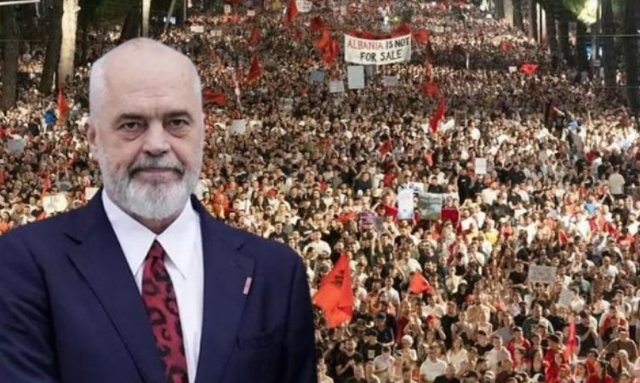
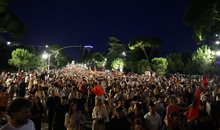
When thousands of citizens took to the streets of Tirana to protest initially against a construction project in Zvërnec, (by a company linked to Jared Kushner) in an area long known as one of the most environmentally sensitive areas of the Mediterranean, and then expanded their opposition to the country's internal problems, few would have thought that this story, after crossing the Atlantic, would take on another dimension.
The 24-day protest, which is concluding with demands related to the country's governance and political class, has been portrayed in the American media as a new chapter in the American debate over Donald Trump and his son-in-law Jared Kushner , as well as the Trump family's influence on business and international politics.
On the one hand, how the American media has handled the issue says more about the debates that dominate the United States than about what is happening on the ground in Albania.
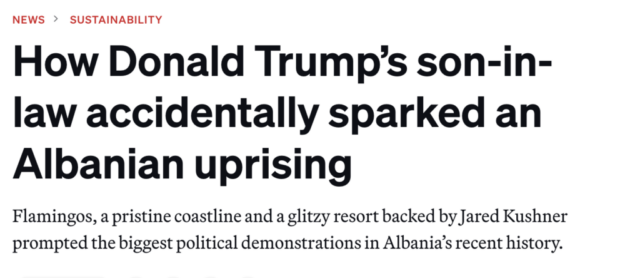
One of the most notable features of the media coverage has been the treatment of the protests in Albania with a focus on the figures of Jared Kushner and Ivanka Trump. Even when reporting on issues such as the biodiversity of Narta, the status of protected areas, or the administrative procedures of the Albanian government, the headlines almost always put Kushner's name at the center, necessarily to connect him to what is happening in the US.
For the American media, then, the Albanian story was not simply a debate over environmental preservation or local tourism, but an example of what Trump's critics consider the merging of private interests with political influence.
Reuters reports, widely republished in international media, described the protest as a reaction to a luxury resort linked to US President Donald Trump's son-in-law, highlighting both environmental concerns and a lack of transparency around the project. The protesters were portrayed as opponents of a development model where powerful investors enjoy privileged access to governments.
Vanity Fair magazine placed the protest within a broader narrative about inequality, corruption, and the influence of economic elites. In its article, the project is described as a symbol of a system where the interests of ordinary citizens clash with those of powerful financial and political actors.
Kjo qasje nuk është rastësore. Që prej mandatit të parë të Trump, Jared Kushner është kthyer në një figurë simbolike në debatin amerikan mbi nepotizmin dhe marrëdhëniet mes biznesit dhe politikës. Për këtë arsye, çdo investim i tij jashtë vendit ka potencialin të interpretohet jo vetëm si një projekt ekonomik e një figure të biznesit, por mbi të gjitha si pjesë e një problemi madhor në sistemin politik të SHBA-së (dhe atij global).
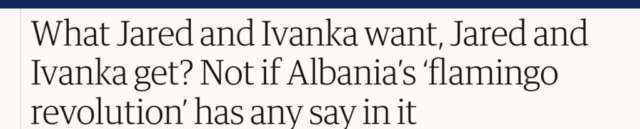
Një aspekt tjetër interesant është mënyra se si disa media amerikane e paraqitën protestën si pjesë të rezistencës globale kundër elitave politike dhe ekonomike.
Në një artikull të New York Times, gazetari Andrew Higgins vë në dukje se si demonstruesit shqiptarë përshkruheshin si njerëz që po fitonin simpati nga amerikanë që i shihnin si “luftëtarë të guximshëm” kundër Trump, Izraelit dhe lakmisë së “1 për qindëshit,” pra të elitave globale. Ky formulim është domethënës sepse e vendos protestën shqiptare brenda gjuhës politike të lëvizjeve progresiste amerikane si Occupy Wall Street apo protestat kundër miliarderëve dhe korporatave të mëdha. Në këtë kuadër, Shqipëria bëhet pothuajse një skenë e largët ku projektohen konfliktet amerikane.
Megjithatë, Higgins ka dhënë edhe kritikën e tij, duke folur sesi media amerikane ose dhe perëndimore e kanë reduktuar një konflikt shqiptar në një histori rreth Trump-it dhe Kushner.
Në diskutime publike dhe analiza të ndryshme është vënë re se fokusi mbi emrin e Kushner shpesh ka lënë në hije elementë të tjerë po aq të rëndësishëm: konfliktet e pronësisë në zonën e Zvërnecit, mosmarrëveshjet ligjore mbi tokën, mënyrën se si qeveria i kaloi vendimet apo ndryshoi ligjet, akuzat për klientelizëm dhe pakënaqësinë më të gjerë ndaj klasës politike shqiptare.
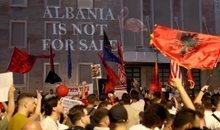
Në fakt, ndërsa për publikun amerikan emri Kushner është elementi më i njohur i historisë, për shumë protestues shqiptarë ai përfaqëson vetëm një pjesë të problemit. Kjo është arsyeja pse një pjesë e mediave më të kujdesshme kanë shmangur interpretimin e protestës si anti-amerikane, edhe përse në protesta ekzistojnë pankarta që bëjnë thirrje kundër shitjes së Shqipërisë.
NPR, PBS dhe media të tjera kanë vërejtur se protestuesit nuk po kundërshtojnë Shtetet e Bashkuara si aleat strategjik, por mënyrën se si lidhjet politike dhe ekonomike mund të përdoren për të siguruar projekte të privilegjuara. Edhe në protestat më të mëdha janë dëgjuar slogane kundër korrupsionit, shitjes së pasurive publike dhe elitave politike vendase, jo kundër Amerikës si shtet.
This has created an interesting tension in the American narrative. On the one hand, Albania continues to be considered one of the most pro-American countries in the world. On the other hand, reports have highlighted a sense of frustration at the fact that figures linked to the American establishment are being seen as beneficiaries of a controversial process. It is precisely this contrast that has made the story attractive to the American public. We are not dealing with a classic protest against the United States, but with a protest that uses the values that America itself claims to defend (such as transparency, democracy and the rule of law).
In recent weeks, as the protests have expanded into a broader movement against corruption and political elites, international coverage has begun to shift. Global media outlets have noted that the movement is gradually moving away from its exclusive focus on the resort and toward a broader expression of dissatisfaction with the Albanian political system. Ultimately, the way the American media has presented this story reveals a familiar phenomenon: international events are often interpreted through the lens of domestic American debates.
The protest that began in Albania as a debate about territory, the environment, and transparency, was read in the United States as a story about Trump, modern oligarchy, political privilege, and the power of global elites.
To fully understand what is happening in southern Albania, one must look beyond the names of Trump and Kushner. Because while for the American media they are served as the main protagonists of the story, for many Albanians they are only the most visible face of a problem that in Albania has much deeper roots. /Faktoje.al
Latest news
Si u kthye një investim në një lëvizje antikorrupsion në Shqipëri?
2026-06-23 16:00:13
Italia sekuestron dy miliardë euro asete të oligarkëve rusë
2026-06-23 15:36:38
Piktori ndërton një Shqipëri ku nuk do të ketë vend për shqiptarët!
2026-06-23 15:20:27

Fresh, elegant and bold: the color that is challenging summer
2026-06-23 14:45:21
Ylli Zalla escapes from RENEA, another pistol is found in her apartment
2026-06-23 14:36:22
He who curses his people in English
2026-06-23 14:17:17
The 2026 World Cup takes over the screens, breaking viewership records
2026-06-23 13:59:22
Heatwave hits France, at least 40 dead
2026-06-23 13:40:48
The first thing women see in a man
2026-06-23 13:30:03
Accident in Fier-Vlora, three injured near Mifoli
2026-06-23 13:17:05


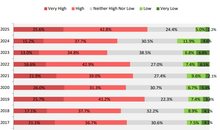
Business perception of corruption reaches historic high in AmCham Index
2026-06-23 12:20:36
Tabaku: Corruption and lack of competition are holding back the Albanian economy
2026-06-23 12:10:20
Spiropali mocks Rama: Lightning bolts, algorithmic control and lewd language
2026-06-23 12:00:54

Norway secures World Cup round of 16
2026-06-23 11:24:25



Three online scams that are taking millions of people
2026-06-23 10:20:07
Brussels issues arrest warrant for former EU commissioner
2026-06-23 10:09:05

Changes in the State Police, names of 8 new leaders
2026-06-23 09:20:37

Vance: 'Good progress' made on plan for final Iran deal
2026-06-23 09:06:27
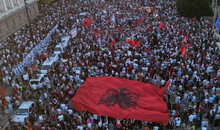
Three weeks of resistance, DW: What is keeping the protest alive in Albania?
2026-06-23 08:39:55
Horoscope, get to know the star forecast
2026-06-23 08:22:33

Clear weather and high temperatures, here's the forecast for this Tuesday
2026-06-23 07:56:53
Morning Post/ In 2 lines: What mattered yesterday in Albania
2026-06-23 07:43:15

Thousands of citizens continue the march through Tirana: Edi Rama is finished!
2026-06-22 22:42:49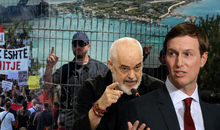
Kushner's company opposes Rama on Zvërnec: We are not involved
2026-06-22 22:20:13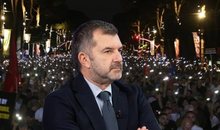
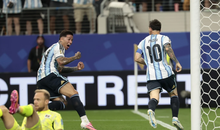
Argentina secures qualification for the 2026 World Cup knockout stage
2026-06-22 21:21:21
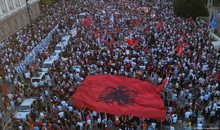
What is keeping the protest alive in Albania?
2026-06-22 20:34:23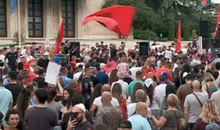
Day 23/ Tomorrow, unions protest in front of the Ministry of Economy
2026-06-22 19:53:15


Why the France-Iraq match risks not being played tonight
2026-06-22 18:48:29
Vetevendosje responds to Rama: We have no role in the protests in Albania
2026-06-22 18:28:30
Accident in Berat, motorbike hits Dutch tourist at white lines
2026-06-22 18:08:24
DW: Why is Bulgaria threatening to veto EU sanctions against Russia?
2026-06-22 17:49:13

The architect of the modern American economy passes away
2026-06-22 16:37:43
Germany loses defender, player ends World Cup early
2026-06-22 16:29:33
Activist: Starmer resigned, Rama says he is not dirty with these scandals
2026-06-22 16:08:50
Former Spanish minister sentenced to 24 years in prison for corruption
2026-06-22 16:02:22
Trial for the 700 thousand euro tender, Benet Beci does not go to the GJKKO
2026-06-22 15:48:52
65-year-old man found dead in Korça
2026-06-22 15:44:47
OSHEE employee arrested in Lezha after being caught with a stolen vehicle
2026-06-22 15:31:57
Albanians among the most emotionally exhausted in the workplace in Europe
2026-06-22 15:02:18
Who are the 3 legends who have played in 6 World Cups?
2026-06-22 14:47:17
Changes in the Shkodra Police, here is who is appointed as the new director
2026-06-22 14:37:55
Man stabs wife, 28-year-old woman rushed to Tirana
2026-06-22 14:27:27
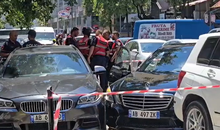
Chaos in Durrës, wanted man crashes into 5 cars while fleeing from police
2026-06-22 14:05:05
Euro hits new negative record, drops to 93 lek
2026-06-22 13:56:49

Andy Burnham announces candidacy for British Prime Minister
2026-06-22 13:34:14
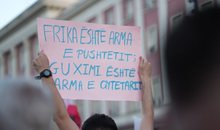
Protesters accuse police of "intimidation tactics" with mass prosecutions
2026-06-22 13:10:22



Blonde girl discovered in Peqin prison, suspicions that she met 2 convicts
2026-06-22 12:11:42

45-year-old man shot dead in Shijak, cousins face prison sentence
2026-06-22 11:51:27


How to exercise safely during high temperatures
2026-06-22 11:22:06
Greece tightens measures as number of children with ADHD increases
2026-06-22 11:10:35
UNDP sounds the alarm for the elderly, humanitarian crisis is looming
2026-06-22 10:59:05
British Prime Minister resigns
2026-06-22 10:44:04
Trump-backed candidate declared winner in Colombia's presidential election
2026-06-22 10:36:24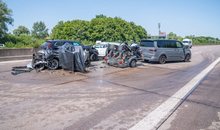
Accident in Germany, two Albanian sisters lose their lives (Names)
2026-06-22 10:31:11